


Navigating modern display specifications often feels overwhelming when every manufacturer highlights distinct acronyms and proprietary marketing terms. Choosing the right television requires understanding how panel backlights, emissive diodes, and color filters operate across varying room environments. If you find yourself asking which tv is better led oled or qled, the answer hinges on your specific lighting conditions, viewing habits, and budget preferences. While traditional LED displays remain budget-friendly workhorses, modern dedicated QLED displays utilize quantum dots to produce intense brightness that cuts through sunlit living rooms.
On the opposite end of the engineering spectrum, OLED technology relies on self-illuminating pixels to deliver unmatched black levels and infinite native contrast. Selecting between these architectures involves evaluating how you use your television every day. Viewers watching movies in dark rooms demand different contrast performance than families watching sports in sun-drenched spaces. By breaking down fundamental differences in backlight hardware, color volume, motion clarity, and long-term durability, you can pinpoint the exact television architecture that best serves your entertainment setup.


Evaluating Display Architectures: Which Television Technology Best Fits Your Space
Deciding between traditional LED, cutting-edge OLED, and quantum dot-enhanced QLED comes down to understanding how each panel generates illumination and manages contrast. None of these three display technologies holds an absolute advantage across every single viewing scenario. Instead, each architecture represents a distinct engineering compromise between peak brightness, black-level depth, viewing angle retention, and long-term panel stability. By exploring how these panels function under varied lighting conditions, you can confidently determine which tv is better led oled or qled for your personal home theater or living room.
Backlight Architecture and Panel Mechanics: How Each Screen Produces an Image
Standard LED displays form the baseline of modern flat-panel televisions by combining a liquid crystal display layer with light-emitting diodes. In these panels, light from edge-lit strips or direct-lit arrays passes through liquid crystal shutters that rotate to block or allow light transmission. Because liquid crystals cannot completely prevent light leakage, standard LED panels often produce elevated dark gray tones instead of true, inky blacks. This structural reality makes traditional LED displays dependable for daytime television watching, though somewhat limited when rendering moody, high-contrast cinema scenes.
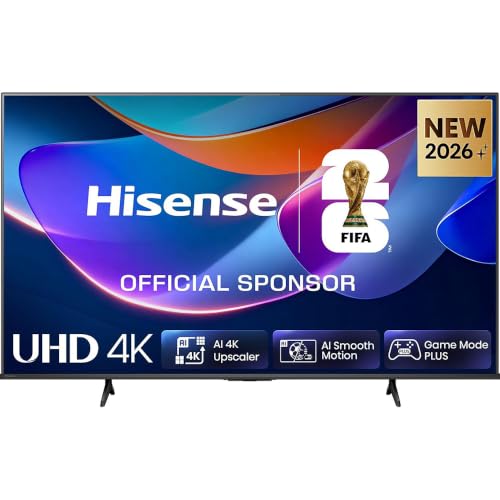
Quantum dot displays, commonly marketed as QLED, introduce a specialized microscopic nanocrystal enhancement film between the backlight and the LCD matrix. When blue LED light strikes these quantum dots, they emit exceptionally pure wavelengths of red and green light, expanding color volume and boosting overall brightness efficiency. For example, entry-tier models like the Hisense 50″ A6S 4K UHD Smart LED TV with QLED and the Hisense 55″ A6S 4K UHD Smart LED TV with QLED combine direct LED backlighting with quantum dot color filters. This configuration delivers rich color reproduction while maintaining the structural simplicity of direct-lit backlights.
Organic light-emitting diode displays, or OLED screens, operate on a fundamentally distinct emissive principle that eliminates the traditional backlight entirely. Every single sub-pixel within an OLED panel generates its own illumination and color output when supplied with an electrical current. When a scene calls for true black, the individual pixels switch off completely to emit zero light, achieving theoretically infinite native contrast. This pixel-level control ensures dark areas remain pristine without any backlight glow spilling into neighboring highlights.
Luminance and Dynamic Range: Daylight Glare Versus Dark-Room Immersion
Daylight viewing introduces substantial ambient glare that can quickly overpower displays with modest light output. QLED televisions hold a pronounced structural advantage in sunlit environments due to their powerful LED backlights. High peak brightness allows quantum dot screens to push vibrant colors through heavy ambient room illumination without appearing washed out or dim. If your living room features large windows or overhead lighting that you prefer keeping on during the day, a bright QLED display provides the visual punch needed to combat harsh daylight.
Dark-room viewing demands precise light suppression rather than overwhelming brightness, making OLED panels exceptionally well suited for nighttime movie sessions. Because backlit panels illuminate clusters of pixels simultaneously, high-contrast scenes often produce noticeable light halos around bright objects, white subtitles, and spaceship starfields. OLED panels eliminate this blooming artifact completely because adjacent pixels remain fully turned off right up to the boundary of a bright highlight. Film enthusiasts seeking theatrical black-level uniformity consistently favor OLED for dedicated home cinemas.
Reflections from lamps and windows can still disrupt viewing even on panels equipped with factory anti-reflective screen coatings. When ambient lighting conditions remain uncontrollable, supplementary external filters can help disperse harsh glare across the panel surface. Accessories such as the BU TV Screen Protectors anti-glare screen protector film and frosted panels from Generic offer matte finishes designed to diffuse specular reflections. While these films soften distracting hot spots and filter high-energy blue light, careful placement away from direct sunlight remains the best strategy for preserving image clarity.
Color Volume and High Dynamic Range Formats
Color volume represents a display’s capability to maintain accurate, vibrant color saturation across its entire luminance range. Standard LED panels frequently suffer from desaturation during bright scenes because pushing the backlight to maximum output tends to wash out delicate hues. Quantum dot layers counteract this limitation by generating intense, narrow spectral peaks that preserve rich reds and greens even at extreme brightness thresholds. This gives QLED displays an edge when rendering sun-drenched landscapes, explosions, and brightly lit animated content.
OLED displays approach color reproduction through the lens of contrast enhancement rather than raw luminous power. Saturated colors pop vividly against true black backgrounds, creating an impression of deep color density and three-dimensional realism. While modern OLEDs deliver exceptional coverage of cinema-grade color standards, their maximum color brightness in full-screen white scenes can taper off due to automated brightness limiter circuits. Both technologies deliver beautiful color performance, but they prioritize different visual strengths.
High Dynamic Range performance relies heavily on how effectively a television decodes and maps dynamic metadata across incoming video signals. Formats such as Dolby Vision and HDR10+ adjust luminance levels dynamically from scene to scene, preventing crushed shadow details and blown-out highlights. Televisions like the Hisense A6S series incorporate multi-format support including Dolby Vision and HDR10+ decoding, pairing these standards with an AI 4K upscaler. This dynamic tone mapping ensures that streamed 4K content maintains balanced contrast regardless of native panel limitations.
Motion Handling, Refresh Rates, and Next-Gen Console Gaming
Pixel response time dictates how rapidly a display panel can transition an individual pixel from one color to another. OLED technology excels in this area, offering near-instantaneous pixel response times that virtually eliminate motion ghosting and trailing behind fast-moving objects. Traditional LED and QLED displays rely on physical liquid crystal movement, which can leave faint trailing trails during high-speed action pans if overdrive algorithms are not properly tuned. This gives OLED an innate responsiveness advantage for fast-paced video games and competitive esports.
Display refresh rates directly influence visual fluidity, separating basic 60Hz panels from high-refresh-rate 120Hz and 144Hz displays. While entry-level displays frequently operate at 60Hz, higher refresh rates provide significantly smoother motion tracking during live sporting events and fast action sequences. Exploring Mini-LED TVs for sports reveals how advanced backlighting arrays pair with native high refresh panels to reduce judder and maintain clarity across rapid field pans. Gamers and sports enthusiasts should always verify native panel refresh specifications before committing to a purchase.
Modern console gaming demands low input latency and modern HDMI connectivity features to ensure responsive play. Technologies like Variable Refresh Rate (VRR) and Auto Low Latency Mode (ALLM) synchronize the display’s refresh cycle directly to the console output, preventing screen tearing. Many accessible QLED televisions incorporate dedicated software enhancements such as Game Mode Plus to lower input lag. The Hisense 50″ A6S and 55″ A6S models support both ALLM and VRR across their HDMI inputs, providing accessible responsiveness for PlayStation 5 and Xbox Series X owners.
Viewing Angles and Living Room Ergonomics
Off-axis viewing angles represent one of the most significant practical distinctions between LCD-based displays and OLED panels. Most modern LED and QLED televisions utilize Vertical Alignment (VA) panel structures because they provide superior native contrast when viewed straight ahead. However, moving just twenty to thirty degrees to either side of the center viewing sweet spot often causes noticeable contrast degradation and color desaturation. In contrast, In-Plane Switching (IPS) panels provide broader angles but compromise native black-level depth.
OLED panels maintain exceptional picture consistency across extreme viewing angles because light emits directly from the front surface of each organic diode. Colors remain rich and black levels remain completely uniform even when seated at severe sixty-degree off-axis angles. If your living space features a wide sectional sofa, an open-concept floor plan, or seating spread throughout a large entertaining area, an OLED panel ensures that every family member enjoys an identical picture quality. This wide viewing retention makes OLED ideal for social viewing environments.
Overcoming off-axis limitations in LCD panels requires strategic furniture placement and realistic room planning. Centering the primary seating position directly perpendicular to the screen helps preserve maximum contrast and vibrant color rendition on VA-based QLED sets. For larger households where side seating is unavoidable, choosing an OLED screen or an LCD television equipped with specialized wide-angle optical films helps mitigate off-center washout. Matching your seating geometry to your display’s optical characteristics prevents disappointment on movie nights.
Panel Longevity, Burn-In Risk, and Routine Screen Maintenance
Permanent image retention, commonly referred to as burn-in, remains a focal point in any discussion of long-term display reliability. Because OLED pixels rely on organic materials that degrade gradually over time, displaying static elements like news banners, sports scoreboards, or desktop taskbars for thousands of cumulative hours can cause uneven pixel wear. Modern OLEDs feature sophisticated maintenance routines like pixel shifting and screen savers to minimize this vulnerability. Nevertheless, users who display static content continuously face a small, persistent burn-in risk.
Quantum dot and standard LED screens rely entirely on inorganic materials that are physically immune to permanent image burn-in. You can leave news channels, video game HUDs, or computer desktops on a QLED panel without worrying about permanent pixel degradation. This durability makes QLED an outstanding choice for bustling family rooms where screens stay powered on for extended periods. Shoppers exploring reliable 55-inch QLED options frequently prioritize this inorganic construction for hassle-free daily longevity.
Routine physical care plays an equally important role in preserving panel performance and extending hardware lifespan. Cleaning delicate modern television surfaces requires gentle techniques, as harsh window sprays containing alcohol or ammonia can permanently strip specialized anti-glare coatings. Utilizing specialized maintenance solutions, such as the GW Deluxe Magic Screen Cleaner kit with soft microfiber cloths, allows you to safely remove smudges and dust without scratching fragile panel filters. Regular maintenance with approved microfiber materials keeps both OLED and QLED screens looking pristine.
Technology Decision Framework: Selecting the Optimal Screen for Your Needs
Choosing traditional LED makes the most sense when purchasing constraints prioritize affordability, screen size, or secondary room utility over cinema-grade picture quality. Standard LED televisions serve reliably in guest bedrooms, home offices, and children’s playrooms where casual viewing dominates. These displays deliver dependable 4K resolution and adequate brightness for everyday streaming apps without requiring a substantial financial investment. For practical everyday use without specialized home theater demands, standard LED remains a sensible and accessible choice.
Investing in a QLED television represents the premier solution for bright living spaces, mixed daytime viewing, and extended gaming setups. With superior peak brightness capabilities, expansive quantum dot color volume, and complete freedom from burn-in concerns, QLED handles diverse household demands effortlessly. Whether you are hosting daytime sports watch parties with open blinds or playing video games for hours on end, QLED delivers vibrant performance without requiring careful ambient light management. It stands as the most versatile display architecture for the majority of modern homes.
Selecting an OLED television remains the ultimate choice for cinephiles and home theater purists who prioritize picture accuracy and contrast depth in dark rooms. The combination of infinite native contrast, zero blooming around white highlights, instantaneous pixel response, and flawless off-axis viewing creates an unbeatable theatrical presentation. While OLED requires a darker viewing environment and thoughtful handling of static imagery, its visual refinement remains unmatched for serious movie watching. If pure cinematic immersion is your top priority, OLED stands at the pinnacle of home entertainment display technology.
Understanding which tv is better led oled or qled ultimately requires matching panel mechanics to your specific living room environment, seating layout, and daily media habits. OLED delivers pristine contrast perfection and wide viewing angles for movie lovers in controlled dark rooms, while QLED offers exceptional daylight luminance, vivid colors, and burn-in immunity for bustling living spaces. Standard LED continues to provide a dependable, budget-conscious baseline for secondary viewing zones. By evaluating your room’s ambient lighting and primary content types against these core strengths, you can select the perfect display to elevate your home entertainment experience.



Write Your Review
No reviews yet. Be the first to share your experience!