
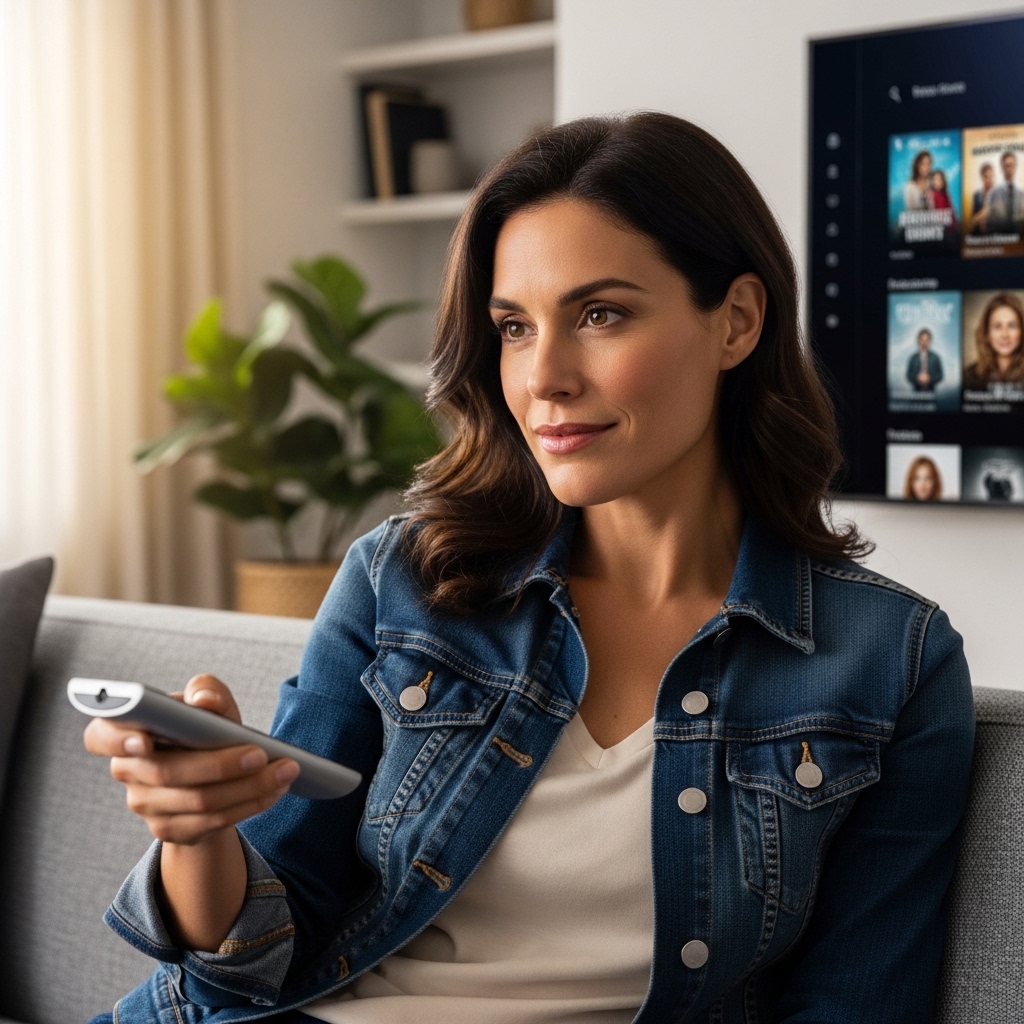

Sunlit living rooms often wash out traditional display contrast, leaving viewers struggling to see fine shadow details during daytime viewing. Standard LED LCD panels rely on diffuse backlights that can cause distracting haze across high-contrast scenes. When asking what is neo qled tv, the answer centers on an advanced display architecture that pairs microscopic light sources with color-enhancing nanocrystals. Understanding this evolution helps buyers determine whether upgrading to a high-luminance panel suits their room layout and media habits. Viewers exploring standard quantum dot displays often wonder how backlight density alters picture quality.
Samsung introduced Neo QLED by swapping standard light-emitting diodes for drastically reduced Quantum Mini LEDs. This physical shrinkage allows television chassis to pack thousands of microscopic lights behind the panel, delivering refined local dimming and high peak brightness without organic burn-in risks. Modern iterations also incorporate dedicated neural network processors to manage real-time upscaling and dynamic HDR tone mapping. Whether you want fluid console gaming or vibrant daytime sports, knowing how this hardware operates makes it easier to navigate today’s home theater market.


Pros
- Exceptional reflection handling thanks to the matte glare-free screen coating
- Neo QLED Mini-LED panel provides far better black levels and brightness than traditional lifestyle displays
- Wireless One Connect system ensures a clean wall mount without unsightly trailing wires
- Bundled Slim Fit Wall Mount allows the display to sit practically flush against drywall
- Massive Art Store catalog and optional magnetic bezels to match any home decor
Cons
- Full access to the Art Store library requires an ongoing paid subscription
- Custom magnetic frame bezels are sold separately for color customization
- Slender frame leaves little room for deep bass, making a companion soundbar recommended for home theater audio
The Samsung 75-Inch Class The Frame Pro LS03HW Series represents a sophisticated fusion of high-end home entertainment engineering and interior design elegance. As a premium lifestyle display, this TV is crafted primarily for homeowners, interior decorators, movie lovers, and families who want a massive centerpiece screen without sacrificing their living room aesthetics. Instead of presenting a giant dark void when turned off, it seamlessly transitions into a realistic artwork display that mimics a gallery canvas.
Picture performance takes a noticeable step forward over standard lifestyle TVs thanks to the inclusion of Neo QLED Mini-LED backlighting. By utilizing smaller LEDs with precise lighting zones, the display achieves deep black levels, impressive local contrast, and vibrant color volume. The matte, glare-free finish is a standout highlight for open-concept floor plans with heavy sunlight. Whether streaming daytime talk shows or watching dark suspense movies with table lamps switched on, reflections are scattered effectively so viewers stay locked into the screen.
Samsung has addressed one of the biggest installation headaches with the Wireless One Connect hub. Rather than routing thick bundles of cables through drywall, this external unit handles audio and video transmission wirelessly, leaving only a low-profile power connection to manage. Combined with the included Slim Fit Wall Mount, the display sits almost flush against your wall, closely mirroring a framed museum painting. You can also personalize the outer look with optional magnetic bezels to coordinate with existing furniture and wall colors.
Everyday use is smooth and responsive with the onboard smart platform and Samsung Vision AI. Accessing popular streaming services like Netflix, Disney+, Prime Video, and live sports apps feels fluid, while built-in Alexa provides hands-free controls for volume and smart home adjustments. Motion handling remains crisp during high-stakes football games and fast-paced console gaming sessions, preventing blur and maintaining sharp image clarity during rapid camera pans.
A few practical factors are worth keeping in mind before mounting this display. While the built-in speakers handle casual sitcoms and morning news dialogue clearly, the slender chassis leaves limited room for deep bass resonance, making a wireless soundbar a wise pairing for movie nights. Additionally, unlocking the full library of over 5,000 museum paintings requires an ongoing Art Store subscription, and decorative magnetic frames are sold separately.
Overall, the 75-inch The Frame Pro is an outstanding investment for living rooms, master bedrooms, and great rooms where visual style and high-quality viewing go hand in hand. If you want top-tier Mini-LED brightness paired with clutter-free wall mounting and gallery-level art display capabilities, this model delivers an exceptional balance of luxury and entertainment value.
The integration of Neo QLED Mini-LED technology gives this display a clear advantage over conventional edge-lit lifestyle models. The precise array of tiny LEDs produces controlled brightness, allowing high dynamic range highlights to pop while preserving shadow detail in dark scenes.
Color reproduction is certified through Pantone Validated ArtfulColor, ensuring that both streaming movies and digital masterworks match the original artist intent. Coupled with the anti-reflective matte screen, viewers enjoy rich color accuracy from various seating positions across the room without harsh glare.
Mounting a 75-inch TV can often be cumbersome, but the included Slim Fit Wall Mount simplifies achieving a flat, museum-style profile. The bracket is specifically tailored to sit flush against standard drywall with minimal clearance.
The Wireless One Connect box transforms cable routing by allowing you to connect streaming boxes, gaming consoles, and audio gear remotely. This eliminates the need to run multiple HDMI leads through your wall, ensuring a clean and streamlined appearance.

Pros
- Zero setup required right out of the box after installing two AAA batteries
- Comprehensive compatibility spanning older Samsung LED models up to modern 4K OLED displays
- Convenient streaming shortcuts speed up movie nights and binge-watching sessions
- Durable construction provides reliable everyday performance for busy households
Cons
- Relies entirely on infrared line-of-sight and lacks built-in voice search functionality
- Dedicated Disney+ hotkey may not trigger on select Samsung TV models produced before 2022
- Does not come with the two required AAA batteries in the package
The Liokoc Universal Replacement Remote is a dedicated infrared handheld controller engineered to restore effortless operation to virtually any Samsung flat-screen or curved display. Whether your living room setup features a flagship S90 series OLED, a bright Neo QLED display for daytime sports viewing, an entry-level Crystal UHD model, or The Frame TV mounted seamlessly on your wall, this remote acts as a direct substitute for lost, broken, or pet-damaged original controllers. It is an especially practical choice for apartment renters, busy families with young kids, bedroom TV owners, and budget-conscious shoppers who want reliable navigation without paying a premium price for original manufacturer hardware.
Daily living room entertainment depends on quick, hassle-free navigation, and this remote interacts smoothly with Samsung's Tizen smart platform. Viewers can easily hop between live broadcast channels, browse picture quality adjustments for movie nights, or tweak audio output settings for external soundbars. The layout includes four direct shortcut buttons for popular streaming services including Netflix, Prime Video, Disney+, and Samsung TV Plus. A snappy 0.1-second response time and a reliable signal range of up to 45 feet allow you to control playback effortlessly from across a large basement home theater or open-concept living area.
Hardware reliability and straightforward setup are where this accessory shines. There are no complicated pairing sequences, code books, or Wi-Fi configurations to worry about. Users simply insert two standard AAA batteries, point the remote at the TV's infrared sensor, and resume watching immediately. The body is molded from durable ABS plastic designed to survive the occasional drop onto hard tile or living room floors, with button switches rated to withstand up to 200,000 clicks over their operational life. Its low-power internal board also minimizes battery draw, helping standard batteries last through months of regular family use.
There are a few realistic operational trade-offs to keep in mind before purchasing. Because this remote uses standard infrared technology rather than Bluetooth, it requires a direct, unobstructed line of sight to your television's IR receiver. In addition, it does not feature an integrated microphone, meaning users who regularly utilize voice assistants like Bixby or Alexa will need to use their smartphone app or television mic instead. It is also worth noting that the dedicated Disney+ shortcut button may not function on certain legacy Samsung models released prior to 2022 due to older firmware configurations, though accessing the app via the home screen menu works smoothly.
Overall, this replacement remote delivers dependable everyday functionality and tremendous practical value. It solves the frustration of missing clickers or sticky volume buttons while maintaining instant access to key inputs, settings, and streaming platforms. For sports fans setting up a secondary game day screen, parents needing a backup for cartoon mornings, or movie buffs looking to refresh their viewing routine, this controller provides a hassle-free and economical way to keep your home entertainment running smoothly.
Setting up this replacement remote requires virtually no technical effort. Because it is pre-programmed to emit standard Samsung infrared commands, it bypasses the frustrating multi-step code-entry process common to generic universal remotes. After popping in two fresh AAA batteries, the remote instantly communicates with the television power receiver and main board.
Compatibility covers an exceptionally broad range of Samsung televisions spanning roughly a decade of releases. It operates smoothly with legacy Full HD and 4K sets from the J, K, M, N, R, and T series, as well as newer AU, BU, CU, and DU series Crystal UHD screens. Owners of high-end Q60 through Q90 QLEDs, QN90 Neo QLEDs, S90 and S95 OLEDs, and LS03 Frame models can seamlessly utilize standard volume, input selection, menu navigation, and power controls right away.
Navigating modern streaming platforms is straightforward thanks to an uncluttered button layout that mirrors standard modern smart remotes. The central directional pad makes gliding through menus, selecting 4K HDR movies, and fast-forwarding through shows feel intuitive for users of any age.
The inclusion of dedicated hotkeys for Netflix, Prime Video, Disney+, and Samsung TV Plus saves time by eliminating multiple menu clicks. While users on pre-2022 models might find the Disney+ hotkey unmapped due to older Tizen software builds, the other buttons reliably launch their respective apps, making cord-cutting and casual binge-watching far more convenient.

Pros
- Superb AI upscaling improves low-resolution content to near-4K quality, great for streaming and cable TV.
- Mini LED technology delivers excellent contrast and high peak brightness, ideal for HDR movies and gaming.
- 144Hz refresh rate with VRR and ALLM support ensures smooth, low-lag gaming on next-gen consoles.
- Smart TV platform (Tizen) is responsive, loads apps quickly, and offers a huge library of free channels via Samsung TV Plus.
- Alexa built-in simplifies voice control for TV functions and smart home routines.
Cons
- No Dolby Vision support – Samsung uses HDR10+, which may be a limitation for some UHD Blu-ray and streaming content.
- Built-in speakers are adequate but not immersive; a separate soundbar is recommended for a true home theater experience.
- Reflection handling could be better in very bright rooms – the glossy screen may pick up glare during daytime viewing.
The Samsung 75-inch Neo QLED QN70F is a 2025 model that sits at the sweet spot between premium picture quality and practical smart features. This Mini LED TV uses thousands of tiny LEDs to control backlighting with incredible precision, which means deeper blacks and brighter highlights than standard QLED sets. The NQ4 AI Gen2 processor powers real-time upscaling, taking whatever you watch — whether it's a grainy old DVD or a compressed stream — and sharpening it to near-4K clarity using 20 neural networks.
This TV is built for American households that do a bit of everything. Movie lovers will appreciate the rich color volume and HDR punch (HDR10+ supported, though Dolby Vision is absent). Sports fans will love the 144Hz Motion Xcelerator, which keeps fast action crisp without motion blur. Gamers get VRR (Variable Refresh Rate) and ALLM (Auto Low Latency Mode) over HDMI 2.1, making it a solid companion for PS5 or Xbox Series X. The 75-inch screen size is perfect for large living rooms, home theaters, or even a dedicated gaming den.
The Tizen smart platform is snappy and easy to navigate. You get thousands of free channels through Samsung TV Plus — great for cord-cutters who want live news, sports, and entertainment without a cable bill. Alexa is built right in, so you can ask the TV to launch apps, adjust volume, or check the weather hands-free. Setup is straightforward: attach the two legs or wall-mount using the standard VESA pattern, plug in your devices, and you're ready to stream Netflix, Prime Video, Disney+, or YouTube in minutes.
Picture quality is where this TV shines. Mini LED backlighting produces excellent contrast for an LCD-based set. Black levels are deep for a QLED, and peak brightness is high enough to make HDR content pop — think explosions in action movies or sunlight glinting off a football helmet. Color accuracy is very good out of the box, though you can fine-tune settings if you're a calibration enthusiast. Upscaling is a standout feature: even 1080p content looks impressively detailed, which is great if you still watch cable or older streaming libraries.
On the downside, the built-in speakers are just okay. Dialogue is clear at moderate volumes, but bass is weak, and there's no sense of surround immersion. Most buyers will want a separate soundbar, especially for movies and gaming. Also, if your room gets a lot of sunlight, the screen's glossy finish can reflect windows or lamps. A matte option would be better, but in a controlled lighting environment, the reflection handling is acceptable.
Overall, the Samsung 75-inch Neo QLED QN70F offers a fantastic mix of AI-enhanced picture quality, gaming-friendly specs, and smart TV convenience at a price that's reasonable for a Mini LED of this size. It's ideal for families who want one TV to handle movie nights, sports marathons, gaming sessions, and casual streaming. If you're a die-hard cinephile who insists on Dolby Vision, or you need audiophile sound out of the box, you might want to look elsewhere. But for the vast majority of U.S. shoppers, this is a strong, well-rounded choice that will light up your living room for years.
Understanding Neo QLED Display Engineering and Performance
Neo QLED represents an evolution in liquid-crystal display technology that combines microscopic light-emitting diodes with a quantum dot color enhancement layer. At its foundation, the system replaces traditional bulky LED backlights with Quantum Mini LEDs that are roughly one-fortieth the size of standard diodes. This massive reduction in light emitter size allows manufacturers to pack thousands of individual illumination sources directly behind the LCD substrate. By pairing these dense light arrays with sophisticated local dimming algorithms and neural network processors, Neo QLED delivers exceptional contrast, intense specular highlights, and vibrant color volume.
The Core Architecture of Quantum Mini LEDs and Quantum Dots
Understanding what is neo qled tv begins with examining how light is generated and manipulated across the optical stack. Traditional LED televisions utilize relatively large light diodes covered by protective lenses, which limits how precisely the television can illuminate specific portions of the image. Neo QLED re-engineers this layout by utilizing ultra-thin micro-layers that disperse light directly across a specialized optical sheet without requiring bulbous diffusion lenses. This architectural change eliminates bulk from the television chassis while maximizing the density of the backlight grid.
Once the blue light emits from the Quantum Mini LED backlight array, it passes through an inorganic quantum dot enhancement film. These microscopic semiconductor nanocrystals absorb the short-wavelength blue light and instantly re-emit highly saturated primary reds and greens with extreme spectral purity. Standard color filters in older LCD televisions absorb substantial light energy, which inevitably dulls peak luminance and shrinks visible color gamut coverage. By relying on quantum dots, the television reproduces full color volume across varied brightness levels, preventing saturated hues from washing out during bright outdoor scenes.
Hardware like the Samsung 65-Inch Class QN70H Series illustrates how this multi-stage optical arrangement functions in everyday living spaces. The combination of precision-molded Mini LEDs and nanocrystal filtering allows the display to render intense specular highlights while maintaining deep color fidelity across demanding 4K sources. Because the quantum dots are inorganic particles, they do not suffer from the chemical degradation associated with organic emissive materials. This provides long-term structural reliability and peace of mind for viewers who frequently display static graphics, sports score bugs, or desktop computer windows.
Local Dimming Zones, Contrast, and Halo Suppression
Contrast performance in non-emissive displays relies heavily on full-array local dimming technology. In a standard LCD screen, a continuous backlight shines behind the liquid crystals, allowing stray light to slip past closed pixels and turn deep blacks into dark gray. Neo QLED addresses this limitation by grouping thousands of Mini LEDs into hundreds of independently controlled dimming zones. When a dark scene appears, the television completely cuts power to the zones behind shadow regions while driving adjacent zones to maximum output.
Controlling these compact lighting zones requires sophisticated hardware drivers, often referred to as Quantum Matrix Technology. Because Mini LEDs sit in such tight proximity to one another, poorly calibrated algorithms could produce distracting light bleed around bright objects. Precise micro-controllers modulate current to each diode cluster in fractions of a second, shaping the light distribution to match onscreen object contours. This tight beam control preserves shadow details in moody movie sequences without sacrificing dynamic punch.
Distracting haloing or subtitle blooming remains an inherent challenge for any zoned backlight system displaying white text over black letterbox bars. On entry-level displays with few dimming zones, glowing halos often outline subtitles or bright stars in dark space scenes. Neo QLED minimizes this artifact by utilizing tighter physical diode spacing and aggressive tone mapping to feather the illumination transition. While absolute per-pixel darkness remains unique to self-emissive panels, Mini-LED local dimming brings LCD contrast performance closer to black-level standards while achieving far greater overall luminance.
Bright-Room Viewing, Anti-Glare Coatings, and Matte Finishes
Ambient daylight represents one of the most frustrating obstacles for home theater enthusiasts with large windows. When strong sunlight strikes an untreated glass panel, surface reflections mirror the room and completely wash out perceived shadow contrast. Neo QLED displays excel in high-ambient-light environments by generating immense sustained peak brightness that easily overpowers competing room illumination. The sheer nit output ensures that daytime sports broadcasts and news programming remain crisp, clear, and punchy without requiring blackout curtains.
Reflection diffusion treatments play an equally critical role in preserving image clarity during daytime hours. High-end models integrate specialized anti-reflective surface coatings designed to scatter incoming light rays across a broader angle, softening harsh specular reflections from floor lamps. For environments with persistent glare, matte display implementations offer an even more dramatic solution. Matte textures absorb and diffuse direct reflections, transforming sharp window outlines into faint, unnoticeable ambient wash.
Displays such as the Samsung 75-Inch Class The Frame Pro LS03HW Series incorporate glare-free matte screen technology directly alongside Neo QLED backlighting. This specialized optical surface ensures that artwork and television programming maintain museum-like realism even when direct daylight streams across the room. Viewers evaluating Mini-LED screens for sports frequently appreciate how high peak brightness combined with low-reflection surfaces keeps fast-paced action legible under aggressive overhead lighting.
Neural Processing, AI Upscaling, and Dynamic Tone Mapping
Raw display hardware requires intelligent video processing to deliver cohesive, artifact-free picture quality across diverse content sources. Neo QLED televisions utilize multi-neural network processing units, such as the NQ4 AI processor, to analyze incoming video frame by frame. These specialized processing engines evaluate source resolution, noise patterns, and edge contours to determine the optimal enhancement parameters in real time. Instead of applying basic sharpening filters that introduce ringing artifacts, machine learning algorithms intelligently reconstruct missing texture information.
Modern displays like the Samsung 75-Inch Class Neo QLED QN70F 4K Mini LED deploy processors powered by multiple neural networks to elevate legacy media. Broadcast television feeds, sports streaming packages, and older optical discs frequently arrive in compressed 720p or 1080p formats. The processor upscales these sub-4K signals by referencing extensive visual databases to smooth pixelated gradients and restore clean text outlines. Furthermore, audio signals receive automated acoustic balancing, ensuring that spoken dialogue remains distinct over loud background scores.
Dynamic tone mapping is another vital processing layer responsible for translating high dynamic range metadata into accurate physical panel output. Because HDR mastering targets can exceed panel capabilities, the processing engine dynamically shifts luminance curves to prevent specular highlight clipping. Color Booster Pro and AI-driven scene evaluation further optimize color saturation, ensuring lifelike rendering across complex skin tones and vibrant landscape foliage. While Samsung models omit proprietary Dolby Vision support in favor of HDR10+ and HDR10, their real-time tone mapping ensures robust highlight definition across major streaming platforms.
Next-Gen Gaming Capabilities and High Frame Rate Motion
Competitive console and PC gamers demand ultra-low input lag, rapid pixel response times, and tear-free high-frame-rate rendering. Neo QLED displays cater extensively to gaming hardware by incorporating dedicated HDMI 2.1 connectivity supporting 4K resolution at 120Hz and 144Hz refresh rates. Features like Motion Xcelerator ensure that rapid camera pans in first-person shooters or racing simulators exhibit clean motion without blurring. When connected to a PlayStation 5, Xbox Series X, or modern graphics card, the television automatically engages Auto Low Latency Mode to minimize controller response delay.
Variable Refresh Rate support is essential for eliminating screen tearing and stutter when frame rates fluctuate during intense graphical sequences. Neo QLED platforms generally incorporate HDMI Forum VRR alongside AMD FreeSync Premium Pro certification for synchronized panel refresh cycles. An integrated Game Bar interface allows players to monitor current frames per second, verify HDR status, and adjust shadow enhancement settings on the fly. These visual calibration tools help expose hidden targets lurking in deep shadows without washing out the entire game environment.
Port layout and bandwidth management require careful planning when configuring complex gaming and audio setups. On many television models, one of the high-bandwidth HDMI 2.1 ports also functions as the enhanced Audio Return Channel port for soundbars or AV receivers. Connecting an external soundbar to that shared port can restrict the number of remaining 4K high-refresh inputs available for gaming hardware. Verifying physical port designations before routing in-wall cables prevents the inconvenience of swapping cables between multiple next-generation consoles.
Panel Mechanics, Viewing Angles, and Screen Uniformity
The underlying liquid crystal panel type significantly influences real-world contrast ratios and off-axis viewing stability. Most high-performance Mini-LED screens utilize Vertical Alignment panel structures, which offer superior native contrast by blocking backlight leakage effectively when pixels are closed. However, standard VA panels naturally exhibit a narrower viewing cone compared to competing display designs. When viewers shift past thirty degrees off-center, color saturation can visibly desaturate and black levels may begin to look elevated.
Manufacturers mitigate this geometric limitation by applying specialized optical wide-angle layers across the glass surface. These micro-prismatic filters refract light horizontally, broadening the usable seating area across wide sectional sofas without severely compromising central black level depth. Alternatively, select regional variants utilize Advanced Display Shot panels that provide naturally wider viewing angles at the expense of baseline static contrast. Relying on dense Mini-LED local dimming helps compensate for lower native panel contrast, producing a balanced viewing experience for larger family rooms.
Screen uniformity is another performance metric scrutinized by live sports fans and movie purists alike. Fast camera pans across bright green soccer pitches or white hockey rinks can reveal faint vertical streaks known as dirty screen effect. Because Neo QLED distributes light through thousands of miniature diodes rather than a handful of perimeter edge lights, overall luminance uniformity is substantially improved. Careful quality control and precision optical diffuser sheets minimize backlight clouding, ensuring that solid color fields remain clean during fast-moving athletic broadcasts.
Ergonomics, Mounting Protocols, and Remote Ecosystems
Selecting the ideal screen size requires balancing room dimensions against standard viewing distance recommendations. The Society of Motion Picture and Television Engineers suggests a thirty-degree field of view for mixed viewing, while THX recommends a forty-degree angle for an immersive cinematic experience. For a 65-inch screen, an optimal viewing distance generally falls between eight and nine feet from the panel. Larger displays, such as budget-friendly 75-inch televisions, thrive at distances between nine and eleven feet, filling peripheral vision without causing eye strain.
Physical installation requires strict adherence to manufacturer weight guidelines and architectural safety standards. Large panels exceeding 65 inches carry substantial weight, necessitating a secure two-person lifting protocol to prevent structural panel bending or accidental drops. When wall mounting, installers must secure heavy-gauge brackets directly into wood wall studs using rated lag bolts rather than relying on hollow drywall anchors. Premium sets frequently provide ultra-slim wall brackets or external connection boxes, such as Wireless One Connect hubs, to facilitate flush architectural mounting without messy in-wall cable clusters.
Daily navigation relies heavily on intuitive remote interfaces and responsive smart operating platforms. While original manufacturer remotes provide integrated solar charging and voice controls, secondary options like the Replacement for Samsung TV Remote Control offer reliable universal infrared backup across extensive model series. These sturdy ABS controllers provide direct shortcut buttons for major streaming services like Netflix, Prime Video, and Samsung TV Plus without requiring complex Bluetooth pairing routines. Having a dependable, instant-response remote ensures seamless access across thousands of streaming channels and connected HDMI inputs.
Neo QLED Versus Conventional QLED and OLED Displays
Evaluating display options requires understanding how Neo QLED compares against standard quantum dot screens and organic light-emitting diode panels. Conventional QLED televisions rely on larger, widely spaced LEDs or edge-lit strips paired with quantum dot films. While standard QLED models deliver vibrant color volume, their limited dimming zones struggle to control backlight bleed in dark rooms. Neo QLED provides a substantial generational step up, delivering dramatically finer backlight control, deeper black levels, and superior highlight precision.
Comparing Neo QLED to OLED highlights distinct engineering priorities and environmental advantages. OLED screens utilize self-emissive organic pixels that turn completely off, achieving perfect black levels and infinite native contrast. However, organic pixels cannot sustain the extreme overall brightness levels produced by high-output Mini-LED backlights without risking thermal stress. Neo QLED achieves significantly higher sustained full-screen luminance, making it the undisputed champion for sun-drenched living spaces where ambient glare would overpower an OLED screen.
Longevity and panel preservation represent decisive factors for many prospective television buyers. Because Neo QLED relies on non-organic semiconductor materials, it is virtually immune to permanent image retention or burn-in caused by static user interfaces. Viewers who leave cable news tickers running for hours, use their display as a high-resolution PC monitor, or log marathon gaming sessions can do so without anxiety. By balancing near-OLED black levels with class-leading daytime brightness and long-term durability, Neo QLED establishes itself as a versatile display solution for modern entertainment spaces.





Write Your Review
No reviews yet. Be the first to share your experience!