


Quiet dialogue, thin-sounding effects, and limited bass can make a television’s built-in audio frustrating, even when its picture looks excellent. A soundbar is an external speaker system designed to sit near a TV and play its audio with more flexibility than the set’s built-in speakers. Understanding what is a tv sound bar also means knowing that models vary: some are compact all-in-one speakers, while others add a subwoofer or multiple channels.
Connection type, room space, and the sound you want matter more than labels alone. The products listed below range from a small stereo bar to systems with separate subwoofers and surround-oriented features, but their specifications don’t establish that every feature will work with every television. If gaming is part of your setup, our guide to budget gaming TVs offers related display considerations; this article focuses on understanding soundbars and matching their connections to a TV.
Top Products
Pros
- Superb vocal clarity with Dialogue Mode that eliminates muffled speech on flat-screen TVs
- Ultra-compact two-inch height easily slides under low-clearance TV stands and tight bedroom setups
- Hassle-free setup via included HDMI-ARC cable for quick plug-and-play TV volume integration
- Built-in Bluetooth enables quick streaming for music and podcasts during everyday downtime
- Optional expansion port allows connection to external Bose subwoofers for extra rumble
Cons
- Lacks standalone Wi-Fi streaming and voice assistant integration like Apple AirPlay or Google Cast
- Compact two-channel footprint cannot reproduce the full rear surround envelopment of discrete 5.1 systems
- Optical audio cable is not included in the packaging for older TVs lacking HDMI-ARC ports
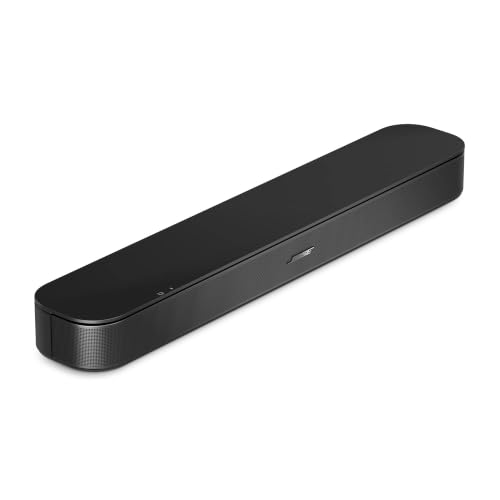
Flat-screen 4K televisions have achieved stunning visual fidelity, yet their razor-thin enclosures frequently sacrifice acoustic performance. The Bose TV Speaker (2nd Gen) steps in as a compact, premium audio upgrade specifically created for homeowners, apartment renters, and bedroom television viewers tired of muffled conversations and weak built-in TV speakers. Measuring just over two inches tall, this streamlined soundbar brings immediate acoustic clarity to movie marathons, sports watch parties, and casual evening streaming without requiring bulky equipment or complex wiring.
At the heart of the unit is a specialized acoustic arrangement featuring a dedicated center tweeter and angled side drivers. This layout focuses on speech intelligibility while casting a wider, more natural stereo spread across living rooms or bedrooms. For viewers who frequently struggle to hear quiet dialogue over booming orchestral scores or action sequences, the proprietary Dialogue Mode raises vocal frequencies cleanly. The addition of Dolby Atmos processing expands the perceived soundstage, creating a more cinematic presence during blockbuster streaming on platforms like Netflix or Disney+.
While compact soundbars often struggle with depth, this unit provides punchy low frequencies that give life to stadium crowds during big games and engine revs in racing titles. The included remote features an instant bass boost button, letting users dial up the low end for intense action movies or gaming sessions without navigating complicated on-screen menus. Gamers playing on modern consoles will appreciate the immediate audio response, crisp directional cues, and absence of audio lag when connected to modern displays.
Bose maintains its reputation for clean aesthetics with a refreshed matte black exterior and subtly rounded corners that complement modern OLED and QLED screens. Thanks to its low-profile silhouette of just 2.24 inches, the soundbar fits effortlessly beneath most TV bezels without obstructing the remote control infrared sensor. The compact footprint makes it an ideal audio companion for secondary displays, master bedrooms, dorm rooms, or compact entertainment centers where space remains at a premium.
Setup takes only a couple of minutes using the included HDMI cable connected to your TV's HDMI-ARC or eARC port, allowing standard television remotes to manage power and volume seamlessly. The soundbar also includes built-in Bluetooth, making it simple to stream podcasts, workout tracks, or party playlists directly from your phone. As a realistic limitation, this compact two-channel bar lacks native Wi-Fi multiroom streaming and cannot completely duplicate the room-filling surround envelopment of discrete rear speakers. Even so, for anyone seeking simple, clutter-free sound enhancement with pristine voice clarity, it delivers exceptional daily entertainment value.
Modern television speakers project sound backward or downward against walls, causing hollow, garbled speech during shows and movies. The Bose TV Speaker (2nd Gen) directs audio forward with a dedicated center tweeter engineered specifically for the human vocal range. This makes whispered lines, fast-paced dialogue, and courtroom drama exchanges remarkably legible at lower volumes without disturbing sleeping family members in adjacent rooms.
The angled left and right transducers widen the listening area, creating an acoustic profile that feels significantly larger than the soundbar's 23-inch frame. With Dolby Atmos support, audio effects feel more dimensional and lifelike. When action intensifies, the remote-activated bass boost introduces resonant warmth to explosions, musical soundtracks, and gaming soundscapes without causing muddy distortion.
Installation is straightforward even for non-technical users. Connecting the included HDMI cable to an HDMI-ARC port enables consumer electronics control (CEC), meaning the soundbar powers on automatically with your TV and responds directly to your standard television or cable remote control. For older televisions without HDMI-ARC, an optical audio input is ready to use with an optional cable.
Beyond television entertainment, onboard Bluetooth pairing turns the soundbar into an everyday living room speaker for tablets and smartphones. For home theater fans wanting deeper theater rumble down the road, a dedicated 3.5mm bass output port allows direct connection to compatible Bose Bass Modules, ensuring easy future expansion for your entertainment system.

Pros
- Crisp, intelligible dialogue tuning makes TV speech easy to understand without constantly cranking the volume
- Wireless subwoofer pairing eliminates clutter while providing noticeable low-end punch for movie nights
- Comprehensive app-based EQ control allows fine-tuning for movies, music playlists, and late-night viewing
- Compact, low-profile soundbar fits neatly between TV pedestal legs or underneath wall-mounted displays
- Upgraded Bluetooth 6.0 provides steady streaming with minimal audio delay
Cons
- Does not include up-firing drivers for physical overhead Dolby Atmos spatial audio
- Peak output is ideal for small to medium rooms rather than cavernous home theater spaces
- Fine-tuning advanced equalization requires using a smartphone app rather than the basic physical remote
Modern flat-screen televisions provide remarkable 4K and OLED picture quality, but their ultra-thin chassis rarely leave room for capable internal speakers. The ULTIMEA 2.1 Channel Sound Bar with Wireless Subwoofer directly addresses this common living room issue by offering a high-value, space-efficient audio upgrade. Engineered to pair seamlessly with LED, QLED, and OLED smart TVs, this compact audio system combines a low-profile main unit with an untethered wireless bass module to bring depth, presence, and vocal intelligibility to everyday viewing.
This audio bundle is particularly well suited for apartment renters, bedroom TV owners, budget-conscious home theater enthusiasts, and gamers who want fuller acoustics without installing complex multi-speaker receivers. Dialogue clarity is often the first casualty of weak TV speakers, leaving viewers constantly adjusting volume levels between loud explosions and quiet conversations. Thanks to dedicated VoiceMX processing, this system monitors vocal frequencies in real time to lift spoken words above dense background scores, making it a great companion for binge-watching drama series, following fast-paced sports commentary, or catching evening news broadcasts.
Acoustic performance is driven by mica-reinforced diaphragms built into the main soundbar. By stiffening the driver cones, the hardware suppresses acoustic distortion and resonance, resulting in cleaner mid-range and high-frequency output during action scenes and acoustic music playback. Meanwhile, the dedicated wireless subwoofer leverages an 18 mm high-excursion driver and a 6.5-liter tuned cabinet. The BassMX optimization keeps low-end rumble tight and controlled down to 45 Hz, delivering satisfying thumps during blockbuster movies and video game sessions without turning muddy.
Integration and day-to-day usability are exceptionally straightforward. Measuring roughly 24 inches wide, the soundbar easily rests beneath 43-inch, 50-inch, 55-inch, or 65-inch televisions without blocking infrared sensors or extending beyond TV stand edges. Because the subwoofer links wirelessly to the bar, you can place it next to your sofa, in an open corner, or beneath an end table without snaking audio cables across the floor. In addition to standard wired television inputs, the inclusion of Bluetooth 6.0 provides fast, stable audio streaming from mobile devices and laptops with minimal sync lag.
While this 2.1 configuration provides substantial volume and dynamic range for typical bedrooms, dorm rooms, and mid-sized living rooms, it does have natural boundaries. It does not feature up-firing height drivers or discrete rear surround modules, so it will not replicate true multi-directional Dolby Atmos surround immersion found in expensive multi-piece speaker packages. Additionally, diving into the deeper 10-band equalizer settings requires using the smartphone app rather than the handheld remote control.
For viewers looking to break free from muffled TV speakers without spending hundreds on bulky audio equipment, this ULTIMEA system hits a sweet balance of size, audio punch, and modern customization. It transforms routine movie nights, streaming marathons, and weekend football watch parties into noticeably more engaging entertainment experiences.
The standout feature of this sound system is its balanced dual-channel soundbar paired with dedicated low-frequency reinforcement. Standard built-in TV speakers typically project sound downward or backward against a wall, creating muffled audio that forces listeners to strain during quiet scenes. The ULTIMEA system projects audio directly into the listening area using mica-reinforced drivers that deliver stable, distortion-free mids and highs even when the volume is pushed during intense action sequences.
Dialogue performance receives a distinct boost from VoiceMX digital signal processing. By targeting and dynamically lifting the 120 Hz to 6 kHz vocal bandwidth, speech remains articulated whether you are listening to rapid banter in a sitcom or whispering dialogue in a suspense thriller. You can enjoy late-night movies without having to constantly ride the volume button to balance whisper-level speaking with explosive sound effects.
On the low-frequency front, the standalone wireless sub with BassMX tuning fills out the bottom end between 45 Hz and 150 Hz. From the rumble of cinematic engines to the beat of streaming music playlists, the bass feels punchy and present rather than hollow, adding physical weight to living room entertainment.
Setting up the ULTIMEA 2.1 sound system takes only minutes, making it an accessible DIY project for any living room or bedroom entertainment center. The compact 24-inch soundbar fits comfortably beneath wall-mounted screens or between standard television support feet, maintaining a clean, minimalist aesthetic that does not dominate the room.
Cable management is simplified by the cord-free subwoofer design. The sub only needs access to a standard electrical outlet, automatically pairing with the soundbar over a reliable wireless frequency. This flexibility allows you to tuck the bass module near your favorite seating position, in an unused room corner, or alongside an entertainment console without having to conceal long audio leads under carpets.
The Ultimea companion application adds a layer of personalization rarely seen at this price tier. Home theater fans can choose from 121 sound presets tailored for cinema, music, and gaming, or manipulate the 10-band custom equalizer to account for specific room acoustics and personal listening preferences.

Pros
- Noticeable boost in speech clarity and vocal definition for news, sports, and movies
- Ultra-compact two-inch profile avoids blocking TV screens or remote IR sensors
- Effortless plug-and-play setup with optical audio cable included in the box
- Convenient dialogue mode button and bass boost toggle on the included remote
Cons
- HDMI cable is not included in the box and must be purchased separately
- Lacks native Dolby Atmos decoding and immersive 3D surround height effects
- Deep bass enthusiasts will need to purchase an external Bose Bass Module
Modern 4K televisions, from ultra-thin OLED panels to vibrant QLED displays, deliver stunning visual fidelity but often struggle with downward or rear-firing speakers that leave dialogue sounding muffled. The Bose TV Speaker addresses this common living room annoyance as a dedicated, all-in-one soundbar engineered specifically for speech clarity and spatial dispersion in a compact package.
This low-profile soundbar fits smoothly into apartments, master bedrooms, home offices, and family living rooms where console space is limited. It is especially beneficial for cord-cutters, seniors, and viewers who find themselves constantly turning on closed captions during fast-paced dramas, as well as sports fans who want commentary to cut clearly through loud stadium noise.
Acoustic performance centers around two angled full-range drivers that cast sound wider than the unit's 23-inch frame suggests. Activating the dedicated dialogue mode analyzes incoming sound to emphasize human speech, sharpening vocal pronunciation against loud background scores or sudden sound effects. A center high-frequency tweeter further clarifies upper register audio so whispers and subtle cues remain distinct.
Practical design is a clear strength of this speaker. Measuring just over two inches tall, it slides under the low stands of popular TVs from Samsung, LG, Sony, and TCL without blocking infrared sensors. The rear interface includes HDMI-ARC, optical audio, and a 3.5mm auxiliary input, complemented by onboard Bluetooth for casual music streaming from your phone or tablet.
Setup takes only a few minutes. Connecting via HDMI-ARC enables CEC functionality, allowing your existing TV remote to regulate volume and power without juggling multiple controllers. While the speaker includes an optical cable for immediate out-of-the-box use, an HDMI connection provides the smoothest day-to-day operation alongside streaming apps on Roku, Fire TV, or Google TV.
Potential buyers should keep in mind that this speaker focuses primarily on dialogue and clean stereo sound rather than immersive Dolby Atmos height channels or heavy sub-bass. Those seeking ground-shaking home theater rumble will want to add a compatible Bose Bass Module. For everyday television viewing, evening news broadcasts, and dialogue-driven shows, it offers an efficient and dependable audio improvement.
Built-in TV speakers frequently project audio downward or against the wall behind your entertainment center, resulting in muddy acoustics. The Bose TV Speaker positions dual angled drivers directly toward the seating area, spreading sound naturally across your couch to create a broader stereo image during movie nights and streaming binges.
The centerpiece feature is the dialogue enhancement button located on the remote control. Turning on this mode boosts frequencies associated with human speech while gently taming harsh background noise, making hushed conversations legible without forcing you to raise the master volume.
For music, sporting events, and video games, the remote also features a bass boost toggle. This adds pleasant warmth and body to orchestral scores and action scenes, providing balanced low frequencies that remain tidy and distortion-free in small to medium-sized living spaces.
Connecting the soundbar to your television is straightforward and requires only a single cable. You can use the included optical audio cable for direct digital audio transmission, or use an optional HDMI cable to take advantage of your TV's HDMI-ARC port.
Using HDMI-ARC simplifies daily entertainment by syncing the soundbar directly with your TV. When you turn on your smart TV, the speaker powers on automatically, and your primary TV remote controls the volume seamlessly. The soundbar also accommodates an auxiliary 3.5mm connection for older audio equipment or gaming monitors.
Wireless Bluetooth pairing turns the soundbar into a convenient home speaker when your TV is turned off. You can easily link a smartphone, tablet, or laptop to play playlists, podcasts, or audiobooks with rich, room-filling sound quality.
Pros
- Extremely compact size fits neatly under small TVs, dorm displays, and computer monitors
- Significantly enhances speech intelligibility compared to muffled built-in TV speakers
- Sub-out connection provides an easy upgrade path for extra bass
- Includes optical cable, aux cord, and wall-mount brackets in the box
Cons
- Requires your TV audio output format to be manually set to PCM stereo to prevent audio distortion
- Standalone bass response is modest without an external powered subwoofer attached
- Not built to provide room-shaking volume in large open-concept living rooms
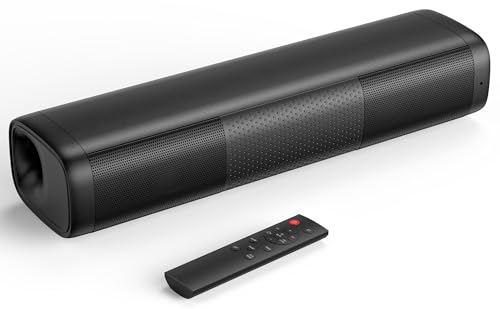
Flat-panel televisions have gotten thinner over the years, but their built-in speakers have often suffered as a result. The Saiyin 11.7-inch Sound Bar provides a practical solution designed to address this problem without cluttering your entertainment center. Functioning as a compact center-channel speaker and standalone soundbar, this unit is engineered to direct sound forward into the room, making dialogue crisp and intelligible. It is an excellent match for apartment renters, college students, bedroom TV setups, desktop gamers, and budget-conscious viewers who need clearer audio without installing a massive multi-speaker system.
In everyday viewing environments, audio clarity is the main priority. The speaker produces up to 48W of peak power, focusing its tuning on balanced trebles and articulate midrange frequencies. This makes a noticeable difference during movie night with the family, fast-paced sports broadcasts, or binge-watching dialogue-heavy drama series where standard TV speakers tend to sound muffled. While the internal drivers deliver solid clarity for everyday listening, the addition of a dedicated subwoofer output port gives bass lovers the option to hook up an external powered sub whenever they want deeper rumble for action films or gaming sessions.
The physical footprint is one of the standout features of this soundbar. Measuring just 11.7 inches long, 3.5 inches deep, and 2.5 inches tall, it slides easily between TV stand legs, rests neatly under computer monitors, or sits on narrow floating shelves. The manufacturer also includes wall-mounting hardware and screws, allowing you to mount it directly beneath a wall-hung display in a guest room or kitchen. Discreet side-facing LED status lights keep your viewing distraction-free during late-night movie viewing, preventing bright indicator lights from shining directly into your eyes.
Connecting this soundbar to your entertainment gear is straightforward thanks to optical digital, 3.5mm auxiliary, and Bluetooth wireless inputs. It pairs quickly with smartphones or tablets for streaming podcasts and music playlists when the TV is off. It also offers compatibility with major streaming remotes, including Fire TV, Fire Stick, and Apple TV remotes, allowing you to manage daily sound without juggling multiple controllers. All essential cables arrive in the box, saving you an extra trip to the electronics store.
To ensure optimal performance, your television audio settings require a quick adjustment during initial setup. Because this unit processes standard two-channel stereo signals, you must configure your TV digital audio output format to PCM or stereo. Leaving a TV set to multichannel Dolby or surround output can cause popping noises or complete silence over the optical connection. Additionally, while the sound output is strong for small to medium rooms, shoppers looking to rattle the walls of a cavernous basement theater will want to look at full-size multi-channel systems.
For everyday viewing in bedrooms, dorms, home offices, and compact living rooms, this mini soundbar hits a sweet spot of convenience and value. It solves the frustrating issue of muffled speech on flat-screen displays while taking up minimal surface space. If you want a quick, affordable audio upgrade that makes streaming shows, watching the news, and casual gaming much more enjoyable, the Saiyin 11.7-inch unit is an easy recommendation.
Getting the soundbar connected takes only a few minutes thanks to the supplied optical and 3.5mm cables. After plugging in the included AC power adapter, attach the optical cable from your smart TV digital audio output port directly into the back of the soundbar. Next, open your television sound settings menu, switch the audio out to Optical or External Speaker, and ensure the digital output format is set strictly to PCM or Stereo.
For wall mounting, the package provides two mounting screws and dry-wall anchors. Position the soundbar centered underneath your wall-mounted television, leaving an inch or two of clearance for easy access to the rear ports. If you plan to stream music from your smartphone or tablet, simply press the input button on the remote until the Bluetooth mode engages, then pair your mobile device in seconds.
This mini soundbar is equipped with three primary input options to handle a variety of home entertainment sources. The digital optical port provides a clean, noise-free connection to modern 4K smart TVs, while the 3.5mm aux input accommodates desktop PCs, older TVs, laptops, or portable gaming monitors. Built-in Bluetooth enables effortless wireless streaming from phones and tablets without running additional cables across your room.
A standout physical feature on the rear panel is the dedicated Sub Out port. Unlike many budget mini soundbars that remain strictly self-contained, this port lets you connect an active powered subwoofer whenever you want to expand your system with ground-shaking low-end bass. Everyday operation is further simplified by broad remote compatibility, functioning seamlessly alongside popular Fire TV, Chromecast, and Apple TV controllers.

Pros
- Dolby Atmos decoding with HDMI eARC support for uncompressed TV audio playback
- Wired wooden subwoofer produces noticeably deeper bass than standalone TV speakers or all-in-one soundbars
- VoiceMX feature keeps TV dialogue clear without constantly riding the volume button
- Fast and simple plug-and-play setup ideal for apartments, bedrooms, and secondary TV setups
- Extensive EQ customization and sound presets available through the smartphone app
Cons
- Lacks physical rear satellite speakers for true behind-the-head surround sound immersion
- Subwoofer requires a physical wire connection back to the main soundbar unit
- Does not include built-in Wi-Fi streaming features like Apple AirPlay or Google Cast
Modern 4K smart TVs deliver stunning visual clarity, but their ultra-thin chassis often leaves little room for robust speakers. The ULTIMEA Poseidon M60 5.1-channel soundbar system addresses this imbalance by providing an affordable, theater-style audio upgrade tailored for American living rooms, apartments, and bedrooms. Designed specifically for movie watchers, gamers, sports fans, and cord-cutters seeking bigger acoustic punch without running cables across the floor, this package pairs a slim soundbar with a dedicated wooden subwoofer.
Sound performance centers on real Dolby Atmos decoding coupled with a 6-driver acoustic architecture pushing up to 300W of peak power. Two side-firing drivers work alongside three front channels to project a wide, enveloping soundstage across your seating area. Lower frequencies get a substantial lift from the wired wooden cabinet subwoofer, which employs an 18 mm high-excursion driver and BassMX technology. This allows basslines in action movies and the roar of stadium crowds during game days to feel punchy and resonant rather than muddy or hollow.
Clear dialogue remains a frequent challenge during evening TV viewing, especially when explosive special effects drown out conversations. The Poseidon M60 counters this with VoiceMX processing, a real-time vocal enhancement tool that isolates spoken frequencies so viewers can follow plot details without constantly adjusting the volume. Connection to your smart TV is streamlined through HDMI eARC, which supplies high-bandwidth audio transmission alongside CEC support, letting you adjust system volume directly using your existing TV remote control.
Measuring just 31.5 inches wide, the soundbar slips easily beneath 43-inch, 50-inch, 55-inch, or 65-inch TVs without blocking lower screen borders or remote sensors. Build quality is sleek and utilitarian, offering both tabletop placement and wall-mounting options. Wireless capabilities are anchored by Bluetooth 5.4, ensuring low-latency syncing when streaming playlists or gaming from a smartphone or tablet. The Ultimea mobile app further broadens usability, giving listeners a 10-band equalizer and dozens of genre-specific presets to match the acoustics of their specific room layout.
While the system delivers remarkable value, potential buyers should recognize its physical design constraints. Because this package relies on virtualized surround channels and side-firing drivers rather than physical rear satellite speakers, sound effects will not physically emanate from behind your couch. Additionally, the wooden subwoofer connects to the main bar via a physical audio cable, which dictates subwoofer placement near the TV console. The unit also omits direct Wi-Fi streaming services like Apple AirPlay or Chromecast.
Based on product specifications and features, the ULTIMEA Poseidon M60 stands out as a highly practical home entertainment upgrade. It suits budget-conscious TV shoppers, families, and apartment dwellers who want impactful bass and crystal-clear dialogue without the clutter, expense, and complex calibration of an AV receiver. For secondary bedroom setups or cozy media dens, this soundbar system easily breathes new life into movie nights and weekend streaming sessions.
The core appeal of the ULTIMEA Poseidon M60 lies in its multi-driver array and dedicated low-frequency enclosure. With five tuned drivers inside the soundbar body and an 18 mm high-excursion driver housed within a 5.3-liter wooden subwoofer, the system achieves a balanced frequency response spanning from 45 Hz up to 18 kHz. This range ensures deep cinematic rumbles while maintaining crisp high frequencies for musical scores and delicate sound effects.
Vocal intelligibility is powered by VoiceMX algorithms, separating center-channel human speech from ambient background tracks. For sports enthusiasts, sideline commentary stays distinct against stadium roar, while movie lovers can follow fast dialogue in quiet scenes without cranking the volume to uncomfortable levels. Multiple sound modes accessible via the app allow rapid tailoring between cinema, music, gaming, and sports sound profiles.
Connectivity on the Poseidon M60 is built around HDMI eARC, which supports transmission bandwidths up to 37 Mbps. This connection accommodates uncompressed Dolby Atmos metadata directly from smart TV streaming apps like Netflix, Disney+, and Prime Video, as well as connected Blu-ray players and gaming consoles. HDMI CEC support allows basic power and volume commands to synchronize seamlessly with your TV remote.
Beyond physical television connections, the unit integrates Bluetooth 5.4 for wireless music streaming from phones, laptops, and tablets. This updated Bluetooth standard offers improved signal stability and lower audio latency compared to older generations. Users can also manage granular audio adjustments through the Ultimea smartphone application, which delivers 121 sound presets and a 10-band graphic equalizer for room-specific fine tuning.
What a TV Soundbar Does and How to Choose a Setup
A TV soundbar is an external audio speaker, usually a long, low enclosure intended to sit below or near a television. It receives sound from the TV or another source and plays it through its own drivers, rather than relying only on the television’s built-in speakers. Some soundbars are self-contained; others pair the bar with a subwoofer, and some are designed to create a wider or surround-style presentation.
The term does not specify a particular channel count, connection, or sound format. Those details vary by model, so the product label alone cannot tell you whether a bar has a separate bass speaker, supports a particular audio format, or includes HDMI eARC. For the options listed here, check the supplied features and the television’s audio-output specifications before deciding that a particular connection or format is available.
Why add a separate speaker to a television?
A soundbar can be useful when TV dialogue is difficult to follow or when the built-in speakers don’t provide the kind of bass or fullness you want. The bar’s drivers are positioned in a separate enclosure, which can give the sound a different presentation from small speakers built into a thin television. The result depends on the soundbar design, its placement, the room, the TV signal, and personal listening preferences.
Dialogue-focused processing is one feature to look for if speech is your main concern. The supplied Bose descriptions list Dialogue Mode, while the ULTIMEA options list VoiceMX technology as a dialogue enhancement feature. Those descriptions indicate the intended use, not a guarantee that every voice will sound clear in every room or at every volume.
More bass may be another reason to add a soundbar, particularly for films, games, or music. A system with a subwoofer has a separate component intended to handle low-frequency sound, but placement and room acoustics affect how bass is heard. If a simpler footprint matters more, an all-in-one bar avoids placing an additional subwoofer, though the specific product’s features and intended performance still need to be considered.
All-in-one bars, stereo designs, and subwoofer systems
An all-in-one soundbar places its drivers and electronics in one enclosure. The Bose TV Speaker models in the supplied data are compact bars with angled drivers and dialogue-related features; the newer listing also names a center tweeter. Neither listing describes a separate included subwoofer. That makes them worth considering for a straightforward setup where dialogue and fewer components take priority over a separate bass unit.
The Saiyin 11.7-inch Sound Bar is a particularly compact option according to its product information. It lists Bluetooth, optical, and 3.5 mm AUX connections, plus a subwoofer output for a powered subwoofer. Its listed connection guidance also says the audio source should be set to PCM, stereo, or non-surround output to avoid cracking noise or no sound, which is an important compatibility detail to review before purchase.
The ULTIMEA Sound Bar with Wireless Subwoofer pairs its bar with a wireless subwoofer, while the supplied features for the ULTIMEA 5.1CH Surround Sound Bar System with Dolby describe a wired wooden subwoofer. Wireless between the bar and subwoofer can reduce the need for an audio cable between those two components, but the subwoofer still needs power and a suitable location. A wired subwoofer adds a physical connection to consider when arranging the system.
Channel labels also need careful reading. A 2.1-channel system generally identifies a bar and subwoofer arrangement, while the ULTIMEA system is listed as 5.1-channel and describes five built-in speakers with side-firing drivers. That description does not mean every system creates the same listening effect or that a room needs no setup considerations. Check what speakers are included and whether the design uses separate rear units before assuming it provides discrete rear-channel placement.
Choosing HDMI ARC, optical, AUX, or Bluetooth
HDMI ARC is a common way to route TV audio to a soundbar through a compatible television port. The Bose TV Speaker listings describe HDMI-ARC connectivity, and one says an HDMI cable is sold separately; the second-generation listing says an HDMI cable is included. Confirm which HDMI port on the television supports ARC, and check the soundbar and TV instructions for setup and audio-output settings.
The ULTIMEA 5.1CH system lists HDMI eARC and says its eARC connection supports Dolby Atmos 5.1-channel audio. That is a feature of this listed system, not a specification that should be assumed for every soundbar or TV. Both devices and the selected content need to support the intended audio path, so verify the television’s port and format support before relying on eARC for a particular setup.
Optical audio is another wired option. The Bose TV Speaker listing says an optical cable is included, while the second-generation listing says an optical cable is sold separately. The Saiyin product information lists an optical connection and includes an optical cable. Optical can be a practical choice when HDMI ARC isn’t available, but check the TV’s audio output options and the soundbar’s supported formats because connection types can differ in what they carry.
AUX, or 3.5 mm audio, can help connect devices with a compatible analog output. The Saiyin bar lists AUX, and the Bose TV Speaker listing includes an AUX input among its connections. Bluetooth is useful for streaming audio from a phone or other paired device, but it is not the same as a wired TV connection and may not be the best choice when you need synchronized television sound.
Before connecting anything, look at the actual ports on both devices and identify which output is intended for TV audio. Connect one supported route, select the corresponding soundbar input, and set the TV audio output accordingly. If the TV has HDMI ARC or eARC and the bar supports the matching connection, that can also allow TV and soundbar control features, but the exact behavior depends on the devices and their settings.
For additional context on television capabilities that can affect a home entertainment system, our guide to 4K UHD television features explains display terminology. Picture resolution and soundbar audio are separate parts of a system, so a 4K TV does not by itself establish which audio formats or return-channel connections its ports support.
Dialogue controls, sound modes, and app adjustments
Dialogue enhancement attempts to make speech easier to distinguish from music and effects. Bose lists Dialogue Mode on its TV Speaker models, and ULTIMEA lists VoiceMX on the two supplied systems. Use these features as optional listening modes: they may suit dialogue-heavy programs, but the preferred setting can vary with the source, room, and listener.
Some bars offer more adjustment than a remote with a few preset controls. The wireless-subwoofer ULTIMEA listing describes app control with a 10-band equalizer and preset EQ matrices, while the 5.1CH ULTIMEA listing also names app-based equalizer and surround-level adjustments. Those tools may help tailor sound, but they don’t replace confirming correct TV output, input selection, and format compatibility first.
Start with modest changes rather than turning every enhancement on at once. Try the dialogue mode for speech-heavy programming, then compare it with the standard setting using familiar content at a comfortable volume. If voices sound unnatural or effects become distracting, return to the prior mode and change one setting at a time.
Placement, room fit, and daily use
A soundbar needs a position where its speakers aren’t blocked and where it doesn’t interfere with the television’s remote sensor or screen. Compact models can be useful on a narrow shelf or in a smaller room, but check the listed dimensions against the available space rather than judging by a product photo. If a TV stand has little clearance, verify the bar’s height and placement recommendations in its documentation.
A separate subwoofer changes the layout. A wireless audio connection gives more flexibility in where the subwoofer can be placed, but power access remains necessary and walls or furniture can affect the sound. A wired subwoofer needs a route for its cable, so consider the room before selecting a package based only on channel count or advertised output.
Soundbar placement and television mounting should not compromise stability, ventilation, or safe access to power. Follow the instructions for each device, use appropriate support for the TV and furniture, and get suitable assistance when handling heavy equipment. For wall-mounted setups, follow the manufacturer’s guidance and confirm the wall support is appropriate for the load.
Matching the product to the problem you want to solve
If the main issue is understanding speech and keeping the setup simple, an all-in-one bar with a dialogue mode may be a reasonable starting point. The Bose listings emphasize compact design and dialogue functions, while the Saiyin bar emphasizes a small footprint and several connection choices. Compare the exact included cables and the TV’s available outputs, because the two Bose listings do not list identical cable inclusions.
If you want a separate bass component, compare whether its connection to the bar is wireless or wired and whether it is included in the package. The ULTIMEA wireless-subwoofer system and the 5.1CH system offer different connection arrangements based on the supplied descriptions. The Saiyin bar’s subwoofer output is an upgrade path for a powered subwoofer, rather than evidence that one is included.
If surround-style audio is a priority, examine the channel arrangement, speaker placement, and supported TV connection rather than treating a channel number as a guarantee of a specific room effect. The ULTIMEA 5.1CH listing names Dolby Atmos and eARC, but buyers should confirm the TV supports the relevant audio return connection and that their source content carries an appropriate format. A simpler bar may be more suitable when space, setup effort, or clear dialogue matters more than surround-oriented features.
What to check when TV sound does not play
Start by checking that the soundbar has power, the correct input is selected, and the TV is sending audio through the connection you chose. Inspect both ends of the cable and confirm that the cable is connected to the TV’s designated audio output or ARC/eARC port where applicable. Then review the TV’s sound-output menu and select the connected audio device or output type described by the manufacturers.
If you use optical with the Saiyin bar and hear crackling or no sound, its supplied guidance specifically calls for PCM, stereo, or non-surround output from the audio source. Apply that guidance only to the relevant setup and consult the product documentation for other models. A format mismatch can look like a failed speaker even when the issue is actually the signal being sent.
For HDMI ARC or eARC, verify that the TV and soundbar are connected through their matching ports and that the TV’s audio-return setting is enabled if the instructions require it. If a particular format doesn’t work, try a supported output option and check whether the source, TV, and soundbar all handle it. Changing one item at a time makes it easier to identify where the connection fails.
Bluetooth pairing problems are separate from HDMI or optical setup. Confirm that the soundbar is in pairing mode, that the source device is selecting it as the output, and that the desired content is playing on that device. If TV audio synchronization is a concern, use a compatible wired connection where possible and follow the TV and soundbar instructions for any available synchronization settings.
A practical way to make the final choice
Begin with the problem you want to fix: difficult dialogue, weak bass, limited connection options, or a desire for a wider sound presentation. Next, match the soundbar’s inputs to ports the television actually has, then decide whether a separate subwoofer fits the room and your tolerance for extra cables or equipment. This order helps prevent choosing a feature-rich system that cannot connect as expected.
Compare product descriptions carefully, particularly cable inclusions, subwoofer wiring, app controls, and dialogue features. Specifications describe capabilities, but they don’t guarantee a particular listening result in every room. A compact bar can be a sensible choice for limited space, while a larger system with a subwoofer may suit a listener who values more low-frequency output and accepts additional components.
Ultimately, a TV soundbar is a separate audio system that can expand the connection and speaker options available beyond a television’s built-in audio. The best match is the one that addresses your main listening need, connects through a supported TV output, and fits the space without making daily use cumbersome. Confirm the signal path and settings before judging the sound, and use the manufacturer’s instructions whenever a feature or connection behaves unexpectedly.


Write Your Review
No reviews yet. Be the first to share your experience!