
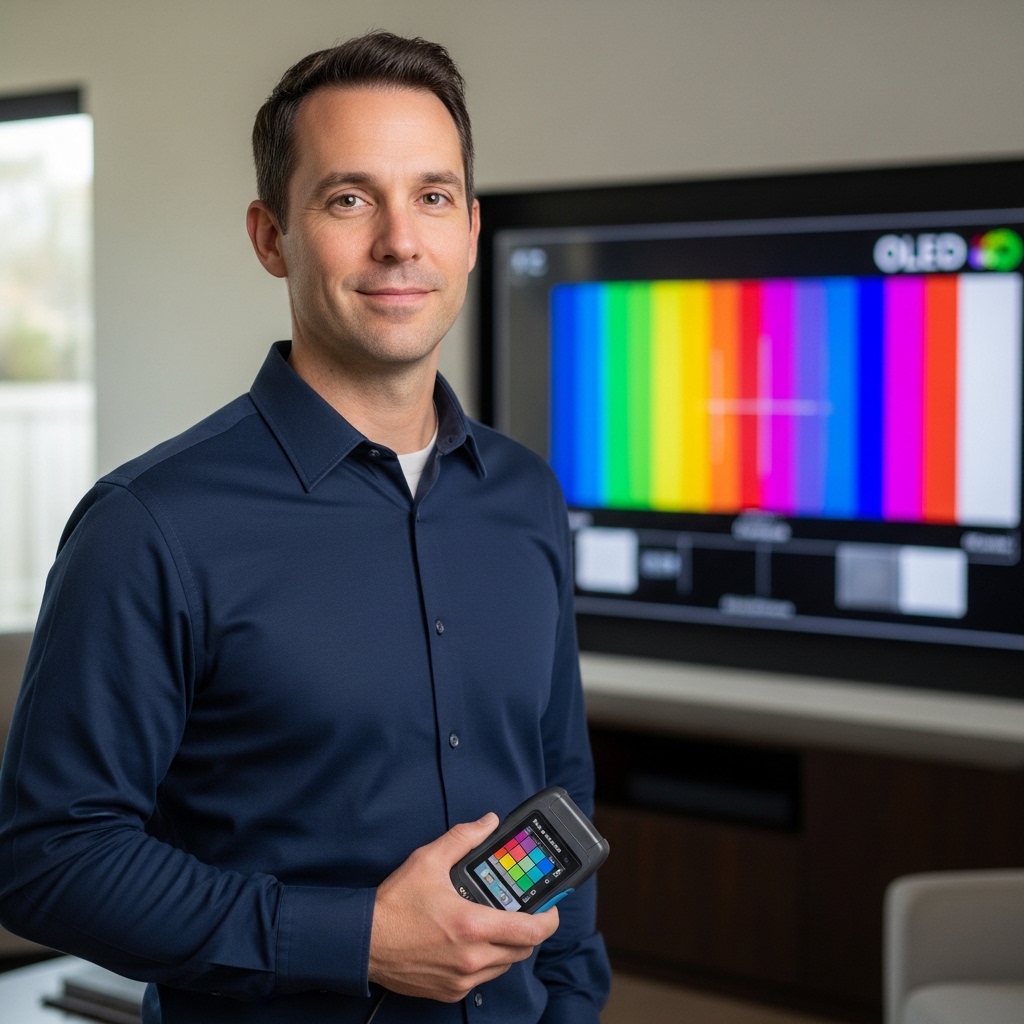

High-resolution home theater displays have reached a fascinating crossroads as consumers frequently ask is 8k tv available in modern retail showrooms. Display manufacturers like Samsung and Sony actively produce ultra-premium televisions boasting 7680×4320 resolution, packing over 33 million pixels onto expansive glass panels. These flagship screens rely on advanced multi-neural processing engines to convert sub-4K cable feeds and standard high-definition broadcasts into remarkably crisp images. Viewers seeking top-tier performance will find that contemporary flagship lines pair Mini-LED backlights with robust local dimming to deliver intense specular highlights and deep shadow detail across larger screen formats.
Native ultra-high-definition media remains scarce across commercial streaming services, which makes onboard artificial intelligence upscaling the central technical pillar of any current setup. Modern panels also incorporate high-bandwidth HDMI 2.1 connectivity, variable refresh rates, and automated gaming dashboards to handle next-generation gaming consoles and enthusiast graphics cards. While specialized home theater enthusiasts might also evaluate Mini-LED sports television options to balance motion handling against room lighting, full-tier ultra-high-resolution displays represent the absolute ceiling of consumer visual clarity. Understanding panel specifications, viewing distances, and signal requirements will help you determine whether stepping into this premium category makes sense for your living space.

Pros
- Extraordinary peak brightness and contrast control powered by thousands of precision Mini LEDs.
- Intelligent 8K upscaling ensures regular 4K movies and cable sports look remarkably crisp.
- Tailor-made for PS5 owners with Auto HDR Tone Mapping and rapid response times.
- Bundled BRAVIA CAM adds handy automated environmental tuning and video calling.
- Intuitive Google TV interface with extensive app availability and hands-free voice search.
Cons
- Native 8K content remains sparse across major consumer streaming platforms.
- Substantial panel weight and depth require sturdy furniture or heavy-duty wall mounting.
- Power consumption is higher than standard 4K LED and OLED alternatives.
The Sony Z9K Series 75-inch 8K Mini LED TV represents the flagship tier of living room and home cinema displays. Designed for dedicated home theater enthusiasts, tech enthusiasts, and serious console gamers, this high-end display brings together native 8K clarity and Mini LED illumination. Whether you are assembling a showcase media room in your house or upgrading a spacious suburban basement for big family movie nights, this flagship BRAVIA XR display provides the processing muscle and screen real estate to transform everyday entertainment into a full-scale cinematic event.
At the core of the viewing experience is Sony's Cognitive Processor XR working alongside the XR Backlight Master Drive. Based on product specifications, thousands of dense Mini LEDs are divided into tightly regulated local dimming zones, producing high peak brightness alongside deep blacks that rival OLED without the risk of permanent burn-in. Because true native 8K footage is still rare, the onboard XR 8K Upscaling is crucial. It intelligently reconstructs lost textures and details from 4K Blu-rays, live broadcast sports, and streaming media. Support for Dolby Vision, IMAX Enhanced, and Netflix Adaptive Calibrated Mode ensures that high dynamic range content retains accurate shadows and natural color saturation via XR Triluminos Pro.
Gamers, particularly those with a PlayStation 5 or Xbox Series X, will appreciate the integrated gaming performance. Equipped with HDMI 2.1 bandwidth, the display supports high-frame-rate 4K gaming at 120Hz, Variable Refresh Rate (VRR), and Auto Low Latency Mode (ALLM) with responsive input lag as low as 8.5ms. Sony includes exclusive PlayStation 5 optimizations such as Auto HDR Tone Mapping and Auto Genre Picture Switch, ensuring your console instantly dials in the ideal HDR parameters during high-speed action or quiet RPG exploration. A dedicated on-screen Game Menu lets you tweak crosshairs, motion blur reduction, and black equalizer levels on the fly without navigating deep settings.
Daily operation is powered by the Google TV ecosystem, granting quick access to services like Prime Video, Disney+, Apple TV, and YouTube. Built-in Google Assistant facilitates swift voice searching, while Apple AirPlay 2 makes sharing phone photos and video streams effortless. Sony also packs in the BRAVIA CAM, a magnetic top-mounted camera that enables gesture controls and video meetings. More importantly, Ambient Optimization Pro utilizes the camera sensor to identify where you sit in the room, automatically adjusting color temperature, brightness, and acoustic sound staging for dialogue clarity.
While the display sets a benchmark for illumination and visual punch, prospective buyers should consider a few practical elements. At 75 inches with an 8K Mini LED backlight array, the television is noticeably heavy and draws more power than conventional 4K displays. Wall installation demands a heavy-duty VESA mount anchored into wall studs, while tabletop use requires a deep, sturdy media console. For shoppers who demand ultimate brightness for sunlit living rooms, top-tier console gaming performance, and future-proof resolution for years of movie watching, the Sony Z9K stands out as a premier flagship investment.
For gaming setups, the Sony Z9K delivers a responsive experience engineered specifically to match current-generation consoles. With HDMI 2.1 inputs supporting 4K at 120Hz, Variable Refresh Rate (VRR), and Auto Low Latency Mode (ALLM), fast-paced first-person shooters and driving simulators run with fluid frame rates and minimal screen tearing. PlayStation 5 players gain unique advantages through Auto HDR Tone Mapping, which automatically selects the ideal HDR setup during initial console configuration.
The dedicated Game Menu interface provides swift access to tactical gaming tools. Players can quickly adjust VRR status, toggle motion blur reduction, or activate a black equalizer to spot competitors lurking in dark corners. Combined with low input lag, this television easily doubles as a high-performance tournament display for the ultimate basement gaming lounge.
Google TV serves as the central hub on the Z9K, aggregating personalized recommendations from all major streaming platforms such as Netflix, Max, Disney+, and Amazon Prime Video. Built-in hands-free Google Assistant allows users to search for actors, switch inputs, or dim connected smart lights without touching the remote, while Apple AirPlay 2 and Chromecast offer seamless mobile mirroring.
The included BRAVIA CAM introduces clever smart room integration. Ambient Optimization Pro recognizes viewer distance and room lighting, tuning the picture balance and acoustic positioning so that dialogue remains clear no matter where family members sit on the couch. It also supports simple gesture controls and large-screen video calls, making it a versatile tool for both entertainment and remote family gatherings.

Pros
- Enables smart TV owners to stream live local news, network sitcoms, and broadcast sports without cable subscriptions
- Generous 25-foot coaxial cable allows strategic placement near windows or higher wall surfaces for stronger signal reception
- Dual-mode booster switch provides separate gain settings for nearby broadcast towers and distant transmitters
- Compact, modern decorative design sits inconspicuously on media furniture or mounts cleanly to a wall
Cons
- Advertised multi-thousand-mile coverage claims do not reflect real-world broadcast horizon physics and line-of-sight limits
- Requires a television equipped with an internal digital ATSC tuner or an external digital converter box to display channels
- Channel reception stability remains dependent on local geography, building materials, and physical distance from broadcast towers
The TVLNKTVV Digital TV Antenna is an amplified over-the-air reception accessory engineered to pair with smart TVs, digital converter boxes, and secondary television displays. Aimed at cord-cutters, live sports enthusiasts, and budget-conscious households, this antenna enables televisions to access free broadcast networks including ABC, CBS, NBC, Fox, and PBS. Rather than paying recurring monthly fees for basic cable packages or live-TV streaming tiers, this indoor and outdoor antenna serves as a direct hardware feed for major network programming, local news, and syndicated content across living room, bedroom, and mobile RV entertainment setups.
Signal reception centers around a 360-degree omni-directional receiver equipped with an inline signal booster and dual-mode range switch. The hardware includes a toggled amplifier that lets users switch between a short-range mode for residences situated within 35 miles of broadcast towers (indicated by a yellow status light) and a long-distance mode for locations further out (indicated by a green status light). While marketing claims reference thousands of miles of coverage, physical broadcast horizon physics dictate that realistic terrestrial over-the-air signals are governed by line-of-sight, terrain, and atmospheric conditions. The dual-mode amplifier is designed to help boost weak signals without overloading your television's digital tuner when closer to transmission towers.
Hardware connectivity is straightforward, utilizing a standard coaxial RF connector that threads directly into the digital antenna input of any television with a built-in ATSC broadcast tuner. A notable practical benefit is the generous 25-foot coaxial cable, which allows substantial positioning freedom. Rather than being confined to the immediate vicinity of your television stand or wall mount, you can run the cable to a high-elevation wall, window sill, or higher bookshelf where physical obstruction from surrounding walls, trees, or residential framing is minimized.
When paired with modern 4K UHD, QLED, or LED smart displays, over-the-air digital broadcast signals frequently provide superior video fidelity compared to highly compressed internet streaming feeds. Live network football games, basketball broadcasts, and local newscasts are delivered with zero streaming latency, buffering, or compression artifacts, giving your television's internal picture processor clean 1080i or 720p source material to upscale. The decorative, lightweight black casing also allows the antenna to rest discreetly on media consoles or mount unobtrusively without clashing with living room aesthetics.
Prospective buyers must recognize the physical realities of over-the-air television reception. Dense concrete construction, radiant barrier roof insulation, dense foliage, and surrounding hills can attenuate broadcast frequencies and limit channel yield. Additionally, whenever you adjust the placement or flip the amplifier range switch, you must run a new channel auto-scan through your television's tuner settings menu. The antenna also solely captures free broadcast networks, meaning cable-exclusive sports and entertainment channels still require dedicated streaming subscriptions.
Based on listed hardware features and practical cord-cutting utility, the TVLNKTVV antenna provides an accessible way to unlock broadcast high-definition television on smart displays. For viewers seeking local channels, news, and network sports to complement on-demand streaming apps on Roku, Google TV, or Fire TV platforms, this long-cord amplified antenna represents a cost-effective television accessory.
Installing this digital antenna with your television takes just a few steps. Connect the 25-foot coaxial cable to the RF antenna or cable-in port located on the back or side of your TV, ensure the amplifier receives power, and select the appropriate range mode. Access your smart TV settings menu, switch the input source to TV or Antenna, and run an automated channel scan to detect all available broadcast signals in your geographic area.
Most modern televisions manufactured for the U.S. market feature an integrated ATSC digital tuner capable of decoding broadcast signals out of the box. If you are using an older analog television or a specialized PC display without an RF tuner, you will need an external digital converter box to process over-the-air channels before routing video via HDMI or composite cables.
Achieving stable high-definition reception depends on antenna orientation and home surroundings. Placing the antenna flat against a window facing toward your local broadcast transmission towers generally yields the strongest signal with minimal digital pixelation. The generous 25-foot cable gives you the leeway to test multiple elevated positions around your living room or bedroom.
For homes situated within 35 miles of transmitters, using the Short Range setting prevents signal overload, while homes in fringe or suburban regions benefit from the amplified Long Distance mode. If you notice dropped channels or signal stuttering during windy or stormy conditions, rescanning during clear weather can help maintain your channel lineup.


Pros
- Remarkable 8K AI upscaling breathes new life into standard 4K and HD streaming content
- Exceptional peak brightness and deep contrast control via Quantum Matrix Pro Mini-LEDs
- Blazing-fast Motion Xcelerator 240Hz refresh rate ideal for high-end PC and console gaming
- Near-borderless Infinity Air design provides a clean, distraction-free aesthetic
- Built-in multi-channel Dolby Atmos sound with Object Tracking Sound Pro
Cons
- Native 8K streaming content remains relatively limited across major streaming platforms
- Premium investment compared to standard 4K OLED or Mini-LED alternatives
- Lacks Dolby Vision HDR support, relying instead on HDR10+ and Neo Quantum HDR 8K Pro
The Samsung 65-Inch QN900D Neo QLED 8K Smart TV represents the peak of Samsung's Mini-LED television lineup for 2024. Designed primarily for tech enthusiasts, movie lovers, sports fans, and gamers who demand top-tier visual performance, this television serves as an impressive centerpiece for living rooms and dedicated basement home theaters. While everyday cord-cutters and casual streamers will appreciate its easy access to streaming apps, this flagship screen is engineered for viewers who want the finest detail and brightness available in modern home entertainment.
At the heart of the display is the NQ8 AI Gen3 processor, which utilizes 512 AI neural networks to upscale standard HD and 4K content to 8K resolution with remarkable clarity. The Quantum Matrix Pro backlighting system packs thousands of Mini-LEDs into precise local dimming zones, producing exceptionally deep black levels alongside sparkling peak highlights. With Neo Quantum HDR 8K Pro and Auto HDR Remastering, high dynamic range content reveals subtle gradations in dark movie scenes and vibrant color volume in sunny outdoor sequences, giving family movie nights and holiday film viewings a rich, theater-like dimension.
Action clarity stands out whether you are hosting Sunday football watch parties or competing in fast-paced video game matches. The AI Motion Enhancer Pro helps keep fast-moving objects, soccer balls, and scrolling tickers sharp without distracting stutter or judder. Gamers gain a true competitive advantage with Samsung's Motion Xcelerator 240Hz technology, which offers ultra-low input lag, variable refresh rate (VRR) capabilities, and full HDMI 2.1 bandwidth across multiple ports to maximize the performance of modern consoles and high-end gaming PCs.
Build quality is evident in Samsung's Infinity Air design, featuring ultra-thin bezels and an almost-invisible profile that maximizes your view. The TV includes built-in Dolby Atmos and Object Tracking Sound Pro, which uses strategically placed speakers to make audio follow on-screen action for surprisingly full sound right out of the box. Samsung's Tizen operating system provides a responsive interface for Netflix, Disney+, Prime Video, and YouTube, alongside integrated Alexa voice assistance for convenient hands-free commands.
Mounting this 66-pound television requires a sturdy VESA-compatible mount or a robust media console that comfortably accommodates its desktop stand. Cable management remains clean, and the initial setup process walks you smoothly through network pairing and input configuration. Potential buyers should consider that native 8K video content remains scarce, and Samsung continues to support HDR10+ rather than Dolby Vision. However, for buyers wanting outstanding upscaling, phenomenal brightness in sunlit living rooms, and unmatched motion smoothness, the QN900D stands as a top-tier investment for long-term home entertainment.
The QN900D relies on Quantum Matrix Pro technology, featuring one and a half times more lighting zones than standard Quantum Matrix sets to ensure tight light control and minimal blooming around bright highlights. This fine-tuned Mini-LED backlight works in tandem with the NQ8 AI Gen3 processor, which actively analyzes each incoming scene to optimize depth, shading, and texture.
Even though true 8K media is uncommon, the 512 neural networks in the AI upscaler effectively enhance live cable broadcasts, YouTube clips, and 4K Blu-ray discs. The screen offers outstanding anti-reflective qualities and immense brightness, making it easy to enjoy crisp, colorful picture quality in sun-drenched living rooms without annoying mirror reflections.
For competitive gamers and PC enthusiasts, the QN900D is equipped with Motion Xcelerator 240Hz support, allowing compatible gaming rigs to push high frame rates with virtually no screen tearing or input lag. With support for FreeSync Premium Pro, Auto Low Latency Mode (ALLM), and Variable Refresh Rate (VRR), gameplay remains responsive and visually fluid.
Samsung's integrated Game Bar lets players quickly check frame rates, adjust aspect ratios, and tweak sound profiles on the fly without interrupting the action. Multiple full-bandwidth HDMI 2.1 ports ensure both modern consoles and gaming PCs can take full advantage of high-refresh-rate gaming simultaneously.

Pros
- Delivers uncompressed high-definition local broadcast picture quality without recurring monthly fees
- Supports modern NEXTGEN TV ATSC 3.0 broadcasts alongside standard digital signals
- Compact footprint with magnetic mounting base is ideal for small living spaces, dorms, and tailgating
- Simple coaxial plug-and-play installation with zero power outlet requirements
Cons
- Rated 20-mile range is best suited for urban or suburban locations close to broadcast towers
- Passive non-amplified design may struggle through thick exterior walls or hilly terrain
- Requires nearby metal surfaces to utilize the magnetic mounting base effectively
The GE Portable HD TV Antenna is an ultra-compact indoor digital monopole antenna designed to pull in free over-the-air broadcast channels without recurring subscriptions. Tailored for cord-cutters, apartment renters, budget-conscious homeowners, and tailgaters, this discreet receiver works alongside modern flat-screen displays to capture local network broadcasts. Whether you want to catch live local football games on Sunday afternoons, follow morning news, or enjoy primetime shows on major networks like CBS, NBC, ABC, FOX, and PBS, this accessory provides a direct link to high-definition broadcast signals.
Based on product specifications, this antenna captures both VHF and UHF frequencies across a 360-degree omnidirectional field up to 20 miles from local transmission towers. Because over-the-air television transmits uncompressed digital video, viewers frequently experience cleaner picture quality, sharper clarity, and richer contrast compared to heavily compressed cable or budget streaming feeds. It is also engineered to support NEXTGEN TV (ATSC 3.0) standards where available, unlocking potential benefits like enhanced color accuracy, higher refresh rates, richer dialogue audio, and pristine 1080p or 4K Ultra HD broadcasts.
Standing at under seven inches tall, this compact monopole antenna maintains a remarkably minimal visual footprint next to modern slim-bezel televisions. The integrated strong magnetic base allows it to grip securely onto metal window frames, TV wall-mount brackets, or metal entertainment center shelves. Its portable form factor also makes it an appealing choice for RV travelers, campers, or outdoor tailgaters setting up a display for game day. The durable coaxial cable connects directly to the RF tuner input on displays from brands such as Samsung, LG, Sony, TCL, Vizio, and Hisense.
Installation is straightforward, requiring only a quick connection to your television's coaxial port followed by an automatic channel scan via the TV setup menu. Because this is a passive, non-amplified antenna rated for up to 20 miles, reception depends heavily on your geographic distance from local broadcast towers and obstacles like dense trees or metal building frames. Viewers residing in remote rural areas beyond 20 miles from broadcast towers may need a larger amplified indoor or attic-mounted unit instead.
For suburban and urban households seeking an unobtrusive and cost-effective method to cut the cord, this GE portable antenna delivers dependable utility. It functions seamlessly as a complementary source for live sports, local weather, and network television alongside streaming platforms like Netflix, Prime Video, or Disney+. The combination of ATSC 3.0 future-readiness, simple placement, and helpful U.S.-based customer support makes it a smart addition to any living room, bedroom TV, or dorm setup.
Setting up this antenna requires no extra power cords, adapters, or complex wall mounting. Simply thread the coaxial cable into your television tuner input, select the antenna input on your TV, and initiate a standard channel scan from your system settings menu.
For best results, placing the magnetic base near a window or elevated metallic surface helps maximize signal acquisition across both UHF and VHF spectrums. If certain channels experience signal dropouts, repositioning the antenna a few inches and running a fresh scan often stabilizes your local lineup.
As broadcast networks expand ATSC 3.0 NEXTGEN TV technology across the United States, compatible televisions can take advantage of significant audio and visual upgrades. This GE antenna is built to receive these signals, supporting enhanced multi-channel audio, vivid high dynamic range color, and video resolutions up to 4K.
While local broadcast availability varies by media market, having an antenna ready for the ATSC 3.0 standard ensures your home entertainment setup remains prepared for new over-the-air features without needing hardware upgrades later.
The Current State of 8K Televisions: Hardware Availability, Panel Physics, and Practical Setup
Consumers asking whether 8K television hardware is actively available can rest assured that flagship models currently occupy top-tier retail spaces. Premium hardware manufacturers produce expansive panels engineered to demonstrate the extreme limits of consumer display technology. Determining whether this hardware fits your personal viewing habits requires looking past retail specifications and investigating signal processing, visual physiology, and interface bandwidth.
Commercial Availability and the Flagship Retail Landscape
Televisions equipped with native 7680×4320 resolution are undeniably available on the open market from leading brands such as Samsung and Sony. These panels sit atop premium manufacturer catalogs, serving as showcase displays that incorporate cutting-edge backlighting arrays and proprietary image processing silicon. Samsung produces ultra-premium lines like the Neo QLED QN900D and QN990F series, while Sony provides flagship units like the Z9K series.
These televisions are marketed primarily in ultra-large formats, typically starting at 65 inches and extending past 85 inches in diagonal measurement. Manufacturers focus on expansive screen dimensions because smaller display sizes cannot exhibit the spatial benefits of thirty-three million subpixels at standard living room seating distances. Retail availability remains steady through authorized consumer electronics dealers and specialized home theater custom integrators. Luxury consumers and technological early adopters can readily order these flagship units today.
Pixel Density and Visual Acuity: Resolving 33 Million Pixels
A standard 4K Ultra HD panel displays roughly 8.3 million pixels, whereas an 8K display quadruples that density to approximately 33.2 million pixels. This monumental increase in spatial resolution creates an exceptionally tight pixel grid where individual subpixels become completely imperceptible to the naked eye. Even when standing close to an 85-inch screen, viewers cannot discern the screen-door mesh that occasionally appears on lower-resolution panels. This ultra-dense structure produces images with photographic smoothness and cleanly defined geometric edges.
Human visual acuity dictates whether this microscopic pixel grid provides a noticeable benefit from normal couch viewing distances. Optical science demonstrates that a viewer with normal 20/20 vision can resolve details down to roughly one arcminute of visual angle. When seated eight to ten feet away from a 65-inch screen, distinguishing native 8K from pristine 4K becomes nearly impossible for the human eye. For viewers evaluating budget 75-inch displays or massive 85-inch flagships, closer seating is essential to appreciate the additional spatial information.
Seating distance calculations reveal that viewers must sit roughly three to five feet from an 85-inch display to resolve the theoretical resolution ceiling. While few people position their furniture that close in a standard living room, closer viewing angles create an immersive field of view that mimics commercial cinema seating. Enthusiasts who build dedicated front-row media rooms can take full advantage of this pixel density without suffering from visible pixel structure.
The Upscaling Engine: Reconstructing Sub-8K Content with Multi-Neural Networks
Native 8K consumer video content remains virtually nonexistent across mainstream commercial streaming services and physical disc media. Major subscription services stream master files in 4K at best, while cable providers continue to distribute content in 720p or 1080i high definition. Because an 8K panel must illuminate every single one of its 33 million pixels regardless of the input feed, the onboard upscaling engine performs the heavy computational lifting.
Leading television manufacturers counteract the scarcity of native media by engineering deep-learning artificial intelligence processors. Samsung integrates its NQ8 AI Gen3 processor into flagship displays, utilizing hundreds of neural networks to analyze incoming video frames in real time. These networks evaluate texture databases, noise patterns, and edge definitions to interpolate missing visual information intelligently. By comparing compressed streaming artifacts against reference models, the processor sharpens typography and suppresses macroblocking noise.
Sony takes a complementary approach with its Cognitive Processor XR, which is designed to emulate how the human brain processes visual focal points. The processing silicon cross-analyzes color, contrast, and clarity vectors to enhance areas where viewer attention naturally gravitates. When processing high-bitrate 4K physical media, these advanced upscaling pipelines deliver breathtaking clarity that edges remarkably close to native high-resolution masters.
Panel Technology Breakdown: Mini-LED Contrast and Backlight Management
Liquid crystal displays require an independent backlighting source to push light through the color filter and subpixel matrix. Flagship 8K televisions predominantly utilize Mini-LED backlighting technology rather than conventional edge-lit or coarse direct-lit configurations. Mini-LED modules are significantly smaller than traditional light-emitting diodes, allowing engineers to pack thousands of microscopic light sources directly behind the LCD glass to create a foundation for vibrant contrast.
Controlling thousands of miniature diodes requires sophisticated full-array local dimming algorithms that dynamically adjust backlight clusters based on on-screen action. Sony incorporates its XR Backlight Master Drive to command these zones with extreme precision, minimizing distracting haloing around bright highlights against dark backgrounds. Samsung utilizes its Quantum Matrix Pro architecture, featuring dense local dimming zones engineered to extract detail from both shadowed corners and bright outdoor scenes.
High peak luminance represents a major operational advantage for Mini-LED based 8K displays compared to self-emissive display technologies. Premium 8K panels can generate substantial peak luminance bursts across ten percent HDR windows, providing the horsepower needed to reproduce realistic sunlight glints and specular reflections. This intense brightness capability allows the display to overcome harsh ambient reflections while reproducing high dynamic range formats like Dolby Vision and HDR10 plus.
High-Bandwidth Interfaces: HDMI 2.1, Refresh Rates, and Console Compatibility
Transmitting thirty-three million pixels at high refresh rates requires massive digital data pipelines that exceed the bandwidth limits of older connection standards. Modern 8K televisions feature HDMI 2.1 input ports capable of transferring uncompressed data streams at rates up to 48Gbps. This high-throughput pipeline enables the television to accept native 8K signals at 60Hz and pristine 4K video feeds at 120Hz or higher. Enthusiast PC gamers equipped with modern graphics hardware can push demanding titles directly to the screen without bottlenecks.
Console gamers using the PlayStation 5 or Xbox Series X benefit extensively from the advanced gaming feature suites built into these flagship televisions. Features like Auto Low Latency Mode automatically engage low-latency picture profiles the instant a connected console launches a title, reducing controller input lag significantly. Variable Refresh Rate technology, including AMD FreeSync Premium Pro, synchronizes panel refresh rates with fluctuating console frame rates to eliminate screen tearing.
Samsung pushes gaming performance even further on select flagship models by supporting refresh rates up to 4K at 240Hz for compatible personal computer setups. Wireless One Connect technology on select Samsung units routes video cables away from the physical panel to a centralized hub, keeping installations remarkably tidy. Sony integrates exclusive PlayStation 5 synchronization features such as Auto HDR Tone Mapping to optimize dynamic range during initial setup. Dedicated on-screen gaming menus allow users to adjust settings on the fly.
Over-the-Air Broadcasting, Digital Antennas, and NextGen TV Capabilities
Many cord-cutting consumers explore whether broadcast television signals can feed ultra-high-definition displays effectively without monthly subscription costs. Terrestrial broadcast standards are evolving toward ATSC 3.0, commonly designated as NextGen TV, which lays the technical foundation for over-the-air 4K and potential 8K broadcast delivery. To capture these localized broadcast signals, installing reliable digital over-the-air antennas is essential for pulling uncompressed high-definition feeds from regional transmission towers.
Antennas manufactured by brands like GE and specialized signal booster providers feature broadband reception capable of capturing VHF and UHF channel frequencies. Because over-the-air digital transmissions do not suffer from the aggressive internet data compression applied by streaming platforms, clean broadcast signals provide an ideal foundation for an 8K television AI upscaler. NextGen TV infrastructure ensures that antenna-equipped households can receive high-bitrate local sports and news broadcasts that scale cleanly onto massive panels.
Ambient Light Mitigation, Glare Filters, and Room Placement
Living room environments present formidable optical challenges, particularly spaces with multiple floor-to-ceiling windows and reflective architectural surfaces. Direct sunlight can wash out subtle shadow gradations and create mirror-like reflections that destroy viewer immersion during daylight hours. Manufacturers address this challenge by applying specialized optical anti-reflective coatings directly to the outer glass layers of their flagship panels. Samsung incorporates proprietary Glare Free panel layers that diffuse direct light reflections across the screen surface, converting harsh glare spots into faint ambient sheen.
Wide viewing angle compensation layers also play a crucial role when installing expansive 75-inch or 85-inch televisions in wide seating arrangements. Traditional vertical alignment LCD panels exhibit color shifting and washed-out contrast when viewed from extreme off-axis seating angles. High-end 8K panels implement specialized optical prism sheets that redirect light evenly across the entire viewing cone, ensuring that family members seated at the edges of a sectional sofa experience vibrant color saturation and contrast.
Power Consumption Directives and Thermal Management Challenges
Driving thirty-three million individual liquid crystal subpixels presents substantial electrical efficiency and thermal management engineering hurdles. The microscopic aperture ratio of an 8K subpixel means that less light passes through the LCD matrix compared to a coarser 4K panel. To overcome this optical restriction and deliver blinding peak HDR luminance, backlights must consume more electrical power and generate more ambient heat. Television chassis engineering incorporates robust internal heat spreaders and ventilated perimeter vents to dissipate thermal energy away from sensitive driver boards.
International energy efficiency standards, such as European Union Ecodesign limits, impose strict power consumption thresholds on consumer display panels. To comply with these regulatory mandates, manufacturers calibrate default out-of-the-box picture profiles to operate in conservative energy-saving modes that reduce maximum screen brightness. Disabling automated eco-sensors and switching the television to calibrated picture modes like Filmmaker Mode allows the panel to access its full luminance capabilities. Unlocking maximum dynamic range performance naturally increases annual electricity usage compared to smaller, lower-resolution screens.
Strategic Buyer Evaluation: When Does Investing in an 8K Panel Make Sense?
Deciding whether an 8K television represents a sensible investment depends largely on screen size requirements, seating distance, and budget flexibility. If your planned installation space calls for a modest 55-inch or 65-inch screen and a couch distance beyond eight feet, a flagship 4K OLED or Mini-LED display generally provides superior contrast and value. However, if your room accommodates an expansive 75-inch, 85-inch, or larger panel, the quadrupled pixel density of an 8K display eliminates visible pixelation and produces incredible textural realism.
Enthusiasts seeking future-proof hardware will appreciate having the latest HDMI 2.1 bandwidth allocations, cutting-edge AI upscaling silicon, and premier industrial design. While native 8K streaming libraries will take years to achieve widespread consumer adoption, an advanced neural processor ensures that your existing 4K movie collection and high-definition sports look distinctly refined today. Balancing room lighting conditions, measuring proper seating distances, and selecting a panel with capable multi-zone local dimming will ensure a rewarding long-term investment.
Ultimately, 8K televisions are readily available for purchase, standing as the pinnacle of consumer display engineering for discerning buyers. They are not an essential upgrade for every casual viewer, but they offer unparalleled immersion when properly matched to large rooms and high-quality source content. Taking the time to evaluate panel technology, processing prowess, and room acoustics ensures that your home theater investment delivers an extraordinary cinematic experience every time you power on the display.


Write Your Review
No reviews yet. Be the first to share your experience!