
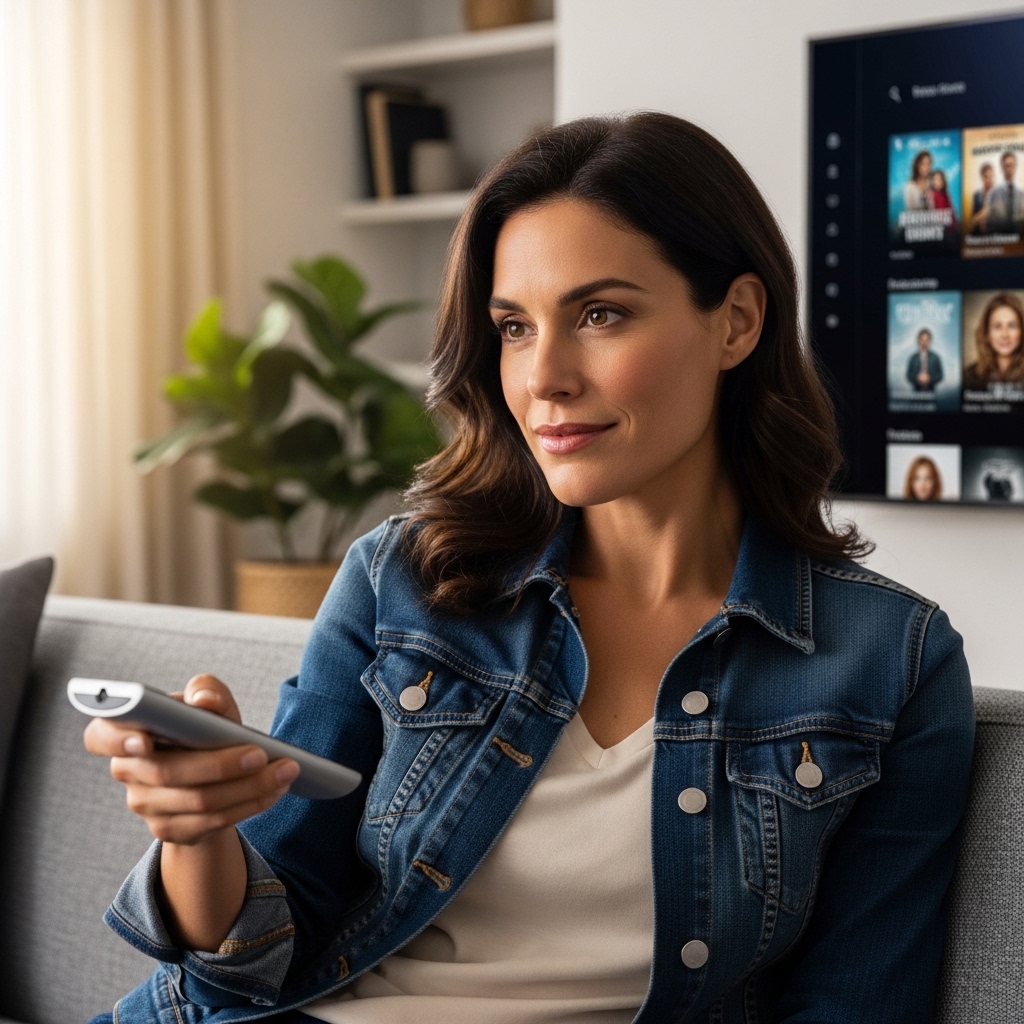

Resolving thirty-three million individual pixels requires immense computing power and specialized panel architecture. Many shoppers walk into retail showrooms or browse online retail portals wondering is there 8k tv equipment actually available and practical for modern living rooms. Premium brands currently engineer consumer displays packing 7680×4320 resolution, combining thousands of tiny diodes with Mini-LED backlighting to elevate dynamic range. While buyers shopping for budget-friendly 75-inch displays often focus on entry-level 4K panels, stepping into ultra-high-resolution territory involves complex computational processors and sophisticated backlights. Understanding whether these displays make sense requires weighing current content constraints against hardware engineering advancements.
The immediate hurdle for most households remains the scarcity of native ultra-high-definition media across popular streaming platforms and cable networks. Modern display manufacturers counter this challenge by embedding sophisticated AI neural network upscaling pipelines that analyze incoming signals frame by frame to reconstruct lost detail. These advanced chipsets target high-definition cable, standard sports broadcasts, and compressed 4K streams to fill the screen without creating distracting digital noise. Investing in an 8K display represents a calculated balance between future-oriented panel readiness and the everyday reality of viewing lower-resolution broadcast sources.

Pros
- Extraordinary peak brightness and contrast control powered by thousands of precision Mini LEDs.
- Intelligent 8K upscaling ensures regular 4K movies and cable sports look remarkably crisp.
- Tailor-made for PS5 owners with Auto HDR Tone Mapping and rapid response times.
- Bundled BRAVIA CAM adds handy automated environmental tuning and video calling.
- Intuitive Google TV interface with extensive app availability and hands-free voice search.
Cons
- Native 8K content remains sparse across major consumer streaming platforms.
- Substantial panel weight and depth require sturdy furniture or heavy-duty wall mounting.
- Power consumption is higher than standard 4K LED and OLED alternatives.
The Sony Z9K Series 75-inch 8K Mini LED TV represents the flagship tier of living room and home cinema displays. Designed for dedicated home theater enthusiasts, tech enthusiasts, and serious console gamers, this high-end display brings together native 8K clarity and Mini LED illumination. Whether you are assembling a showcase media room in your house or upgrading a spacious suburban basement for big family movie nights, this flagship BRAVIA XR display provides the processing muscle and screen real estate to transform everyday entertainment into a full-scale cinematic event.
At the core of the viewing experience is Sony's Cognitive Processor XR working alongside the XR Backlight Master Drive. Based on product specifications, thousands of dense Mini LEDs are divided into tightly regulated local dimming zones, producing high peak brightness alongside deep blacks that rival OLED without the risk of permanent burn-in. Because true native 8K footage is still rare, the onboard XR 8K Upscaling is crucial. It intelligently reconstructs lost textures and details from 4K Blu-rays, live broadcast sports, and streaming media. Support for Dolby Vision, IMAX Enhanced, and Netflix Adaptive Calibrated Mode ensures that high dynamic range content retains accurate shadows and natural color saturation via XR Triluminos Pro.
Gamers, particularly those with a PlayStation 5 or Xbox Series X, will appreciate the integrated gaming performance. Equipped with HDMI 2.1 bandwidth, the display supports high-frame-rate 4K gaming at 120Hz, Variable Refresh Rate (VRR), and Auto Low Latency Mode (ALLM) with responsive input lag as low as 8.5ms. Sony includes exclusive PlayStation 5 optimizations such as Auto HDR Tone Mapping and Auto Genre Picture Switch, ensuring your console instantly dials in the ideal HDR parameters during high-speed action or quiet RPG exploration. A dedicated on-screen Game Menu lets you tweak crosshairs, motion blur reduction, and black equalizer levels on the fly without navigating deep settings.
Daily operation is powered by the Google TV ecosystem, granting quick access to services like Prime Video, Disney+, Apple TV, and YouTube. Built-in Google Assistant facilitates swift voice searching, while Apple AirPlay 2 makes sharing phone photos and video streams effortless. Sony also packs in the BRAVIA CAM, a magnetic top-mounted camera that enables gesture controls and video meetings. More importantly, Ambient Optimization Pro utilizes the camera sensor to identify where you sit in the room, automatically adjusting color temperature, brightness, and acoustic sound staging for dialogue clarity.
While the display sets a benchmark for illumination and visual punch, prospective buyers should consider a few practical elements. At 75 inches with an 8K Mini LED backlight array, the television is noticeably heavy and draws more power than conventional 4K displays. Wall installation demands a heavy-duty VESA mount anchored into wall studs, while tabletop use requires a deep, sturdy media console. For shoppers who demand ultimate brightness for sunlit living rooms, top-tier console gaming performance, and future-proof resolution for years of movie watching, the Sony Z9K stands out as a premier flagship investment.
For gaming setups, the Sony Z9K delivers a responsive experience engineered specifically to match current-generation consoles. With HDMI 2.1 inputs supporting 4K at 120Hz, Variable Refresh Rate (VRR), and Auto Low Latency Mode (ALLM), fast-paced first-person shooters and driving simulators run with fluid frame rates and minimal screen tearing. PlayStation 5 players gain unique advantages through Auto HDR Tone Mapping, which automatically selects the ideal HDR setup during initial console configuration.
The dedicated Game Menu interface provides swift access to tactical gaming tools. Players can quickly adjust VRR status, toggle motion blur reduction, or activate a black equalizer to spot competitors lurking in dark corners. Combined with low input lag, this television easily doubles as a high-performance tournament display for the ultimate basement gaming lounge.
Google TV serves as the central hub on the Z9K, aggregating personalized recommendations from all major streaming platforms such as Netflix, Max, Disney+, and Amazon Prime Video. Built-in hands-free Google Assistant allows users to search for actors, switch inputs, or dim connected smart lights without touching the remote, while Apple AirPlay 2 and Chromecast offer seamless mobile mirroring.
The included BRAVIA CAM introduces clever smart room integration. Ambient Optimization Pro recognizes viewer distance and room lighting, tuning the picture balance and acoustic positioning so that dialogue remains clear no matter where family members sit on the couch. It also supports simple gesture controls and large-screen video calls, making it a versatile tool for both entertainment and remote family gatherings.


Pros
- Affordable way to cut the cord and access live local channels without monthly fees.
- 360-degree reception and swivel design help optimize signal strength in various room layouts.
- Compact and versatile mounting options suit TVs, walls, or flat surfaces; works with most smart TVs.
- NEXTGEN TV compatible for future-proofing as ATSC 3.0 broadcasts expand.
Cons
- Range is limited to 40 miles, so it may not work well in areas with weak broadcast signals or significant obstructions.
- Indoor antenna performance can vary based on building materials, location, and interference from other electronics.
The UltraPro Hover Digital TV Antenna is a practical indoor antenna designed for U.S. homeowners, apartment renters, and cord-cutters who want to access free over-the-air local channels without the hassle of a cable subscription. This compact antenna supports 4K, 1080p, and standard HD broadcasts, making it a solid companion for smart TVs used for streaming, live sports, news, and family entertainment.
Based on product specifications and user feedback, the antenna's 360-degree reception and swivel design help users fine-tune signal strength to capture channels up to 40 miles from the broadcast source. Many cord-cutters appreciate this flexibility, as it allows them to position the antenna for the best reception in their living room, bedroom, or apartment. The ability to mount it on top of a TV, lay it flat, or stick it to a wall with included tape adds to its convenience for various setups.
For picture quality, the antenna delivers full 1080p HD and is 4K/8K Ultra HD-ready, so viewers can enjoy crisp, clear local broadcasts for news, sports, and prime-time shows. While it doesn't offer the enhanced contrast or HDR of premium streaming, it provides reliable access to network channels that many cord-cutters miss. The NEXTGEN TV (ATSC 3.0) compatibility is a forward-looking feature, promising stronger signals, richer color, and faster refresh rates as broadcasters upgrade.
Setup is straightforward: unfold the bracket to mount atop the TV, or remove it for flat placement or wall mounting. The push-on coax connector makes attaching the cable quick and tool-free. Some users may find that signal reception varies based on their distance from broadcast towers, building materials, or interference from other electronics, which is typical for indoor antennas.
Overall, the UltraPro Hover Digital TV Antenna is a budget-friendly solution for families, streamers, and gift buyers looking to cut the cord without sacrificing live local content. It works with all major TV brands and smart platforms, making it a practical addition to any home theater, bedroom, or apartment setup. While not a replacement for a full cable package, it's a smart way to enjoy free HD channels and supplement streaming services.

Pros
- Remarkable 8K AI upscaling breathes new life into standard 4K and HD streaming content
- Exceptional peak brightness and deep contrast control via Quantum Matrix Pro Mini-LEDs
- Blazing-fast Motion Xcelerator 240Hz refresh rate ideal for high-end PC and console gaming
- Near-borderless Infinity Air design provides a clean, distraction-free aesthetic
- Built-in multi-channel Dolby Atmos sound with Object Tracking Sound Pro
Cons
- Native 8K streaming content remains relatively limited across major streaming platforms
- Premium investment compared to standard 4K OLED or Mini-LED alternatives
- Lacks Dolby Vision HDR support, relying instead on HDR10+ and Neo Quantum HDR 8K Pro
The Samsung 65-Inch QN900D Neo QLED 8K Smart TV represents the peak of Samsung's Mini-LED television lineup for 2024. Designed primarily for tech enthusiasts, movie lovers, sports fans, and gamers who demand top-tier visual performance, this television serves as an impressive centerpiece for living rooms and dedicated basement home theaters. While everyday cord-cutters and casual streamers will appreciate its easy access to streaming apps, this flagship screen is engineered for viewers who want the finest detail and brightness available in modern home entertainment.
At the heart of the display is the NQ8 AI Gen3 processor, which utilizes 512 AI neural networks to upscale standard HD and 4K content to 8K resolution with remarkable clarity. The Quantum Matrix Pro backlighting system packs thousands of Mini-LEDs into precise local dimming zones, producing exceptionally deep black levels alongside sparkling peak highlights. With Neo Quantum HDR 8K Pro and Auto HDR Remastering, high dynamic range content reveals subtle gradations in dark movie scenes and vibrant color volume in sunny outdoor sequences, giving family movie nights and holiday film viewings a rich, theater-like dimension.
Action clarity stands out whether you are hosting Sunday football watch parties or competing in fast-paced video game matches. The AI Motion Enhancer Pro helps keep fast-moving objects, soccer balls, and scrolling tickers sharp without distracting stutter or judder. Gamers gain a true competitive advantage with Samsung's Motion Xcelerator 240Hz technology, which offers ultra-low input lag, variable refresh rate (VRR) capabilities, and full HDMI 2.1 bandwidth across multiple ports to maximize the performance of modern consoles and high-end gaming PCs.
Build quality is evident in Samsung's Infinity Air design, featuring ultra-thin bezels and an almost-invisible profile that maximizes your view. The TV includes built-in Dolby Atmos and Object Tracking Sound Pro, which uses strategically placed speakers to make audio follow on-screen action for surprisingly full sound right out of the box. Samsung's Tizen operating system provides a responsive interface for Netflix, Disney+, Prime Video, and YouTube, alongside integrated Alexa voice assistance for convenient hands-free commands.
Mounting this 66-pound television requires a sturdy VESA-compatible mount or a robust media console that comfortably accommodates its desktop stand. Cable management remains clean, and the initial setup process walks you smoothly through network pairing and input configuration. Potential buyers should consider that native 8K video content remains scarce, and Samsung continues to support HDR10+ rather than Dolby Vision. However, for buyers wanting outstanding upscaling, phenomenal brightness in sunlit living rooms, and unmatched motion smoothness, the QN900D stands as a top-tier investment for long-term home entertainment.
The QN900D relies on Quantum Matrix Pro technology, featuring one and a half times more lighting zones than standard Quantum Matrix sets to ensure tight light control and minimal blooming around bright highlights. This fine-tuned Mini-LED backlight works in tandem with the NQ8 AI Gen3 processor, which actively analyzes each incoming scene to optimize depth, shading, and texture.
Even though true 8K media is uncommon, the 512 neural networks in the AI upscaler effectively enhance live cable broadcasts, YouTube clips, and 4K Blu-ray discs. The screen offers outstanding anti-reflective qualities and immense brightness, making it easy to enjoy crisp, colorful picture quality in sun-drenched living rooms without annoying mirror reflections.
For competitive gamers and PC enthusiasts, the QN900D is equipped with Motion Xcelerator 240Hz support, allowing compatible gaming rigs to push high frame rates with virtually no screen tearing or input lag. With support for FreeSync Premium Pro, Auto Low Latency Mode (ALLM), and Variable Refresh Rate (VRR), gameplay remains responsive and visually fluid.
Samsung's integrated Game Bar lets players quickly check frame rates, adjust aspect ratios, and tweak sound profiles on the fly without interrupting the action. Multiple full-bandwidth HDMI 2.1 ports ensure both modern consoles and gaming PCs can take full advantage of high-refresh-rate gaming simultaneously.
Understanding Current 8K Television Availability and Technical Reality
Yes, 8K televisions are actively manufactured and commercially available, representing the highest resolution tier in modern consumer display engineering. Major technology brands continue to push panel development by packing over 33 million pixels into flagship television chassis. These screens do not merely serve as experimental prototypes; they are fully realized home entertainment centerpieces built for demanding enthusiasts. Understanding whether these displays belong in your living room requires examining how panel hardware, processing algorithms, and content delivery intersect.
The Current Landscape of 8K Display Hardware
Modern electronics brands concentrate their 8K engineering efforts primarily in premium ultra-large screen form factors. Flagship models from companies like Samsung and Sony showcase screen sizes starting around 65 inches and extending past 85 inches. These massive panels benefit the most from increased pixel density because individual pixels remain completely invisible even on vast display canvases. Rather than relying on traditional LED illumination, modern 8K screens almost universally adopt advanced Mini-LED backlighting to maximize illumination precision.
The hardware architecture behind these panels reflects years of iterative display refinement. High-end offerings like the Samsung Neo QLED series and Sony Bravia XR Z9K utilize custom timing controllers and dense subpixel layouts. Premium designs also incorporate external signal boxes, such as wireless or single-cable connect modules, to keep cable clutter away from the slim chassis. This mechanical separation helps keep heat dissipation manageable across the dense pixel matrix while allowing flush wall mounting.
Human Visual Acuity and the 33-Million-Pixel Threshold
Evaluating an 8K screen requires understanding how human vision processes ultra-fine spatial detail. Standard human visual acuity, often measured as 20/20 vision, resolves approximately one arcminute or sixty arcseconds of visual angle. When viewers sit at a standard distance of nine to ten feet from an average screen, their eyes struggle to distinguish between 4K and 8K pixel grids. The spatial density of 7680×4320 pixels only becomes truly apparent when screen dimensions expand or seating distances decrease significantly.
On a 65-inch screen, resolving 33 million individual pixels requires sitting within roughly four feet of the panel. Most living room furniture layouts place family seating much further back, making raw resolution gains subtle during casual viewing. Once screen sizes expand to 75 inches or 85 inches, the visual mathematics change substantially. At those larger dimensions, standard 4K panels feature larger individual pixels that keen observers can discern, whereas an 8K display preserves perfectly smooth diagonals and lifelike curves.
Perceived sharpness also depends heavily on contrast performance and optical clarity rather than pixel counts alone. A display capable of rendering bright specular highlights against inky shadows often appears noticeably sharper to human observers than a lower-contrast screen with equal pixel density. High-density panels eliminate the faint screen-door effect that can occasionally appear on massive displays viewed up close. This creates an optical presentation that feels closer to looking through an open window than watching a digital screen.
The Native Content Conundrum and Broadcast Realities
The primary reservation many shoppers express centers on the distinct shortage of native 8K programming. Commercial streaming platforms such as Netflix, Amazon Prime Video, Disney+, and Apple TV+ stream almost all their premium catalogs in 4K resolution with high dynamic range. Physical media formats also stopped advancing at the 4K Ultra HD Blu-ray standard, leaving no physical retail format for native 8K movies. Outside of user-generated video platforms and specialized nature documentaries, finding true native 7680×4320 content remains rare.
Network infrastructure constraints present another formidable barrier to widespread native streaming adoption. Transmitting uncompressed or high-bitrate 8K video streams demands substantial broadband throughput, often requiring consistent speeds between fifty and one hundred megabits per second. Many residential internet service providers impose monthly data caps that uncompressed ultra-high-definition streaming would rapidly exhaust. While emerging compression standards like AV1 and advanced HEVC codecs reduce bandwidth overhead, widespread distribution infrastructure remains focused on stabilizing 4K delivery.
Traditional over-the-air television broadcasts face similar technical limits. Terrestrial broadcast networks across North America are still rolling out ATSC 3.0 NextGen TV transmission standards, which primarily target 1080p and selective 4K broadcasts with enhanced audio. Modern accessories, such as long-range digital indoor antennas, reliably pull in high-definition digital signals for local channels without recurring subscription fees. However, translating those broadcast feeds into full-panel clarity on an 8K display places the entire burden of image quality directly on the television’s internal processor.
How Multi-Neural AI Processors Bridge the Resolution Gap
Because native content remains scarce, modern 8K displays rely almost entirely on sophisticated computational upscaling. Early upscaling methods used basic mathematical interpolation, simply duplicating neighboring pixels and often producing soft, blurry imagery. Modern flagship chipsets, such as Samsung’s NQ8 AI Gen3 processor and Sony’s Cognitive Processor XR, employ deep-learning neural networks trained on massive image databases. These neural networks analyze incoming video frames in real time, intelligently estimating and reconstructing missing textural details.
Advanced processing architectures deploy hundreds of dedicated neural networks simultaneously to handle specific visual elements. For example, some networks specialize in sharpening fine hair, textile weaves, and architectural lines, while others focus on smoothing flat gradients like clear skies. This targeted processing prevents the harsh edge ringing and unwanted noise amplification that plagued older video scalers. The resulting picture renders clean lines and nuanced depth across everyday 1080p cable feeds and high-bitrate 4K streaming movies.
Processing motion during live broadcasts introduces an additional layer of computational complexity. Fast-moving sports broadcasts can suffer from blur, jitter, or distorted text on stadium scoreboards when scaled up to 33 million pixels. Dedicated motion enhancers analyze vector trajectories to interpolate frames smoothly without inducing an unnatural soap-opera effect. Enthusiasts who watch fast-paced athletics can explore Mini-LED displays for high-motion sports to see how high refresh rates and powerful processors cooperate to stabilize rapid on-screen movement.
Backlight Architecture: Mini-LED Control and Blooming Suppression
Engineering an 8K liquid crystal display introduces significant optical hurdles regarding light transmission. Because an 8K panel packs four times as many subpixels into the same physical space as a 4K panel, the thin-film transistors and wiring block a greater proportion of backlight illumination. To compensate for this reduced panel aperture ratio, manufacturers incorporate thousands of microscopic diodes within Mini-LED backlight arrays. These dense diode clusters generate the exceptional luminance required to drive vivid high dynamic range highlights.
Raw brightness alone does not produce an engaging cinematic experience without meticulous light control. Flagship displays group their Mini-LEDs into hundreds or thousands of individually controlled local dimming zones. Sophisticated backlight algorithms monitor scene brightness, actively dampening light behind dark backgrounds while pushing peak illumination into specular reflections. Systems like Sony’s XR Backlight Master Drive and Samsung’s Quantum Matrix Pro minimize visible haloing or blooming around bright subtitles and pinpoint stars.
Maintaining consistent color accuracy across these dense backlights requires specialized optical enhancement layers. Quantum dot technology converts high-energy blue LED light into pure red and green spectrums, broadening total color volume significantly. This wide color reproduction ensures that subtle skin tones, deep foliage, and vibrant sunsets retain lifelike saturation. When paired with effective local dimming, the display achieves deep perceived black levels that closely rival self-emissive screen technologies.
Gaming Integration and Next-Gen Interface Bandwidth
Enthusiast gaming serves as one of the few practical arenas where native 8K rendering currently exists. High-end PC graphics cards equipped with modern architectures can output native 8K signals or utilize intelligent temporal upscaling during interactive gameplay. To handle this immense data load, television manufacturers equip their displays with HDMI 2.1 connectivity supporting full 48Gbps fixed-rate link transmission. These high-speed ports ensure the panel can receive 8K signals at sixty frames per second or 4K signals at high refresh rates.
Console and PC gamers also benefit from low-latency gaming enhancements built directly into modern 8K displays. Automatic Low Latency Mode detects active gaming consoles instantly, stripping away redundant post-processing filters to keep response times rapid. Sony’s Z9K series, for instance, lists input lag as low as 8.5ms alongside specialized auto HDR tone mapping for the PlayStation 5. Variable refresh rate protocols, including HDMI VRR and dedicated synchronization suites, eliminate screen tearing and stuttering during demanding graphical sequences.
Connecting these high-performance gaming sources requires careful attention to physical interface standards. Legacy HDMI cables built for 18Gbps transmission fail to maintain stable signal locks when handling uncompressed high-framerate data, often causing intermittent black screens. Gamers must use certified Ultra High Speed HDMI cables capable of maintaining continuous 48Gbps throughput without signal degradation. Ensuring proper port configuration in the display’s system menus guarantees that full bandwidth handshakes occur reliably across all connected gaming platforms.
Acoustic Architecture and Integrated Room Sound
Visual clarity represents only half of the home entertainment equation when designing a premier media room. Massive 8K television screens require audio systems capable of projecting sound that aligns precisely with on-screen action. Manufacturers address this by embedding multiple speaker drivers directly into the frame, creating directional audio arrays. Technologies like Samsung’s Object Tracking Sound Pro and Sony’s Acoustic Multi-Audio steer dialogue and sound effects so voices seem to emanate directly from an actor’s mouth.
While built-in audio processing has advanced remarkably, dedicated external soundbars or component systems remain essential for true home theater immersion. Advanced displays incorporate enhanced Audio Return Channel capabilities, allowing uncompressed Dolby Atmos and DTS:X audio streams to travel over a single HDMI cable to an external receiver. Viewers interested in room-filling sound dynamics can research televisions engineered for sound quality to understand how chassis acoustics and multi-channel processing interact. Proper audio synchronization ensures that high-resolution visuals remain perfectly paired with impactful cinematic soundscapes.
Practical Room Setup, Power Consumption, and Safety Protocols
Deploying a premium 8K television requires thoughtful room preparation and careful physical handling. Screens measuring 75 inches or 85 inches carry substantial chassis weight and require at least two people during unboxing and assembly. Wall-mounting installations demand heavy-duty VESA brackets rated well beyond the display’s total mass, secured directly into structural wall studs rather than hollow drywall anchors. When placing large displays on media consoles, verify furniture weight capacities and attach anti-tip safety tethers to prevent accidental tipping.
Ambient lighting conditions also influence perceived image quality during daytime viewing sessions. Flagship 8K televisions feature advanced anti-reflective optical coatings designed to diffuse harsh window light and ambient lamp reflections. Combined with high peak brightness from Mini-LED backlights, these optical filters ensure the picture remains vibrant even in bright living rooms. Wide viewing angle compensation layers help preserve contrast and color saturation for viewers seated off to the sides of wide sectional sofas.
Operating a dense 8K pixel grid with thousands of backlight diodes inevitably increases electrical power consumption. Stricter energy efficiency regulations, such as the European Union’s Ecodesign directives, enforce strict operational wattage caps on large-screen electronics. Manufacturers comply by shipping displays with energy-saving modes enabled by default, which can throttle maximum screen brightness out of the box. Users who adjust their picture presets should balance vivid highlight reproduction against realistic household energy consumption and adequate rear panel ventilation.
Investing in an 8K television ultimately represents a commitment to flagship processing power and expansive screen real estate. While native 8K entertainment remains a niche format, the advanced AI upscaling processors and dense Mini-LED backlighting found in these screens deliver stunning fidelity for everyday 4K and 1080p media. Buyers seeking an uncompromising visual centerpiece for a spacious living room will find substantial value in these flagship displays. Balancing room viewing distances, physical mounting safety, and content expectations ensures your entertainment space delivers a truly captivating visual experience for years to come.


Write Your Review
No reviews yet. Be the first to share your experience!