

Stepping into an electronics showroom or browsing display catalogs often presents buyers with an overwhelming wall of technical specifications and resolution numbers. Anyone upgrading an aging living room screen quickly confronts the core question of whether is 4k tv better than hd when viewing typical daily broadcasts, streaming series, and gaming consoles. While high definition served as the living room standard for well over a decade, modern screen manufacturing has shifted production overwhelmingly toward Ultra High Definition panels. Viewers evaluating modern mid-sized streaming displays often wonder if quadrupling the pixel density genuinely transforms their everyday movie watching or if standard high-definition resolution remains sufficient for casual spaces.
The practical difference between formats extends far beyond simple pixel counts, directly influencing visual clarity, viewing distance comfort, and high dynamic range performance. Answering whether an upgrade makes sense requires examining how modern video processing engines scale lower-resolution sources like sports feeds or cable broadcasts without introducing visual noise. Panel size, ambient lighting conditions, and display hardware capabilities also dictate whether your eyes can actually perceive the added clarity. Understanding these critical hardware distinctions helps ensure you select the ideal panel without overspending on features your viewing space cannot fully utilize.

Pros
- Pulls in free uncompressed over-the-air digital signals with no monthly subscriptions
- Generous 16-foot shielded coaxial cable provides plenty of reach to find the best window placement
- Upgraded internal Smart IC chip helps maintain signal stability during bad weather
- Quick and painless setup that connects straight into standard ANT/IN ports on modern digital TVs
Cons
- Channel availability and signal strength vary based on terrain and distance from broadcast towers
- May require testing multiple room locations and rescanning to achieve the highest channel count
- Older analog televisions require a separate digital converter box
The DAANT Indoor Long Range TV Antenna is a compact reception accessory built to help home entertainment enthusiasts capture free over-the-air television. Designed for cord-cutters, apartment renters, suburban homeowners, and budget-conscious families, this unit pulls down network programming without adding to monthly entertainment expenses. Whether you want to follow local NFL games on CBS and FOX, track emergency weather bulletins, or watch morning programming on NBC and ABC, this digital antenna complements any living room or bedroom television display.
When plugged into a modern 4K LED, QLED, or OLED television, an over-the-air antenna often delivers picture quality that exceeds standard cable feeds. Because broadcast stations transmit uncompressed signals directly over the airwaves, viewers enjoy sharp 1080p and 4K broadcasts with clean contrast, deep color saturation, and fewer artifacts. Sports fans will notice clear motion handling and dialogue clarity during high-stakes football games and live events, bypassing the annoying compression and delays often experienced on crowded Wi-Fi networks.
Build quality focuses on practical placement within real homes. The antenna is anchored by an included 16-foot coaxial cable constructed with a solid center conductor, dielectric insulation, and three aluminum shielding layers. This robust shielding guards against electromagnetic interference and helps shield against signal loss during thunderstorms. Its lightweight, slim black panel is easy to position behind a wall-mounted TV, mount directly against a windowpane, or tuck behind an entertainment console.
Setting up the antenna takes only a few minutes. Users simply attach the coaxial cable to the ANT/IN connector on the television, access the settings menu, select the antenna input, and run an automated channel scan. Testing both vertical and horizontal orientations near an exterior window often helps capture additional stations. Modern platforms like Google TV, Roku TV, webOS, and Fire TV automatically index these stations into an on-screen program guide, blending free local television with your daily streaming apps.
While this antenna delivers strong everyday value, practical limitations should be kept in mind. Reception is governed by local geography, distance from transmission towers, and home construction materials such as brick, stucco, or metal framing. Additionally, older analog displays will require an external converter box to process modern digital broadcasts. For viewers with digital ATSC tuners seeking an economical way to stream local channels alongside Netflix and Prime Video, this antenna makes a practical, money-saving addition.
Getting optimal signal strength from your indoor digital antenna depends primarily on placement. Positioning the antenna as high as possible against an exterior window facing nearby broadcast towers usually delivers the cleanest line of sight. Checking online coverage resources such as the FCC DTV reception map can help you determine the general direction of regional transmitters before mounting.
It is best to position the antenna away from heavy electronic appliances like microwaves, high-power wireless routers, and metallic window screens that can disrupt radio frequency signals. Remember to run a fresh channel scan on your smart TV whenever you adjust the antenna position or move it to a different wall, as the built-in tuner must re-index available frequencies.
Sports enthusiasts and local news watchers gain a major advantage with a dedicated digital antenna. Major broadcast networks carry weekly sports matchups, holiday parades, and awards shows with zero internet streaming lag. This prevents delayed reactions and spoiled plays from phone notifications before the action occurs on screen.
Because the signal travels directly through the air to your TV tuner, you also avoid the bandwidth drops, pixelation, and buffering pauses that can plague streaming services during high-traffic sporting events like playoff games. It is an efficient way to keep your home theater connected to live network television all year long.
Pros
- Generous 65-inch display size at an accessible value point for living rooms and family spaces
- Built-in Samsung TV Plus delivers massive libraries of free streaming channels out of the box
- Reliable 4K upscaling brings sharper definition to standard cable channels and older streaming titles
- Integrated Alexa voice assistance enables seamless hands-free navigation and volume adjustments
- Smooth frame transitions with Motion Xcelerator minimize noticeable judder during football and basketball games
Cons
- Standard 60Hz refresh rate lacks native 120Hz support for competitive next-gen console gaming
- Lacks full array local dimming, which limits deep black levels in completely dark home theater rooms
- Built-in speakers provide modest bass output, making a dedicated soundbar recommended for cinematic audio
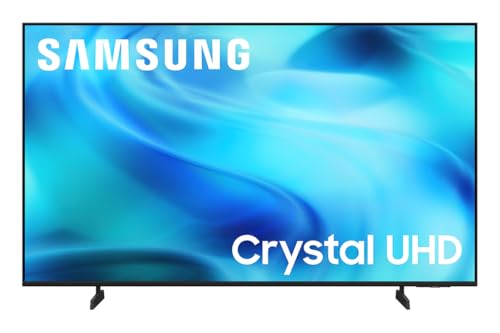
The Samsung 65-Inch Class U8000H Series Crystal UHD Smart TV offers a well-rounded 4K viewing package designed for everyday home entertainment. Geared toward families, apartment dwellers, cord-cutters, and budget-conscious buyers, this LED display brings a spacious 65-inch canvas into living rooms, finished basements, or primary bedrooms. Whether hosting weekend sports watch parties, enjoying family movie marathons, or catching up on morning news, this model aims to provide dependable visuals without complicated calibration steps.
At the core of the display is the Crystal Processor 4K, which works to optimize color expression and deliver clear upscaling for sub-4K cable broadcasts and streaming media. Features like Color Booster help bring vibrant tones to animated movies and nature documentaries, while Motion Xcelerator keeps fast-moving sports and action sequences steady at 60Hz. Although it does not feature full-array local dimming or OLED-level deep blacks, its contrast and brightness are well-suited for moderate to bright living rooms where casual daytime viewing and evening streaming dominate.
For casual gamers using modern consoles, the television delivers low input lag and responsive handling at 4K 60Hz, ensuring smooth playback across adventure titles and sports games. The smart platform offers intuitive navigation, quick app launch times, and built-in Alexa voice control for finding shows and adjusting settings without picking up the remote. In addition, Samsung TV Plus provides cord-cutters with immediate access to over 750 free live channels and thousands of on-demand programs right out of the box, eliminating the immediate need for paid subscriptions.
The exterior sports a clean, minimalist design with slim bezels that keep viewer focus squarely on the screen. Weighing under 32 pounds, the panel remains manageable during setup, whether mounting on a standard VESA bracket or resting on its included media stand feet. HDMI and audio return options support easy connectivity for soundbars, streaming players, and gaming hardware. While the built-in stereo speakers produce intelligible dialogue for sitcoms and news broadcasts, pairing the display with a soundbar is beneficial for rich, room-filling audio during blockbuster movies.
Overall, the Samsung 65U8000H represents a balanced blend of screen size, smart functionality, and everyday picture reliability. While serious home theater purists seeking true black levels or competitive gamers needing 120Hz refresh rates may look toward higher-tier models, this Crystal UHD TV excels for shoppers who want an expansive, easy-to-use smart display for daily family viewing and effortless streaming.
Navigating entertainment is seamless thanks to Samsung's comprehensive smart interface, which organizes favorite streaming platforms like Netflix, Prime Video, Disney+, and YouTube into an easy-to-read dashboard.
A major highlight for cord-cutters is Samsung TV Plus, which grants instant access to hundreds of free live TV channels and vast libraries of on-demand movies without requiring account sign-ups or subscription fees.
Hands-free voice functionality with built-in Alexa makes it easy to search for specific actors, switch inputs, launch apps, or pause playback with simple voice commands, fitting smoothly into modern smart homes.
Sports fans will appreciate the integrated Motion Xcelerator technology, which intelligently calculates and inserts frame transitions in real time to prevent annoying motion blur during high-speed football plays or hockey action.
For gaming setups, the TV automatically switches to a low-latency mode to reduce control lag, delivering crisp 4K visual feedback at 60Hz for consoles like the Xbox Series S or Nintendo Switch.
While competitive esports players may require native 120Hz panels, casual gamers will find the smooth responsiveness and vibrant color palette plenty capable for relaxing evening gaming sessions.

Pros
- Delivers clear uncompressed HD broadcast signals for live sports and major networks without subscription costs
- Weatherproof construction enables versatile indoor, outdoor, balcony, or attic installation
- Included 33-foot coaxial cable offers generous reach to find the strongest signal location
- Built-in dual amplifier helps maintain steady reception in suburban and fringe reception zones
Cons
- Signal strength and channel count depend significantly on local broadcast tower proximity and topography
- Older analog televisions require a separate digital converter box to process the signal
- Users must run a fresh channel scan on the television whenever the antenna is repositioned
The Tendodo Indoor and Outdoor Digital TV Antenna is an amplified reception solution tailored for cord-cutters, apartment renters, and suburban homeowners seeking free access to high-definition broadcast television. As streaming subscriptions and cable packages continue to increase in price, this compact accessory bridges the gap by pulling in live local network stations including ABC, CBS, FOX, NBC, PBS, and CW. It serves as an ideal pairing for smart TVs in living rooms, home theaters, dorms, bedrooms, and even RV entertainment systems where reliable live television is desired without recurring contracts.
Picture quality through an over-the-air digital antenna often outperforms compressed cable or satellite feeds. Because broadcast stations transmit uncompressed digital video, viewers can enjoy authentic 1080p and 4K-ready broadcasts with rich contrast, crisp text, and vibrant color balance. For sports fans tuning into Sunday football or marquee championship games, over-the-air reception avoids the typical streaming latency and compression artifacts that often cause motion blur during fast-paced plays. High-definition motion handling remains smooth and consistent on modern OLED, QLED, and LED television panels.
Hardware design and durability are central strengths of this model. Featuring a discreet noir finish, the antenna is housed inside a flame-retardant, weatherproof shell that can withstand rain, harsh sunlight, and snow. A built-in dual amplifier and intelligent filtering chip help block out 4G and 5G cellular interference, which is particularly beneficial for viewers living in fringe reception zones or outer suburbs. The included 33-foot high-grade coaxial cable provides ample slack to route the antenna to high-reception zones like second-story windows, attic rafters, or balcony railings rather than restricting placement right behind the TV.
Day-to-day usability and setup are straightforward for both tech enthusiasts and casual viewers. The antenna connects directly to the coaxial ANT IN port on modern smart TVs powered by platforms such as Google TV, Roku TV, Fire TV, Samsung Tizen, or LG webOS. Apartment dwellers will appreciate the included heavy-duty mounting tape that adheres securely to glass or drywall without leaving permanent marks or requiring power tools. For permanent outdoor or attic placement, mounting hardware is provided to lock the unit securely into position.
Potential buyers should keep in mind that over-the-air reception is fundamentally governed by environmental factors. Dense tree coverage, brick walls, and geographic valleys can impact signal strength, meaning channel availability naturally varies by ZIP code. Moving the antenna to a new spot also requires running a quick channel re-scan through your television menu to lock in the clearest frequencies. For sports fans, families, and budget-conscious cord-cutters wanting free local channels and crisp picture fidelity, the Tendodo antenna stands as a practical and cost-effective home entertainment accessory.
Getting your smart TV configured with the Tendodo antenna requires only a few minutes. Begin by connecting the 33-foot coaxial cable directly into the ANT IN or CABLE IN port located on your television back panel. If you plan on indoor placement, use the included residue-free adhesive tape to secure the panel high on a window or an exterior-facing wall pointed toward local broadcast towers.
Once connected, turn on your television and access the settings menu using your standard TV remote control. Navigate to the channel or tuner setup section, select antenna as your signal source, and run an automated channel scan. In a few minutes, your TV will catalog every available digital sub-channel in your area. For optimal reception, check free online transmission maps from resources like DTV.gov, and always remember to initiate a fresh channel scan whenever you adjust the placement angle of the antenna.
One of the strongest arguments for adding a digital antenna to your home theater setup is live sports performance. Cable and internet streaming services compress video streams and often introduce a 30 to 60-second transmission delay, which can lead to spoiler alerts from social media during major football, basketball, or baseball games. An over-the-air signal delivers real-time action directly from local network broadcast towers with zero streaming buffer time.
In addition to sports, an over-the-air antenna ensures constant access to local morning news, severe weather tracking, and emergency alerts, even if your local internet service experiences an unexpected outage. Combining this digital antenna with your favorite smart streaming apps offers a comprehensive, flexible home entertainment experience that protects your monthly household budget.

Pros
- Low-profile stick stays hidden behind the television and avoids blocking neighboring HDMI inputs.
- Convenient voice remote controls TV power and volume, eliminating the need for a secondary remote.
- Fast, responsive Roku interface with a customizable home screen and convenient live TV guide.
- Capable of drawing power directly from compatible TV USB ports for a truly wire-free appearance.
Cons
- Resolution tops out at standard 1080p HD, lacking 4K UHD and HDR support for advanced displays.
- Some older TVs with low-power USB ports may require an optional AC wall adapter.
- Lacks hands-free voice commands, requiring a press of the microphone button on the remote.
The Roku Streaming Stick HD is an ultra-compact media player engineered to modernize standard HDTVs, older flat panels, and secondary displays into fast, capable smart TVs. Based on product specifications and user feedback, this pocket-sized streamer is exceptionally well suited for apartment renters, college students in dorms, cord-cutters, and families outfitting a guest room, kids playroom, or master bedroom. Its discreet form factor plugs directly into any available HDMI port and remains completely hidden behind the television frame, making it a great pairing for clean wall-mounted installations.
When connected to standard 720p or 1080p high-definition television panels, the stick delivers crisp video playback and steady motion handling for everyday entertainment. While it does not support 4K resolution or HDR formats such as Dolby Vision or HDR10, HD sitcoms, network broadcasts, and streaming movies retain sharp detail and balanced color reproduction across compatible screens. Sports fans and news followers can watch live broadcasts with consistent frame pacing, avoiding noticeable judder as long as a stable home Wi-Fi connection is maintained.
At the center of the experience is Roku OS, celebrated for its uncluttered tile layout, speedy menu navigation, and minimal app loading lag. The included voice remote simplifies the entire living room setup by incorporating essential television power and volume controls, allowing you to retire the original TV remote for regular daily viewing. Voice search works smoothly to locate titles, actors, and specific genres without the tedium of on-screen typing. Audio is passed directly through HDMI to television speakers, soundbars, or AV receivers, preserving crisp dialogue clarity and dependable stereo separation.
In terms of build and design, the stick measures only 3.7 inches long, which prevents it from crowding adjacent HDMI ports or digital optical outputs on tight TV input panels. The ability to draw power directly from an adjacent USB port on your television helps maintain a neat aesthetic free of hanging wall cords. Dual-band Wi-Fi connectivity keeps streaming connections reliable even when the stick is nestled behind a dense TV chassis, and the lightweight construction holds up well for travelers who prefer having their own login credentials ready in hotel rooms.
Initial installation is remarkably straightforward: plug the stick into an HDMI port, connect the USB power lead, follow the on-screen network prompts, and sign into your streaming services. There are practical limitations to keep in mind, however. Because playback resolution caps out at HD, owners of 4K LED, QLED, or OLED home theater centerpieces will prefer a dedicated 4K model to take full advantage of their display panel. Additionally, certain older televisions with weak USB power output may prompt an on-screen warning, requiring connection to a standard wall outlet.
For budget-focused shoppers, bedroom setups, kitchen displays, or anyone seeking to upgrade an aging secondary TV, the Roku Streaming Stick HD delivers dependable performance and unmatched user convenience. It eliminates remote clutter, consolidates live sports and free streaming channels, and hides neatly out of sight behind your television frame.
The Roku operating system continues to stand out for its straightforward home screen and broad channel availability. Users can customize app placement to prioritize services like Netflix, Disney+, Hulu, and YouTube right at the top of the menu. Navigating between apps feels fluid, with fast launch times that outpace many sluggish built-in smart TV interfaces found on older televisions.
A standout feature is the Roku Sports Zone, which centralizes game times, broadcast networks, and streaming destinations for your favorite sports teams. Coupled with The Roku Channel, which offers hundreds of free ad-supported live television networks, local news feeds, and movies, the platform provides expansive content variety right out of the box without requiring expensive cable packages.
Installing the Roku Streaming Stick HD takes only a few minutes from unboxing to streaming. Its slim body slides directly into an open HDMI port without requiring bulky extension brackets in most television arrangements. Once inserted, connecting the included USB cable to your television USB port delivers operating power, keeping the entire entertainment space free from drooping cords.
The on-screen setup assistant guides you through connecting to your home Wi-Fi network and calibrating the voice remote to control your television brand for power and volume toggles. Roku account linking is handled quickly via a mobile device or browser, ensuring that your preferred channels and subscription preferences populate without complex manual entry.

Pros
- Easy to install with magnetic base and long cable - no tools needed
- Compact size makes it easy to hide or place discreetly
- Affordable price for cord-cutters looking to save on monthly cable bills
- Supports 4K and 1080P over-the-air broadcasts for sharp picture quality
Cons
- Reception range is highly dependent on your location and distance from broadcast towers - may not work well in rural areas
- No amplifier included, so signal strength may be weaker in some settings
- The magnetic base may not adhere securely to non-metal surfaces
The HIDB TV Antenna is a digital indoor HDTV antenna designed for anyone looking to cut the cord and watch local channels for free. It's not a television itself, but an accessory that pairs with any smart TV or regular TV with a coaxial input. This antenna is ideal for apartment renters, homeowners, cord-cutters, streamers, and budget-conscious shoppers who want access to live news, sports, and network shows without a monthly subscription.
Based on the product description, this antenna features a strong magnetic base that allows you to attach it to any metal surface - think TV stand legs, window frames, or even a refrigerator. The 10-foot long coaxial cable gives you plenty of flexibility to move the antenna around for the best reception. The design is compact and slim, so it can be easily hidden behind a TV or placed on a shelf without drawing attention.
The HIDB antenna uses a built-in Smart IC Chip and Crystal Clear Filter Technology to boost signal reception up to 120+ miles. Of course, actual range depends on your distance from broadcast towers, local terrain, and obstacles like buildings or trees. For the best experience, the manufacturer recommends using the DTV.gov map to check available channels in your area and rescanning after moving the antenna. The antenna supports both 4K and 1080P over-the-air broadcasts, so you can enjoy sharp picture quality on compatible TVs.
Setup is straightforward: simply attach the antenna to a metal surface or place it on a table, connect the coaxial cable to your TV, and run a channel scan. The magnetic base holds it firmly in place. One nice touch is the eco-friendly flame retardant double PC soft material that offers moisture and lightning protection - a practical safety feature for an indoor antenna.
Some realistic limitations: reception quality can vary significantly. If you live far from broadcast towers or in a densely built area, you may not get all channels clearly. There's no built-in amplifier, so signal strength may be weaker in some homes. Also, the magnetic base only works on metal surfaces; for other placements, you may need to use the included adhesive or a separate mount.
Overall, the HIDB TV Antenna is a good value for anyone who wants to watch free local TV without a cable bill. It's particularly well-suited for apartment dwellers, bedroom TV setups, and families looking to stream live sports, news, and entertainment. If you're a cord-cutter or budget-conscious shopper, this antenna is a practical addition to your home entertainment setup.
Pros
- Easy setup and intuitive Fire TV interface with Alexa voice control.
- Good 4K HDR picture quality with HDR10+ support for improved contrast.
- Fast performance thanks to new quad-core processor and Wi-Fi 6 connectivity.
- Ambient Experience mode adds a decorative touch when the TV is not in use.
- Competitive price for a feature-rich 50-inch 4K smart TV.
Cons
- Brightness may be limited in very sunny rooms, reducing HDR impact.
- Built-in speakers are adequate for casual use but lack deep bass; a soundbar is recommended for better audio.
- Only 60Hz panel, not ideal for high-refresh-rate gaming or fast-paced sports if you prefer smoother motion.
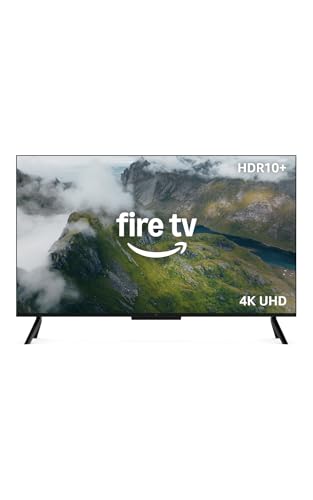
The Amazon Fire TV 50-inch 4-Series is a solid entry-level 4K smart television designed primarily for streaming enthusiasts, cord-cutters, and families looking for a straightforward, all-in-one entertainment solution. With the latest Fire TV platform built right in, it offers seamless access to popular apps like Netflix, Prime Video, Disney+, Hulu, and more, plus free live TV channels with no subscription required. The included Alexa Voice Remote Enhanced makes it easy to search for content, control smart home gadgets, or ask for weather updates using natural speech.
In terms of picture quality, the 4-Series delivers 4K Ultra HD resolution with HDR10+ support, which enhances contrast and color accuracy for a more lifelike viewing experience. While not as bright as premium LED or OLED models, it handles dark scenes reasonably well thanks to improved contrast from HDR10+. Motion handling and upscaling of lower-resolution content are decent for this price range, making it suitable for movies, TV shows, and everyday news. For dark room movie nights, the TV performs admirably, though in brightly lit living rooms you may notice some glare.
The Fire TV platform is one of the easiest to navigate, with a clean home screen that organizes apps, live TV, and recommendations. Alexa integration is a standout feature- you can change channels, launch apps, adjust volume, or even control compatible smart lights without touching the remote. The Omnisense technology is a neat addition: sensors detect when you enter the room and wake the display to show artwork or quick-access menus, adding a touch of convenience and style to any space.
Gaming on this TV is geared toward casual and cloud-based play. You can stream titles from Amazon Luna or Xbox Game Pass without a console using your phone as a controller. However, with a 60Hz panel and no VRR or HDMI 2.1 support, it is not built for competitive or high-framerate gaming. For family-friendly titles or party games, it works fine. The four HDMI inputs provide plenty of connectivity for a soundbar, cable box, and a console, plus eARC support ensures easy audio setup.
Setup is straightforward: attach the two feet or mount it using the VESA pattern (standard 200x200). The bezels are slim, giving the 50-inch screen a modern look that blends into most living rooms or bedrooms. The included remote has dedicated buttons for popular streaming services, making access quick. Overall build quality is good for its price, with a stable stand and lightweight construction (under 19 pounds).
Realistically, the main limitations are brightness and built-in sound. In very bright rooms, HDR highlights may not pop as much, and the speakers lack bass for an immersive audio experience. A budget soundbar like the Amazon Fire TV Soundbar would complement this TV well. Despite these trade-offs, the Fire TV 50-inch 4-Series offers exceptional value for streamers, families, and anyone new to 4K smart TVs. It is a reliable choice for a secondary bedroom TV, a family room for kids and movies, or a primary living room for cord-cutters who prioritize streaming ease over absolute picture perfection.
Evaluating 4K Ultra HD Resolution Against Standard High Definition
Resolving whether is 4k tv better than hd requires understanding that 4K Ultra HD provides a substantial leap in overall visual fidelity for most living room spaces. A 4K display packs four times as many individual pixels into the panel compared to a conventional 1080p Full HD screen. This resolution advantage delivers noticeably sharper edge definition, clearer text, and refined texture rendering across movies, games, and streaming television. For viewers positioning medium to large screens in everyday entertainment spaces, the modern 4K format clearly outperforms older high-definition hardware.
Pixel Density and Structural Screen Clarity
The technical foundation of standard high-definition displays relies on a resolution matrix of 1920 horizontal pixels by 1080 vertical pixels, totaling roughly two million addressable points of light. By comparison, 4K Ultra HD establishes a resolution grid of 3840 horizontal pixels by 2160 vertical pixels, which equals approximately 8.3 million pixels. This enormous increase in pixel density eliminates the visible screen-door effect where viewers could discern individual subpixels on larger screens. Fine details such as hair strands, distant landscape features, and stadium crowd textures render with natural clarity rather than jagged digital edges.
On smaller screens viewed from across a spacious room, human visual acuity struggles to resolve the finer pixel grid of an ultra-high-definition panel. However, as television screen sizes expand into standard living room dimensions, pixel density becomes the deciding factor in maintaining an immersive picture. High-definition panels stretched across fifty inches or larger often reveal pixelation and soft focal planes when viewed from standard couch distances. A 4K panel maintains tightly grouped pixels that preserve image cohesion even when you sit relatively close to the screen.
The physical spacing between pixels, known in display engineering as pixel pitch, diminishes substantially on a 4K television. This tighter grouping prevents the harsh stairstepping artifacts that frequently degrade slanted lines and geometric objects on standard 1080p screens. Architectural lines in cityscapes, fine sports graphics, and subtitle fonts appear crisp and legible without requiring artificial sharpness processing. As a result, the image retains an organic, film-like appearance that older high-definition televisions simply cannot replicate at equivalent screen dimensions.
Viewing Distance and Human Visual Acuity Limits
Human eyesight possesses a measurable threshold for distinguishing spatial details, which display engineers quantify through angular resolution and field of view. When you sit ten feet away from a modest screen, standard 1080p high definition can appear reasonably sharp because your eyes cannot resolve finer grain at that distance. Moving closer or increasing the physical screen footprint immediately exposes the structural limitations of a standard HD panel. With a 4K display, you can comfortably sit closer to a large screen to enjoy a wider, cinema-like field of view without noticing individual pixels.
Display industry guidelines often suggest viewing distances between one and one and a half times the screen diagonal for 4K content to appreciate the full resolution benefit. For viewers considering compact 40-inch displays in a bedroom or kitchen, the distance threshold makes the visual difference between HD and 4K somewhat less dramatic. In contrast, seating six to eight feet away from a 65-inch screen reveals immediate textural gains on an ultra-high-definition television. Seating distance therefore plays an essential role in dictating whether the physical pixel upgrade produces a dramatic daily visual improvement.
Calculating your room layout before purchasing a new display ensures your seating arrangement actually benefits from an ultra-high-definition upgrade. If your furniture arrangement forces you to sit fifteen feet away from a fifty-inch television, the biological limits of human vision will blur the distinction between 1080p and 4K. Bringing seating closer to a 4K display expands your peripheral field of view, creating a more engaging cinematic experience. This flexibility allows home theater enthusiasts to maximize screen size in modest rooms without suffering from visible pixel grids.
High Dynamic Range and Modern Color Capabilities
Resolution alone only accounts for the sharpness of the visual grid, but modern 4K panels arrive bundled with high dynamic range processing that fundamentally transforms contrast and color depth. Standard high definition relies almost exclusively on standard dynamic range standards established decades ago, restricting brightness transitions and color gamuts. Premium formats like HDR10, HDR10+, and Dolby Vision enable compatible 4K panels to display specular highlights alongside deep shadow details. This expanded luminance range brings cinematic explosions, direct sunlight reflections, and subtle night scenes to life with realistic intensity.
Color performance on modern 4K televisions also benefits from advanced software enhancements like Samsung Color Booster and expanded color spectrum profiles. These processing algorithms map wide color gamuts accurately to prevent banding across bright skies and subtle skin tones. Entry-level high-definition televisions typically lack the processing muscle and panel hardware required to interpret HDR metadata correctly. Even if a standard HD set accepts an HDR signal, it frequently tone-maps the image downward, causing a dull or washed-out appearance rather than an authentic dynamic presentation.
Beyond standard static HDR, advanced dynamic metadata formats adjust picture parameters on a scene-by-scene or frame-by-frame basis. Displays utilizing HDR10+ instruct the video processor on how to balance shadow gradation and peak highlights in real time. This ensures dark corridors in thrillers preserve textural shadow details without blowing out adjacent bright light fixtures. Standard 1080p high definition lacks the native infrastructure to decode these dynamic profiles, locking viewers into a flatter, uniform contrast presentation.
Video Processing and Broadcast Content Upscaling
A common concern among viewers upgrading to ultra-high-definition displays centers on how non-4K content appears on a high-density screen. Televisions like the Samsung 65-Inch Class Crystal UHD U8000H Series integrate dedicated processors, such as the Crystal Processor 4K, designed specifically to upscale legacy video feeds. These internal processors analyze incoming 720p and 1080i broadcast signals in real time to interpolate missing pixel data cleanly. Without intelligent hardware upscaling, standard cable feeds would appear blurry or heavily pixelated when stretched over millions of additional physical pixels.
Modern upscaling engines leverage spatial filtering and edge-sharpening algorithms to refine lower-resolution streams from platforms or external media sticks. When paired with basic input sources like a Roku Streaming Stick HD with Voice Remote, a capable 4K display upconverts the 1080p output into a cleaner presentation. Advanced image processing also reduces digital compression noise and smoothing artifacts common in streaming feeds and legacy DVD playback. Consequently, upgrading to a 4K panel does not degrade your existing media library, provided the television includes a competent onboard scaling engine.
Different manufacturers employ distinct algorithmic strategies to reconstruct missing image data during the scaling process. Machine learning models analyze visual patterns to distinguish intentional film grain from accidental digital compression noise. This separation allows the television to sharpen facial features, clothing weaves, and background text while leaving cinematic textures intact. Older high-definition sets possess no such processing power, simply displaying compressed artifacts directly as they arrive from the transmission source.
Broadcast Realities and Over-the-Air Antenna Signals
Many cord-cutters rely on over-the-air signals for live sports, local evening news, and major network primetime programming. Installing indoor and outdoor accessories like the Tendodo Indoor/Outdoor Digital Antenna for smart tv or the DAANT TV Antenna Indoor Long Range allows televisions to pull uncompressed digital broadcasts. These over-the-air feeds often transmit in 720p or 1080i high definition, which delivers superior bitrate quality compared to heavily compressed cable or satellite feeds. Connecting an antenna directly into your television tuner provides clean source material that feeds modern upscaling hardware effectively.
The ongoing rollout of ATSC 3.0 NextGen TV broadcasting standard enables selected markets to transmit native 4K signals over the air alongside enhanced audio. Utilizing compact digital hardware, such as the HIDB TV Antenna for Smart TV Indoor, positions your living room to capture these high-bandwidth local channels without monthly fees. Viewers watching football or live events through over-the-air digital television antennas gain an uncompressed broadcast signal that looks noticeably crisper on an ultra-high-definition display than on older hardware. Even standard 1080p broadcast feeds benefit from the absence of third-party streaming compression before reaching your TV processor.
Signal reception quality directly dictates the stability of over-the-air broadcasts, making proper antenna placement crucial for reliable viewing. Positioning antennas near windows or higher up on walls helps bypass dense building materials that degrade digital broadcast signals. When paired with a capable digital tuner, an antenna avoids the internet bandwidth bottlenecks and streaming lag that often plague online sports broadcasts. This direct broadcast pipeline feeds the television pure video data that clean upscaling algorithms transform into a vivid living room experience.
Motion Handling and Gaming Response Across Generations
Video games and fast-paced sports present a rigorous test for any television display panel, demanding rapid pixel response times and minimal input latency. The Amazon Fire TV 50″ 4-Series (newest model) and similar modern 4K sets feature dedicated gaming modes designed to strip away unnecessary post-processing lag. Lower input latency ensures that button inputs on modern consoles like the PlayStation 5 or Xbox Series X translate instantly to on-screen movements. Older high-definition televisions often carried slower image processing circuitry that produced noticeable delay during fast-paced competitive gameplay.
Motion interpolation technologies, such as Samsung Motion Xcelerator, estimate frame transitions in real time to keep sports action smooth up to 60Hz. While high-definition panels frequently suffered from motion blur during fast camera pans, modern 4K LCD panels utilize faster pixel switching to maintain edge clarity. Gamers who connect current-generation gaming consoles will find that modern 4K displays unlock high-resolution textures and expanded visual fidelities impossible on 1080p hardware. Even casual gaming via cloud platforms benefits from the sharper graphic overlays and clearer heads-up displays delivered by 4K resolution.
Advanced HDMI connectivity on modern 4K sets frequently includes Auto Low Latency Mode, which detects when a console powers on and switches picture modes automatically. This eliminates the tedious process of digging through television menus to disable motion smoothing and picture enhancement filters manually. High-definition televisions from previous generations rarely offered automated handshake communication, leaving users stuck with high input lag unless configured manually. For anyone playing modern video games, upgrading to a 4K television yields substantial responsiveness advantages alongside visual clarity.
Smart Platform Responsiveness and Operating Systems
The user experience of a television depends heavily on its underlying software platform, system responsiveness, and streaming application library. Modern 4K televisions arrive equipped with capable operating systems like Fire TV OS, Tizen, or Roku OS powered by upgraded multi-core microprocessors. These smart platforms provide immediate access to subscription services, customized content recommendations, and extensive collections of free streaming television channels. In contrast, older high-definition smart TVs often suffer from discontinued app updates, sluggish menu navigation, and abandoned security patches.
Modern operating systems also incorporate voice-activated remotes, hands-free smart home controls, and ambient display modes when the screen sits idle. The Amazon Fire TV 50″ 4-Series (newest model) incorporates ambient sensing hardware to wake the screen and display artwork or family photos smoothly. Using integrated voice remotes to search across multiple services reduces navigation friction compared to manually typing titles on older software. Purchasing a modern 4K television therefore modernizes your entire household media navigation, regardless of whether every individual show you watch streams in native 4K.
Faster system processors and expanded memory on current 4K televisions also streamline app switching, eliminating the frustrating crashes common on aging hardware. Firmware updates continue to deliver new streaming applications and user interface optimizations for several years following release. Owners of older high-definition displays frequently find themselves forced to purchase external streaming adapters just to keep their sets functional. A new 4K television integrates modern wireless connectivity like dual-band Wi-Fi to keep media feeds running smoothly without playback stalls.
Identifying Scenarios Where Standard High Definition Still Works
Despite the clear technical superiority of 4K Ultra HD panels, specific home environments and usage cases still function well with standard high definition. Secondary spaces like compact guest bedrooms, garages, RVs, or home workshops rarely require massive display panels or critical movie-watching calibration. In screens under thirty-two inches viewed from across a room, the human eye cannot easily discern the pixel density improvement between 1080p and 4K. Choosing a simple high-definition panel in these specific secondary spots remains a practical, cost-effective decision for basic news and casual viewing.
Bandwidth limitations also present a realistic constraint for households operating on metered internet plans or slow broadband connections. Streaming consistent 4K HDR streams requires substantial steady download bandwidth, which can quickly consume monthly data allotments or cause buffering on congested networks. High-definition streams consume significantly less data per hour while delivering stable, stutter-free playback on modest connections. If your primary source material consists of legacy DVDs, standard definition cable, or low-bitrate security camera feeds, the immediate necessity for 4K diminishes slightly.
Hardware costs and energy consumption also remain slightly lower on smaller, standard high-definition screens compared to larger, high-brightness 4K displays. For utility installations such as kitchen counter counters or background exercise monitors, an entry-level HD display serves its purpose without unnecessary hardware overhead. In these dedicated minor use cases, viewers prioritize basic audio clarity and casual visibility over pristine black levels or HDR specular highlights. Recognizing these distinct boundary lines prevents overspending on display capabilities that will never be appreciated in a given room setting.
Practical Verification and Picture Mode Calibration Steps
Maximizing the visual advantages of a newly installed 4K television requires adjusting several factory default picture settings immediately after unboxing. Most manufacturers ship displays in an aggressive Store or Vivid picture mode, which oversaturates colors and applies excessive artificial sharpening. Switching the display preset to Movie, Cinema, or Filmmaker Mode restores accurate color temperatures and preserves filmmaker intent. You should also disable energy-saving ambient light sensors if they aggressively dim the backlight during daytime viewing hours.
Verifying that external sources output full 4K signals involves checking menu settings across your streaming hardware, cable boxes, and gaming consoles. Connecting devices with high-speed cables rated for modern bandwidth standards ensures your television receives full chroma sampling and HDR metadata without handshake dropouts. Checking the on-screen resolution banner when launching streaming titles confirms whether your network delivers true 4K or steps down to 1080p. Taking a few moments to verify these physical connections and picture settings ensures you experience the full clarity and contrast that 4K hardware provides.
Proper physical placement and viewing angle alignment complete the setup process for an optimal home entertainment experience. Aligning the center of your 4K television close to seated eye level prevents neck strain and preserves contrast performance on panels sensitive to off-axis angles. Securing the display firmly on a dedicated media console or mounting it using rated hardware ensures safety and stability across years of daily use. With proper configuration and thoughtful room placement, the transition from standard high definition to 4K Ultra HD delivers an unmistakably superior viewing experience.



Write Your Review
No reviews yet. Be the first to share your experience!