

Quantum dot technology has transformed modern home theater displays by producing vibrant, high-purity color that withstands washed-out ambient daylight. Understanding exactly how much is samsung qled tv technology worth requires evaluating where entry-level displays end and premium engineering begins. Shoppers often encounter wide pricing gaps between baseline edge-lit models and advanced quantum matrix backlights. Finding the ideal balance involves assessing panel refresh rates, internal processing engines, and dynamic tone mapping. Exploring reliable bright-room QLED televisions reveals how differing hardware tiers handle reflections, high contrast, and daily media playback.
Display costs fluctuate significantly based on whether you choose standard home theater designs or specialized lifestyle formats. Mainstream panels focus on practical streaming capabilities and punchy high dynamic range performance, while design-centric models prioritize flush wall integration and matte artwork displays. In addition, essential replacement components such as smart remotes influence long-term ownership investments. Evaluating these architectural tiers helps prospective buyers avoid overpaying for unnecessary features while securing essential panel longevity and responsive smart TV navigation.
Pros
- Restores convenient voice search functionality on supported Samsung smart TVs
- Simple and fast Bluetooth pairing process right out of the box
- Extensive compatibility covering multiple generations of Samsung 4K and 8K displays
- Cost-effective alternative to purchasing an expensive original manufacturer unit
Cons
- Requires an active home Wi-Fi network connection on the TV for voice commands to function
- Not compatible with legacy non-voice Samsung smart TVs or standard infrared-only models
- Requires standard AAA batteries which are not included in the package
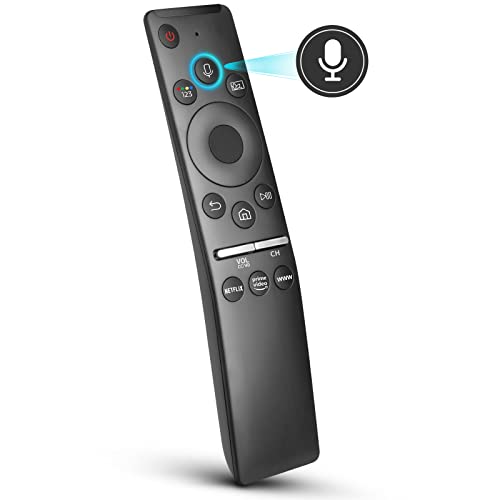
The EWO'S Voice Remote Replacement is designed specifically for Samsung smart television owners who need a direct, functional substitute for a missing or malfunctioning original controller. Engineered to communicate with Samsung QLED, Crystal UHD, The Frame, and 8K displays, this accessory delivers the core functionality that modern streaming requires. For apartment renters, busy families with kids, cord-cutters, and home theater fans, losing access to hands-free voice commands and quick app navigation can disrupt casual movie nights or weekend sports viewing. This unit steps in to restore full control without requiring complicated universal programming codes.
Day-to-day smart TV performance relies heavily on how smoothly a remote interacts with the onboard operating system. Compatible with Samsung Tizen smart platforms, this remote allows users to dictate search terms, jump between inputs for gaming consoles, adjust soundbar volume, and launch major streaming services like Netflix, Prime Video, and YouTube. Instead of painstakingly pecking out movie titles letter by letter on an on-screen keyboard, users can press the dedicated mic button to search libraries instantly. According to user feedback, button responsiveness is snappy, ensuring smooth transitions across menus and settings.
The build quality follows a clean, minimalist profile reminiscent of modern Samsung factory designs. It measures roughly 6.2 inches long and weighs under two ounces without batteries, making it easy to hold during long viewing sessions or bedtime binge watching. The layout keeps essential controls within thumb reach, including the directional navigation wheel, volume rocker, and playback keys. Pairing is handled over Bluetooth, freeing you from needing a strict, unobstructed line of sight to the lower bezel of your television when relaxing on the couch.
Initial pairing is straightforward and takes only a few moments. After powering on your Samsung display, you simply point the remote toward the TV sensor and hold the Return/Exit and Play/Pause buttons simultaneously for about five seconds. An on-screen prompt confirms the connection, allowing you to resume browsing immediately. Based on product specifications, this remote supports a long list of popular TV lines, including the TU8000, CU7000, CU8000, DU8000, and Q60 through Q90 series. However, users should verify that their specific television natively supports voice functions, as standard budget models lacking built-in voice hardware will not be able to process speech queries.
For homeowners, movie lovers, and gamers seeking an economical way to regain complete command over their Samsung home theater setup, this replacement controller provides practical utility and solid value. While it does not include batteries and requires a stable Wi-Fi connection on the display for voice parsing, its broad model support and swift Bluetooth setup make it a dependable pick for keeping your living room entertainment running smoothly.
Setting up this replacement remote is designed to be user-friendly, requiring no manual entry of four-digit universal codes. To begin, insert two fresh standard AAA batteries into the rear compartment, making sure polarity aligns properly with the internal terminals.
Turn on your Samsung television using the power button on the TV panel or an existing remote. Point the new remote toward the front sensor of the screen from a distance of two to three feet, then press and hold both the Return/Exit button and the Play/Pause button simultaneously for roughly five seconds.
Watch the display for an on-screen pairing icon followed by a notification confirming the connection to your smart controller. Once the message disappears, the remote is paired via Bluetooth and ready for daily streaming, gaming input selection, and volume control.
This remote is tailored to unlock the full potential of Samsung Tizen smart TV platforms. The integrated microphone supports voice recognition, enabling viewers to speak natural phrases to launch streaming apps, search for specific movie titles, or switch between connected HDMI devices.
Because the voice functionality operates directly through your television's operating system, an active Wi-Fi or Ethernet internet connection on the TV is necessary for speech processing. Once connected, it functions seamlessly with Samsung's supported voice assistants to control playback, pause sports broadcasts, or adjust picture presets on the fly.

Pros
- Quantum HDR with HDR10+ delivers impressive contrast and detail in bright and dark scenes.
- AI upscaling improves the look of HD and even standard-def content significantly.
- Samsung Gaming Hub offers a wide selection of cloud games with no hardware needed.
- Built-in Alexa and free streaming channels add great value for cord-cutters.
- Competitive price for a 65-inch QLED with advanced features.
Cons
- No Dolby Vision support, relying on HDR10+ which has less widespread content.
- Built-in speakers may lack deep bass for a truly cinematic experience; a soundbar is recommended.
- Limited to 60Hz refresh rate, which may not satisfy competitive gamers seeking 120Hz.
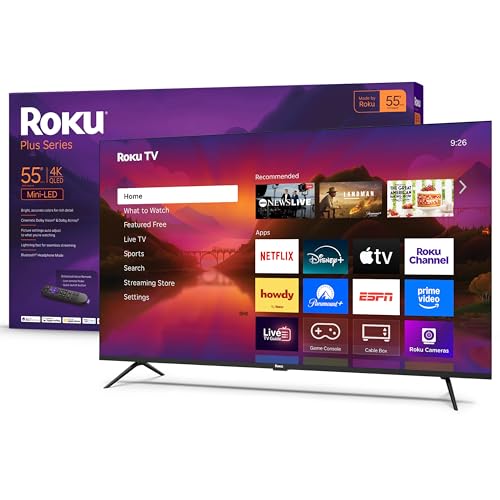
The Samsung 65Q7F is a 2025 model QLED 4K smart TV that aims to bring premium features to a more accessible price point. It combines Quantum Dot color technology with an AI-powered processor to enhance picture and sound in real time. This TV is designed for homeowners, apartment renters, and families who want a large, vibrant display for everyday entertainment without breaking the bank.
Picture quality is a strong suit here. The Quantum HDR (HDR10+) support delivers punchy highlights and decent black levels for a QLED panel. The AI upscaling is particularly useful for streaming older shows or cable content, making them look noticeably sharper. Colors are rich and accurate, and the TV handles bright room conditions well thanks to good peak brightness. However, it lacks Dolby Vision, which might disappoint home theater enthusiasts who prefer that format's wider availability.
For gamers, the Samsung Gaming Hub is a standout feature. It offers instant access to cloud gaming services like Xbox Game Pass and NVIDIA GeForce NOW without needing a console. The TV also supports Auto Low Latency Mode (ALLM) to reduce input lag, though it's limited to a 60Hz panel. This makes it great for casual and story-driven games, but competitive players may want a 120Hz model. The Object Tracking Sound Lite adds a sense of immersion, but the built-in speakers are average - a soundbar is a worthy upgrade for movie nights.
Smart TV performance is smooth thanks to the Tizen platform and the Q4 AI Gen1 processor. Apps load quickly, and the interface is responsive. Built-in Alexa allows for hands-free control, and Samsung Knox provides solid security for connected devices. The inclusion of over 2,700 free channels via Samsung TV Plus is a huge plus for cord-cutters, covering news, sports, and movies without any subscription.
Setup is straightforward: the TV comes with a simple stand, and VESA mounting is standard. The slim bezels give it a modern look that fits well in any living room or bedroom. Connectivity includes multiple HDMI ports (likely 2.1 on one port for eARC), USB, Wi-Fi, and Bluetooth. One limitation is the lack of HDMI 2.1 bandwidth for 4K at 120Hz, but for most users this won't be an issue.
Overall, the Samsung 65Q7F QLED TV is a strong contender for budget-conscious shoppers, families, and streamers who want a large 4K TV with excellent color, smart features, and gaming flexibility. It's not for hardcore gamers or those needing Dolby Vision, but for daily movie watching, sports, and casual gaming, it delivers impressive value.
The Samsung 65Q7F uses Quantum Dot technology to produce over a billion colors, resulting in vibrant, lifelike images. Quantum HDR with HDR10+ enhances contrast by dynamically adjusting brightness and color scene by scene. This means you get deeper blacks and brighter highlights in compatible content. The AI upscaling is effective at cleaning up lower-resolution sources, making HD and even standard-def look surprisingly sharp. While it doesn't support Dolby Vision, the HDR10+ performance is strong, and the TV handles reflections well in moderately lit rooms. For a QLED, black levels are good but not as deep as an OLED - some blooming may be visible in dark scenes with bright objects.
The Samsung Gaming Hub is the highlight for gamers, providing instant access to cloud gaming services like Xbox Game Pass, GeForce NOW, and Amazon Luna. The TV supports Auto Low Latency Mode (ALLM) to minimize input lag, making games feel responsive. However, the panel is limited to 60Hz, so it's best suited for single-player and story-driven titles rather than competitive shooters that benefit from higher frame rates. The Object Tracking Sound Lite helps with directional audio, but for a truly immersive gaming experience, a dedicated sound system is recommended. The TV also supports HDR10+ Gaming for enhanced visuals in supported titles.

Pros
- Matte screen finish effectively cuts glare from bright windows and indoor ambient lighting
- Flushes neatly against the wall with the included Slim Fit mount for a clean picture-frame profile
- Smooth 144Hz refresh rate and VRR support make it surprisingly capable for modern console and PC gaming
- Tizen platform offers swift access to major streaming apps, Samsung TV Plus, and built-in Alexa voice control
Cons
- Black levels and contrast in a pitch-black home theater do not match self-lit OLED displays
- Customizable magnetic frame bezels are sold separately to match specific room decor
- Slim built-in speakers lack deep low-end bass, making an external soundbar preferable for movie nights
The Samsung The Frame LS03F 55-Inch 4K QLED TV is crafted for viewers who desire a high-performance television that seamlessly integrates into interior home decor. Rather than occupying living room space as a blank black rectangle when switched off, this lifestyle display features Art Mode and an anti-reflective matte screen that mimics textured canvas prints or paper lithographs. It speaks directly to homeowners, apartment renters, and design-conscious folks who prioritize aesthetic harmony without sacrificing the digital features expected from a modern smart hub.
Under the hood, the NQ4 AI Gen2 Processor handles picture enhancement, color mapping, and standard-definition upscaling with finesse. The QLED panel delivers broad color volume and crisp 4K resolution, bringing vibrant saturation to wildlife documentaries, weekend football games, and cinematic streaming catalogs. What sets the display apart in real-world living spaces is its matte surface treatment. Glare from nearby windows or floor lamps is diffused across the panel, allowing daytime TV viewing and family cartoon sessions to proceed without distracting mirror-like reflections.
While built with art appreciation in mind, the LS03F holds serious appeal for gamers and sports fans. Supporting Variable Refresh Rate (VRR) up to 4K 144Hz alongside Auto Low Latency Mode (ALLM), the panel keeps fast-paced action fluid and responsive during console tournaments or high-speed racing titles. Tizen OS powers the streaming experience, offering rapid navigation through platforms like Netflix, Disney+, Prime Video, and YouTube. With built-in Alexa and Samsung Vision AI, finding a movie, launching an app, or tweaking ambient settings takes only a simple voice prompt.
The build of The Frame focuses on architectural minimalism. It includes a Slim Fit Wall Mount designed to hang the unit nearly flush with your drywall, closely replicating the look of a traditional framed canvas. Connecting power and peripherals is made remarkably tidy through an external connection hub, requiring only a single discreet wire running to the screen. For those seeking a tailored touch, magnetic bezels in various wood and metallic finishes can be snapped on effortlessly, though they are sold as standalone accessories.
Prospective buyers should consider their primary viewing environment before installation. While the QLED panel achieves ample brightness for sunlit rooms, it utilizes edge backlighting rather than full-array local dimming or self-lit pixels. In a dark home theater room, deep shadows and letterbox bars may appear somewhat elevated, showing subtle blooming compared to high-end OLED alternatives. Furthermore, while dialogue clarity remains distinct, the ultra-slim chassis limits low-frequency bass output, making a dedicated soundbar a worthwhile companion for blockbuster action sequences.
Based on product specifications and everyday living room requirements, the Samsung The Frame LS03F represents an exceptional hybrid solution for design-conscious homeowners, multi-purpose family rooms, and casual-to-serious gamers. It bridges the gap between sophisticated room styling and high-refresh entertainment, making it an outstanding investment for those who value wall aesthetics just as much as 4K clarity.
Art Mode transforms the television when entertainment takes a break. Rather than powering down into an empty screen, the display exhibits museum-curated classics, modern photography, or personal family portraits with authentic matte texture. The integrated brightness sensors automatically adapt the panel luminance according to ambient room lighting, preserving a natural, non-backlit look throughout the day.
Mounting the display is simplified by the included Slim Fit hardware, allowing the chassis to rest securely against wall surfaces. With the single thin wire routed to an external hub, media consoles and walls stay free from tangled cords, making it a natural centerpiece above living room credenzas or bedroom dressers.
Beneath its gallery-ready exterior, the LS03F doubles as a responsive gaming screen capable of handling current-generation consoles and gaming PCs. Supporting up to 4K 144Hz variable refresh rates, it minimizes screen tearing and motion blur during fast camera pans in first-person shooters and sports titles.
Auto Low Latency Mode instantly switches the display into game-optimized picture settings upon detecting a console signal. Combined with smooth frame interpolation for sports broadcasts, the TV keeps rapid action looking crisp whether you are hosting a Sunday football watch party or diving into an evening gaming session.

Pros
- Affordable replacement for lost or broken original Samsung remotes
- Voice control works well for basic commands and searches, adding convenience
- Compatible with a wide range of Samsung TV models from 2019-2026
- Durable build quality with high button press longevity
- Shortcut keys streamline access to streaming apps
Cons
- Voice and shortcut functions require original TV hardware support; may not work on all models
- No backlit buttons, which can be inconvenient for use in dark rooms
- Some users may find the build less premium than the original Samsung remote
If you have a Samsung smart TV from 2019-2026 and your original remote has gone missing or stopped working, the Acoyer replacement remote is a solid and budget-friendly solution. This remote is designed to work with a huge range of Samsung models, including QLED, LED, Frame, and Crystal series, making it a versatile pick for many households. It's especially good for streamers, cord-cutters, and families who want a simple way to control their TV without spending a lot.
One of the standout features here is the voice control capability. You can press the voice button and speak commands like 'Open Netflix' or 'Volume up,' which works well for hands-free navigation. However, it's important to note that this function relies on your TV's original hardware support. If your original remote didn't have voice control, this remote won't add it. The same goes for the four shortcut keys, which let you jump straight to popular streaming services. For most compatible models, these shortcuts are a real time-saver during movie nights or binge-watching sessions.
Build quality is decent for the price. The remote uses a durable ABS plastic shell that feels sturdy enough for everyday use. The buttons are well-spaced and have a satisfying click, and they're rated to withstand over 150,000 presses, which should last for years. The ergonomic shape fits comfortably in your hand, and the layout is intuitive, so even kids or older family members can pick it up and use it right away.
Setup is straightforward. Just insert the included batteries (usually AAA, but check the package), and the remote should pair automatically with your Samsung TV. If it doesn't, there's a simple pairing process in the manual. The remote works via infrared and Bluetooth on compatible models, offering reliable control from up to 40 feet away. It's a hassle-free replacement that gets you back to watching your favorite shows quickly.
There are a couple of limitations to keep in mind. The remote doesn't have backlit buttons, which can be annoying if you often watch TV in a dark room. Also, while the voice control works for basic commands, it's not as responsive as a dedicated smart speaker like an Amazon Echo or Google Nest. For most users, though, these are minor trade-offs given the low price.
Overall, the Acoyer replacement remote is a practical choice for Samsung TV owners who need a reliable backup or replacement. It's ideal for streamers, families, and anyone who wants voice control without paying for an expensive original remote. If you're a home theater enthusiast who needs advanced features like backlighting or a premium feel, you might prefer a first-party remote. But for everyday use, this remote gets the job done without breaking the bank.
Understanding Samsung QLED TV Pricing Tiers and Value Drivers
Evaluating the overall expense of acquiring a quantum dot display requires examining the underlying hardware, panel dimensions, and aesthetic form factor. Entry-tier models deliver vibrant nanocrystal color reproduction and dependable upscaling at an approachable financial tier. Mid-range and specialized lifestyle designs demand a higher initial investment because they integrate upgraded processors, faster refresh rates, and tailored installation hardware. Understanding where engineering advancements justify their higher price brackets ensures you select a television that aligns with your specific room environment and viewing habits.
Entry-Level Quantum Dot Displays: Everyday Entertainment and Streaming Value
Baseline quantum dot televisions serve as an accessible entry point for households upgrading from older standard LED LCD screens. Models such as the Samsung 65-Inch Class QLED Q7F Series Samsung incorporate nano-sized quantum dots capable of rendering over a billion distinct color shades without requiring a massive budget. This series relies on the Q4 AI Gen1 Processor to upscale legacy high-definition content to a crisp 4K presentation. Integrated dynamic tone mapping through HDR10+ helps balance contrast by bringing out fine shadow detail alongside bright highlights.
Software features on these introductory sets further enhance their overall ownership value without escalating purchase costs. Built-in streaming platforms like Samsung TV Plus provide immediate access to thousands of live streaming channels without necessitating recurring subscription commitments. Data protection remains a key consideration for modern smart households, supported by multi-layered Samsung Knox Security to protect connected smart home devices and user passwords. For budget-conscious shoppers seeking large-screen immersion, entry-tier QLED panels deliver exceptional screen surface area for an economical outlay.
Premium Lifestyle Engineering: The Cost Behind Specialized Design and Art Modes
Aesthetic-focused televisions occupy a premium tier because their structural architecture requires bespoke engineering beyond standard living room displays. The Samsung 55-Inch Class The Frame LS03F 4K QLED exemplifies this lifestyle tier, combining high-grade television performance with an authentic picture frame aesthetic. Its ultra-slim chassis mounts flush against the drywall using specialized slim fit wall mounting hardware. All audio, visual, and power signals route through an external connection hub via a single, nearly invisible cable, eliminating unsightly cord clutter across your entertainment space.
Screen coatings represent another tangible hardware upgrade that drives up the investment in lifestyle displays. The Frame utilizes a specialized matte screen surface that diffuses room illumination to deliver a virtually glare-free, print-like visual texture. Integrated ambient light sensors activate Art Mode when the display is idle, showcasing curated masterpieces from digital galleries or private photo collections. Choosing dedicated 55-inch display options in this designer category requires weighing aesthetic room integration against traditional flat-panel performance benchmarks.
Underneath its artistic exterior, lifestyle engineering frequently incorporates flagship-grade processing components. The NQ4 AI Gen2 Processor dynamically manages scene-by-scene audio and video parameters to suit varying ambient conditions. Enthusiasts also gain competitive responsiveness, with high-tier iterations supporting smooth variable refresh rate gaming up to 4K at 144Hz. While this specialized format commands a noticeable pricing premium over standard models, it uniquely eliminates the traditional black rectangle dominating your living room wall.
Screen Sizing Curves and Field-of-View Economics
Display dimensions represent the single largest variable determining the retail price tier across Samsung’s quantum dot catalog. Moving from a compact secondary-room display up to a centerpiece home theater screen exponentially increases the surface area of glass and optical layers. While smaller sizes suit home offices and bedrooms, manufacturing efficiencies decline as mother glass substrates yield fewer massive sheets. Consequently, pricing curves rise sharply once panel dimensions cross the sixty-five-inch threshold.
Seating distance formulas recommended by organizations like SMPTE and THX assist buyers in spending their display budget strategically. An optimal cinematic experience generally calls for a thirty to forty-degree field of view from your primary sofa position. If you sit eight to ten feet away, investing in a sixty-five-inch panel yields far greater visual immersion than paying for a smaller flagship screen. Balancing physical room dimensions against panel expense prevents the frustration of buying an undersized screen that fails to engage the viewer.
Installation considerations also expand as panel sizes increase into seventy-five-inch and eighty-five-inch configurations. Heavy large-format screens require sturdy drywall stud anchoring, heavy-duty VESA brackets, and careful two-person lifting procedures. Secondary costs for rated wall mounts and reinforced furniture should be calculated alongside the television purchase itself. Selecting the ideal size class requires aligning spatial ergonomics with both panel cost and mounting hardware requirements.
Refresh Rates and Gaming Capabilities Across Price Points
Internal panel refresh rates create a distinct dividing line between budget-tier offerings and performance-oriented displays. Entry-level quantum dot units typically employ standard sixty-hertz panels that suffice for streaming television and casual cinematic viewing. In contrast, higher-tier series feature native one-hundred-twenty-hertz or one-hundred-forty-four-hertz panels designed for high-motion fidelity. This hardware upgrade directly impacts smoothness during fast camera pans and competitive gaming sessions.
Console and PC gaming enthusiasts must evaluate high-speed connectivity before settling on a specific price bracket. Higher-end models support HDMI 2.1 bandwidth across dedicated ports, unlocking four-kilohertz gaming at high frame rates with Auto Low Latency Mode. Smooth motion rendering during live sports action and gaming is further enhanced by AMD FreeSync and variable refresh rates. Evaluating fast motion tracking for live sports shows how higher refresh panels eliminate annoying motion blur during critical plays.
Dedicated game interfaces also contribute to the overall value proposition of modern Samsung displays. Features like the Samsung Gaming Hub allow users to stream cloud titles directly without owning a standalone physical console. Input lag is minimized to single-digit or low-teen millisecond benchmarks when Game Mode is engaged. If your entertainment relies heavily on interactive media, investing in high-refresh gaming capabilities delivers tangible day-to-day satisfaction.
Picture Processing, AI Upscaling, and HDR Format Dynamics
The onboard neural processing engine significantly influences visual quality and accounts for substantial variations across model tiers. Introductory processors like the Q4 AI Gen1 focus on standard noise reduction and intelligent color mapping. Step-up engines such as the NQ4 AI Gen2 utilize sophisticated multi-neural networks to analyze textural depth and sharpen lower-resolution broadcasts. These computational enhancements ensure vintage programs and live cable feeds appear sharp on high-density 4K panels.
High dynamic range reproduction represents another critical domain where hardware tiers diverge. Samsung relies extensively on the royalty-free HDR10+ standard, utilizing dynamic metadata to adapt scene brightness on a frame-by-frame basis. Nano-engineered quantum dots maintain high color saturation even when backlight output peaks in luminous outdoor sequences. However, Samsung does not support proprietary Dolby Vision licensing, meaning dynamic tone mapping relies entirely on internal chipset computation.
Color volume performance remains remarkably consistent across the entire quantum dot family due to inorganic nanocrystal filters. Even budget models produce over a billion distinct shades, preventing gross banding across skies and sunsets. Step-up models differentiate themselves by driving these colors with higher peak sustained luminance, enhancing specular highlights. Understanding these processing distinctions helps buyers determine whether premium AI upscaling aligns with their daily viewing sources.
Backlight Architecture: Edge-Lit, Full Array, and Quantum Matrix Distinctions
Backlight engineering serves as the foundational pillar dictating both television contrast and retail cost. Affordable QLED models frequently employ edge-lit configurations, positioning LEDs along the display perimeter to keep the chassis slender. While edge lighting lowers production expenses, it struggles to produce deep, uniform blacks in light-controlled cinema rooms. Viewers may observe slight illumination bleeding around high-contrast edges or bright subtitles against dark letterbox bars.
Stepping up to Full Array Local Dimming or advanced Mini-LED backlighting commands a steeper price tag for measurable visual gains. Mini-LED arrays pack thousands of microscopic diodes behind the liquid crystal layer, grouped into hundreds of individually managed dimming zones. This dense zoning dramatically suppresses blooming while delivering intense peak nit brightness for daylight viewing. The resulting static contrast approaches organic self-emissive displays while retaining complete immunity to permanent image retention.
Assessing your viewing room lighting conditions is essential when deciding between these backlight architectures. Sun-drenched living rooms with floor-to-ceiling windows benefit enormously from the intense brightness of multi-zone backlights. Conversely, bedrooms with dim ambient illumination can often get by with standard backlights if extreme contrast is not a priority. Investing in sophisticated backlight arrays makes financial sense primarily for cinephiles and high-ambient spaces.
Long-Term Ownership and Accessory Replacement Costs
Calculating the real cost of owning a television involves looking beyond the initial panel purchase to consider operational durability. Quantum dot televisions utilize inorganic nanocrystals that do not degrade over time or suffer from permanent screen burn-in. This structural resilience makes QLED panels ideal for displays that showcase static news tickers, desktop operating systems, or extended gaming HUDs. Lower long-term maintenance anxiety provides significant peace of mind over a multi-year ownership cycle.
Remote controls represent a common secondary accessory expense that can arise during the lifespan of your display. Reliable third-party alternatives, such as the Voice Remote for Samsung Smart TV QLED UHD Frame from EWO’S, offer an economical solution when original controllers are misplaced. This unit provides voice interaction and simple five-second button pairing across numerous Samsung QLED, Frame, and Crystal UHD series. Maintaining smart navigation through affordable replacements ensures your smart TV experience remains effortless.
Similarly, options like the replacement remote for Samsung displays from Acoyer provide durable ABS construction with responsive buttons. This replacement device incorporates voice navigation and four dedicated streaming shortcut keys to streamline app launching across wide model years. Having access to affordable, responsive accessories protects your initial television investment from unnecessary operational frustration. High-wear components should never compromise the convenience of your primary home theater display.
Strategic Buying Decisions and Practical Value Assessment
Choosing the right Samsung QLED television ultimately depends on matching hardware specifications to your real-world room constraints. If your space features modest ambient lighting and standard streaming demands, entry-level models deliver exceptional color fidelity and dependable 4K resolution. Investing in premium tiers becomes necessary when you require wide-angle matte anti-glare coatings, flush wall mounting, or high-refresh gaming bandwidth. Prioritizing core display requirements over superfluous features guarantees maximum return on your home entertainment budget.
Carefully balance screen size, backlight capability, and secondary hardware costs before committing to a purchase. Factor in necessary accessories such as sturdy VESA wall mounts, high-speed HDMI cables, and ergonomic voice remotes to ensure smooth setup. By focusing on verified display traits such as quantum dot color saturation, dynamic HDR processing, and panel refresh rates, you can select a television with confidence. A thoughtful assessment of your room conditions ensures your new display delivers years of engaging, immersive entertainment.





Write Your Review
No reviews yet. Be the first to share your experience!