


Unpacking a brand-new self-emissive television brings unmatched excitement, but modern displays require deliberate physical handling and software calibration to realize their full visual potential. Learning how to setup lg oled evo tv hardware correctly ensures that delicate organic light-emitting panels deliver reference-grade contrast, immaculate black levels, and vibrant color accuracy right out of the box. Many home theater owners inadvertently leave restrictive eco-saving settings engaged, which diminishes peak specular highlights and compromises overall picture dynamics.
Proper placement, secure cable management, and correct picture mode selection allow modern self-lit displays to achieve true cinematic fidelity in both bright living rooms and light-controlled theater spaces. Whether you are transitioning from traditional edge-lit LCD screens or upgrading from budget OLED displays, establishing clean HDMI 2.1 handshakes and configuring motion processing properly makes a substantial visual difference. Taking the time to dial in custom gaming parameters and automated panel care routines will also safeguard longevity while unlocking responsive high-frame-rate performance.


Pros
- Infinite contrast ratio with pixel-level dimming for exceptional dark-room movie watching
- Four HDMI 2.1 ports provide high versatility for multiple modern gaming consoles and PC rigs
- Exceptionally wide viewing angles keep color and brightness consistent across broad living room seating
- Comprehensive HDR format support including Dolby Vision IQ and HDR10
- Smooth motion handling with sub-millisecond pixel response times for fast sports and action films
Cons
- Peak screen brightness is lower than premium Mini-LED displays in sun-drenched rooms with direct sunlight
- Glossy glass surface can pick up noticeable reflections from nearby unshaded lamps or windows
- Substantial weight and wide 77-inch dimensions require two people for assembly and a wide media console
The LG C1 Series 77-inch OLED TV (OLED77C1PUB) is a premium large-format 4K display engineered to bring reference-grade cinema visuals into residential entertainment spaces. Built with self-lit OLED pixels, this television eliminates the need for standard LED backlighting, producing infinite contrast and absolute black levels. It is particularly well suited for dedicated home theater enthusiasts, serious console gamers, movie lovers, and sports fans looking to anchor a basement theater or spacious living room with an expansive 77-inch canvas.
In real-world viewing conditions, the a9 Gen 4 AI Processor 4K handles content upscaling and motion processing with exceptional clarity. Because each pixel turns completely off when displaying black, scenes in movies and dark video game corridors show no blooming or backlight bleed around bright subtitles. Support for Dolby Vision IQ balances dynamic tone mapping based on ambient room light, while vibrant color volume makes high dynamic range HDR10 content pop. Off-angle viewing is virtually flawless, ensuring guests sitting along the perimeter of the room during Sunday football games or holiday watch parties enjoy the exact same color fidelity as those seated front and center.
Gamers will appreciate the comprehensive HDMI 2.1 implementation across all four ports, supporting 4K resolution at 120Hz alongside Variable Refresh Rate (VRR), Auto Low Latency Mode (ALLM), NVIDIA G-Sync compatibility, and AMD FreeSync Premium. Input lag remains imperceptible in Game Optimizer mode, giving fast-paced multiplayer titles on current-generation consoles seamless responsiveness. For audio connectivity, the eARC port simplifies sending uncompressed Dolby Atmos signals directly to a dedicated receiver or soundbar system, while built-in WiSA readiness provides support for compatible high-fidelity wireless speaker configurations.
The physical design showcases an ultra-thin panel profile framed by razor-thin bezels, mounted to a substantial metal pedestal stand that directs sound forward toward the audience. Running LG webOS, the interface provides intuitive access to streaming favorites like Netflix, Prime Video, Disney+, and YouTube, accompanied by built-in hands-free voice commands through Amazon Alexa and Google Assistant. Setup and initial navigation feel smooth via the ergonomic LG Magic Remote, which includes point-and-click cursor tracking and dedicated hotkeys for popular services.
Like most traditional OLED panels, the screen delivers moderate peak brightness compared to high-end Mini-LED alternatives, meaning daytime viewing in sun-drenched rooms with uncovered windows can reveal occasional glare and reflections. Additionally, the sheer size and weight of the 77-inch display mean two people are required for safe assembly and wall mounting via standard VESA brackets. For shoppers seeking authentic cinema contrast, responsive gaming capabilities, and an expansive centerpiece for movie nights and weekend sports watch parties, the LG C1 77-inch represents an exceptional balance of high-end display engineering and long-term home entertainment value.
The core strength of the LG C1 lies in its self-emissive OLED panel, where over eight million individual pixels regulate their own brightness independently. This design produces pitch-black letterbox bars, true starfields without halo artifacts, and shadow details that backlit LCD displays frequently wash out. Color accuracy out of the box is natural, making skin tones appear realistic during network dramas and preserving cinematic filmmaker intent.
High dynamic range performance is bolstered by Dolby Vision IQ, which measures room lighting to fine-tune highlight intensity and shadow gradation dynamically. Fast motion during hockey games, basketball matchups, or high-speed racing shows minimal blur due to near-instantaneous pixel response times. While bright living spaces with direct sunlight may challenge its overall luminance, ambient light control reveals a depth of picture that remains among the most satisfying in the industry.
Console and PC gamers will find the LG C1 well equipped for high-performance play. All four HDMI inputs support the full HDMI 2.1 standard at 48Gbps bandwidth, facilitating 4K gaming at 120Hz with HDR enabled. The integrated Game Optimizer menu consolidates critical adjustments, allowing players to adjust black stabilizer settings, verify active refresh rates, and toggle low-latency presets without digging through complicated system menus.
Support for VRR, NVIDIA G-Sync, and AMD FreeSync Premium eliminates screen tearing and stutter during demanding visual sequences. Input latency drops below 10 milliseconds in game mode, offering immediate controller feedback for competitive shooters, sports simulations, and rhythm games. Combined with the expansive 77-inch viewing area, the display delivers an intensely immersive setup for gaming marathons.


Pros
- Infinite contrast and pure black levels create peerless picture depth in dark rooms.
- Outstanding gaming suite with 144Hz support, four HDMI 2.1 ports, and near-instant response time.
- Wide viewing angles keep colors and brightness consistent from every seat on the couch.
- Guaranteed five years of webOS system updates ensures long-term app support and platform freshness.
Cons
- Cannot achieve the blistering peak brightness levels of premium Mini-LED TVs in rooms with direct sunlight.
- Built-in speakers offer clear dialogue but lack the deep low-end bass needed for movie blockbusters.
- The webOS interface features sponsored content tiles that require initial customization to streamline.
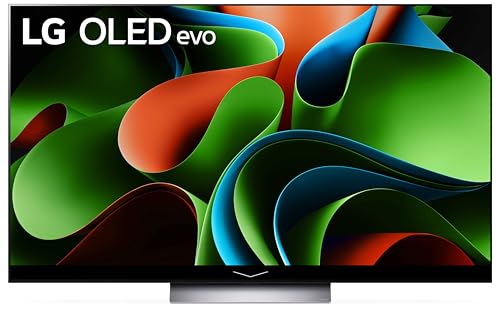
The LG OLED evo C4 Series 65-inch television sits firmly at the forefront of premium home entertainment displays. Geared toward home theater enthusiasts, serious gamers, movie lovers, and sports fans, this model blends self-emissive panel precision with modern processing. Whether mounted as the centerpiece of a dedicated basement media room or placed in an apartment living area, it caters directly to viewers who prioritize pure contrast, accurate colors, and responsive performance over raw, unrefined panel brightness.
Visual performance centers around more than eight million self-lit pixels that can turn off completely, generating infinite contrast ratios that eliminate the annoying light bleed and blooming typical of backlit LCD panels. LG pairs this panel with Brightness Booster technology and the a9 AI Processor Gen7, yielding punchy specular highlights and rich color fidelity across varied content. High dynamic range mastering looks stellar through Dolby Vision and Filmmaker Mode, while standard-definition cable sports and older streaming catalogs receive refined clarity via real-time AI Super Upscaling.
For gamers, the C4 delivers an elite level of responsiveness. It supports up to a 144Hz refresh rate with an ultra-fast 0.1ms response time, providing blur-free motion in fast-paced shooters and driving simulations. Full compatibility with NVIDIA G-Sync, AMD FreeSync Premium, Variable Refresh Rate (VRR), and Auto Low Latency Mode (ALLM) ensures tear-free gameplay. The TV includes four full-bandwidth HDMI 2.1 inputs, allowing console owners, PC gamers, and soundbar users to keep all their gear connected without swapping cords or sacrificing bandwidth.
Daily operation through LG's webOS platform is snappy, providing direct access to essential streaming services such as Netflix, Prime Video, Disney+, and YouTube. The included Magic Remote functions like an on-screen mouse pointer, streamlining text input and menu navigation, while built-in Alexa allows convenient voice control for smart home adjustments. Under the webOS Re:New program, LG guarantees operating system upgrades for five years, providing peace of mind regarding app compatibility and interface longevity.
In terms of audio and design, the ultra-slim panel and minimal bezels look elegant in any room, whether on its central pedestal stand or fixed flat against a wall via standard VESA mounts. The integrated sound system decodes Dolby Atmos and provides crisp dialogue for everyday television, though deep cinematic rumble still calls for a dedicated soundbar or surround system. For homeowners, apartment renters, and home theater creators wanting benchmark black levels, fluid gaming, and dependable smart streaming, the LG C4 stands as an easy top recommendation.
Picture performance on the LG OLED evo C4 is highlighted by absolute black levels and unmatched contrast. Because every individual pixel generates its own light, dark movie sequences show zero haloing around subtitles or bright streetlights, preserving the director's original vision.
The combination of LG's Brightness Booster and the a9 AI Processor Gen7 delivers impressive highlight punch, making HDR10 and Dolby Vision titles leap off the screen with vibrant, accurate colors. Wide viewing angles ensure that family members and guests watching from side chairs experience the same color saturation and clarity as those sitting directly in front.
Equipped with a native 144Hz refresh rate and an exceptional 0.1ms pixel response time, the LG C4 is purpose-built for both current-generation game consoles and high-end PC rigs. Input lag is practically imperceptible, keeping competitive gameplay sharp and fluid.
With four 48Gbps HDMI 2.1 ports, players can connect a PlayStation 5, Xbox Series X, and gaming PC at the same time while still reserving an eARC port for audio. The LG Game Optimizer overlay offers immediate access to VRR, G-Sync, black stabilizer, and genre-specific display presets without leaving your match.

Pros
- Wireless Zero Connect Box simplifies clean wall mounting by eliminating visible source cables running to the panel.
- Incredible OLED contrast, pure black levels, and wide viewing angles ideal for large sectional seating.
- Full gaming suite with 120Hz, VRR, ALLM, FreeSync Premium, and G-SYNC support for modern consoles and PCs.
- Powerful a9 AI Processor Gen6 delivers exceptional upscaling for cable broadcasts and fast-action sports.
- Included 2-year CPS protection plan adds peace of mind for a large-screen television investment.
Cons
- Massive 83-inch panel requires significant wall space, sturdy mounting studs, and at least two people for setup.
- High-end wireless connectivity and large OLED panel size represent a significant financial investment.
- OLED screens can experience reflections in rooms with intense direct sunlight compared to bright Mini-LED models.
The LG 83-Inch Class M3 Series OLED evo 4K Smart TV is a premium large-format display designed for cinephiles, sports fans, and console gamers seeking an uncompromising home entertainment experience. What distinguishes the M3 series from traditional large screens is its wireless Zero Connect Box, which allows external devices like gaming consoles, streaming boxes, and Blu-ray players to transmit full 4K 120Hz video and audio through the air directly to the display. For homeowners who want a clean, minimalist wall installation in a main living room or basement theater without cutting into drywall for cable runs, this design represents a major leap in convenience.
Visual quality is anchored by LG's self-lit OLED evo panel, where millions of individual pixels turn completely off to achieve true black levels and infinite contrast. Under the hood, the a9 AI Processor 4K Gen6 analyzes incoming content in real time, sharpening lower-resolution cable sports feeds and enhancing shadow details in dark movie scenes. Support for Dolby Vision ensures high dynamic range movies showcase realistic highlights, while exceptionally wide viewing angles keep colors and brightness consistent no matter where friends or family sit during a weekend watch party.
Gamers will appreciate the comprehensive performance suite engineered into this display. With a native 120Hz refresh rate, low input lag, and support for variable refresh rate (VRR) alongside NVIDIA G-SYNC and AMD FreeSync Premium, the M3 handles high-speed action without screen tearing or stutter. Whether running fast-paced racing simulations or competitive first-person shooters on modern game consoles, the motion remains crisp and responsiveness feels immediate on an expansive 83-inch canvas.
Smart streaming is powered by LG's webOS platform, which provides intuitive navigation, personalized content hubs, and quick access to top streaming apps including Netflix, Apple TV+, and YouTube. Voice assistant integration allows for hands-free search and volume adjustments. Audio is handled with onboard Dolby Atmos decoding to produce clear dialogue and an expansive soundstage, though the Zero Connect Box also provides seamless eARC connectivity to send multi-channel audio to an external soundbar or dedicated home theater receiver.
While the M3 series delivers remarkable performance, practical considerations should be kept in mind before ordering. An 83-inch television requires substantial wall space and careful two-person handling during placement, and the Zero Connect transmitter operates best with a clear path toward the display. For movie lovers, gamers, and homeowners looking to build an uncluttered, reference-grade entertainment center, this LG bundle delivers an exceptional blend of picture fidelity, wireless convenience, and long-term protection.
LG's Zero Connect technology separates the traditional inputs from the TV chassis into an independent transmitter unit. Users can plug their gaming consoles, cable boxes, sound systems, and streaming dongles directly into the Zero Connect Box located across the room or inside an AV cabinet, leaving only the power cord connected to the television itself.
The system uses proprietary high-frequency wireless transmission capable of delivering uncompressed 4K video at up to 120Hz along with Dolby Atmos audio without noticeable latency. This setup is particularly advantageous for homeowners mounting above a fireplace, across an open-concept living area, or on an accent wall where running in-wall conduit is difficult or impossible.
Equipped with HDMI 2.1 bandwidth, the M3 series supports modern gaming features including 4K at 120Hz, Auto Low Latency Mode (ALLM), and quick response times. The inclusion of both NVIDIA G-SYNC and AMD FreeSync Premium ensures smooth frame rates across consoles and high-end gaming desktop PCs.
LG's Game Optimizer dashboard provides quick on-screen adjustments for input lag, black stabilizer settings, and genre-specific picture modes. The massive 83-inch display delivers a deeply immersive gaming environment where fine textures, vivid HDR lighting, and shadow details are rendered with pinpoint accuracy.
Step-by-Step Configuration and Calibration for LG OLED Evo Displays
Unboxing a premium television requires methodical preparation to avoid structural damage and ensure optimum picture fidelity. Getting the initial configuration right establishes the foundation for accurate color tracking, uncompressed spatial audio, and rapid gaming response times. Following a structured procedure eliminates visual artifacts, avoids aggressive automated dimming, and protects delicate organic emissive layers over years of daily enjoyment.
Unboxing and Safe Handling of Ultra-Thin Emissive Panels
Self-emissive displays feature razor-thin upper chassis designs that lack the rigid structural backing found on standard back-lit televisions. Handling these fragile glass panels demands a coordinated two-person lift to prevent flexing or micro-cracking across the screen substrate. Never lift the television by gripping the top corners or pinching the thin outer edges where pressure concentrates. Keep your hands positioned securely along the lower third of the chassis where internal components provide reinforced structural support.
Preparing a clean, level surface covered with a soft blanket helps when assembling the central pedestal stand or attaching mounting brackets. Align the provided stand base with the lower chassis slots, securing all included machine screws evenly without over-torquing the threads. For wall installations, confirm that the VESA mounting plate matches the rear bolt pattern and that your wall anchors attach firmly into structural wall studs. Leaving sufficient clearance behind the television promotes adequate thermal airflow around the internal video processors and power delivery components.
High-Bandwidth HDMI 2.1 Cabling and Peripheral Connection
Modern OLED displays provide full-bandwidth HDMI 2.1 inputs capable of passing 4K signals at high refresh rates. Utilizing certified Ultra High Speed HDMI cables rated for 48Gbps ensures stable signal transmission without intermittent black-screen dropouts or color compression. Connect modern gaming consoles, streaming boxes, and high-end gaming PCs directly to these primary ports rather than routing through older audio equipment that lacks modern passthrough bandwidth. Inspect each cable connection to ensure the jack sits flush and perpendicular against the recessed side terminal bay.
Pay close attention to port numbering when incorporating external sound equipment into your home theater setup. Dedicated audio systems should connect exclusively to the designated eARC port, typically labeled as HDMI 2, to facilitate uncompressed Dolby Atmos and multi-channel PCM passthrough. Routing your primary audio hardware through this specific interface avoids bandwidth conflicts and enables seamless unified volume control via consumer electronics control protocols. Keep power cords physically separated from video interconnects along the cable management channels to prevent electrical interference.
Initial webOS Setup and Disabling Automated Energy Dimming
Powering on the television for the first time launches the automated webOS setup wizard. Pair your Magic Remote by pressing the central scroll wheel, then connect the television to a stable high-speed Wi-Fi network or hardwired Ethernet connection. Complete the regional prompts and terms of service agreements, making sure to select standard home use rather than store demonstration mode. Store demonstration profiles lock display output into an over-saturated, excessively bright state designed strictly for retail showroom lighting.
Factory environmental regulations mandate aggressive power-saving profiles that ship enabled by default on modern smart televisions. These energy-saving features automatically throttle OLED pixel luminance and engage ambient light sensors that crush specular highlights in standard viewing environments. Navigate immediately to the main Settings menu, choose General, select Energy Saving, and switch Energy Saving Step to completely off. Disabling this automated restriction immediately unlocks the panel’s authentic luminance ceiling and stabilizes full-field image brightness across all inputs.
Picture Mode Calibration for Accurate SDR and HDR Cinema
Achieving accurate color reproduction begins by switching away from factory Standard, Eco, or Vivid picture presets. For standard dynamic range broadcasting, select Filmmaker Mode or ISF Expert Dark Space to align the display with industry mastering standards. Filmmaker Mode automatically establishes the correct 6500K color temperature, neutralizes artificial edge enhancement, and presents film content in its original aspect ratio. This reference preset ensures that skin tones, shadow detail, and color saturation match director intent without artificial post-processing tinting.
When watching high dynamic range formats, the television detects incoming signals and switches to dedicated HDR10 or Dolby Vision picture profiles. Choose Filmmaker Mode for standard HDR10 content, and select Dolby Vision Cinema or Cinema Home when streaming compatible premium titles. Adjust OLED Pixel Brightness to maximum for high dynamic range playback to maximize the impact of specular highlights, but leave basic Contrast at its factory default value. Setting Dynamic Tone Mapping to On can brighten darker scenes, though leaving it set to HGiG or standard tone mapping preserves calibrated luminance tracking.
Optimizing SDR Brightness and Day-Night Ambient Adaptation
Standard dynamic range content such as daytime broadcast sports and vintage television sitcoms requires balanced luminance scaling to avoid visual fatigue. While high dynamic range mastering benefits from running OLED Pixel Brightness at its ceiling, SDR mastering is targeted for lower overall room luminance. Set SDR OLED Pixel Brightness between 35 and 50 for dark-room cinema environments, or raise it to 70 or 80 if your display sits in a brightly lit room with ambient daylight. Keeping the basic contrast setting locked near 85 ensures that white clipping does not wash out delicate cloud textures or bright athletic jerseys.
Users watching television in rooms with fluctuating sunlight should consider utilizing the Peak Brightness setting located under the advanced brightness sub-menu. Setting Peak Brightness to Medium or High introduces an extra boost of luminance for SDR imagery without corrupting chromatic tracking across midtones. Leaving ambient light sensor toggles disabled prevents the television from unexpectedly dimming during sudden cloud cover or sunset transitions. This manual control maintains consistent viewing comfort across day and night sessions while protecting the subpixels from needless thermal stress.
Managing Motion Handling and 24p Cadence Without Stutter
Self-emissive pixels transition states nearly instantaneously, measuring response times under 0.1 milliseconds. This blistering pixel response eliminates LCD-style motion blur, but it can introduce visible frame stutter during slow 24-frame-per-second cinematic camera pans. Because each frame holds statically on screen before switching instantaneously to the next, sensitive viewers may notice a slight jumpy cadence during horizontal tracking shots. Managing this visual characteristic requires precise motion menu adjustments rather than heavy frame interpolation.
Open the advanced Picture settings, navigate to Clarity, and scroll down to the TruMotion configuration menu. Enable Real Cinema to ensure 24p film cadences pull down correctly without introducing unnatural telecine judder. For viewers who find raw 24p panning slightly jarring, switch TruMotion to User Selection and set De-Judder to a subtle value between 1 and 2 while leaving De-Blur at 0. This modest adjustment smooths out abrupt cinematic transitions without introducing the artificial soap opera effect that ruins film texture.
Configuring Game Optimizer for Low Input Lag and Variable Refresh Rates
Connecting modern gaming hardware unlocks the specialized Game Optimizer menu, which activates dedicated ultra-low latency processing pipelines. Enabling Game Optimizer automatically engages Auto Low Latency Mode and drops total input lag well below ten milliseconds for lightning-fast controller responsiveness. The on-screen Game Dashboard overlay allows users to monitor real-time frame rates, variable refresh status, and black stabilizer levels directly over active gameplay. Ensure that 4K Deep Color is set to 4K in the external device connection menu to allow full chroma 4:4:4 color transmission.
Variable refresh rate support eliminates screen tearing and frame pacing inconsistencies during demanding graphics rendering. Inside the Game Optimizer sub-menu, toggle both VRR and G-Sync alongside AMD FreeSync Premium to active status. For console gaming on modern consoles, configure system HDR calibration screens with the television set to HGiG mode rather than dynamic tone mapping. HGiG ensures that the game engine handles tone curves internally, mapping highlight details cleanly without double-processing highlight clipping.
Audio Passthrough and Sound Output Optimization
Built-in downward-firing television speakers deliver functional dialogue, but physical cabinet constraints limit bass extension and dynamic spatial immersion. Integrating dedicated external soundbars or surround receivers elevates the listening experience to match the television’s exceptional visual presentation. If you are comparing sound reproduction options across home entertainment displays, reviewing televisions designed for clear sound quality can help clarify how specialized audio configurations handle dialogue clarity and multi-channel imaging.
Navigate to the Sound menu and set Sound Out to HDMI eARC Device to direct multi-channel soundtracks to your external audio system. Open Advanced Settings, verify that eARC Support is toggled on, and switch Digital Sound Output from Auto to Passthrough. Selecting Passthrough instructs the television’s internal processor to transmit bitstream Dolby Atmos, DTS, and multi-channel uncompressed linear PCM directly to the audio receiver without downmixing. This pure bitstream pipeline eliminates audio processing latency and maintains complete acoustic fidelity across complex film soundtracks.
Essential Panel Care Routines and Burn-In Mitigation
Organic light-emitting diodes utilize carbon-based compounds that gradually degrade with heat and continuous static luminance exposure. Modern webOS firmware integrates several automated maintenance algorithms directly into system menus to safeguard panel longevity and prevent permanent image retention. Open General settings, scroll to OLED Care, and select OLED Panel Care to view available automated mitigation utilities. Confirm that Screen Move is enabled, as this setting imperceptibly shifts image boundaries periodically to distribute static pixel workloads across adjacent subpixel clusters.
Adjust Logo Brightness is another vital protective setting that detects static HUDs, broadcast banners, and news tickers, dimming their localized intensity automatically. Keep this feature configured to Low or High to mitigate risk during prolonged gaming sessions or extended cable news viewing. Never unplug the television from the wall outlet or turn off smart surge protectors immediately after viewing sessions conclude. The television initiates automatic short compensation cycles in standby mode after every four cumulative hours of use, and cutting mains power interrupts these vital maintenance routines.
Matching Viewing Distance to Commercial Mother Glass Cuts
Consumer display panels are produced from standardized commercial mother glass substrates, resulting in distinct diagonal cuts measuring 42, 48, 55, 65, 77, 83, and 97 inches. Shoppers migrating from older liquid crystal displays often search for non-existent sizes like 50-inch, 70-inch, or 75-inch models. In these situations, sizing up to a 55-inch or 77-inch OLED panel provides an immediate upgrade in field-of-view immersion. Exploring giant screen OLED displays clarifies how premier flagship glass sizes transform expansive home theater environments while preserving pixel density.
Determine your optimal screen cut by measuring the distance between your primary seating position and the display wall. For standard high-definition and 4K cinema viewing, a 65-inch or 77-inch display generally accommodates seating distances between seven and ten feet comfortably. Compact spaces, such as bedrooms or desktop gaming desks, benefit from 42-inch or 48-inch form factors that maintain sharp pixel density at near-field viewing ranges. Ensuring an appropriate screen size prevents neck strain and maximizes the immersive impact of the self-emissive 4K canvas.
Troubleshooting Signal Dropouts and Verifying Performance
Intermittent signal loss, sparkling pixels, or sudden black screens usually indicate HDMI handshake failures rather than internal panel malfunctions. When experiencing signal drops, verify that your HDMI cable connects directly into a primary 48Gbps port without intermediary switches or unpowered extension adapters. Access the hidden signal diagnostic dashboard by opening the Channels menu and pressing the number 1 key five times rapidly on your Magic Remote. This diagnostic window displays real-time signal resolution, active color space, HDMI bandwidth rate, and HDCP handshake status for immediate troubleshooting.
Firmware updates periodically optimize internal tone-mapping curves, improve gaming handshake stability, and enhance overall webOS responsiveness. Check for software updates under the General menu upon completing initial setup, and consider enabling automatic background downloads. Avoid entering unauthorized service menus to alter factory thermal limiters or disable Automatic Brightness Limiter safeguards, as doing so voids manufacturer panel warranties. Taking the time to properly install, calibrate, and maintain your display guarantees thousands of hours of spectacular home theater entertainment.





Write Your Review
No reviews yet. Be the first to share your experience!