

Navigating modern television marketing often feels overwhelming when retail displays throw technical acronyms together without clear context. Shoppers frequently ask what is qled vs oled vs smart tv because store signage mixes fundamental screen hardware with software features as if they were competing display choices. Understanding this landscape begins by separating how a television illuminates its picture from how it streams your favorite content. Display panels rely on either self-illuminating pixels or backlight filters, while connected streaming systems handle the applications and interface navigation. Learning these core differences prevents costly shopping mistakes and ensures you get the exact visual performance your living space requires.
Emissive displays deliver unmatched dark-room contrast with perfect per-pixel black levels, which makes premium panels and accessible budget OLED displays especially popular for cinema lovers and competitive gamers. In contrast, quantum dot LCD models prioritize raw brightness to combat direct sunlight in bright rooms, while intelligent software platforms tie the entire entertainment experience together. Identifying how these display technologies function alongside connected operating systems clarifies your options immediately. Evaluating your viewing environment, gaming habits, and content priorities will help you decide which configuration provides the most rewarding home entertainment experience.

Pros
- Spectacular black levels and dynamic contrast ideal for dark-room movie viewing
- Outstanding gaming response with 120Hz support, VRR, and low input lag
- Pantone Validated certification ensures accurate, true-to-life colors without heavy calibration
- Smart 4K upscaling sharpens lower-resolution cable broadcasts and classic shows effectively
Cons
- Does not include support for Dolby Vision HDR formatting
- Peak brightness may not combat extreme reflections as effectively as premium Mini-LED TVs in sun-filled rooms
- Slim integrated speakers benefit significantly from an external soundbar for deep home theater bass
The Samsung 55-Inch S85H Series OLED 4K Smart TV brings self-lit display technology into a versatile size tailored for modern American living rooms, primary bedrooms, and apartment entertainment setups. Designed for film buffs wanting cinematic inky blacks, console gamers requiring high frame rates, and streamers looking for crisp 4K content, this model pairs high-end visual fidelity with everyday practicality. Its sleek Graphite Black profile fits neatly on media consoles or low-profile wall mounts, making it an attractive centerpiece for sports watch parties or quiet weekend movie marathons.
At the heart of the viewing experience is the NQ4 AI Gen2 Processor, which actively enhances scene-by-scene brightness, contrast, and color depth. Because OLED pixels emit their own light, you get virtually infinite contrast with zero light bleed around subtitles or bright objects during dark sci-fi movies. Pantone Validated color accuracy combined with Color Booster Pro ensures that skin tones, nature documentaries, and live football broadcasts remain authentic without oversaturation. Meanwhile, the integrated 4K AI Upscaling breathes fresh life into standard HD cable feeds, legacy DVDs, and older streaming content so everything renders with sharp definition.
For enthusiasts playing on PlayStation 5, Xbox Series X, or high-end gaming PCs, this display functions as an ultra-responsive screen. Equipped with Motion Xcelerator 120Hz, along with support for NVIDIA G-Sync and AMD FreeSync Premium, the TV delivers smooth motion and low latency across fast-paced multiplayer titles. Fast transitions and high-speed action scenes remain crisp and free from screen tearing, while automatic low latency mode (ALLM) ensures the panel instantly shifts to its most responsive state whenever a console powers on.
Samsung equips the S85H with an ultra-slim design that accentuates any contemporary interior decor. The Tizen smart TV platform provides swift access to major streaming apps including Netflix, Prime Video, Disney+, and YouTube, accompanied by fluid menu navigation and intuitive voice assistant compatibility. Connectivity options support modern AV receivers and soundbars through eARC, while tidy rear cable channels help keep living room setups clean and uncluttered.
While the visual presentation is exceptional, there are a few practical trade-offs to keep in mind. Like all Samsung televisions, it supports HDR10 and HDR10+ but lacks Dolby Vision support, which some dedicated home theater enthusiasts might miss on compatible 4K discs. Additionally, while OLED black levels are unmatched, viewers with sun-drenched sunrooms might find that high-output Mini-LED models resist harsh daytime glare a bit better, and pairing the TV with an external soundbar is recommended to achieve room-shaking audio. Overall, for movie fans, next-gen gamers, and everyday streamers who prioritize flawless contrast and responsive performance, the Samsung S85H represents a stellar mid-size display upgrade.
Thanks to self-illuminating OLED pixels, this display achieves true inky blacks with zero blooming or haloing around bright objects. Each individual pixel can shut off completely, creating an infinite contrast ratio that makes nighttime cinematic scenes pop with remarkable clarity and realistic depth.
The onboard NQ4 AI Gen2 Processor optimizes contrast and color balance in real time. Backed by Pantone Validation and Color Booster Pro, the panel reproduces natural skin tones and expansive color gradations, ensuring that blockbuster movies, streaming shows, and sports broadcasts look authentic in both brightly lit and dark room environments.
The Samsung S85H Series is engineered to handle demanding modern gaming setups with ease. With native 120Hz refresh rates powered by Motion Xcelerator technology, fast-paced first-person shooters and competitive racing games feel fluid and remarkably responsive. Support for both AMD FreeSync Premium and NVIDIA G-Sync compatibility minimizes screen tearing and frame stutter, keeping your gameplay smooth during intense action.
Gamers can also take advantage of auto low latency mode (ALLM), which switches the television directly into dedicated game mode as soon as a console is detected. The low input lag and instantaneous pixel response time inherent to OLED technology make button inputs feel instantaneous, giving players a distinct edge in online matches and tournament play.

Pros
- Infinite contrast ratio with true inky blacks and precise per-pixel illumination
- Exceptional 144Hz VRR support tailored for PC and console gamers
- Advanced AI upscaling enhances sports broadcasts and older streaming content
- Wide viewing angles ensure consistent colors for family watch parties
Cons
- Lacks native Dolby Vision format support like other Samsung displays
- Built-in audio lacks sub-bass power, making a dedicated soundbar recommended
- OLED screens may show reflections in living rooms with direct, bright sunlight
The Samsung 65-Inch S90F OLED TV is a premium 4K television built for home theater enthusiasts, serious gamers, sports buffs, and movie lovers. Designed for American living rooms, finished basements, and modern apartments, this display combines self-illuminating OLED panel technology with Samsung's NQ4 AI Gen3 processor. Viewers who enjoy streaming weekend marathons, hosting Super Bowl watch parties, or connecting high-end gaming rigs will find this television well suited to their entertainment habits.
At the center of the visual experience is the OLED panel architecture, where each individual pixel turns on and off independently. This architecture creates true zero-nit black levels, eliminating haloing and backlight bleed in dark living room environments. The NQ4 AI Gen3 processor leverages 128 neural networks to analyze scenes in real time, enhancing specular highlights through HDR+ processing and boosting color depth. Furthermore, the intelligent auto-remastering system upgrades standard dynamic range content into HDR-like quality, injecting added brightness and rich hues into vintage movies and daytime television.
For fast-paced content, this display handles quick action with remarkable fluidity. Sports fans will appreciate the AI-driven motion smoothing, which keeps rapid-moving baseballs, hockey pucks, and football passes crisp while keeping scoreboard tickers legible. Gamers gain a substantial advantage with Motion Xcelerator technology supporting variable refresh rate (VRR) up to 4K at 144Hz. Combined with auto low latency mode (ALLM), the panel delivers ultra-low input lag and tear-free responsiveness for modern consoles and gaming PCs during competitive multiplayer sessions.
The physical design showcases a slim profile in Graphite Black with minimalistic bezels that blend smoothly into any room aesthetic. Whether mounted using a standard VESA bracket or placed on an entertainment console, cable management keeps wire clutter out of sight. Built-in Alexa voice control offers hands-free navigation for launching popular streaming apps like Netflix, Disney+, Prime Video, and YouTube. Smart TV responsiveness is snappy, letting busy families switch between live cable TV, streaming subscriptions, and connected gaming consoles with minimal friction.
While this television delivers standout visual quality, there are a few practical trade-offs to keep in mind. Like most Samsung televisions, it supports HDR10 and HDR10+ but skips Dolby Vision, which some home theater purists prefer for specific streaming titles. Additionally, while the integrated speakers offer clean dialogue for news and casual viewing, the slim chassis limits deep bass response, making an external soundbar or multi-channel audio receiver a worthwhile addition. For shoppers seeking premium contrast, fluid motion, and high-frame-rate gaming in a 65-inch footprint, this television stands out as a top-tier centerpiece for home entertainment.
Gamers will find plenty to like about the Samsung S90F OLED display. With native support for refresh rates up to 144Hz at full 4K resolution, fast-paced first-person shooters, racing sims, and action titles feel instantaneous and remarkably smooth. The integration of variable refresh rate (VRR) and auto low latency mode (ALLM) eliminates screen tearing and minimizes input lag, providing a sharp competitive edge for both console and PC setups.
The self-emissive OLED pixels also deliver near-instantaneous pixel response times. This rapid transition prevents ghosting and smearing during erratic camera pans, keeping visual targets well defined. The dedicated game bar interface makes it simple to monitor frame rates, adjust picture ratios, and tweak audio output settings on the fly without interrupting ongoing matches.
Picture reproduction on the S90F benefits directly from the self-lit nature of OLED panels. Because each pixel controls its own luminance, contrast is virtually limitless, delivering starfields and nighttime cityscapes without light bleed into adjacent dark areas. Off-axis viewing angles are exceptionally wide, ensuring that friends and family sitting along the edges of the room see the exact same color accuracy and contrast as those sitting directly centered.
The NQ4 AI Gen3 processor plays a major role in optimizing lower-resolution sources such as cable sports, standard HD streams, and older digital movies. Using multiple neural networks, the processor analyzes textures and cleans up compression artifacts to output a clean, detailed 4K image. Colors stay natural and vibrant across various lighting levels, making regular viewing feel elevated and immersive.
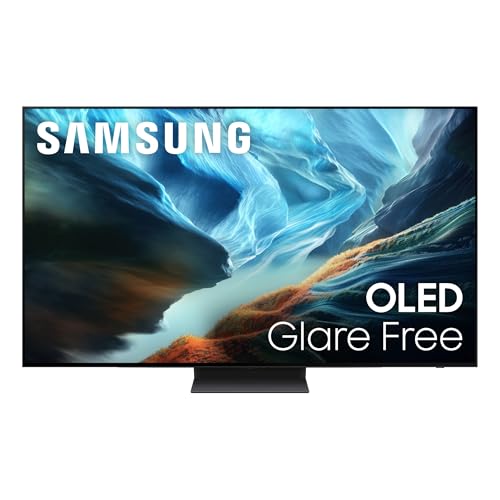
Pros
- True OLED black levels with virtually infinite contrast for dark-room cinema immersion
- Glare Free coating significantly cuts reflections during daytime sports and living room viewing
- Exceptional gaming capabilities with up to 165Hz VRR, low input lag, and G-SYNC support
- Powerful 128-neural-network AI processor delivers sharp upscaling for cable and streaming
- Sleek, minimalist design fits comfortably on standard media consoles or flush wall mounts
Cons
- Does not support Dolby Vision HDR formatting, relying instead on HDR10 and HDR10+
- Slim chassis design naturally limits deep bass response without an external soundbar
- Higher initial investment compared to conventional LED and standard QLED televisions
The Samsung 55-Inch Class S90H Series OLED 4K Smart TV represents a high-performance home entertainment display engineered for movie lovers, console gamers, and sports enthusiasts seeking top-tier contrast and smooth motion. Built around self-lit OLED pixels, this model pairs individual pixel-level illumination with Samsung Glare Free technology, making it uniquely versatile for both dark home theater rooms and moderately bright living spaces. Whether you are an apartment renter outfitting a media nook or a homeowner upgrading a main entertainment center, the 55-inch footprint strikes an appealing balance between immersive screen size and manageable room dimensions.
Picture performance is driven by the NQ4 AI Gen3 Processor, which leverages 128 AI neural networks to optimize contrast, sharpness, and color saturation scene by scene. The inherent strength of OLED technology ensures true inky black levels with zero light bleed around bright subtitles, while the Glare Free finish helps diffuse ambient daylight and overhead lamp reflections that typically plague glossy panels. For cable subscribers and classic movie fans, 4K AI Upscaling Pro and Auto HDR Remastering work behind the scenes to sharpen standard 1080p sports feeds and infuse vintage SDR media with expanded dynamic range and vivid highlights.
Gamers will find substantial value in the Ultimate Gaming Pack integration, which supports refresh rates up to 165Hz alongside NVIDIA G-SYNC and AMD FreeSync Premium Pro compatibility. With ultra-low input lag, Auto Low Latency Mode (ALLM), and dedicated gaming dashboard utilities, PC and console gamers can track fast-paced competitive shooters or open-world action titles without tearing or screen stutter. For Sunday football watch parties or hockey games, AI Motion Enhancer Pro tracks rapid ball and puck movement, stabilizing the broadcast image to keep text overlays readable and fast camera pans crisp.
In terms of build quality, the S90H sports a clean Graphite Black profile with razor-thin bezels that give it a floating, modern aesthetic. The central pedestal stand provides reliable stability on standard media consoles, while VESA mounting compatibility offers flexible placement for flush wall setups. Under the hood, the Samsung Tizen operating system delivers quick access to streaming platforms like Netflix, Prime Video, Disney+, and Samsung TV Plus, alongside integrated voice assistant support. While the onboard speakers deliver crisp dialogue for news and sitcoms, the slim chassis naturally limits deep low-end bass, making an external eARC-connected soundbar a sensible addition for true theater rumble.
Like other Samsung televisions, the S90H does not feature native Dolby Vision support, relying instead on HDR10, HDR10+, and HLG for dynamic HDR reproduction. Additionally, viewers in extremely sun-drenched rooms with direct sunlight hitting the screen will want sheer blinds drawn to get the most out of OLED contrast. For cinephiles seeking authentic film mastering, gamers demanding fluid 165Hz response, and families wanting a premium all-around living room display, this 55-inch S90H OLED TV stands out as a well-rounded and deeply satisfying centerpiece.
The Samsung S90H is outfitted with a comprehensive suite of gaming features designed for both current-generation consoles and high-end gaming PCs. Supporting native refresh rates up to 165Hz with Motion Xcelerator technology, this screen delivers exceptionally fluid frame pacing that eliminates ghosting during intense multiplayer matches.
Compatibility with NVIDIA G-SYNC and AMD FreeSync Premium Pro ensures that variable refresh rates stay synchronized with your GPU, preventing frustrating screen tearing and stutter. With Auto Low Latency Mode (ALLM) automatically switching the TV into high-response game mode when a console boots up, input lag remains negligible for competitive play.
Samsung Game Bar provides an on-screen overlay where players can monitor frame rates, adjust aspect ratios, and fine-tune black equalizer settings on the fly. Whether connecting a PlayStation 5, Xbox Series X, or custom gaming rig, the high-bandwidth HDMI connectivity ensures smooth 4K gameplay with full HDR color fidelity.
At the heart of the S90H lies an advanced OLED panel capable of generating infinite contrast, as each individual pixel turns completely off to produce pitch black. This pixel-level precision eliminates the blooming and halo artifacts commonly seen on traditional backlit LED screens during nighttime movie viewing.
A standout feature of this model is the Glare Free panel coating, which disperses incoming reflections without dulling the display's vibrant color palette or deep contrast. This engineering addresses one of the classic drawbacks of OLED panels, making daytime viewing of sports, news, and family programming far more enjoyable in sunlit spaces.
Color reproduction remains richly saturated across wide viewing angles, ensuring that friends and family sitting off to the side enjoy the exact same vivid picture as anyone seated dead-center. Combined with HDR10+ dynamic tone mapping, highlights like sunlight reflections and practical explosions look intensely bright and lifelike.
Pros
- Exceptional contrast and deep black levels enhanced by an anti-reflective Glare Free screen coating
- Outstanding gaming capability with up to 165Hz support, low input lag, G-SYNC, and FreeSync Premium Pro
- Intelligent AI processing delivers clean 4K upscaling and smooth motion handling for live sports
- Wide viewing angles keep color and contrast accurate across entire living room seating setups
Cons
- Does not support Dolby Vision HDR format, utilizing HDR10+ and standard HDR instead
- Built-in speakers provide modest bass performance, making a companion soundbar recommended for cinematic audio
- Premium OLED hardware commands a higher price tag than conventional LED or QLED alternatives
The Samsung 65-Inch Class S90H Series OLED 4K Smart TV stands out as a high-performance display built for home theater purists, console gamers, and sports fans alike. Designed to anchor a busy living room or a dedicated media space, this model brings together self-illuminating OLED pixels with modern AI-driven video processing. Whether you are hosting a lively Super Bowl party, settling down for a Friday family movie marathon, or diving into competitive multiplayer titles, this screen offers the balance of rich contrast and responsive playback that demanding viewers look for.
Picture quality represents one of the strongest highlights of the S90H series. Thanks to OLED HDR+ paired with Glare Free screen technology, the panel delivers true inky blacks without turning into a mirror during bright daylight viewing. The onboard NQ4 AI Gen3 processor utilizes 128 neural networks to drive 4K AI Upscaling Pro and Auto HDR Remastering. This means cable broadcasts, older streaming releases, and classic sitcoms receive noticeable clarity boosts, while high-dynamic-range movies showcase punchy highlights and nuanced shadow detail without washed-out gray tones.
For gaming and live sports, this television is equipped to handle rapid motion with ease. The Ultimate Gaming Pack includes Motion Xcelerator supporting up to a 165Hz refresh rate alongside NVIDIA G-SYNC and AMD FreeSync Premium Pro. Console and PC players benefit from low input lag, tear-free visuals, and quick response times during fast-paced action. Sports fans also benefit from the AI Motion Enhancer Pro, which works to keep fast-moving baseballs, hockey pucks, and on-screen score tickers sharp and readable without jarring motion blur or jitter.
Build quality and smart convenience are equally well considered. Sporting a sleek Graphite Black finish with ultra-thin borders, the display mounts cleanly flush against a wall using standard VESA hardware or sits securely on an entertainment console. Samsung Tizen smart platform supplies straightforward access to essential streaming applications like Netflix, Prime Video, Disney+, and live streaming channels. While the built-in speakers produce clear dialogue for casual news broadcasts, adding a dedicated soundbar or audio receiver is recommended to match the cinematic scale of the picture with deeper bass.
Prospective buyers should consider a few practical trade-offs before purchasing. As with most Samsung displays, this model does not support Dolby Vision, relying instead on HDR10, HDR10+, and HLG formats. Additionally, full-scale OLED displays sit at a premium price point compared to entry-level LED units. For movie lovers who prioritize deep contrast, gamers demanding high frame rates, and households wanting a bright, anti-glare display for daytime viewing, the Samsung S90H offers a well-rounded and deeply satisfying entertainment upgrade.
Gamers looking to pair current-gen consoles or high-end gaming PCs with a responsive screen will find plenty to appreciate in the S90H. With support for refresh rates up to 165Hz through Motion Xcelerator, gameplay feels fluid and responsive during fast turns and rapid firefights. Both NVIDIA G-SYNC and AMD FreeSync Premium Pro are supported, which helps prevent distracting screen tearing and stutter during demanding visual scenes.
Low input latency and auto low latency mode (ALLM) ensure that button presses translate immediately to the screen. The integrated Game Bar provides quick access to essential settings like aspect ratio adjustments, frame rate readouts, and input lag status without needing to leave your game. Whether you are running long campaign sessions on an Xbox Series X or competitive tournaments on a PC, this display delivers smooth, artifact-free performance.
Bright living spaces often present a challenge for traditional OLED televisions, but the S90H addresses this with specialized Glare Free surface treatment. This anti-reflective design disperses ambient light from windows and lamps, preserving deep black levels and vibrant colors even during afternoon viewing sessions. Wide viewing angles ensure everyone on the couch enjoys consistent contrast and color saturation from any seat in the room.
Sports broadcasts receive a noticeable upgrade through AI Motion Enhancer Pro, which intelligently detects and stabilizes high-speed ball movement and scrolling graphics. Combined with Auto HDR Remastering, standard dynamic range sporting events and legacy broadcast feeds gain an extra layer of brightness and crispness that makes live action feel energetic and lifelike.
Pros
- True OLED contrast with absolute black levels and zero backlight bleed
- Excellent gaming responsiveness with 120Hz refresh rate, VRR, and low latency
- Powerful AI upscaling breathes new life into standard HD cable and streaming content
- Pantone-validated color accuracy delivers realistic visuals right out of the box
- Ideal 48-inch size for space-conscious living rooms, bedrooms, or dual-purpose desktop setups
Cons
- Peak full-screen brightness may be less punchy than Mini-LED displays in sun-drenched rooms
- OLED panels require reasonable care to prevent static image retention over prolonged periods
- Built-in speakers provide clear dialogue but lack deep low-end bass for an authentic home theater punch
The Samsung 48-Inch Class S85H Series OLED 4K Smart TV brings premium self-illuminating display technology to a versatile form factor that fits into spaces where massive screens cannot. Powered by Samsung's NQ4 AI Gen2 processor, this television utilizes individually controlled OLED pixels that switch off completely to produce infinite contrast and absolute black levels. Whether upgrading a secondary entertainment nook or searching for a dedicated high-end monitor replacement, this television blends modern display engineering with responsive smart functionality.
This screen size makes the S85H exceptionally well-suited for apartment renters, college dorm gaming rigs, bedroom TV setups, and home theater enthusiasts working with limited square footage. Avid movie buffs will appreciate the cinematic fidelity during dark-room viewings, while console and PC gamers gain a desktop-friendly display that matches high-end graphics cards. It also serves busy families and cord-cutters who want straightforward access to their favorite streaming platforms without dealing with external streaming sticks.
In terms of picture quality, the OLED HDR capability ensures bright highlights pop against rich, shadow-filled backgrounds without any blooming or backlight halos. Color reproduction stands out thanks to Pantone validation and Samsung's Color Booster Pro, which keeps human skin tones natural while preserving lush landscapes and dynamic neon palettes. The onboard NQ4 AI Gen2 processor handles 4K AI upscaling smoothly, refining low-resolution broadcasts, sports streams, and older digital movies so they appear crisp on the 4K panel.
Gamers will find plenty to like with the Premium Gaming Pack features, which include Motion Xcelerator 120Hz support alongside AMD FreeSync Premium and NVIDIA G-SYNC compatibility. These technologies coordinate to reduce screen tearing, stutter, and input lag during fast-paced first-person shooters or competitive sports simulations. Quick response times inherent to OLED technology keep fast action clear and fluid, making gaming marathons or Sunday football watch parties feel smooth and responsive.
Setup and daily usability remain straightforward with Samsung's Tizen operating system, which provides instant access to major services including Netflix, Disney+, Prime Video, and YouTube. The Graphite Black frame features slim bezels and a tidy footprint that mounts cleanly to standard VESA brackets or rests securely on media furniture. Built-in speakers provide crisp vocal delivery for everyday sitcoms and news broadcasts, though home cinema fans will likely want to connect a dedicated soundbar through eARC for richer bass and expansive audio depth.
While OLED panels may not match the blinding peak brightness of high-end Mini-LED screens in rooms with intense midday sunlight, the S85H excels in moderate to dim viewing environments where its contrast truly shines. For movie buffs, competitive gamers, and homeowners looking for uncompromising OLED visual quality in a practical 48-inch profile, the Samsung S85H represents a well-balanced home entertainment investment.
The core attraction of the Samsung S85H is its self-emissive OLED panel, where every single pixel generates its own light. This architecture allows black areas of an image to achieve absolute darkness with zero light leakage, giving starry night skies, space sci-fi epics, and moody horror films remarkable depth and three-dimensional realism.
Samsung pairs this panel with Pantone validation and Color Booster Pro, ensuring that color gradients transition smoothly and tones remain authentic to filmmaker intent. The NQ4 AI Gen2 processor continuously monitors the incoming video feed, applying intelligent scene-by-scene adjustments to maintain highlight detail and upscale lower-resolution sports and cable broadcasts into sharp 4K presentations.
Designed to cater to demanding console and PC players, the S85H comes equipped with Samsung's Premium Gaming Pack. With a native 120Hz refresh rate and Motion Xcelerator technology, fast pans and rapid camera movements maintain high clarity without jarring motion blur.
Support for AMD FreeSync Premium and NVIDIA G-SYNC compatibility ensures variable refresh rates align smoothly with modern gaming consoles and PC graphics cards. Near-instantaneous OLED pixel response times paired with low input lag give competitive players a tangible advantage in reaction times and overall controller responsiveness.
Understanding Display Hardware and Connected Platforms
Answering what is qled vs oled vs smart tv requires untangling a common retail misunderstanding about how modern televisions are categorized. Shoppers often see these three terms grouped together on store displays as though they were competing screen technologies. In reality, OLED and QLED represent completely different physical display hardware architectures, whereas Smart TV refers to the integrated operating system and streaming software. Clarifying this fundamental distinction eliminates confusion and helps you evaluate picture performance and streaming features accurately.
Category Differences: Screen Hardware Versus Platform Software
Display panels and operating systems handle separate responsibilities inside a television chassis. OLED and QLED describe the physical engineering that generates, filters, and illuminates pixels across the screen glass. These panel architectures dictate core visual parameters like black level depth, peak luminance, color volume, and viewing angles. Without a physical display assembly, a television cannot produce an image regardless of its internal computing capabilities.
Smart TV capabilities describe the software platform and network features rather than the screen panel itself. A smart interface handles wireless connectivity, streaming menus, content navigation, and voice assistant integration. Because modern televisions integrate processing chips directly into the chassis, virtually every modern OLED and QLED display is already a Smart TV. Comparing a Smart TV to an OLED display is like comparing an automotive navigation system to the engine.
OLED Display Architecture: Organic Self-Emissive Pixels
Organic Light Emitting Diode technology relies on an emissive design where every individual pixel generates light. When an electrical current reaches an organic subpixel, it illuminates independently without requiring an external backlight unit. When a scene calls for true black, the television cuts electrical power to those specific pixels entirely. This per-pixel control yields mathematically infinite contrast ratios, because dark areas contain zero stray light leakage.
Self-emissive engineering completely eliminates backlight blooming and halo artifacts around bright objects. In high-contrast scenes like starry skies or white subtitles on dark backdrops, each illuminated element remains crisp without hazy light spilling into adjacent shadows. Models like the Samsung S85H series and flagship S90H series utilize this emissive precision to reveal subtle shadow details that standard backlights routinely wash out. Viewers also enjoy wide viewing angles, as emissive pixels maintain color saturation from off-center seating positions.
Emissive designs require thermal management during sustained bright sequences. Because driving organic compounds at maximum output generates heat, televisions incorporate an Automatic Brightness Limiter to protect panel integrity. This protective circuitry attenuates brightness when large portions of the screen display bright white content, such as snow scenes or hockey broadcasts. Despite this limitation, small specular highlights achieve striking visual punch against the panel’s absolute black backdrop.
QLED Display Architecture: Quantum Dots and Transmissive Backlights
Quantum Dot Light Emitting Diode technology is a refined version of traditional liquid crystal display hardware rather than an emissive system. A QLED television uses a transmissive design where a separate LED or Mini-LED backlight shines through multiple optical layers. Between the backlight and the liquid crystal shutter sits a microscopic layer of quantum dots, which are semiconductor nanocrystals. When blue backlight energy strikes these nanocrystals, they emit pure red and green light.
This quantum dot enhancement film allows QLED televisions to achieve remarkable peak luminance and high color volume. By producing pure primary wavelengths, the display maintains rich color saturation even when pushed to high brightness levels. High full-field brightness makes QLED panels capable performers in sunlit living rooms where windows introduce severe ambient glare. The robust inorganic structure of quantum dots also enables sustained high luminance without thermal throttling concerns.
Transmissive architecture introduces inherent optical compromises when reproducing dark scenes. Because the liquid crystal layer cannot block backlight illumination with absolute perfection, stray light inevitably filters into dark sections of the image. Even with advanced local dimming arrays, high-contrast objects can exhibit haloing around their borders. Furthermore, standard LCD alignment structures tend to lose color saturation and contrast when viewed from off-center seating angles.
Smart TV Platforms and AI Video Processing Engines
Smart TV platforms provide the interactive software layer that transforms raw display hardware into an integrated entertainment hub. Modern operating systems like Samsung Tizen organize streaming services, live broadcast channels, connected inputs, and smart home controls into a unified interface. These platforms allow users to stream 4K content directly through native applications without requiring external media streaming devices. Built-in voice assistants, automated content recommendations, and mobile device casting further enhance day-to-day usability.
The processing engine behind the smart platform plays a decisive role in picture quality. In models like the Samsung S85H series, the NQ4 AI Gen2 processor optimizes real-time motion and color mapping while upscaling lower-resolution cable broadcasts. Stepping up to the Samsung S90F or S90H series introduces the NQ4 AI Gen3 processor, which utilizes 128 neural networks to analyze incoming frames simultaneously. This computational power refines texture clarity, reduces compression artifacts, and restores subtle gradients cleanly.
Smart platforms also coordinate dynamic HDR tone mapping and audio processing across connected home theater equipment. When evaluating 55-inch streaming screens, buyers should note how the operating system handles content switching and audio passthrough. Enhanced Audio Return Channel connectivity allows the television to pass uncompressed Dolby Atmos signals directly from native streaming apps to an external soundbar or AV receiver. Advanced processors can also remaster standard dynamic range programming into HDR-like presentations with expanded color expression.
Contrast, Room Lighting, and Glare Handling
Room lighting conditions dictate which display hardware provides the most compelling visual experience. In a dedicated dark home cinema or dimly lit living room, OLED displays excel due to their zero-nit black levels. The human visual system perceives contrast as the ratio between the darkest black and brightest white within a scene. Because OLED blacks are absolute, even modest highlight peaks create an astonishing perception of visual depth that transmissive panels cannot match in low ambient light.
Bright environments with unshaded windows present a different physical challenge for television screens. Direct sunlight can overpower lower-luminance displays and reflect distracting ambient shapes across glossy glass surfaces. High-end displays address this obstacle through specialized screen coatings and boosted panel illumination. For instance, the Samsung S90H series incorporates dedicated Glare Free technology designed to diffuse incoming daylight and minimize reflections, preserving perceived contrast during daytime viewing sessions.
Choosing between high sustained brightness and infinite contrast requires realistic appraisal of your viewing habits. If daytime sports broadcasts and brightly lit social gatherings represent your primary viewing, high-output backlights provide great visibility. If evening movie watching, high-fidelity HDR streaming, and immersion in dark scenes take priority, emissive pixels deliver a substantially more cinematic image. Evaluating ambient light levels helps you avoid washed-out contrast and frustrating screen reflections.
Gaming Capabilities, Refresh Rates, and Signal Bandwidth
Modern gaming demands low input latency, rapid pixel response times, and expansive signal bandwidth from both hardware and software. OLED panels offer a distinct physical advantage in pixel transition speed, changing color states in fractions of a millisecond. This instantaneous response virtually eliminates ghosting and smearing behind fast-moving characters in competitive titles. By contrast, liquid crystal molecules in standard LCD designs require slightly longer physical transition times, which can produce noticeable motion blur during fast camera pans.
High refresh rate support elevates console and PC gaming responsiveness to fluid levels. While mainstream displays operate at 60Hz, gaming-oriented models like the Samsung S85H support Motion Xcelerator 120Hz for smooth action on PlayStation 5 and Xbox Series X. The Samsung S90F advances refresh potential to 144Hz, while the S90H reaches up to 165Hz for enthusiast PC rigs. Synchronized variable refresh rate technologies like AMD FreeSync Premium Pro and Nvidia G-Sync match panel refresh directly to graphics output, eliminating screen tearing.
Full-bandwidth HDMI 2.1 inputs ensure that modern gaming displays receive uncompressed 4K video at high frame rates simultaneously. An integrated Game Bar interface lets players monitor frame rates, adjust input lag profiles, and alter aspect ratios on the fly without exiting gameplay. Auto Low Latency Mode automatically switches the television from cinema picture processing to low-latency Game Mode whenever a console launches. These features demonstrate how software intelligence and hardware capabilities combine to deliver a responsive gaming environment.
Panel Sizing Standards and Mother Glass Manufacturing
Manufacturing constraints create specific size boundaries for different display technologies that shoppers must understand. Liquid crystal panels for standard LED and QLED televisions are cut from diverse manufacturing lines that yield sizes like 43, 50, 60, 70, 75, and 85 inches. OLED panels, however, are produced from standardized Gen 8.5 and Gen 10.5 mother glass sheets cut into precise commercial dimensions. This manufacturing reality produces consumer OLED televisions exclusively in 42, 48, 55, 65, 77, 83, and 97-inch diagonal form factors.
Shoppers searching for legacy LCD sizes like 50 inches or 75 inches must map their target dimensions to corresponding OLED equivalents. A buyer looking for a compact 50-inch display can choose between a 48-inch option like the Samsung S85H or step up to a 55-inch chassis. Those hunting for 70-inch or 75-inch panels must transition directly to a 77-inch OLED screen. Likewise, consumers considering oversized 85-inch installations should evaluate 83-inch models like those found in large-format cinema displays.
Desktop computer users occasionally search for 32-inch OLED televisions, but panels in that size bracket exist exclusively as dedicated computer monitors rather than consumer TVs. Compact spaces like home offices and secondary bedrooms are best served by 42-inch or 48-inch chassis designs. Selecting the proper panel cut ensures that physical wall mounts, media console footprints, and viewing distances match your room architecture. Verifying manufacturer dimensions and VESA mounting bracket compatibility prevents setup frustrations during installation.
Panel Longevity, Image Retention, and Maintenance Care
Concerns regarding permanent image retention or burn-in often make prospective buyers hesitate when weighing display choices. Permanent image retention occurs when static on-screen elements cause uneven degradation across organic subpixels over thousands of cumulative hours. Because QLED televisions utilize inorganic quantum dots and robust LED backlights, they are practically immune to static burn-in. Modern OLED engineering, however, incorporates multiple automated hardware and software safeguards that dramatically minimize degradation risks under normal mixed-content viewing habits.
Built-in protection routines actively defend emissive panels without requiring constant user intervention. Pixel shifting features subtly move the active image across the display grid to distribute subpixel illumination evenly over time. Logo luminance dimmers identify static graphics like news tickers or video game status meters and attenuate their local brightness automatically. When the television enters standby mode after extended operation, an automated compensation cycle runs quietly in the background to equalize electrical resistance across the pixel grid.
Simple maintenance habits ensure that your television panel delivers reliable visual performance for years. Always leave the television connected to mains electrical power so automated standby refresh cycles can execute properly overnight. Avoid using harsh chemical solvents, alcohol, or ammonia-based glass cleaners, which can permanently strip delicate anti-reflective screen coatings. Dusting the screen gently with a clean, dry microfiber cloth preserves the optical clarity of your display without scratching the surface.
Practical Selection Criteria for Real-World Living Spaces
Deciding which television configuration fits your home comes down to matching hardware strengths with your everyday viewing habits. If your entertainment space features uncontrolled sunlight and your primary content consists of daytime sports, news, and casual streaming, a high-output QLED display provides robust visibility. If your routine focuses on evening cinema, 4K HDR streaming series, and responsive high-frame-rate gaming, an OLED panel offers an unmatched visual upgrade. Remember that every modern option within these tiers comes fully equipped with comprehensive Smart TV streaming convenience.
Budget expectations also require a grounded understanding of authentic panel manufacturing price floors. Genuine consumer OLED displays carry an entry threshold that makes brand-new models unavailable at extreme budget price tiers. Shoppers with strict financial limits should consider clearance sales on previous-generation models, certified refurbished units, or entry sizes like 48-inch panels rather than expecting sub-tier pricing on flagship releases. Investing in the right tier ensures you receive advanced video processing, comprehensive HDR format support, and lasting display reliability.
Examining panel architecture, smart operating features, and physical sizing side by side clarifies your path forward. Whether you select an accessible 48-inch S85H series OLED for responsive gaming or a 65-inch S90H display with Glare Free technology for family movies, separating hardware from software ensures complete confidence in your final investment. Aligning your living space requirements with proven display capabilities guarantees a deeply satisfying home entertainment setup.


Write Your Review
No reviews yet. Be the first to share your experience!