
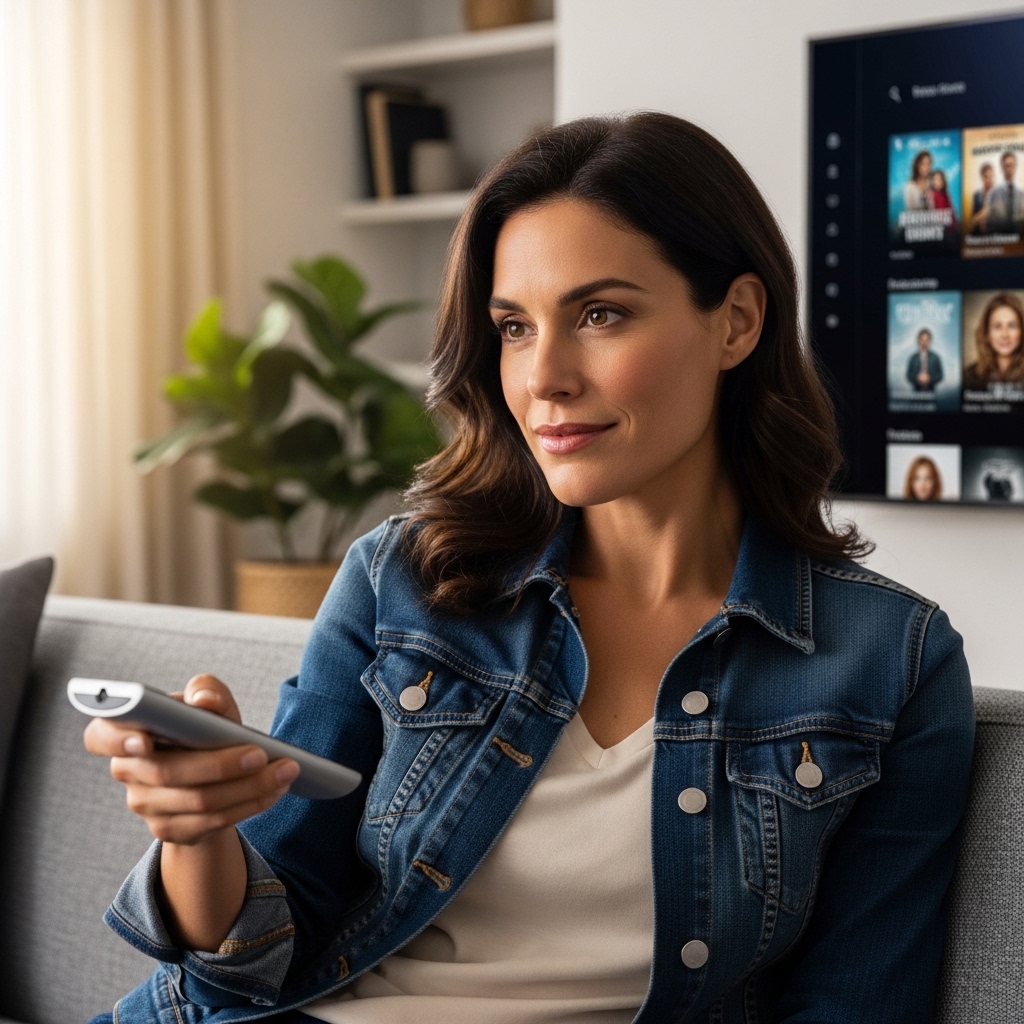

Dimming the lights in a dedicated entertainment room often exposes the distracting backlight bleed and washed-out letterbox bars of standard liquid crystal displays. Anyone asking themselves should i get oled tv is typically pursuing genuine per-pixel illumination where dark shadows remain deep and highlights pop without haloing. Emissive display hardware fundamentally changes film viewing and gaming because every diode generates its own illumination independently. For shoppers exploring accessible ways to enter emissive display ownership, reviewing affordable OLED displays illustrates how attainable reference black levels have become.
Making the switch to an emissive screen requires balancing room ambient lighting against true contrast fidelity. While modern panels deliver spectacular specular highlights for high dynamic range mastering, full-screen brightness caps and static graphic maintenance remain genuine ownership realities. Prospective buyers evaluating screen sizes can check mid-size streaming displays to assess how standard dimensions suit their room arrangements. Understanding how these screens balance peak HDR luminance, HDMI 2.1 gaming connectivity, and panel care ensures you pick the right display for your home.

Evaluating the Practical Realities of OLED Television Ownership
Deciding on an emissive display requires looking beyond showroom marketing to examine how panel physics operate in daily living environments. Traditional liquid crystal screens rely on intense LED backlights pushed through color filters, whereas organic light emitting diode displays illuminate every single pixel independently. This hardware distinction determines how well a television produces shadow detail, retains off-axis color, and handles HDR highlights. Answering should i get oled tv ultimately hinges on your typical room lighting, preferred media, and personal tolerance for automatic brightness adjustments.
Infinite Contrast and Per-Pixel Illumination Mechanics
The core appeal of organic diode technology stems from its emissive nature, allowing individual pixels to turn off entirely when displaying black. Because each pixel controls its own luminance, there is zero light bleed around bright objects set against dark backgrounds. This capability proves transformative for cinema enthusiasts watching widescreen films with black letterbox bars. Standard backlit televisions rely on local dimming zones that often create blooming around subtitles, whereas emissive panels preserve razor-sharp edges without light spilling into adjacent pixels.
Shadow detail in dark scenes requires precise voltage management across millions of microscopic diodes. Traditional WOLED displays introduce an uncolored white subpixel alongside red, green, and blue emitters to enhance luminance efficiency. This arrangement maintains deep black levels while ensuring that near-black gradations resolve smoothly without crushing subtle shadow details. In contrast, QD-OLED panels utilize blue self-emissive layers paired with quantum dot converters, preserving intense color saturation in high-luminance highlights.
Ambient Living Room Light and Automatic Brightness Limiter Behavior
Viewing conditions play a significant role in determining whether an emissive screen satisfies your daily expectations. Dedicated home theaters with blackout shades allow an organic diode screen to showcase its full dynamic range, but sunlit living spaces introduce challenges. While modern panels produce remarkable specular highlights in small window areas, they cannot sustain that same intensity across large white surfaces. Sunlight streaming directly onto the display glass washes out perceived contrast, forcing the panel to compete against ambient room reflections.
To protect organic compounds from thermal strain and manage power consumption, every emissive television employs an Automatic Brightness Limiter (ABL). When a broadcast transitions from a dim interior to a full-field white scene, such as a hockey rink, the internal limiter steps down screen luminance. Viewers accustomed to standard LED backlights may notice this dimming shift during daytime sports broadcasts or winter scenes. Modern high-end iterations feature refined algorithms that make these luminance transitions smoother, though full-screen white brightness remains lower than high-output Mini-LED backlights.
Screen coating treatments also influence how an emissive display performs when fixtures or windows cast ambient illumination across the room. Many high-performance panels utilize glossy anti-reflective finishes designed to maintain perceived black depth by scattering incoming light. Conversely, panels that omit traditional polarizing layers to boost color efficiency can exhibit a slight magenta tint or raised dark levels under direct ambient lighting. Positioning your display away from unshaded windows and pairing it with soft bias lighting helps preserve optimal contrast regardless of panel finish.
High-Frame-Rate Gaming and HDMI 2.1 Bandwidth Configuration
Video game enthusiasts represent one of the primary audiences that benefit most dramatically from emissive display hardware. Organic diodes transition between color states virtually instantaneously, delivering sub-millisecond response times that eliminate motion blur and ghosting trails behind fast-moving objects. In competitive first-person shooters or racing titles, this instantaneous pixel response ensures that environmental details remain razor sharp during rapid camera rotations. When paired with low input latency modes, the display provides immediate tactile responsiveness that feels exceptionally connected to controller inputs.
Modern gaming consoles and desktop graphics cards demand high-bandwidth display interfaces to unlock their full visual capabilities. Full-bandwidth HDMI 2.1 connections supporting up to 48Gbps allow the display to handle uncompressed 4K signals at 120Hz or 144Hz with 10-bit color. Support for Variable Refresh Rate protocols, including Nvidia G-Sync Compatible, AMD FreeSync Premium, and HDMI Forum VRR, eliminates screen tearing without introducing control latency. Activating dedicated Game Optimizer interfaces lets players adjust black stabilization, monitor frame delivery, and verify active refresh rates without leaving their game.
Port availability and bandwidth allocation require careful attention before finalizing your home entertainment setup. Some televisions provide four full-speed HDMI 2.1 ports, allowing users to connect multiple gaming consoles and a personal computer simultaneously. Other displays feature only two high-bandwidth ports, with one of those inputs doubling as the dedicated audio return channel interface. If your soundbar occupies that shared connection, you are left with only one high-frame-rate gaming port, which can force inconvenient cable swapping.
Addressing Permanent Image Retention and Modern Screen Longevity
Anxiety surrounding permanent image retention, commonly referred to as burn-in, remains a frequent hesitation for prospective display buyers. Burn-in occurs when static graphic elements, such as news tickers, sports scoreboards, or gaming heads-up displays, cause localized subpixels to age faster than surrounding areas. Temporary image retention is far more common, appearing as a faint residual shadow that fades away naturally after changing on-screen content. Understanding the difference between temporary retention and permanent cumulative wear helps demystify how these organic panels operate under regular household use.
Display manufacturers have implemented sophisticated automated maintenance routines designed to mitigate uneven subpixel degradation over years of operation. Features such as pixel shifting quietly nudge static images by small margins, distributing luminance wear across adjacent diodes without disrupting the viewer. Dedicated logo luminance limiters actively detect stationary graphics on screen and subtly reduce their brightness to prevent localized heat accumulation. Many premium panels incorporate integrated aluminum heatsinks behind the substrate, which draw thermal energy away from the organic stack to preserve brightness and panel longevity.
Maintaining optimal panel health requires simple, consistent ownership habits rather than complicated manual interventions. Leaving your television plugged into a live power outlet allows the processor to initiate automated compensation cycles whenever the screen enters standby mode. Unplugging the television at the wall switch or using smart plugs that sever power prevents these essential background cleaning algorithms from executing properly. Varying your viewing diet between streaming movies, gaming, and broadcast television ensures that no single static graphic element dominates screen time over thousands of cumulative hours.
Commercial Mother Glass Substrates and Screen Size Availability
Shoppers exploring emissive television lineups often notice that available screen dimensions differ from traditional liquid crystal display options. Consumer organic diode panels are cut from standardized Gen 8.5 and Gen 10.5 mother glass substrates, which produce specific diagonal dimensions to maximize manufacturing efficiency. Standard consumer sizes include 42-inch, 48-inch, 55-inch, 65-inch, 77-inch, 83-inch, and flagship 97-inch form factors. Because manufacturing facilities optimize substrate cuts around these dimensions, you will not encounter brand-new 50-inch, 70-inch, or 75-inch organic television panels on the retail market.
Navigating mismatched sizing requires mapping your existing room furniture or wall space to the nearest manufactured panel cut. Shoppers searching for 40-inch or 43-inch screens can easily transition to 42-inch or 48-inch displays, which fit neatly onto media desks and compact dressers. Buyers looking for compact displays can evaluate compact bedroom television alternatives to determine whether smaller footprints suit their layout requirements. Similarly, shoppers considering legacy 50-inch formats find that 48-inch models preserve tighter desk dimensions while 55-inch units provide a noticeable cinematic upgrade without demanding excessive wall space.
Large home theaters requiring expansive displays must account for the step up from standard sizes to flagship theater cuts. Viewers searching for 70-inch or 75-inch panels should focus on 77-inch screens, which offer substantial surface area gains that heighten cinema immersion. For expansive seating spaces where 85-inch screens are typically considered, exploring flagship 83-inch home cinema displays provides a close diagonal match paired with emissive contrast performance. Selecting the appropriate size based on manufactured substrate cuts ensures your mounting brackets, viewing distances, and spatial layout align seamlessly.
Motion Processing, 24p Cadence, and Video Engine Scaling
The instantaneous pixel response time that makes emissive screens remarkable for gaming can introduce an unexpected visual artifact during cinematic movie playback. Traditional film content is mastered at 24 frames per second, where slight camera pans rely on natural motion blur to look smooth. Because self-emissive diodes switch colors instantaneously, each 24p frame remains static on screen until the next frame snaps into place, creating a visual effect known as sample-and-hold motion stutter. Viewers encountering this phenomenon sometimes mistake it for transmission judder, though it is simply the byproduct of ultra-fast panel responsiveness.
Modern video processing engines provide customizable motion smoothing tools to alleviate 24p stutter without introducing unnatural artifacts. Subtle de-judder adjustments allow the processor to insert calculated intermediate frames that smooth out panoramic camera sweeps without making feature films resemble daytime soap operas. Selecting dedicated Filmmaker Mode disables heavy post-processing while preserving the director intended frame rate, aspect ratio, and color temperature. Taking time to fine-tune motion interpolation settings lets you strike the right balance between crisp frame transitions and cinematic cadence tailored to your personal taste.
Video processors also handle the crucial task of upscaling standard definition and compressed streaming signals to native 4K display resolution. Sophisticated chipsets like the LG Alpha series utilize machine learning databases to analyze incoming video streams, distinguish fine texture from digital noise, and reconstruct lost edge clarity. They also actively mitigate macroblocking and chrominance overshoot in low-bitrate streams, preventing near-black compression artifacts from distorting subtle shadow gradations. Advanced processing ensures that legacy cable broadcasts and vintage streaming releases look crisp and clean on a high-density 4K emissive panel.
Dynamic HDR Ecosystem Compatibility and Audio Passthrough
High dynamic range content relies on dynamic metadata to instruct the television on how to map peak highlights and shadow details on a scene-by-scene basis. Different television manufacturers align with specific HDR formats, meaning buyers must verify that their streaming libraries match their hardware capabilities. Formats such as Dolby Vision dynamically adjust brightness parameters throughout a film to optimize tone mapping, while HDR10+ offers an alternative open-source metadata standard. Brands such as LG and Sony incorporate Dolby Vision but omit HDR10+, whereas Samsung displays support HDR10+ while bypassing Dolby Vision.
Delivering high-fidelity multi-channel audio from smart streaming apps or connected gaming consoles requires robust audio passthrough capabilities. An enhanced audio return channel interface, known as eARC, carries uncompressed Dolby Atmos and multi-channel LPCM audio tracks directly to external soundbars or AV receivers. High-bandwidth audio passthrough eliminates audio lag during fast-paced video gaming and prevents downmixing that can reduce surround sound clarity. Ensuring your television supports full audio passthrough formats guarantees that your acoustic stage matches the visual immersion provided by pristine emissive black levels.
Navigating Realistic Price Floors and Long-Term Display Value
Budget realities form an essential part of determining whether an organic diode television aligns with your purchasing roadmap. Because manufacturing organic emissive mother glass involves rigorous yield controls and premium materials, brand-new displays cannot be purchased in entry-level bargain tiers. Shoppers exploring entry-tier options can expect realistic starting investment thresholds around moderate retail tiers for 42-inch or 48-inch displays during promotional periods. Budget-conscious consumers searching for lower entry points can explore factory-refurbished models or prior-generation clearance sales to capture authentic emissive contrast without stretching their finances.
Evaluating long-term display value requires balancing initial purchase costs against multi-year viewing satisfaction and performance durability. Emissive panels offer viewing angles that maintain color saturation and contrast even from wide off-axis seating positions, making them outstanding choices for wide living rooms. Their per-pixel light control eliminates the blooming artifacts and backlight degradation that can plague edge-lit liquid crystal panels over extended lifespans. Investing in an emissive display often delays the desire for premature upgrades because the underlying contrast foundation represents reference-level visual performance for home entertainment.
Determining whether to move forward with an emissive screen comes down to your personal viewing habitat, daily media diet, and dark-room expectations. Home cinema purists, dedicated console gamers, and dark-room viewers will find that emissive displays deliver an unmatched visual experience characterized by pure black levels and instant responsiveness. Conversely, viewers placing a screen in sun-drenched rooms with uncovered windows or those who run static cable news tickers all day may prefer the higher sustained full-screen brightness of Mini-LED options. Matching your real-world viewing environment against these technical characteristics ensures you select a television that delivers lasting visual enjoyment for years to come.


Write Your Review
No reviews yet. Be the first to share your experience!