


Home theater enthusiasts often encounter format mismatches when trying to feed high-resolution video streams into older television sets. Many viewers wonder if can a full hd tv play 4k without triggering an error screen or requiring expensive hardware replacements. While a standard 1080p panel cannot physically alter its pixel grid, modern playback devices offer built-in downscaling routines that bridge the technological gap. Understanding how video processors convert high-density signals allows viewers to extend the lifespan of older screens before upgrading to compact 40-inch TV options built around modern display standards.
Physical display hardware imposes absolute limits on how many pixels illuminate a screen at any given instant. A Full HD television contains roughly two million individual pixels, whereas an Ultra HD panel packs over eight million. Connecting a streaming box or game console directly to an older screen requires matching HDMI handshake protocols and High-Bandwidth Digital Content Protection standards. When these communication layers align, the television receives an adapted signal that preserves clean image geometry and steady frame rates.

Pros
- Delivers crisp 4K H.265 local video playback directly to TVs and projectors without buffering or internet dependencies
- Versatile connectivity options include modern HDMI, optical audio for surround sound systems, and legacy analog RCA
- Massive external drive compatibility supporting up to 8TB hard drives across NTFS, FAT32, and exFAT formats
- Handy portrait mode and continuous auto-looping functions make it versatile for displays and presentations
Cons
- Refresh rate caps at 30Hz for 4K video, making it less suitable for high-frame-rate 60fps 4K sports or fast-action content
- Lacks network connectivity, Wi-Fi, and built-in streaming apps like Netflix, Disney+, or Prime Video
The fnetic 4K Digital Media Player is a compact, standalone offline playback device engineered to bridge the gap between stored digital media and your living room television. Unlike standard streaming boxes that rely strictly on broadband connections and proprietary app stores, this compact hardware player reads directly from USB thumb drives, high-capacity external hard drives, and micro SD cards. It offers a practical solution for movie collectors with high-resolution digital files, families wishing to share vacation photos on the big screen, apartment renters who want reliable offline entertainment, and small business owners setting up digital signage displays.
Equipped with H.265 and HEVC decoding, the device supports playback up to 4096x2304 resolution. Connected to a 4K OLED, QLED, or LED display, it yields crisp picture definition, well-defined contrast, and natural color reproduction from high-bitrate video files. Because it processes media directly from local storage, viewers avoid the sudden compression artifacts, bandwidth drops, or stuttering often found on congested Wi-Fi networks. The unit supports both standard landscape orientation for movie nights and 90-degree portrait orientation for commercial menu boards or modern digital art setups.
Audio and video connectivity options are impressively versatile for a player of this size. Modern 4K TVs and home theater projectors connect cleanly via the HDMI port, while older analog televisions and CRT monitors can be revived using the included composite RCA output. For home theater enthusiasts focused on rich sound quality, the dedicated optical Toslink audio port transmits digital surround signals directly to your soundbar or multi-channel AV receiver, helping provide clear movie dialogue and impactful bass during late-night viewing marathons.
Build quality is discreet and highly utilitarian, featuring a grey mini enclosure measuring just 3.2 by 3.1 inches that weighs under a quarter of a pound. This tiny profile makes it effortless to mount behind a wall-hung bedroom TV, tuck inside an entertainment center, or bring along for camper and RV vacations. The internal media engine recognizes diverse drive formatting including NTFS, exFAT, and FAT32, accepting external hard drives as large as 8TB and micro SD cards up to 1TB. Dual USB ports also allow connection for an optional mouse or keyboard alongside your media drive for fast navigation.
Realistic performance limitations center on its hardware ceiling. While it handles 4K decoding with ease, the HDMI output caps at 30Hz at maximum resolution, which may show minor motion judder on high-frame-rate 60fps action sequences compared to higher-end 4K media hubs. It also lacks any internal Wi-Fi or streaming platforms, meaning you will not be streaming Netflix, YouTube, or live sports apps through this unit. For consumers seeking an affordable, dependable offline media decoder that plays massive file archives without network hassle, this unit represents an exceptionally practical living room accessory.
The fnetic media player features a comprehensive selection of input and output interfaces that cater to both modern 4K home theater systems and vintage television setups. The primary HDMI output provides clear digital audio and 4K Ultra HD video transmission directly to flat-screen TVs, computer monitors, and home theater projectors.
For owners of older televisions, a dedicated 3.5mm-to-composite RCA analog video and audio output ensures wide backward compatibility without requiring active signal converters. In addition, the onboard optical Toslink port allows straightforward connection to soundbars and surround sound receivers for pristine digital audio fidelity.
External media connections are equally generous, incorporating two standard USB ports alongside a dedicated micro SD card slot. The system supports full read and write capabilities across NTFS, exFAT, and FAT32 file partitions, supporting external mechanical hard drives and solid-state drives up to 8TB in capacity.
Integrating this standalone player into an existing home entertainment setup is straightforward and clean. Because the unit draws minimal power and has an ultra-slim footprint of under an inch thick, it can be attached directly behind a wall-mounted television using basic mounting tape or placed neatly on an AV cabinet shelf without cluttering your cable runs.
To maximize sound and picture performance, users can run the HDMI cable directly into their 4K TV while sending optical audio out to an external soundbar or multi-speaker surround processor. This split routing maintains crisp video rendering while ensuring that dialogue clarity and cinematic sound effects remain full and immersive.
The included remote control manages auto-playback, shuffle, and continuous repeat cycles seamlessly. This makes it an ideal companion for playing holiday video traditions, family slideshows during gatherings, or ambient background scenery without keeping a laptop or noisy PC connected to your main display.

Pros
- Built-in Roku OS – no need for a separate streaming stick or dongle; all your favorite apps are ready to go.
- Easy setup with auto focus and keystone – truly plug-and-play for instant big-screen enjoyment.
- Portable and lightweight design (under 5 lbs) makes it simple to carry from living room to backyard or even on trips.
- Excellent value for cord-cutters and budget-conscious shoppers who want a large screen experience without sacrificing smart features.
Cons
- Only 1080p resolution – not 4K, which may disappoint those wanting ultra-high-definition detail.
- Brightness may be limited in fully lit rooms or during daytime outdoor use; best for dim or controlled lighting.
- No built-in battery – requires a power outlet, so outdoor use needs extension cord or generator.
The Aurzen Roku TV Smart Projector is a versatile home entertainment device that combines a portable projector with the popular Roku streaming platform. Unlike traditional smart TVs, this projector lets you create a screen size from 60 to 150 inches, making it a unique solution for movie lovers, families, and cord-cutters who want a cinema-like experience at home or outdoors.
Picture quality is solid for its class. The 1080p Full HD resolution delivers crisp details and vibrant colors, especially when using the 'Vivid' brightness mode for living rooms or outdoor nights. The auto focus and auto keystone correction are standout features – they instantly adjust the image for a sharp, rectangular screen without any manual tweaking. For a projector in this price range, the three brightness levels (Low, Standard, High) give you flexibility for different environments, though you will want a darker room for the best contrast and black levels.
Sound is handled by dual 5W speakers with Dolby Audio support. They provide clear dialogue and decent stereo effect for casual viewing, but for a true home theater feel, you may want to connect external speakers via Bluetooth 5.2 or the audio output. The built-in Roku platform is the biggest selling point – it offers the same smooth, intuitive interface as Roku TVs, with thousands of streaming apps, live TV channels, and voice control through Alexa, Google Assistant, or Siri.
Setup is incredibly straightforward. Unbox, plug in, connect to WiFi, activate your free Roku account, and you are ready to stream. The white, compact design (about 4.6 pounds) makes it easy to move from the living room to the bedroom or backyard. The included remote is simple and functional, and the Roku mobile app provides additional control options. Connectivity includes dual-band WiFi (2.4G/5G) and Bluetooth 5.2, ensuring lag-free streaming and easy pairing with headphones.
This projector is ideal for apartment renters, families with kids, and budget-conscious shoppers who want a big screen without the cost and bulk of a large TV. It also makes a great gift for tech enthusiasts or outdoor entertainment lovers. However, it is not a substitute for a high-end 4K TV – the 1080p resolution and brightness limitations mean it works best in dimmer settings. For Super Bowl watch parties or movie marathons in a dark basement or backyard at dusk, this projector delivers impressive value.
Overall, the Aurzen Roku TV Smart Projector is a practical, feature-packed choice for anyone seeking an affordable, portable big-screen experience with the convenience of built-in Roku streaming. If you are a streamer, cord-cutter, or outdoor movie night fan, this projector may be exactly what you need.
Pros
- Excellent value for a 4K HDR smart TV with a large app selection and free live TV.
- Fast performance with Wi-Fi 6 and a responsive quad-core processor for smooth navigation.
- Built-in Alexa voice control makes finding content and managing smart home devices effortless.
- Four HDMI inputs provide plenty of connectivity for gaming consoles, soundbars, and streaming devices.
Cons
- Built-in speakers may lack deep bass for home theater enthusiasts; a soundbar is recommended for fuller audio.
- Brightness may not be ideal for very bright rooms with direct sunlight; best for moderate lighting conditions.
- Limited to 60Hz refresh rate, so not the best choice for competitive gamers seeking high frame rates.
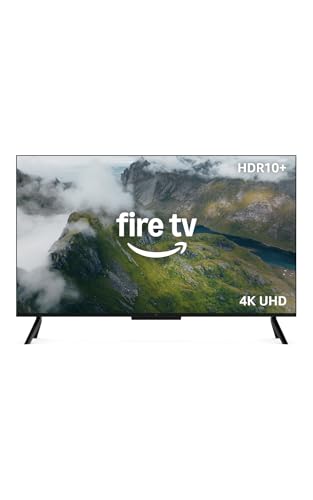
The Amazon Fire TV 43-inch 4-Series is a 4K Ultra HD smart TV designed to deliver a great entertainment experience without breaking the bank. It's an LED-backlit LCD TV that supports HDR10+ for enhanced contrast and color, making it a solid choice for movie lovers, families, and cord-cutters who want a simple, all-in-one streaming solution. With its built-in Fire TV platform and Alexa voice control, this TV is especially suited for streamers and anyone who wants to easily access Netflix, Prime Video, Disney+, Hulu, and thousands of other apps.
Picture quality is a strong point for this price range. The 4K resolution combined with HDR10+ support brings out details in both bright and dark scenes, so you'll notice improved clarity in your favorite movies and shows. While it doesn't have local dimming or the deep blacks of an OLED, the contrast is respectable for an LED TV, and colors look natural and vibrant. Motion handling is adequate for most content, though fast-paced sports or action movies may show some judder. Viewing angles are typical for an LED panel, so it's best to sit directly in front for the best picture.
Gaming performance is decent for casual gamers. The 60Hz panel and standard input lag are fine for most console games, but competitive players may want a TV with a higher refresh rate and VRR support. However, the ability to stream games via Amazon Luna and Xbox Game Pass without a console is a neat bonus for families and casual gamers. The four HDMI inputs give you plenty of room to connect a gaming console, soundbar, and streaming stick.
The smart TV experience is where this model shines. The Fire TV platform is fast and intuitive, with a new quad-core processor and Wi-Fi 6 support ensuring apps load quickly and navigation feels snappy. Alexa voice control is deeply integrated, letting you search for content, control smart home devices, or even ask for the weather with natural language. The included Alexa Voice Remote has preset buttons for popular apps, making it easy to jump straight to your favorites. The Ambient Experience feature is a nice touch, waking the TV to show artwork or a clock when you enter the room.
Setup is straightforward: plug in the TV, connect to Wi-Fi, and sign into your Amazon account. The TV comes with a simple stand, and VESA mounting is supported for wall installation. Sound quality from the built-in speakers is clear for dialogue and everyday viewing, but bass is limited. For a more immersive experience, especially for movies and gaming, pairing with a soundbar is recommended. The design is clean with slim bezels, though the TV is a bit thick compared to premium models.
Overall, the Amazon Fire TV 43-inch 4-Series is an excellent value for budget-conscious shoppers, apartment renters, and families who want a reliable 4K smart TV with a great streaming platform. It's perfect for a living room, bedroom, or dorm setup where ease of use and content access are top priorities. While it has some limitations in brightness and sound, its combination of features, performance, and price makes it a smart buy for everyday entertainment.

Pros
- Hassle-free plug-and-play design requires no home Wi-Fi network, Bluetooth configuration, or mobile apps.
- Reliable dual-band signal reaches up to 328 feet in clear line-of-sight environments.
- Compact, lightweight build hides cleanly behind wall-mounted TVs and compact entertainment centers.
- Decodes 4K content smoothly while delivering a steady 1080p video output at 60Hz.
Cons
- Display output resolution is capped at 1080p at 60Hz rather than native 4K resolution.
- Dense interior walls, solid metal obstacles, or heavy concrete barriers can reduce effective range.
- Competitive esports gamers may prefer wired HDMI 2.1 cables for ultra-low latency and 120Hz refresh rates.
The FWTAOU Wireless HDMI Transmitter and Receiver is an adaptable home entertainment video extender designed to eliminate long, messy cables between your media sources and your display. This type of wireless AV accessory is ideal for homeowners mounting an OLED or QLED TV over a fireplace, apartment renters avoiding wall drilling, and movie lovers hosting backyard projector nights. It also suits cord-cutters and casual streamers looking to beam content from a laptop, cable box, or media player directly to a secondary bedroom TV or living room screen without rearranging furniture.
In everyday viewing scenarios, this system handles 4K source decoding and transmits a clean Full HD 1080p video signal at a smooth 60Hz refresh rate. Whether you are following fast-moving football plays during a Sunday watch party, streaming high-bitrate movies, or binging TV shows on Netflix, the motion handling remains consistent. Color reproduction and contrast levels faithfully mirror the incoming signal, keeping dialogue crisp and audio properly synchronized through standard TV speakers or an external soundbar.
Signal stability is driven by dual-band 5GHz and 2.4GHz frequencies paired with an internal LDS antenna and a Dynamic Stability Equalizer Engine. Under clear line-of-sight conditions, the transmission stretches up to 328 feet, which provides ample flexibility for large living spaces, patio setups, or office presentations. While thick drywall or brick partitions can reduce signal reach, the dual-band architecture helps prevent drops and visual artifacts caused by household Wi-Fi congestion.
Setup is genuinely straightforward, operating on a hardware-level plug-and-play basis that pairs within seconds. You do not need to download third-party apps, connect to local home Wi-Fi networks, or navigate Bluetooth menus. The transmitter plugs directly into your source device, while the compact receiver connects to an available HDMI port on your smart TV, projector, or computer monitor. Its featherlight 0.1-pound footprint makes it easy to tuck out of sight behind flush wall mounts or sleek TV stands.
A practical consideration for high-end home theater enthusiasts is that the receiver outputs at 1080p rather than native 4K, and it does not support specialized gaming protocols like 120Hz refresh rates, VRR, or ALLM found on modern HDMI 2.1 consoles. For competitive multiplayer gaming tournaments, a dedicated wired connection remains the preferred route. Nevertheless, for casual gaming, streaming holiday movie marathons, sports watch parties, and tidy cord-free living spaces, this wireless HDMI setup offers exceptional convenience and everyday value.
Installing this wireless HDMI kit takes mere moments because both transmitter and receiver are pre-paired at the factory. Connect the transmitter dongle to the HDMI output of your PC, laptop, or TV set-top box, and connect the receiver dongle to any free HDMI port on your TV or projector. Power both units using standard USB connections, and the LED status display confirms an active connection within seconds.
For best results in a home theater or living room, maintain as clear a line of sight as possible between transmitter and receiver. Mounting the receiver high on the back of your television or slightly above a projector stand helps minimize signal interference from furniture, home appliances, and other consumer electronics.
For casual gaming, movie streaming, and weekend sports watch parties, the FWTAOU wireless system provides smooth 60Hz motion handling without noticeable stutter or frame drops. The ZeroDrop technology maintains dependable audio-video synchronization, ensuring that dialogue matches actor lip movements during movie nights and sound effects stay in sync during casual gameplay.
While ideal for casual couch gaming on platforms like Nintendo Switch or single-player RPGs on PC, serious competitive esports players seeking frame-perfect input responses or 120Hz refresh rates will still achieve the lowest input lag through direct high-speed wired cables. For general family entertainment, TV streaming, and outdoor movie nights, it delivers solid wireless utility.

Pros
- Delivers free uncompressed local HD and 4K broadcasts without subscription costs
- Integrated 360-degree Smart IC chip filters out unwanted cellular and FM signal interference
- Compact form factor with adhesive base mounts cleanly out of sight
- Quick plug-and-play setup compatible with any ATSC tuner or smart TV
Cons
- Signal reception depends heavily on geographic distance from local broadcast towers and interior walls
- Moving the antenna requires running a full channel rescan on your television tuner
- Extended range claims can vary significantly in dense urban or deeply rural environments
The ApexWaveTV Indoor Digital TV Antenna is an amplified reception accessory engineered for televisions equipped with digital ATSC tuners. Designed to capture free over-the-air broadcasts, this compact indoor unit connects directly to your television coaxial input to unlock regional networks, morning news broadcasts, local weather alerts, and network sports. For cord-cutters looking to ditch expensive cable packages or streaming bundles, this antenna provides a straightforward pathway to high-definition broadcast channels.
This indoor antenna is well suited for apartment renters, suburban homeowners, college students in dorms, and budget-conscious viewers who want reliable over-the-air reception without rooftop antenna installations. It also serves as an excellent companion for smart TV owners who already subscribe to streaming platforms like Netflix or Prime Video but still need local broadcast feeds for Sunday football watch parties, award shows, or regional breaking news.
Over-the-air broadcasts bypass the heavy compression algorithms used by many cable providers, allowing compatible 4K and 1080p smart TVs to showcase uncompressed picture quality, crisp dialogue, and vibrant colors. The internal smart IC chip assists in filtering out extraneous cellular and FM frequencies that often cause pixelation or stuttering during live sports viewing. Because local stations broadcast in native high definition, viewers can expect sharp motion handling during football games or family movie broadcasts when situated within a solid broadcast coverage zone.
Featuring a 7-inch footprint and an included 3M adhesive base, the ApexWaveTV antenna offers flexible mounting options without disrupting your living room decor. It can be mounted flush against a window pane, adhered behind a wall-mounted TV, or set upright on an entertainment credenza. The attached coaxial cable features reinforced copper shielding to reduce signal loss between the antenna and your TV RF port, keeping cable clutter manageable behind your display setup.
Setting up the unit is straightforward: connect the coaxial line to your TV antenna-in port, switch your television tuner setting to air or broadcast, and run a digital channel scan. While the manufacturer advertises long-range capability, real-world reception is influenced by home building materials, brick walls, and geographic distance from local broadcast towers. If channels appear weak or drop out, repositioning the antenna near an exterior window and rescanning the channel lineup is essential for optimal signal capture.
If you are seeking a low-cost, hassle-free way to supplement your streaming setup with live regional channels, the ApexWaveTV Indoor Digital TV Antenna represents a practical investment. It helps cord-cutters and sports enthusiasts enjoy high-definition network broadcasts without recurring fees, making it an easy addition to living room televisions, bedroom setups, or basement man caves.
Getting the best signal from an indoor digital antenna starts with strategic placement. Broadcast signals travel best with fewer obstructions, so positioning the antenna on or near a window facing local transmission towers generally produces the strongest channel list. The included 3M adhesive base allows you to mount the unit cleanly to glass, drywall, or the back panel of your TV stand.
Once connected to the coaxial ANT-IN terminal, access your TV settings menu, confirm the input source is set to TV or Antenna, and trigger an auto-channel scan. Whenever you adjust the placement or angle of the antenna to improve specific stations, running a fresh scan ensures your smart TV tuner locks in every available high-definition signal.
Pros
- Easy setup and intuitive Fire TV interface with Alexa voice control.
- Good 4K HDR picture quality with HDR10+ support for improved contrast.
- Fast performance thanks to new quad-core processor and Wi-Fi 6 connectivity.
- Ambient Experience mode adds a decorative touch when the TV is not in use.
- Competitive price for a feature-rich 50-inch 4K smart TV.
Cons
- Brightness may be limited in very sunny rooms, reducing HDR impact.
- Built-in speakers are adequate for casual use but lack deep bass; a soundbar is recommended for better audio.
- Only 60Hz panel, not ideal for high-refresh-rate gaming or fast-paced sports if you prefer smoother motion.
The Amazon Fire TV 50-inch 4-Series is a solid entry-level 4K smart television designed primarily for streaming enthusiasts, cord-cutters, and families looking for a straightforward, all-in-one entertainment solution. With the latest Fire TV platform built right in, it offers seamless access to popular apps like Netflix, Prime Video, Disney+, Hulu, and more, plus free live TV channels with no subscription required. The included Alexa Voice Remote Enhanced makes it easy to search for content, control smart home gadgets, or ask for weather updates using natural speech.
In terms of picture quality, the 4-Series delivers 4K Ultra HD resolution with HDR10+ support, which enhances contrast and color accuracy for a more lifelike viewing experience. While not as bright as premium LED or OLED models, it handles dark scenes reasonably well thanks to improved contrast from HDR10+. Motion handling and upscaling of lower-resolution content are decent for this price range, making it suitable for movies, TV shows, and everyday news. For dark room movie nights, the TV performs admirably, though in brightly lit living rooms you may notice some glare.
The Fire TV platform is one of the easiest to navigate, with a clean home screen that organizes apps, live TV, and recommendations. Alexa integration is a standout feature- you can change channels, launch apps, adjust volume, or even control compatible smart lights without touching the remote. The Omnisense technology is a neat addition: sensors detect when you enter the room and wake the display to show artwork or quick-access menus, adding a touch of convenience and style to any space.
Gaming on this TV is geared toward casual and cloud-based play. You can stream titles from Amazon Luna or Xbox Game Pass without a console using your phone as a controller. However, with a 60Hz panel and no VRR or HDMI 2.1 support, it is not built for competitive or high-framerate gaming. For family-friendly titles or party games, it works fine. The four HDMI inputs provide plenty of connectivity for a soundbar, cable box, and a console, plus eARC support ensures easy audio setup.
Setup is straightforward: attach the two feet or mount it using the VESA pattern (standard 200x200). The bezels are slim, giving the 50-inch screen a modern look that blends into most living rooms or bedrooms. The included remote has dedicated buttons for popular streaming services, making access quick. Overall build quality is good for its price, with a stable stand and lightweight construction (under 19 pounds).
Realistically, the main limitations are brightness and built-in sound. In very bright rooms, HDR highlights may not pop as much, and the speakers lack bass for an immersive audio experience. A budget soundbar like the Amazon Fire TV Soundbar would complement this TV well. Despite these trade-offs, the Fire TV 50-inch 4-Series offers exceptional value for streamers, families, and anyone new to 4K smart TVs. It is a reliable choice for a secondary bedroom TV, a family room for kids and movies, or a primary living room for cord-cutters who prioritize streaming ease over absolute picture perfection.
The Technical Reality of Displaying Ultra HD Content on 1080p Panels
Displaying an Ultra HD signal on a legacy high-definition television depends entirely on how the video signal is processed before it reaches the panel. The short technical answer is yes, a Full HD television can play 4K media, provided an external playback device or downscaling converter processes the high-resolution signal into a standard 1080p format. The television itself will never show true 4K resolution because it lacks the physical pixel density required to map 3840 by 2160 pixels. Instead, viewers see a downscaled high-definition picture that often looks cleaner than native 1080p due to improved source data compression.
Native Pixel Architecture Versus Video Signal Resolution
Physical television panels operate on a fixed subpixel matrix that never changes after manufacturing. A Full HD display features an exact resolution grid of 1920 horizontal pixels by 1080 vertical pixels, totaling approximately 2.07 million individual picture elements. In contrast, an Ultra HD display features 3840 by 2160 pixels, which yields over 8.29 million active pixels across the screen surface. When someone asks if can a full hd tv play 4k natively, the physical hardware answer remains an absolute no because the screen cannot create physical pixels that do not exist.
Video signals operate separately from the fixed physical resolution of a television display glass. Media files, streaming services, and physical discs carry video streams encoded at specific resolutions and bitrates. When an external player sends a signal to a television, the receiving port must interpret the resolution metadata correctly. If a native 4K signal bypasses conversion and enters a standard 1080p HDMI input, the display typically exhibits an invalid format error or a blank screen.
Downscaling and Chroma Subsampling Mechanics
Downscaling represents the mathematical process of shrinking a dense digital video frame to fit a smaller pixel canvas. When an external decoder downscales 4K video to 1080p, it uses spatial averaging algorithms to combine four source pixels into a single output pixel. This process frequently results in a noticeable bump in visual clarity known as supersampling. Supersampled 1080p content often appears sharper, cleaner, and less prone to digital compression artifacts than standard high-definition broadcast feeds.
Video compression standards also influence how color information translates during downscaling. Most streaming content uses 4:2:0 chroma subsampling, which discards half of the vertical and horizontal color detail to save transmission bandwidth. Downscaling a 4K 4:2:0 file to 1080p effectively reconstructs a full 4:4:4 color signal relative to the lower resolution screen. Fine lines, text edges, and subtle tonal shifts look noticeably more refined when fed from a downscaled high-bitrate source.
External Media Converters and Dedicated Playback Hardware
Legacy televisions lack internal decoding chips capable of decompressing modern video codecs such as HEVC or VP9. Dedicated hardware adapters bridge this divide by handling video decoding internally and passing an analog or standard digital signal downstream. The 4K Full-HD USB and microSD Digital Media Player exemplifies this utility by decoding H.265 media files while outputting via HDMI or legacy composite RCA ports. Using specialized players guarantees that high-resolution video files stored on flash storage can drive older monitors and commercial digital signage displays.
Standalone media decoders process heavy file structures without overburdening the display electronics. These media players decode complex containers like MKV and MP4 directly from high-capacity hard drives and memory cards. Built-in video scalers automatically down-convert ultra-high-definition video streams to match connected 1080p displays. This prevents frame drops, audio sync drift, and decoder lockups that frequently occur when older processors encounter heavy bitrates.
Wireless HDMI Transmission and Resolution Adaptation
Cable runs between high-end media servers and secondary rooms often present severe installation challenges. Wireless video adapters provide an alternative path by receiving high-resolution sources and transmitting stabilized video over dual-band wireless frequencies. Units like the Wireless HDMI Transmitter and Receiver 328FT/100M accept 4K input signals while transmitting a clean 1080p output at 60Hz. This setup allows conference rooms, classrooms, and secondary bedrooms to display high-resolution video without requiring native 4K display panels.
Latency management remains a critical consideration when deploying wireless video transmission systems. Advanced dual-band transmitter chips dynamically balance bandwidth across 2.4GHz and 5GHz channels to minimize signal dropouts. The transmitter handles the intensive task of signal negotiation with the source device before converting the feed for the receiving display. Viewers receive a steady high-definition picture that bypasses the resolution incompatibilities of older television inputs.
Broadcast Reception and Digital Antenna Processing
Over-the-air television distribution follows unique transmission standards that differ from internet streaming channels. Indoor reception equipment, including modern digital HDTV antenna setups, captures broadcast signals broadcast over public frequencies. The Digital TV Antenna for Smart TV Indoor,TV Antenna captures both high-definition broadcasts and emerging NextGen TV signals across a wide reception radius. The television tuner itself must decode the signal into viewable picture data.
Most digital television broadcasts currently transmit in 720p or 1080i high-definition formats. When NextGen TV broadcasts transmit 4K streams, the television internal ATSC tuner determines whether the channel displays correctly. If an older television features an older ATSC 1.0 tuner, it cannot process ATSC 3.0 ultra-high-definition signals without an external set-top converter box. Adding a capable external tuner box allows legacy televisions to display modern digital broadcasts without requiring an immediate panel replacement.
The High Dynamic Range Tone Mapping Challenge
Resolution represents only half of the modern viewing equation, with High Dynamic Range providing the other half. Ultra HD content frequently arrives mastered in HDR10, HDR10+, or Dolby Vision color formats that require wide color gamuts and high luminance. Older Full HD televisions lack both the brightness capability and the internal tone mapping software to interpret HDR metadata. When an HDR signal enters a legacy standard dynamic range panel without proper conversion, dark areas look washed out and colors appear dull.
Quality playback sources include dynamic range conversion routines that map wide color palettes into standard Rec. 709 color space. Streaming sticks and gaming consoles often allow users to force standard dynamic range output in their system settings menus. Disabling HDR at the source level ensures the television receives balanced gamma levels and accurate color saturation. Taking this step prevents the muddy gray shadows and clipped highlights that often plague misconfigured downscaled video feeds.
HDMI Handshake Standards and HDCP Copy Protection
Video data flows through physical HDMI ports governed by strict communication handshakes. Modern 4K playback hardware relies on HDMI 2.0 or HDMI 2.1 specifications equipped with HDCP 2.2 or HDCP 2.3 copy protection. Older Full HD televisions generally feature older HDMI 1.3 or HDMI 1.4 ports that only support HDCP 1.4 encryption protocols. If a media source detects an incompatible copy protection handshake, it automatically blocks 4K playback or restricts video output entirely.
Streaming platforms like Netflix, Prime Video, and Disney+ enforce strict hardware compliance before serving media streams. When connected to a 1080p display, the streaming application detects the display maximum capability via Extended Display Identification Data. The service then delivers a native 1080p video stream rather than wasting network bandwidth on a 4K feed. This automatic adaptation eliminates handshake blackouts while ensuring consistent playback performance across older hardware.
Alternative Formats: Portable Projectors and Hybrid Displays
Home entertainment layouts increasingly incorporate hybrid projection systems alongside traditional television sets. Devices like the Aurzen Roku TV Smart Projector with Wifi feature native 1080p display hardware while integrating modern streaming software platforms. Built-in operating systems handle diverse stream formats internally, removing the guesswork associated with resolution mismatches. Automated keystone and autofocus systems ensure that incoming high-definition video displays sharply across screen sizes reaching up to 150 inches.
Integrated streaming platforms simplify video processing by managing resolution scaling directly on the motherboard. Because the built-in operating system understands the optical engine resolution limits, it requests appropriately formatted streams from content servers. Viewers enjoy fluid navigation, built-in dual stereo speakers, and stable wireless connectivity without managing external conversion boxes. For temporary setups, outdoor cinema nights, or secondary bedrooms, modern smart projectors provide a flexible alternative to wall-mounted panels.
When Upgrading to a Native 4K Display Makes Sense
While downscaling allows legacy screens to function, upgrading to a true 4K television provides substantial visual and functional improvements. Investing in a dedicated 4K streaming TV unlocks full 3840 by 2160 pixel resolution alongside dedicated High Dynamic Range decoding. Modern displays like the Amazon Fire TV 43″ 4-Series (newest model) deliver sharp image clarity, HDR10+ contrast, and integrated smart functionality. Fast quad-core processing and Wi-Fi 6 connectivity ensure that high-bitrate streaming feeds load quickly without buffering delays.
Screen sizing also dictates how much resolution benefits the human eye at standard viewing distances. Stepping up to larger dimensions, such as the Amazon Fire TV 50″ 4-Series (newest model), makes the density jump from 1080p to 4K immediately apparent. Larger screen areas reveal subtle clothing textures, distant background landscapes, and facial details that get lost on smaller 1080p panels. Upgraded panels also provide low-latency gaming modes, cloud gaming support, and smart home voice remotes that simplify everyday media consumption.
Practical Configuration Tips for Legacy Display Setups
Optimizing an older television for modern source playback starts inside the external device settings menu. Users should navigate to the display settings of their console, streaming stick, or media player and set resolution output to 1080p explicitly. Selecting an automatic resolution setting can sometimes trigger intermittent HDMI handshake failures during format changes. Manually locking the output resolution establishes a stable signal baseline that prevents screen flickering and audio dropouts.
Color format and picture preset adjustments further refine picture quality on older high-definition panels. Viewers should select standard dynamic range presets such as Cinema or Movie mode to avoid artificial edge enhancement and inaccurate color temperatures. Disabling dynamic contrast and setting HDMI black levels to standard matching the source prevents shadow detail from crushing into solid black. Regular maintenance, such as checking HDMI cable connections and updating external player firmware, ensures consistent playback performance across all entertainment sources.
Managing resolution compatibility between modern media formats and older display hardware requires understanding how signal scaling works. While an older Full HD screen can never physically display true 4K resolution, capable downscaling adapters and smart source devices make high-resolution media accessible. Viewers looking to maximize an existing screen can rely on specialized converters and proper source settings for reliable everyday viewing. When true HDR contrast, expanded color palettes, and maximum pixel density become priorities, transitioning to a native Ultra HD television offers the most complete home entertainment upgrade.





Write Your Review
No reviews yet. Be the first to share your experience!