


Introduction
A television can stream apps and still need an antenna or tuner to receive free local broadcasts. What is ATSC TV comes down to the broadcast standard a television or receiver uses to decode over-the-air channels. That distinction matters when you’re connecting an antenna, reusing an older display, or considering a newer NextGen TV receiver. The products listed here include antennas, converter boxes, portable televisions, and tuners, so they serve different parts of a broadcast setup rather than representing one interchangeable type of TV.
Before buying, check whether your TV already has an over-the-air tuner and whether you need legacy ATSC 1.0, newer ATSC 3.0, or both. You’ll also need to confirm local station availability: a compatible receiver can’t create a broadcast signal that isn’t available in your area. An antenna’s placement and nearby obstructions can affect reception, so advertised range shouldn’t be treated as a guarantee. For antenna placement context, see our guide to multi-directional TV antennas, and review indoor antenna options if you’re comparing compact reception setups.
Product Shortcode

Pros
- Supports USB recording up to 4TB for extended DVR-like functionality.
- Clear QAM support unlocks basic cable channels without a box rental.
- Easy setup with included 5ft HDMI cable and large remote.
- Durable metal construction and compact footprint.
- Firmware updatable via USB to add features and improve performance.
Cons
- Does not support ATSC 3.0 (NextGen TV) – only older ATSC 1.0.
- Not compatible with cable company boxes like Comcast or DirecTV.
- USB flash drives are not recommended for recording; requires an external hard drive.
The Mediasonic HomeWorx HW250STB is an ATSC digital converter box designed to breathe new life into older televisions or monitors that lack a built-in digital tuner. By connecting an over-the-air antenna, this compact device decodes free HD broadcasts and outputs them in crisp 1080P via HDMI or composite video. It also includes a Clear QAM tuner for unscrambled cable channels, making it a true all-in-one solution for cord-cutters and budget-minded viewers.
This converter box is best suited for homeowners, apartment renters, and families who want to cut cable costs without sacrificing live TV. It also appeals to tech enthusiasts looking for a reliable way to record broadcast shows, as it supports external USB hard drives up to 4TB for pausing and recording live TV. The multimedia player function adds extra value by letting you play photos, music, and videos from a USB drive – perfect for movie lovers and streamers who want offline content.
In terms of performance, the HW250STB delivers stable and clear reception for OTA channels, thanks to improved sensitivity in the 2025 batch. The 1080P output via HDMI ensures sharp images, while the Dolby Digital audio passthrough provides good sound quality for a home theater setup. Recording is straightforward: just plug in an external hard drive (USB 2.0 or 3.0) and use the on-screen guide to schedule recordings. The included large remote and front display showing channel numbers and a clock make everyday use simple.
Build quality is solid with a metal case that dissipates heat well and feels durable. The unit is small (4.33 x 6.6 x 1.42 inches) and lightweight (0.78 lbs), so it fits easily on a TV stand or near a monitor. Connectivity includes HDMI, composite AV outputs, a USB port, and a coaxial input for antenna or cable. Setup is quick – the box comes with a 5ft HDMI cable, and the user-friendly menu guides you through scanning channels. The box also supports firmware updates via USB to keep it current.
However, there are realistic limitations. The HW250STB only supports ATSC 1.0, so it cannot decode NextGen TV (ATSC 3.0) broadcasts. It also does not work with cable company boxes like Comcast, DirecTV, or DISH – it is strictly for over-the-air signals or unscrambled basic cable (Clear QAM). Additionally, while the box has USB recording, it requires an external hard drive; USB flash drives are not recommended for reliability. Some users may also miss features like built-in streaming apps, but that’s not the purpose of a dedicated converter box.
Overall, the Mediasonic HomeWorx HW250STB is a practical and affordable investment for anyone looking to maximize free TV, record live shows, or repurpose an older display. Whether you’re a cord-cutter, a sports fan wanting to record games, or a family looking to save on monthly bills, this converter box delivers solid performance at a great price. It’s a reliable addition to a bedroom, living room, or home theater setup.
Pros
- Excellent 35-mile range for urban and suburban areas, providing clear reception of major networks.
- Includes a 12-foot high-quality RG6 cable with strong shielding to minimize interference.
- Compact, lightweight, and reversibly colored design makes it easy to hide or match decor.
- Future-proof with ATSC 3.0 support, so you’re ready for next-generation OTA broadcasts.
Cons
- Range may be limited in rural or heavily obstructed areas beyond 35 miles.
- Indoor placement can be affected by walls, metal objects, or interference from electronics.
- Cable is only 12 feet, which may require an extension for some setups.
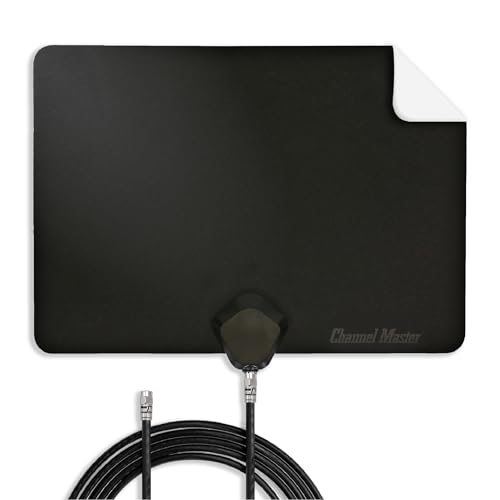
The Channel Master FLATenna is an indoor HDTV antenna designed for homeowners and apartment renters who want to cut the cord without sacrificing access to live local TV. It captures over-the-air signals from networks like ABC, CBS, FOX, NBC, PBS, Univision, and Telemundo, delivering them in stunning HD and even supporting 4K and NextGen TV (ATSC 3.0) broadcasts. For sports fans, this means free access to Sunday football, the Super Bowl, and major events in crisp detail straight from your TV’s tuner.
Built by Channel Master, a trusted name in antenna technology since 1949, the FLATenna focuses on practical reliability. Its 35-mile range is realistically rated to account for common obstructions like walls and interference, making it a solid choice for urban and suburban environments. The ultra-thin, lightweight panel (about 9×13×0.25 inches) weighs only 0.25 pounds, so you can mount it on a wall, window, or even lay it flat on a table without it being an eyesore. The reversible black-and-white design helps it blend into any home decor.
Setup is about as easy as it gets: plug the included 12-foot RG6 coaxial cable into your TV’s antenna port, run a channel scan, and you’re done. The cable features professional-grade shielding to reduce signal dropouts, which is a thoughtful touch for a product at this price point. For cord-cutters, streamers, and budget-conscious households, this means instant access to live news, sports, and prime-time shows without ongoing fees.
Movie lovers and families will appreciate the consistent picture quality of OTA broadcasts, which often surpass cable or streaming compression. With 4K and NextGen TV support, you’re set for future broadcast upgrades. However, note that indoor antennas are always at the mercy of your home’s construction—thick concrete walls or metal roofing can reduce range. Placement near a window generally yields the best results.
Overall, the FLATenna is a smart, affordable solution for anyone looking to supplement streaming services with free live TV. It’s especially appealing to apartment renters, tech enthusiasts testing OTA, and families wanting reliable local channels without a monthly bill. While not a miracle worker for extremely remote locations, it delivers on its promise for typical American homes.
Pros
- Supports both NextGen ATSC 3.0 signals and legacy ATSC 1.0 broadcasts in one receiver
- Includes 64GB of internal storage for out-of-the-box live TV recording and pause
- Supports AC-4 audio decoding and up to 4K HDR video output for enhanced local viewing
- Expandable DVR capacity via USB drives or microSD card slots
Cons
- Actual 4K broadcast availability and channel selection strictly depend on local broadcast market rollout
- Requires an external digital TV antenna which is not included in the package
- Occasional DRM encryption on select ATSC 3.0 channels may require ongoing internet-based firmware updates
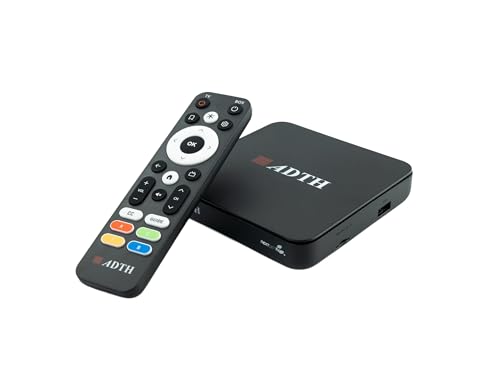
The ADTH NextGen TV Box Gen 2 is a dedicated over-the-air digital television tuner and DVR receiver designed to bring modern broadcast standards to any existing television, projector, or computer monitor equipped with an HDMI port. Built specifically around the ATSC 3.0 NextGen TV broadcast standard while retaining backward compatibility with ATSC 1.0, this converter box represents a major upgrade path for cord-cutters, apartment renters, and suburban homeowners. Instead of paying recurring fees for regional sports networks and standard broadcast feeds through cable or live TV streaming packages, this device allows viewers to harness free, uncompressed signals directly from local broadcast towers.
Visual performance on compatible broadcasts can show a noticeable bump over standard high-definition cable feeds. NextGen TV architecture allows networks to transmit in resolutions up to 4K with High Dynamic Range (HDR), providing deeper contrast, punchier highlights, and richer color reproduction on 4K OLED, QLED, and LED panels. For sports fans tuning into live football broadcasts or movie lovers enjoying weekend primetime network features, the clarity can surpass heavily compressed cable feeds. Fast motion handling looks clean during quick passes and camera pans, making it a dependable addition to a living room setup or a Sunday football watch party.
Audio handling is another focal point, thanks to built-in support for Dolby Digital Plus and AC-4 decoding. Older tuner boxes often struggle with modern broadcast audio streams, leaving viewers with muffled dialogue or silent channels. By decoding AC-4 tracks natively, the ADTH Gen 2 helps elevate dialogue clarity above background crowd noise and musical scores, which is a major advantage for both living room soundbars and basic flat-screen built-in speakers. In addition, the integrated 64GB internal drive gives viewers instant DVR functionality, making it easy to pause live TV during a snack run, rewind a controversial referee call, or schedule recordings without buying extra memory cards immediately.
The physical footprint of the box is sleek and unobtrusive, making it easy to position on a TV stand shelf, tuck behind a wall-mounted display, or pack into an RV entertainment console. Setup involves plugging in a coaxial cable from your TV antenna, connecting the HDMI cable to your display, and walking through the guided on-screen channel scan. Built-in dual-band Wi-Fi and Bluetooth enable the receiver to download vital over-the-air broadcast updates and DRM security certificates, which are increasingly required by major broadcast networks deploying ATSC 3.0 signals across U.S. metropolitan areas.
Potential buyers should keep in mind that performance relies heavily on antenna quality, distance from local transmission towers, and whether regional stations have fully activated ATSC 3.0 transmission equipment. If you live in an area with active NextGen TV signals and want to eliminate subscription fees without sacrificing 4K potential, dialogue clarity, or DVR recording convenience, the ADTH Gen 2 delivers a capable, future-ready solution for your home entertainment system.
Setting up the ADTH NextGen TV Box Gen 2 is straightforward for both novice TV owners and experienced home theater builders. The back panel houses standard antenna coaxial input and an HDMI output port, allowing quick integration with modern smart TVs, older flat panels, and desktop PC displays. Once powered on, the on-screen configuration wizard guides you through scanning for both ATSC 1.0 and ATSC 3.0 channels in your broadcast market.
Connecting the box to your home Wi-Fi network is highly recommended during initial setup. Dual-band wireless capability allows the receiver to fetch security handshakes and firmware updates needed to decode encrypted NextGen TV channels seamlessly. For viewers with large DVR libraries in mind, the unit also offers external expansion via USB and microSD storage slots, ensuring you never run out of room for holiday specials, family sitcoms, or recorded sporting events.

Pros
- Compact size fits in unconventional spaces like kitchen counters, RV nooks, and small bedrooms
- Full HD 1080p resolution offers good clarity for a small screen
- Built-in Wi-Fi and smart apps eliminate the need for an external streaming device in most cases
- Multiple HDMI ports including ARC provide flexibility for connecting soundbars, game consoles, or streaming sticks
- Lightweight and portable design is ideal for travelers and campers
Cons
- 1080p resolution limits detail compared to 4K screens, but acceptable for this size
- Small screen size may not satisfy viewers expecting a large living room experience
- Built-in speakers may lack bass and volume, typical for compact TVs
The Feihe 15.6-inch Smart TV is a compact LED television designed specifically for small spaces where a full-sized TV simply won't work. Whether you're outfitting a cozy kitchen, a camper van, an RV, or a bedroom with limited wall space, this pint-sized screen aims to deliver entertainment without sacrificing functionality. It's a practical solution for renters, travelers, and anyone looking to add a secondary TV to a tight spot.
Picture quality on this 1080p Full HD panel is respectable for its size class. Colors appear reasonably vibrant, and the LED backlight provides adequate brightness for most indoor environments. While it lacks advanced features like HDR or Dolby Vision, the 1080p resolution looks crisp on a 15.6-inch screen. Viewing angles are typical for an LED panel, so it's best to sit directly in front for optimal clarity. Motion handling is sufficient for casual TV shows, news, and streaming content, though fast-paced sports or action movies may show some blur.
Smart features are a key highlight. The TV comes with built-in Wi-Fi and a smart platform that grants access to popular streaming apps such as Netflix, Prime Video, YouTube, and Apple TV. This means you can cut the cord and stream directly without needing a separate Roku, Fire Stick, or Chromecast. The interface is straightforward, though app loading times may lag slightly compared to higher-end smart TVs. Voice control is not included, but the included remote covers basic navigation.
Connectivity is surprisingly generous for a TV this small. It includes three HDMI ports, one with ARC support for connecting a soundbar or audio system, a USB port for media playback, and an AV input for legacy devices. This allows you to hook up a gaming console, a streaming stick, or an external drive for movie nights. The ATSC tuner also enables free over-the-air channels with an antenna, making it a versatile option for campers and RV users.
Build quality feels solid for its price point. The TV is slim, lightweight, and easy to carry from room to room. It measures just 2 inches in depth, so it can sit on a small stand or be wall-mounted using a standard VESA bracket. The black bezels keep the focus on the screen, and the overall design is minimal enough to blend into any setting. Setup is quick out of the box, though the included manual could be clearer for first-time smart TV users.
Overall, the Feihe 15.6-inch Smart TV is a niche product that excels at what it sets out to do: provide entertainment in compact, mobile, or secondary spaces. It's best suited for budget-conscious shoppers, RV owners, campers, parents setting up a playroom TV, or streamers who want a small screen in the kitchen. It's not designed to replace your main living room TV, but as a supplemental screen, it offers solid value at an affordable price. If you need a small, smart, and portable TV for a tight spot, this is a worthy candidate.

Pros
- Four physical tuners let multiple devices stream live local channels simultaneously.
- Delivers uncompressed broadcast picture quality superior to heavily compressed cable and satellite feeds.
- Simple whole-home DVR setup using any standard USB external hard drive without mandatory monthly fees.
- Flexible network placement allows pairing with an antenna in the optimal window or attic location.
Cons
- Does not support ATSC 3.0 channels that have active DRM encryption enabled by broadcasters.
- Requires a wired Ethernet network connection to your home router or network switch.
- Advanced electronic program guide data and automated series recordings require an optional paid subscription.
The SiliconDust HDHomeRun Flex 4K is an external network television tuner designed to capture free over-the-air digital broadcasts and distribute them across a home network. Unlike conventional tuners that connect directly to a single television display via HDMI, this compact device connects to a digital antenna and your home router via Ethernet. It decodes both legacy ATSC 1.0 digital signals and NextGen TV ATSC 3.0 broadcasts, converting them into digital streams accessible through compatible smart TV platforms, streaming media players, gaming consoles, and mobile devices.
This hardware is an excellent match for cord-cutters, sports fans, home theater enthusiasts, and multi-television households aiming to eliminate expensive cable bills while retaining local network channels. Families can simultaneously stream Sunday football in the living room, watch the local evening news in the kitchen, and view cartoons on a bedroom smart TV without running coaxial splitters through the walls. For apartment renters and homeowners alike, it offers freedom to place the digital antenna in the specific window or attic space that receives the strongest signal rather than near the primary television stand.
Based on product specifications and user feedback, broadcast picture quality is one of the standout advantages of this network tuner setup. Over-the-air television signals are typically broadcast with far less digital compression than traditional cable or live streaming services. This results in sharper native clarity, vibrant color representation, clean fast-motion handling during live sports, and crisp dialogue clarity across stereo and surround sound configurations. With two dedicated ATSC 3.0 tuners, viewers in supported broadcast markets can access NextGen TV feeds that offer enhanced video resolution and improved audio fidelity.
Hardware practicality is centered on simplicity and flexible whole-home media management. Measuring just 7 by 5 by 2.2 inches, the matte black chassis integrates seamlessly into any networking cabinet or media shelf. The rear panel features an RF coaxial antenna connector, a gigabit Ethernet jack, power input, and a USB port designed for whole-home DVR functionality. By connecting an ordinary external USB hard drive, users can record live broadcast television, pause live sports, and schedule shows across the household network without mandatory monthly service subscriptions.
While the hardware provides exceptional flexibility, potential buyers should recognize current broadcast environment limitations. ATSC 3.0 channels that utilize broadcaster-mandated digital rights management encryption are currently incompatible with third-party network tuners, restricting NextGen reception to DRM-free transmissions. Additionally, smooth whole-home multi-stream performance relies on a reliable home Wi-Fi network and a wired Ethernet connection to your router. For viewers seeking crystal-clear local broadcasts, versatile multi-room streaming, and subscription-free DVR potential, the HDHomeRun Flex 4K serves as a high-value anchor for any modern entertainment setup.
Live broadcast sports remain the primary reason many viewers hesitate to cut the cord, and the HDHomeRun Flex 4K directly addresses this challenge. Major networks like CBS, FOX, NBC, and ABC broadcast marquee events including the Super Bowl, college football playoffs, golf tournaments, and regional baseball games over the air for free. Because over-the-air television transmits directly from local broadcast towers with minimal compression, sports fans often experience sharper action, reduced motion blur, and noticeably less broadcast delay compared to internet streaming services.
With four integrated tuners, this unit easily accommodates busy game days where multiple sports events overlap. Multiple users across the house can tune into different games on their preferred smart TVs, tablets, or gaming displays at the same time. Paired with a connected USB hard drive, the system allows sports enthusiasts to pause for snack breaks, rewind critical plays, or record evening highlights effortlessly.
Integrating the HDHomeRun Flex 4K into an existing home theater display or living room media center is straightforward. Instead of cluttering your media console with an antenna cable, the tuner connects directly to your home network switch or Wi-Fi router. The official HDHomeRun application is readily available across popular platforms including Apple TV, Amazon Fire TV, Google TV, Android TV, Roku Ultra, and Windows PCs, enabling intuitive channel surfing with your regular TV remote.
Advanced home theater enthusiasts can also integrate the tuner into popular personal media servers such as Plex, Emby, or Channels DVR. This integration centralizes live broadcast channels and recorded local content alongside your personal movie libraries and streaming apps, creating a clean, unified viewing experience on premium OLED, QLED, and 4K HDR displays.
Pros
- Access to free local HD channels from major networks with no monthly service charges
- NextGen TV ATSC 3.0 compatibility prepares your setup for future high-resolution broadcasts
- Adjustable dipoles allow precise directional adjustments to pull in stubborn channel frequencies
- Lightweight and compact design fits conveniently beside your living room or bedroom television
- Straightforward setup requires only a coaxial connection and a quick television channel scan
Cons
- 30-mile reception range is best suited for city and suburban areas rather than remote rural locations
- The included 4-foot coaxial cable may limit optimal placement if your TV is far from an exterior window
- Manual dipole repositioning may occasionally be required when switching between VHF and UHF stations
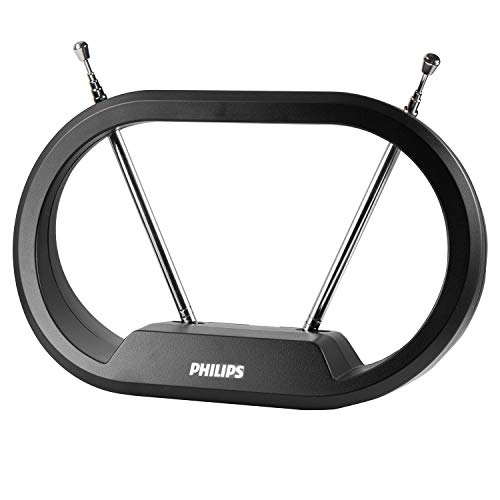
The Philips Indoor TV Antenna Rabbit Ears is an over-the-air broadcast receiver designed to pull in free VHF and UHF network television directly to your living room display. For cord-cutters pairing this accessory with modern 4K OLED, QLED, or LED smart TVs, it unlocks live local programming without requiring cable bills or subscription streaming bundles. Because over-the-air signals arrive uncompressed directly from local broadcast towers, viewers frequently enjoy crisper 1080p resolution, vibrant color accuracy, and reduced broadcast delay compared to heavily compressed internet streams.
This compact indoor antenna is well suited for apartment renters, suburban homeowners, sports fans, and budget-conscious cord-cutters. If you enjoy hosting game-day watch parties, catching local evening news, tracking severe weather alerts, or tuning into prime-time network broadcasts, having reliable over-the-air access provides direct peace of mind. It also works seamlessly for secondary bedroom displays, dorm room setups, or garage TVs where running an extra cable box or relying solely on Wi-Fi bandwidth might be impractical.
Supporting broadcast standards up to 4K and 8K Ultra HD, this unit is built with compatibility for NextGen TV (ATSC 3.0) wherever local transmission towers support the updated standard. The dual dipoles extend and pivot to hone in on VHF channels, while the integrated circular loop focuses on UHF frequency bands. User feedback indicates that picking up native broadcast signals directly to an ATSC-equipped tuner helps maintain clean contrast levels, natural skin tones, and sharp motion handling during fast-paced live sporting events.
Built with a lightweight footprint measuring 6.24 by 7.71 by 2.43 inches and weighing under half a pound, the antenna rests steadily on entertainment consoles, media shelves, or TV stands. The package includes an attached four-foot coaxial cable that screws straight into the standard RF tuner jack on your TV or standalone tuner box. While the classic rabbit ears look blends vintage utility with sleek modern accents, the adjustable elements make directional fine-tuning straightforward when targeting specific local broadcast towers.
Realistic limitations center primarily on physical broadcast physics and indoor placement. With a rated reach of up to 30 miles, homes located in deep rural areas far from regional broadcast towers may experience weaker signal capture or channel dropouts compared to amplified or outdoor roof-mounted antennas. The four-foot coaxial cable also restricts how far away you can position the antenna from your display, which means placing it directly near a high window could require an inexpensive coaxial cable extension.
For viewers looking to trim monthly bills while maintaining crystal-clear access to live sports, award shows, and regional broadcasts, this Philips indoor antenna serves as a practical, plug-and-play addition to any home entertainment system. Pairing it with a modern smart TV lets you effortlessly switch between on-demand streaming apps and zero-latency over-the-air broadcasts. It remains an affordable and dependable choice for city and suburban households seeking authentic broadcast television.
Setting up the Philips Indoor Antenna takes only a few minutes and requires no technical background or special tools. The integrated four-foot coaxial cable threads directly into the antenna input on the back of your television or converter box. Once tightened securely, position the antenna on a flat surface such as your TV stand, shelf, or near a window facing local broadcast towers.
After the physical connection is complete, navigate to your TV settings menu, switch the tuner source to antenna or over-the-air mode, and run an automated channel scan. If certain local channels appear weak, adjusting the angle and length of the telescoping dipoles or rotating the center UHF loop can significantly improve signal stability before rescanning.
Live sports enthusiasts benefit significantly from over-the-air television reception. Unlike streaming platforms that introduce thirty-second to two-minute transmission delays, antenna broadcasts deliver real-time action, preventing live scores and game-winning plays from being spoiled by phone notifications or social media alerts.
Major network sporting events, regional football matchups, and major tournaments broadcast on local affiliates display with exceptional clarity through this antenna. The uncompressed signal preserves sharp motion clarity and natural color gradients on high-refresh-rate 120Hz displays, making fast-moving footballs, hockey pucks, and race cars look smooth and defined.

Pros
- Supports DRM-encrypted ATSC 3.0 channels that many older OTA tuners cannot decode
- Compact USB stick design keeps living room and bedroom entertainment setups clean and clutter-free
- Provides access to uncompressed local HD and 4K-ready broadcasts for live sports watch parties
- Cost-effective solution to upgrade an existing Google TV or Fire TV player to NextGen TV
Cons
- Requires host hardware with native Dolby AC-4 audio and Widevine L1 DRM decoding capabilities
- Encrypted ATSC 3.0 channels require an active home internet connection to verify viewing licenses
- Direct USB design connects to only one TV or streaming box rather than streaming across the home network
The ADTH NextGen TV USB Tuner is an external television accessory engineered to bring free over-the-air ATSC 3.0 NextGen TV and legacy ATSC 1.0 digital broadcasts to modern smart streaming hardware. Designed specifically for cord-cutters, sports fans, and tech enthusiasts looking to bypass rising cable bills, this USB dongle connects directly to select Android TV, Google TV, and Fire TV host devices. It turns a standard streaming box into a full-fledged broadcast receiver capable of pulling in live local news, network dramas, and major sports broadcasts directly from an antenna.
Unlike standard streaming apps that heavily compress video signals, over-the-air ATSC 3.0 broadcasts deliver crisp video with superior color accuracy, enhanced clarity, and potential 4K HDR enhancements where stations broadcast them. For football Sundays, regional sports watch parties, and movie nights, the tuner captures raw digital signals straight from the airwaves. Because NextGen TV utilizes modern HEVC video standards, compatible displays can showcase smooth motion handling and sharp detail without buffering delays or pixelation common to congested internet streams.
Audio performance and DRM compatibility are vital considerations with modern NextGen TV reception. The ADTH tuner supports encrypted ATSC 3.0 broadcasts, which allows viewers to unlock channels that have implemented broadcast DRM, provided the host device has Widevine L1 and a steady internet connection. Audio relies on the host device having native Dolby AC-4 decoding support, which ensures clear dialogue and balanced multichannel sound when paired with modern home theater soundbars and AV receivers.
Build quality is sleek, compact, and unobtrusive, featuring a clean white USB enclosure that hides easily behind a wall-mounted living room TV or bedroom display. Setting up the unit involves plugging the USB connector into a supported streaming player, such as the Onn 4K Pro or Amazon Fire TV Cube 3rd Gen, connecting an antenna coax cable, and running the ADTH NextGen TV companion application. Unlike bulky network tuners that take up shelf space near your router, this direct USB connection keeps cable management tidy and latencies minimal.
While the hardware offers impressive broadcast potential, prospective buyers must confirm their streaming player's compatibility before purchasing. Devices lacking Dolby AC-4 audio or Widevine L1 will experience silent playback or black screens on encrypted stations, and the tuner functions on only one display at a time rather than serving the whole household. For cord-cutting families and sports fans who already own a verified compatible streaming player, the ADTH NextGen TV USB Tuner provides a capable, economical pathway to enjoy pristine over-the-air television without monthly contracts.
Setting up the ADTH NextGen TV USB Tuner requires verifying both your geographic broadcast coverage and host hardware capabilities prior to installation. Because ATSC 3.0 rollout varies across American cities, running an antenna coverage check will confirm which local affiliates broadcast NextGen TV in your area. You can also download the ADTH NextGen TV Test app onto your streaming device to confirm whether it possesses the required Dolby AC-4 audio decoders and HEVC video capabilities.
Once compatibility is confirmed, installation is straightforward. Connect your coaxial antenna lead to the tuner, insert the USB connector into your compatible streaming device, and launch the channel scan through the dedicated application. Encrypted channels will need your streaming device to maintain an active internet connection to download DRM security keys, ensuring smooth access to protected major network affiliates.
Live sports coverage benefits substantially from uncompressed over-the-air broadcasts. Standard cable and live-TV streaming services often introduce compression artifacts, color banding, and noticeable broadcast delays during major football, basketball, and baseball games. The ADTH NextGen TV Tuner receives direct broadcast signals with minimal latency, keeping you in sync with live plays and game-day reactions.
The integration of NextGen TV standards also lays the groundwork for high-frame-rate broadcasts and enhanced dynamic range. Local affiliates broadcasting in 1080p HDR or native 4K provide sports enthusiasts and movie lovers with richer contrast, deeper black levels, and vibrant team colors on modern OLED and QLED displays.
What ATSC TV Means for Antennas, Tuners, and Viewing
ATSC is the digital television broadcast standard used to transmit over-the-air television in the United States. In everyday shopping, “ATSC TV” usually means a television or receiver with a tuner that can decode broadcast channels received through an antenna. It doesn’t describe the screen’s panel technology, smart platform, or streaming services. A television can have a 4K display and streaming apps but still require a compatible tuner or external receiver for antenna broadcasts.
The practical distinction is between the broadcast signal and the device displaying it. An antenna picks up radio-frequency broadcasts; a tuner decodes them into channels and video; the television displays the picture. Some products combine these functions, while others supply only an antenna or a tuner that connects to a separate screen. Once you know which component you’re missing, it’s easier to avoid buying a converter box when the TV already has a suitable tuner.
ATSC 1.0 and ATSC 3.0 are different broadcast generations
ATSC 1.0 is the established standard behind traditional digital over-the-air broadcasts. ATSC 3.0, also called NextGen TV, is a newer standard that can support features such as 4K or HDR broadcasts where stations provide them and the receiving equipment supports them. The presence of an ATSC 3.0 tuner does not mean every local channel is broadcasting in 4K, HDR, or ATSC 3.0. Availability varies by location and station, so local coverage is a necessary part of the decision.
Compatibility works in both directions: a receiver that handles ATSC 1.0 and 3.0 can tune broadcasts from either standard, but a receiver limited to ATSC 1.0 cannot decode an ATSC 3.0-only signal. The ADTH NextGen TV Box Gen 2 is listed as supporting both standards and connecting to a display over HDMI. By contrast, the Mediasonic HomeWorx converter box is explicitly listed as not supporting ATSC 3.0. Match the tuner to the broadcasts you expect to receive, rather than assuming that “digital TV” means every generation is covered.
The tuner may be inside the TV or in a separate device
A television with a compatible built-in tuner can scan for available antenna channels after you connect an antenna to its coaxial input. A converter box offers another route when an older display lacks the needed tuner: the box receives the antenna signal and sends video to the screen, commonly over HDMI. The HomeWorx model is listed for ATSC broadcasts on analog and digital televisions, projectors, and computer monitors, with 1080p HDMI output. Its specifications also list recording and live-TV pause functions when a compatible external hard drive is connected.
A network tuner takes a different approach. The SiliconDust HDHomeRun Flex 4K connects to an antenna and distributes broadcast television over a home network to supported devices, rather than acting as a simple HDMI box for one screen. Its listed configuration includes four tuners, two for ATSC 3.0 and all four for ATSC 1.0. Device and channel compatibility still matter: the product information distinguishes supported platforms for ATSC 1.0 and DRM-free ATSC 3.0 content and notes that DRM-protected channels aren’t compatible.
The ADTH NextGen TV USB Tuner is another distinct option. Its product information describes use with Android TV, Google TV, and Fire TV devices, but it is not a network tuner and is intended for the device it plugs into. Playback depends on the host device’s codec support, and the listing says encrypted ATSC 3.0 channels require internet access and compatible DRM support. Check the specific device compatibility information before purchase; a USB connection alone does not ensure every television or streaming box will work.
An antenna receives signals; it does not guarantee channels
Indoor antennas such as the Channel Master FLATenna and Philips rabbit-ears model are designed to receive local broadcasts. Their listed range figures are estimates, not promises that every station will come in clearly from every room. Terrain, buildings, distance from transmitters, antenna orientation, and indoor placement can all affect reception. A station may also broadcast on a frequency that behaves differently indoors from another nearby station, so reception can vary by channel.
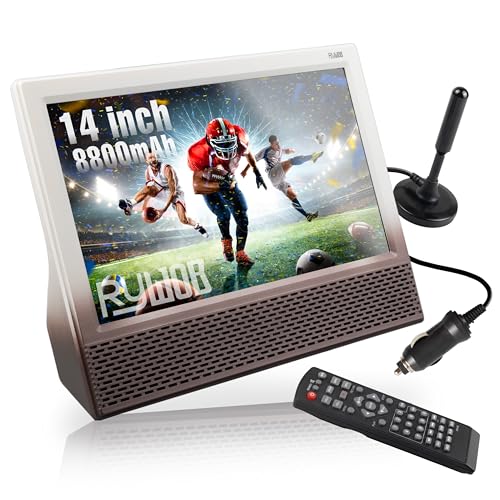
Begin by checking which local stations broadcast in your area and whether they use ATSC 1.0 or ATSC 3.0. Then connect an antenna to the tuner’s antenna input and run a channel scan using the device’s setup instructions. If channels are missing or breaking up, try a different permitted placement, such as nearer a window, and scan again. The Rywob portable TV’s product information likewise notes that signal strength depends on local towers and suggests window or outdoor placement for improved reception, but actual results remain location-specific.
Antenna specifications can help narrow the choices, but they don’t replace checking local coverage. The FLATenna listing describes a reversible indoor design, a 12-foot coaxial cable, and compatibility with ATSC 3.0 broadcasts. The Philips antenna is listed with adjustable loop and dipoles and a shorter included coaxial cable. Those features may help with positioning and connection in a room, but neither antenna can promise a stable picture where the broadcast signal is weak or obstructed.
For a broader comparison of antenna types, our outdoor television setup guide can help you think about the display environment, while an antenna direction and reception guide is more directly relevant when stations come from different directions. Keep the distinction clear: an antenna addresses signal pickup, while a tuner addresses decoding. Replacing one does not necessarily solve a problem caused by the other.
Resolution claims depend on the broadcast and the whole signal path
A tuner’s maximum output resolution is not proof that a station is sending a broadcast at that resolution. The ADTH Gen 2 product description lists output up to 4K HDR, but it also notes that 4K broadcast availability varies by location. A 4K-capable receiver can output a signal to a compatible display, yet an HD broadcast does not become native 4K just because it passes through that receiver. The source station, tuner, connection, and television all affect what you can actually watch.
The same reasoning applies to HDR and audio formats. The ADTH Gen 2 listing identifies HDR output and support for Dolby Digital Plus and AC-4, with compatibility requirements for the connected television or audio system. Those features matter only when the broadcast and connected equipment support them. A buyer should treat format support as a chain: the station must provide the format, the receiver must decode it, and the display or audio equipment must be able to use it.
Keep the screen’s own resolution separate from broadcast resolution. A Full HD television can display lower-resolution broadcast content, while a 4K television may upscale a lower-resolution source. Upscaling can adapt the image to the panel, but it cannot recover detail that wasn’t present in the original broadcast. If you’re comparing display resolution more generally, our 4K UHD television guide explains the screen-side distinction.
Recording features and smart functions vary by receiver
Some ATSC products do more than tune channels, but their recording approaches are not interchangeable. The HomeWorx box lists recording and pause-live-TV features that require an external USB hard drive, with support for drives up to the capacity stated in its product information. It also lists USB media playback and Clear QAM support for unscrambled cable channels. Those extras may suit someone connecting a legacy screen, but the listing clearly says the box does not support ATSC 3.0.
The ADTH Gen 2 box lists built-in storage and DVR functions, including recording and playback, and says external storage can expand capacity. The HDHomeRun Flex 4K supports whole-home viewing through a network and lists DVR use with a connected USB hard drive; advanced automatic recording features may depend on a paid TV guide. These differences influence where recordings are stored, which devices can access live channels, and whether extra storage or services are needed. Read the specific feature requirements instead of treating “DVR included” as one uniform capability.
Portable televisions add another category. The Feihe compact smart television lists built-in Wi-Fi and streaming apps alongside an ATSC tuner, while the Rywob portable TV lists a built-in tuner, antenna, and rechargeable battery. A smart TV app uses an internet connection; an antenna broadcast does not require a streaming subscription. But portable displays still need adequate local reception for live antenna viewing, and battery runtime or portability does not improve the broadcast signal itself.
Common compatibility errors are easy to avoid
The first common mistake is buying by a label such as “digital converter” without checking the broadcast standard. Confirm whether you need ATSC 1.0, ATSC 3.0, or both, and verify the exact model’s listed support. The second is overlooking the receiver’s output connection: an HDMI-only box may not connect directly to a display that lacks HDMI without an appropriate, supported conversion arrangement. Confirm the television’s available inputs before choosing a receiver.
USB tuners require particular care because the host device is part of the system. The ADTH USB model’s product information calls out host codec requirements, DRM limitations, and the need to check device compatibility. A USB port on a television does not by itself establish support for live broadcast tuning through that tuner. Consult the model’s supported-device information or compatibility test before relying on a particular television or streaming device.
Network tuners bring their own requirements. The HDHomeRun sends television over a home network, so compatible playback devices and a functioning network are part of the setup. Its product details specify that supported device lists differ by broadcast standard and DRM status. If a channel is unavailable on one device, that doesn’t automatically mean the antenna or tuner is defective; the playback platform or channel protection may be the limiting factor.
Choose the setup around the screen you already own
If your television already includes a compatible tuner, an antenna may be the only additional hardware needed for local channels. If an older display lacks a tuner, a converter box with an output your screen accepts can be more appropriate. If you want live television on multiple supported devices around a home, a network tuner may fit that goal, provided your devices and channels are compatible. The right choice depends more on the connection and viewing arrangement than on the phrase “ATSC TV” alone.
For a secondary room, RV, or compact installation, a small television with a built-in tuner can reduce the number of separate components. The Feihe and Rywob listings illustrate different approaches: one combines smart functions and an ATSC tuner, while the other emphasizes portability and battery operation. Neither description establishes how many channels a particular location will receive. Confirm dimensions and power needs for the intended space, and check local signal conditions before counting on antenna television away from home.
For a primary living-room display, think through the signal path before choosing accessories. Identify the broadcast generation, the tuner location, the antenna connection, and the output or network path to the screen. Then check whether desired stations are available and whether any protected channels have special device requirements. This avoids paying for capabilities you can’t use or discovering that one component in the chain is incompatible after setup.
ATSC TV is best understood as broadcast reception and decoding, not a particular kind of screen. Check local station availability, match the tuner standard to those broadcasts, and choose an antenna or receiver that connects to the television or playback devices you plan to use. That simple sequence clarifies whether you need an antenna, a converter, a network tuner, or no extra tuner at all.




Write Your Review
No reviews yet. Be the first to share your experience!