


Upgrading living room entertainment often starts with deciphering retail jargon, yet many shoppers find the technical terminology confusing. Setting up modern home theater hardware requires knowing exactly how pixel density alters everyday viewing. Understanding what is 4k tv resolution provides the foundation for evaluating modern flat screens, external media players, and high-bitrate streaming services. Without clear technical clarity, buyers frequently struggle to determine whether higher pixel numbers actually translate to sharper imagery in everyday living spaces.
Pixel counts alone do not guarantee a cinematic picture unless paired with capable image processing and proper room placement. Evaluating how high-definition signals transition into ultra-high-definition grids helps viewers avoid common pitfalls like soft upscaling or distracting motion blur. Finding the right display balance is especially critical when selecting dedicated 55-inch streaming screens that balance viewing distance with panel sharpness. Exploring how display hardware renders fine textures ensures you invest in hardware that genuinely elevates your visual entertainment.

Pros
- Fluid 4K streaming performance with comprehensive support for Dolby Vision, HDR10+, and Dolby Atmos
- Cloud gaming via Xbox Game Pass and Amazon Luna offers convenient gaming on any living room or bedroom TV
- Wi-Fi 6E connectivity provides reliable, high-speed wireless streaming across busy smart home networks
- Generous 16GB storage capacity allows for plenty of app installs without frequent storage warnings
- Compact stick format plugs neatly behind mounted displays to keep entertainment centers clean
Cons
- Cloud gaming requires a separate subscription and compatible Bluetooth wireless controller
- Ad-heavy home screen interface prioritizes Amazon Prime Video and sponsored content over third-party recommendations
- Requires a separate wall outlet power connection for optimal performance rather than standard low-power TV USB ports
The Amazon Fire TV Stick 4K Max represents the top tier of compact HDMI streaming players, designed to give any television a modern smart platform upgrade. Based on product specifications and user feedback, this device bridges the gap between basic streaming dongles and full-fledged media boxes. It serves as a practical solution for homeowners revitalizing an older flat screen, apartment renters wanting a portable media hub, and cord-cutters eager to drop expensive cable subscriptions in favor of live streaming apps like YouTube TV, Sling, and Philo.
Visual and audio performance stand out as primary strengths for home theater enthusiasts and movie lovers. The stick delivers true 4K Ultra HD playback with full support for premium high dynamic range formats, including Dolby Vision, HDR10+, and HLG. When paired with a capable 4K display, viewers can expect rich contrast, nuanced shadow detail, and accurate color mapping during family movie nights or late-night series marathons. On the audio side, pass-through compatibility for Dolby Atmos ensures that cinematic soundtracks and overhead audio effects translate effectively through compatible soundbars and multi-channel home audio systems.
Under the hood, an upgraded processor and Wi-Fi 6E support significantly improve everyday responsiveness. Navigating through the refreshed Fire TV interface feels quick, with noticeably snappy app launch speeds across platforms like Netflix, Prime Video, Disney+, and Max. The integration of conversational Alexa+ search makes tracking down obscure films or checking live sports scores as simple as speaking naturally into the remote. Gamers also benefit substantially from this hardware boost, as native cloud support for Xbox Game Pass and Amazon Luna allows users to stream major console titles directly to their display without needing a physical video game console.
Build quality remains sleek and functional, measuring just over four inches in length to hide discreetly behind wall-mounted TVs or tight entertainment setups. Unlike previous generations, the 16GB of onboard storage provides plenty of breathing room for dozens of streaming apps and casual games without running into frustrating storage ceiling warnings. The included voice remote adds practical convenience with dedicated television power, volume, and channel-surfing buttons, effectively consolidating daily controls into a single handheld device. When the TV is not in active use, the Ambient Experience converts the blank black screen into an attractive digital canvas showing artwork, personal photos, and helpful smart home widgets.
While the Fire TV Stick 4K Max offers broad capabilities, there are a few practical limitations worth keeping in mind. The Fire TV interface remains somewhat cluttered with sponsored advertisements and highlighted Amazon content, which can feel intrusive compared to cleaner operating systems. Additionally, cloud gaming performance depends heavily on the stability of your home internet connection, and gaming requires purchasing a compatible Bluetooth controller separately. Powering the stick also generally requires running the included power adapter to a wall outlet, as low-powered USB ports on many televisions cannot provide adequate current for stable 4K operation.
For streamers, sports fans, and tech-savvy households searching for a responsive, feature-packed media player, the Amazon Fire TV Stick 4K Max is a thoroughly dependable choice. Its balance of advanced HDR processing, robust wireless connectivity, and flexible cloud gaming makes it an excellent centerpiece for main living rooms, dedicated basement home theaters, or secondary bedroom televisions alike.
Cloud gaming on the Amazon Fire TV Stick 4K Max turns your display into an instant gaming screen without taking up shelf space. Through native integration with Xbox Game Pass and Amazon Luna, players can jump into console-grade titles simply by pairing a compatible Bluetooth controller. The updated graphics pipeline and fast internal processor help keep input latency low, making casual multiplayer sessions and story-driven campaigns smooth and accessible.
The addition of tri-band Wi-Fi 6E connectivity plays a critical role in preserving gameplay stability. By utilizing the less congested 6 GHz wireless frequency, the streaming stick minimizes packet loss, frame drops, and buffering during fast-paced action sequences. While competitive esports players may still prefer a dedicated console wired via Ethernet, this setup provides an exceptionally convenient, clutter-free solution for dorm rooms, bedrooms, and family gaming nights.
The Fire TV interface provides comprehensive access to virtually all major streaming platforms, encompassing hundreds of thousands of movies, live channels, and on-demand episodes. With Alexa+ voice functionality built into the upgraded remote, searching across diverse platforms is fast and intuitive, allowing you to search by actor, genre, or specific dialogue quotes without typing on an onscreen keyboard.
Beyond traditional video entertainment, the Ambient Experience elevates the everyday role of your television. When you step away from watching movies, the display can show curated art collections, personal photo albums, weather forecasts, and customizable smart home controls. From controlling compatible smart lights to monitoring video doorbells, the device functions as an interactive home management dashboard right on your screen.
Pros
- Delivers crisp 4K Ultra HD picture clarity with dynamic HDR10+ color support.
- Alexa+ voice integration simplifies content discovery across numerous streaming platforms.
- Supports Xbox cloud gaming without requiring an expensive physical video game console.
- Extremely compact and lightweight design remains completely hidden behind your display.
- Provides quick access to a huge catalog of live, free, and subscription entertainment channels.
Cons
- Relies on HDR10+ without listed support for Dolby Vision dynamic metadata.
- Xbox cloud gaming performance depends heavily on home Wi-Fi stability and requires a separate paid subscription.
- The home screen displays sponsored banners and promotional content rows that some viewers may find cluttered.
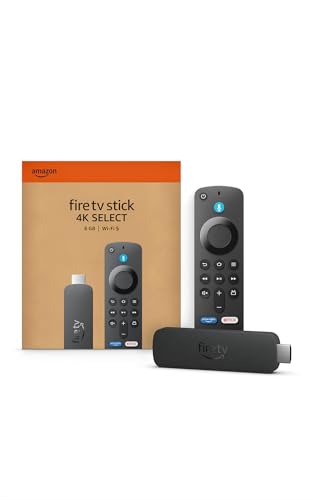
The Amazon Fire TV Stick 4K Select serves as a dedicated streaming media player built to transform any standard television into an intelligent entertainment display. Designed primarily for cord-cutters, apartment renters, busy families, and bedroom TV users, this compact dongle attaches directly to an open HDMI port. It presents a cost-effective way to modernize older flat-screen sets or replace sluggish built-in smart TV interfaces with an updated, responsive operating system.
Regarding visual performance, the device supplies crisp 4K Ultra HD playback with high dynamic range support via HDR10+. Connected to an HDR10+ capable LED, QLED, or OLED TV, viewers can enjoy enhanced contrast ratios, punchy colors, and clear highlights during movie nights or weekend sports broadcasts. Fast motion handling remains smooth for live hockey matches or football games, provided your home Wi-Fi delivers sufficient bandwidth to prevent buffering drops.
Smart functionality stands out through the modernized Fire TV user experience, backed by natural voice interaction through Alexa+. Rather than endlessly scrolling through distinct apps, viewers can speak naturally to find specific genres, track down actors, or manage playback across services like Prime Video, Netflix, Disney+, and Max. Furthermore, the inclusion of Xbox cloud gaming through Xbox Game Pass turns your living room TV into a casual console, allowing users to pair a wireless Bluetooth gamepad and play blockbuster titles directly over the cloud.
In terms of hardware build and everyday practicality, the player measures just over four inches long and weighs less than a tenth of a pound. This low-profile profile easily hides behind slim wall-mounted displays without demanding complex cable management or bulky shelf space. Connectivity relies on standard HDMI along with Wi-Fi, making the initial configuration quick and straightforward for non-technical users looking to stream workout videos, news updates, or late-night shows.
A few practical considerations are worth observing before choosing this model. The specifications highlight HDR10+ rather than Dolby Vision, which might leave dedicated home theater buffs wanting broader premium HDR format support. Furthermore, while the cloud gaming feature works well for casual play, competitive gamers may notice occasional latency depending on home network congestion, and an active Xbox Game Pass subscription is required.
For everyday viewers, apartment living rooms, student dorms, and guest bedrooms, the Fire TV Stick 4K Select delivers remarkable utility. It combines reliable 4K playback, an expansive library of free and premium streaming apps, and smart voice assistance into an unobtrusive footprint. Whether organizing family cartoon marathons or catching the big game with friends, this streaming player provides a practical, straightforward upgrade for modern home entertainment.
The updated interface prioritizes speed, helping family members pin their favorite applications directly to the home bar for one-click access. Integration with Alexa+ enables conversational searches, meaning you can ask for movies by quote or ask for recommendations based on mood, eliminating repetitive remote clicking.
For casual gamers, the ability to stream Xbox titles straight to the television via Xbox Game Pass provides an accessible alternative to buying a dedicated console. Players simply connect a compatible Bluetooth controller, launch the app, and play major titles with low input lag on solid Wi-Fi connections.
Physical installation requires only seconds, as the stick slots right into any open HDMI port on the back or side of your television. Because it draws power via an included cable and adapter, it stays hidden away, keeping living room entertainment consoles clean and wire-free.
The player pairs effortlessly with home Wi-Fi networks and guides users through a fast on-screen setup process. Once connected, users can also control compatible smart lights, thermostats, and security cameras straight from the couch using the included voice remote.
Pros
- Generous 65-inch display size at an accessible value point for living rooms and family spaces
- Built-in Samsung TV Plus delivers massive libraries of free streaming channels out of the box
- Reliable 4K upscaling brings sharper definition to standard cable channels and older streaming titles
- Integrated Alexa voice assistance enables seamless hands-free navigation and volume adjustments
- Smooth frame transitions with Motion Xcelerator minimize noticeable judder during football and basketball games
Cons
- Standard 60Hz refresh rate lacks native 120Hz support for competitive next-gen console gaming
- Lacks full array local dimming, which limits deep black levels in completely dark home theater rooms
- Built-in speakers provide modest bass output, making a dedicated soundbar recommended for cinematic audio
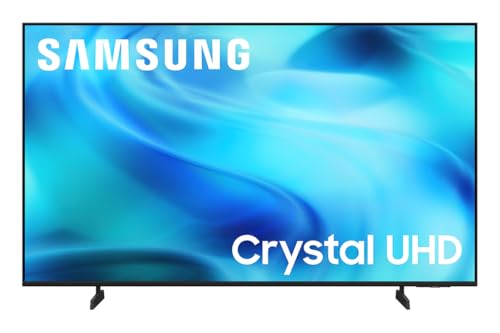
The Samsung 65-Inch Class U8000H Series Crystal UHD Smart TV offers a well-rounded 4K viewing package designed for everyday home entertainment. Geared toward families, apartment dwellers, cord-cutters, and budget-conscious buyers, this LED display brings a spacious 65-inch canvas into living rooms, finished basements, or primary bedrooms. Whether hosting weekend sports watch parties, enjoying family movie marathons, or catching up on morning news, this model aims to provide dependable visuals without complicated calibration steps.
At the core of the display is the Crystal Processor 4K, which works to optimize color expression and deliver clear upscaling for sub-4K cable broadcasts and streaming media. Features like Color Booster help bring vibrant tones to animated movies and nature documentaries, while Motion Xcelerator keeps fast-moving sports and action sequences steady at 60Hz. Although it does not feature full-array local dimming or OLED-level deep blacks, its contrast and brightness are well-suited for moderate to bright living rooms where casual daytime viewing and evening streaming dominate.
For casual gamers using modern consoles, the television delivers low input lag and responsive handling at 4K 60Hz, ensuring smooth playback across adventure titles and sports games. The smart platform offers intuitive navigation, quick app launch times, and built-in Alexa voice control for finding shows and adjusting settings without picking up the remote. In addition, Samsung TV Plus provides cord-cutters with immediate access to over 750 free live channels and thousands of on-demand programs right out of the box, eliminating the immediate need for paid subscriptions.
The exterior sports a clean, minimalist design with slim bezels that keep viewer focus squarely on the screen. Weighing under 32 pounds, the panel remains manageable during setup, whether mounting on a standard VESA bracket or resting on its included media stand feet. HDMI and audio return options support easy connectivity for soundbars, streaming players, and gaming hardware. While the built-in stereo speakers produce intelligible dialogue for sitcoms and news broadcasts, pairing the display with a soundbar is beneficial for rich, room-filling audio during blockbuster movies.
Overall, the Samsung 65U8000H represents a balanced blend of screen size, smart functionality, and everyday picture reliability. While serious home theater purists seeking true black levels or competitive gamers needing 120Hz refresh rates may look toward higher-tier models, this Crystal UHD TV excels for shoppers who want an expansive, easy-to-use smart display for daily family viewing and effortless streaming.
Navigating entertainment is seamless thanks to Samsung's comprehensive smart interface, which organizes favorite streaming platforms like Netflix, Prime Video, Disney+, and YouTube into an easy-to-read dashboard.
A major highlight for cord-cutters is Samsung TV Plus, which grants instant access to hundreds of free live TV channels and vast libraries of on-demand movies without requiring account sign-ups or subscription fees.
Hands-free voice functionality with built-in Alexa makes it easy to search for specific actors, switch inputs, launch apps, or pause playback with simple voice commands, fitting smoothly into modern smart homes.
Sports fans will appreciate the integrated Motion Xcelerator technology, which intelligently calculates and inserts frame transitions in real time to prevent annoying motion blur during high-speed football plays or hockey action.
For gaming setups, the TV automatically switches to a low-latency mode to reduce control lag, delivering crisp 4K visual feedback at 60Hz for consoles like the Xbox Series S or Nintendo Switch.
While competitive esports players may require native 120Hz panels, casual gamers will find the smooth responsiveness and vibrant color palette plenty capable for relaxing evening gaming sessions.
Pros
- Smooth 4K playback with wide HDR format support including Dolby Vision and HDR10+
- Wi-Fi 6 support offers stable high-bandwidth wireless performance for 4K video and cloud gaming
- Console-free cloud gaming via Xbox Game Pass adds huge entertainment value for casual players
- Included voice remote provides reliable universal TV power and volume controls
Cons
- Xbox cloud gaming requires a separate subscription and compatible Bluetooth game controller
- Home screen interface features prominent ad placement and sponsored content recommendations
- Power adapter is required for optimal operation, which may occupy an extra wall outlet behind wall mounts
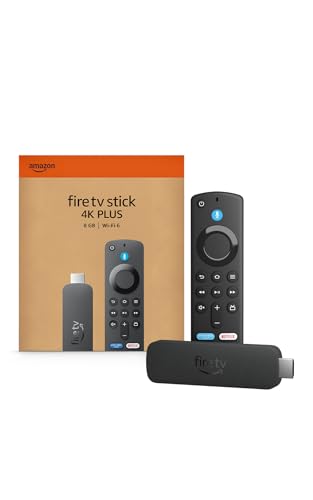
The Amazon Fire TV Stick 4K Plus is a compact streaming media player designed to bring modern smart TV capabilities, vibrant 4K resolution, and cloud gaming to any compatible television display. This streaming dongle is a practical upgrade for apartment renters, homeowners, cord-cutters, college students, and budget-conscious movie lovers who want to revamp an older 4K panel or bypass sluggish built-in smart TV interfaces. Whether you are setting up a secondary bedroom TV, building a living room family entertainment hub, or outfitting a basement recreation room, this device provides instant access to major streaming networks and digital media services.
Based on product specifications, this media stick delivers crisp 4K Ultra HD playback with high dynamic range support across Dolby Vision, HDR10+, and standard HDR10. On compatible OLED, QLED, or LED screens, content benefits from refined contrast, deep black levels, and vibrant color saturation during dark thriller scenes or bright outdoor sporting events. Fast-moving sports and action sequences stream smoothly without noticeable frame judder, provided your internet connection is reliable. On the audio side, pass-through support for immersive Dolby Atmos lets movie enthusiasts pair the device with dedicated soundbars or multi-channel home theater receivers for crisp dialogue and dynamic room-filling surround sound.
A notable advantage for casual gamers and tech enthusiasts is native support for Xbox cloud gaming directly through the Fire TV platform. Users with an active Xbox Game Pass Ultimate membership and a compatible Bluetooth wireless controller can stream popular titles without needing a full console setup under the television. To keep cloud gaming responsive and high-bitrate 4K movie streams buffer-free, the stick integrates Wi-Fi 6 hardware. This wireless standard handles multiple active devices on a home network with lower latency, which helps prevent resolution drops during family movie nights or weekend gaming marathons.
The hardware features a slim plug-in form factor that connects directly into an HDMI port on the back or side of your television, keeping living room cable management tidy and discrete. The package includes an Alexa Voice Remote equipped with dedicated power, volume, and mute buttons, allowing viewers to control both their television hardware and media playback with a single handheld unit. Fire TV includes conversational Alexa+ search, which lets viewers locate titles by genre, actor, or mood across different subscription libraries without cumbersome on-screen typing.
While the device offers impressive versatility, there are a few practical factors to weigh before purchasing. The Fire TV home screen heavily integrates sponsored content and ad banners alongside recommended titles, which some users may find cluttered compared to minimalist streaming platforms. In addition, cloud gaming requires an external Bluetooth controller and a robust high-speed broadband connection, meaning it does not replace the raw offline graphics fidelity of a dedicated home console. Lastly, the stick operates best when connected to wall power using the supplied AC adapter, which can complicate ultra-tight flush wall-mount installations if an outlet is out of reach.
Overall, the Amazon Fire TV Stick 4K Plus represents an outstanding balance of visual fidelity, modern Wi-Fi 6 wireless stability, and versatile entertainment options for American households. It is especially well suited for cord-cutters looking to consolidate subscriptions, sports fans who demand stable live streams, and families seeking an affordable way to upgrade an existing bedroom or living room 4K TV. For shoppers who want cinematic Dolby Vision playback and cloud gaming convenience in an unobtrusive footprint, this streaming stick is an easy recommendation.
The refreshed Fire TV interface organizes live channels, streaming services, and rented titles into clean, accessible rows that minimize search friction. Viewers can easily pin their most-used applications, including Netflix, Disney+, Prime Video, YouTube, and Max, directly to the main navigation bar for instant access.
With Alexa+ conversational voice search, navigating extensive libraries is hands-free and intuitive. Viewers can ask for specific movie genres, query sports scores, check local weather updates, or control compatible smart home devices like living room smart lights and video doorbells without pausing entertainment.
Thanks to cloud integration with Xbox Game Pass, this streaming stick turns your existing television into a virtual gaming display. By pairing a standard wireless Bluetooth controller, players can jump into console-quality games without purchasing bulky hardware or waiting on massive file downloads.
The inclusion of Wi-Fi 6 ensures lower packet latency and steady throughput, which is essential for cloud gaming responsiveness. While competitive esports players will still prefer a hardwired gaming console with high refresh rates and variable refresh rate (VRR) support, casual gamers and families will appreciate the accessibility and variety available right from their TV remote.
Pros
- Direct TV-powered setup eliminates wall outlet clutter behind mounted screens
- Wi-Fi 6 connectivity ensures reliable high-resolution 4K HDR10+ streaming
- Redesigned voice remote controls TV power and volume alongside smart navigation
- Bluetooth private listening allows easy headphone pairing for late-night viewing
Cons
- Cannot enhance the native hardware brightness, contrast, or refresh rate limits of your host display
- Requires an HDR10+ compatible display panel to take advantage of dynamic high dynamic range content
- Lacks an integrated physical Ethernet port, relying entirely on home Wi-Fi
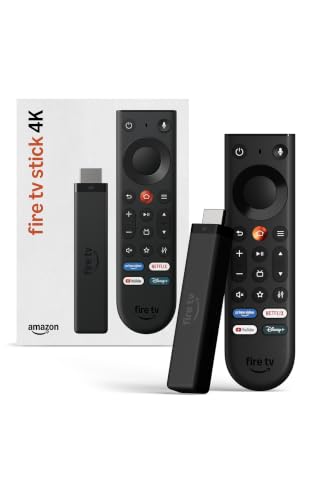
The Amazon Fire TV Stick 4K is an external streaming media player engineered to upgrade the smart capabilities of modern televisions, secondary displays, and older flat screens. Rather than replacing an existing screen, this compact plug-in adapter delivers Fire TV functionality directly to any display equipped with a standard HDMI port. It is an appealing match for American households dealing with sluggish factory smart platforms, bedroom and dorm room viewers needing a neat setup, and cord-cutters looking to consolidate subscriptions into a single responsive hub.
Video output performance is anchored by native 4K resolution capabilities paired with HDR10+ high dynamic range decoding. When plugged into a compatible 4K television, the device sends rich color data and scene-by-scene dynamic metadata to the screen. Because it operates as a video source rather than an integrated display panel, peak brightness, black levels, and native refresh rates remain dictated by the host TV. However, for displays that support HDR10+, this media stick ensures signals are delivered cleanly to preserve contrast and highlight detail across movies, live sports, and nature documentaries.
Hardware connectivity focuses on convenience and modern wireless standards. The inclusion of Wi-Fi 6 support helps maintain strong wireless data throughput, reducing buffering during high-bitrate 4K streaming even on busy home networks. Setup is streamlined through Direct Power support, allowing the stick to draw power directly from the television without forcing you to snake another power brick to a crowded wall outlet. For night owls, built-in Bluetooth audio enables fast pairing with wireless headphones, providing a simple private listening solution for late-night television entertainment.
Day-to-day usability is centered around the Fire TV interface and the redesigned remote control. The bundled remote includes dedicated television power and volume controls, eliminating the need to juggle multiple remotes during regular viewing. A convenient navigation ring allows easy scene jumping, while shortcut buttons jump straight into Live TV feeds. Alexa+ voice intelligence is built directly into the microphone button, allowing users to search across services like Netflix, Prime Video, Disney+, and YouTube, while also dimming compatible smart lights or checking Ring camera feeds directly on the screen.
There are practical limitations to keep in mind before upgrading. The streaming stick cannot improve the physical limitations of an older display, such as poor viewing angles, low native SDR brightness, or motion blur caused by slow response times. Furthermore, the unit does not include an onboard RJ45 Ethernet port, meaning users in areas with spotty Wi-Fi coverage cannot plug in a network cable directly out of the box. Displaying HDR10+ also requires a television panel with matching format decoding support, as standard displays will downscale to baseline SDR or basic HDR.
For television owners seeking to breathe fresh life into aging screens or streamline secondary-room entertainment, the Amazon Fire TV Stick 4K offers outstanding practical value. Its balance of Wi-Fi 6 wireless stability, wall-adapter-free Direct Power, and intuitive Alexa+ voice control makes it a dependable way to modernize your TV viewing experience without investing in an expensive new display.
The Fire TV operating system brings hundreds of thousands of movies, television episodes, and free ad-supported streaming channels together into a single layout. Major streaming apps including Prime Video, Netflix, YouTube, Disney+, Max, Hulu, Peacock, and Paramount+ are organized alongside live broadcast television guides.
With Alexa+ voice control, finding content is as simple as speaking naturally into the remote. Viewers can request tailored recommendations, skip to specific scenes, control connected smart home gear like Ring doorbells, or set ambient artwork on the television display when it is not actively in use.
Setting up the Amazon Fire TV Stick 4K requires minimal effort thanks to its compact 3.97-inch form factor that plugs straight into an open television HDMI input. Direct Power capability allows the stick to run from the television, reducing cable clutter behind wall mounts and tight entertainment centers.
Equipped with Wi-Fi 6, the streaming stick provides stable high-speed data transmission for seamless 4K HDR playback. Built-in Bluetooth listening lets you pair wireless headphones instantly, ensuring clear audio for private viewing without waking sleeping family members.

Pros
- Quantum dot QLED panel provides rich color volume and solid HDR10 contrast for everyday viewing.
- Responsive Roku OS interface makes streaming, app switching, and live TV navigation remarkably simple.
- Enhanced voice remote includes a handy lost remote finder feature and customizable shortcuts.
- Bluetooth Headphone Mode enables effortless private listening for late-night entertainment.
Cons
- Standard 60Hz refresh rate lacks native 120Hz high-frame-rate support for competitive next-gen gaming.
- Does not feature advanced local dimming for inky black levels in pitch-black home theater rooms.
- Built-in speakers provide clear dialogue but lack deep low-end bass without an external soundbar.
The Roku 50-Inch Select Series 4K QLED Smart TV serves as an accessible, entertainment-focused display engineered to bring quantum dot color technology to everyday living spaces. Geared toward apartment renters, busy families, cord-cutters, and budget-conscious movie watchers, this 50-inch screen strikes a versatile balance between compact sizing and immersive entertainment. Whether you are outfitting a primary apartment living room, setting up a secondary bedroom TV, or upgrading a family bonus room, this model emphasizes straightforward operation and vibrant picture quality without complicated menu systems.
In terms of visual performance, the inclusion of a QLED panel provides noticeably punchy color saturation and improved brightness compared to standard entry-level LED displays. Support for HDR10 highlights specular details in modern 4K streaming shows and movies, while Roku Smart Picture technology works behind the scenes to analyze incoming signals and adjust picture modes automatically. While it does not incorporate full array local dimming for true inky blacks in completely dark home theater basements, its overall contrast and color volume remain well-suited for well-lit living rooms during afternoon football watch parties or evening family movie nights.
Gamers and streamers will appreciate the TV's responsive operation and low input lag for casual console play. Although restricted to a standard 60Hz refresh rate rather than advanced 120Hz gaming standards, it handles Nintendo Switch, PlayStation, and Xbox gaming smoothly for casual players and weekend tournaments. The standout highlight remains the Roku OS platform, which provides instantaneous access to essential services like Netflix, Disney+, Prime Video, and a massive library of free ad-supported live channels. Navigation is remarkably snappy, while smart home compatibility with Apple AirPlay, Apple Home, Alexa, and Google Assistant makes casting media effortless.
The exterior hardware features an attractive frameless bezel design that gives the TV a sleek, modern profile that blends seamlessly with any decor. Weighing under 17 pounds, the lightweight chassis makes handling and mounting onto standard VESA wall brackets exceptionally straightforward. Built-in stereo speakers are specifically tuned for dialogue clarity so you can catch every line of television drama or sports commentary without straining. For late-night entertainment, the Bluetooth Headphone Mode allows users to route audio straight to wireless headphones, while the enhanced voice remote includes a lost remote finder that ends frantic searches between couch cushions.
Realistic expectations are necessary regarding home theater extremes. Enthusiasts seeking deep black levels for high-end cinematic setups or competitive gamers demanding HDMI 2.1 120Hz VRR capabilities may need to explore premium displays at higher price tiers. However, for everyday viewers, college dorm rooms, guest bedrooms, and cost-conscious households seeking reliable 4K clarity, seamless streaming, and intuitive controls, this 50-inch QLED model represents an exceptionally practical home entertainment solution.
The integrated Roku TV operating system remains one of the cleanest and easiest smart platforms available for streaming households. The home screen offers personalized recommendations and eliminates endless scrolling by organizing your favorite streaming services, connected inputs, and live television options in one central location.
Cord-cutters benefit from instant access to The Roku Channel, providing hundreds of free live TV channels spanning news, sports, movies, and daytime programming right out of the box. Setup takes just minutes over fast Wi-Fi, and automatic software updates ensure the interface stays fresh and secure over time.
Smart home users can take advantage of broad ecosystem support, including Apple AirPlay for mirroring photos and videos directly from iPhones or iPads. Hands-free convenience is further expanded with support for Roku Voice, Siri, Amazon Alexa, and Google Assistant for quick volume changes, input switching, and title searching.
Unboxing and setting up the Roku 50-Inch Select Series TV is designed to be user-friendly, even for solo installers. At a physical weight of approximately 16.8 pounds, lifting and positioning the display onto standard media consoles or entertainment centers requires minimal effort.
For wall mounting, the display is compatible with standard VESA wall brackets, making it easy to hang in master bedrooms, guest rooms, or apartment living spaces where saving floor space is a priority. The slim profile and clean cable arrangement keep clutter to an absolute minimum.
On-screen setup guides you step-by-step through Wi-Fi pairing, streaming account activation, and input configuration. Within minutes of plugging in the power cord, the television is ready to stream shows, connect cable boxes, or hook up your favorite gaming consoles.
Everything You Need to Know About 4K Display Resolution
The core measurement behind ultra-high-definition displays defines the visual density of modern entertainment. At its foundation, 4K resolution describes a specific horizontal and vertical grid that delivers four times the pixel count of standard high-definition screens. Understanding this pixel structure helps viewers distinguish between physical hardware capabilities and the software processing that refines incoming signals. Evaluating how this clarity functions in real living rooms ensures that you make informed decisions when upgrading home theater equipment.
The Fundamental Pixel Grid: Defining Ultra High Definition Clarity
A standard consumer television built for ultra-high-definition viewing features an exact display matrix of 3840 horizontal pixels by 2160 vertical pixels. Multiplying these figures reveals roughly 8.3 million individual light-emitting or filtering points across the panel. In comparison, legacy 1080p full high-definition panels utilize 1920 by 1080 pixels, which totals roughly 2.07 million dots. This dramatic increase in pixel density means that fine lines, tiny text, and subtle textures appear remarkably smooth rather than jagged or pixelated.
The term 4K originally stemmed from professional digital cinema standards established by the Digital Cinema Initiatives consortium, which designated a 4096 by 2160 container. Consumer display manufacturers adopted the slightly modified 3840 by 2160 standard to preserve the familiar 16:9 widescreen aspect ratio used in broadcast television and consumer media. You will often see this format labeled interchangeably as 4K UHD or Ultra High Definition on retail packaging. Regardless of the branding label used, the underlying hardware relies on the same 8.3-million-pixel grid to render incoming video frames.
Individual pixels on a 4K panel are significantly smaller than those on an older high-definition screen of the exact same physical dimensions. Because these picture elements are tightly packed, you can sit noticeably closer to a large screen without perceiving individual dot structures or distracting screen-door gaps. This high pixel density enables television manufacturers to produce screens spanning sixty-five, seventy-five, or eighty-five inches while maintaining pristine visual cohesion. For everyday viewers, this technological shift transforms home viewing from a distant experience into an immersive theatrical showcase.
Pixel Density, Screen Dimensions, and Viewing Distance Geometry
The visual advantage of 4K clarity depends heavily on the relationship between physical screen dimensions and seating distance. On a smaller screen viewed from across a large living room, the human eye cannot easily distinguish individual pixels regardless of screen resolution. Larger screen sizes, such as fifty-inch or sixty-five-inch models, allow that high pixel density to produce a visibly sharper and more immersive image. Field-of-view standards established by cinematic engineering organizations recommend sitting close enough to let the screen fill thirty to forty degrees of your horizontal vision.
If you sit nine or ten feet away from a modest screen, your eye resolution reaches an optical threshold where 1080p and 4K images can look virtually indistinguishable. Moving closer or stepping up to a larger panel size reveals the detailed textures rendered by the denser pixel matrix. For instance, a 65-inch television viewed from seven to eight feet provides an ideal optical distance where fine clothing weaves, individual blades of grass, and background scenery look lifelike. Proper seating placement ensures that you extract the full geometric benefit of those 8.3 million pixels without introducing eye strain.
Room layout planning must account for both vertical and horizontal placement to maximize optical clarity. Mounting a large screen too high on a wall forces an unnatural upward neck angle that detracts from viewing comfort and can wash out contrast on vertically sensitive panel types. Positioning the display so that your seated eye level aligns with the middle third of the screen delivers the cleanest visual geometry. When you combine recommended viewing distances with proper eye-level alignment, the high-density pixel grid provides optimal perceived sharpness across every seat in the room.
How Video Processing and Upscaling Engines Handle Sub-4K Content
Native 4K content is widely available through modern streaming applications and physical media, but a vast portion of everyday television still broadcasts in 720p or 1080i formats. A 4K panel cannot simply leave unaddressed space when receiving a lower-resolution signal, so internal processing engines must scale the image to fill the 8.3-million-pixel grid. Basic nearest-neighbor upscaling duplicates adjacent pixels, which often results in a soft, blocky picture with visible digital artifacts. Advanced display processing chipsets analyze incoming frames in real time to calculate edge contours, smooth color gradations, and reconstruct missing details.
Dedicated hardware such as Samsung’s Crystal Processor in the Samsung 65-Inch Class Crystal UHD U8000H Series actively analyzes incoming source signals to enhance clarity. Rather than merely stretching a low-resolution cable feed, the processor evaluates textures and sharpens boundaries to make standard cable broadcasts look crisp. Similarly, Roku Smart Picture processing on the Roku 50-Inch Select Series Smart TV 2026-4K QLED automatically optimizes picture presets based on the incoming signal format. Effective upscaling hardware ensures that older television reruns, broadcast sporting events, and standard streaming libraries look clean and defined on an expansive screen.
Video processing algorithms also incorporate temporal noise reduction to eliminate compression artifacts from low-bitrate internet video. When streaming services compress video to save network bandwidth, dark backgrounds can suffer from macroblocking or noticeable color banding. Modern image processors identify these visual imperfections and apply subtle spatial smoothing without softening crisp foreground objects. Having a capable onboard processor ensures that your television presents a polished, high-definition image even when streaming conditions fall short of reference quality.
Why 4K Resolution Requires High Dynamic Range for True Visual Impact
High pixel counts provide sharp object edges, but resolution alone does not determine overall picture realism or depth. High Dynamic Range technology works alongside 4K resolution by expanding the contrast ratio between the darkest shadows and the brightest specular highlights. Formats such as HDR10, HDR10+, and Dolby Vision instruct the television panel on how to map luminance levels dynamically or statically across each scene. Without capable HDR processing, an ultra-high-definition image can appear flat and washed out even when object edges look razor-sharp.
Quantum dot technology, featured in displays like the Roku 50-Inch Select Series Smart TV 2026-4K QLED, leverages microscopic nanocrystals to produce a broader color volume that complements high dynamic range metadata. Dedicated streaming hardware such as the Amazon Fire TV Stick 4K Max (newest model) and Amazon Fire TV Stick 4K Plus (newest model) support both Dolby Vision and HDR10+ passthrough. Pairing an advanced media streamer with an HDR-capable television ensures that bright sunlight reflections and subtle dark shadows retain detailed tonal variations. This synergy between pixel density, peak luminance, and color saturation produces the true home cinema experience that viewers expect from modern hardware.
Dynamic metadata formats like Dolby Vision and HDR10+ adjust luminance tone curves on a scene-by-scene or frame-by-frame basis. This real-time adjustment prevents dark shadowy scenes from losing detail while stopping bright outdoor highlights from clipping into pure white. Static HDR10 applies a single tone mapping curve across an entire film, which can force compromises between dark and bright scenes. Investing in source devices and displays that decode dynamic HDR standards guarantees that your 4K panel renders the full dynamic expression envisioned by directors.
Motion Processing, Refresh Rates, and Fast-Action Clarity
Sharp resolution can quickly degrade into a blurry smear during fast camera pans if a television panel struggles with motion handling. Native panel refresh rates describe how many times per second the physical screen refreshes its image, typically operating at 60Hz or 120Hz. Many manufacturers utilize marketing terminology like Motion Xcelerator or proprietary motion rates to describe software frame interpolation rather than physical panel refresh speed. For sports enthusiasts, pairing high pixel clarity with capable panel response is crucial, as explored in our guide to Mini-LED displays designed for high-motion sports.
Motion interpolation technologies insert artificial intermediate frames between incoming frames to reduce visible judder during fast-paced movement. While this processing can stabilize fast sports broadcasts, aggressive motion smoothing often produces an unnatural soap opera effect during cinematic movies filmed at 24 frames per second. Most televisions allow viewers to adjust or disable motion interpolation settings within custom picture profiles. Calibrating motion settings ensures that fast-moving hockey pucks or football passes remain distinct without making Hollywood cinema look like cheap daytime video.
Fast pixel response times also dictate whether high-speed objects leave visible trailing streaks across bright backgrounds. Liquid crystal panels with slow response times can blur high-contrast edges during panning shots, effectively reducing perceived resolution to standard-definition levels while objects are moving. Selecting displays that pair responsive panel timing with customizable frame interpolation guarantees that fast-action sports and action video games maintain high visual fidelity. Maintaining motion clarity ensures that the benefits of your 8.3-million-pixel display remain visible during every fast-moving moment.
Source Hardware, Streaming Bandwidth, and HDMI Interface Requirements
Achieving true ultra-high-definition playback requires a capable content delivery chain from the source to the display panel. Streaming native 4K video consumes significant network bandwidth, generally requiring consistent internet speeds of at least twenty-five megabits per second per stream. Compact streaming adapters like the Amazon Fire TV Stick 4K Select (newest model) and Amazon Fire TV Stick 4K (newest model) plug directly into HDMI inputs to decode modern video codecs efficiently. Upgrading to network standards such as Wi-Fi 6 on the Fire TV Stick 4K Plus or Wi-Fi 6E on the Fire TV Stick 4K Max helps prevent buffering drops when multiple household devices share bandwidth.
Physical hardware connections also dictate whether your television receives an authentic ultra-high-definition feed. Legacy HDMI 1.4 cables lack the bandwidth to transport 4K video above 30 frames per second, causing playback stutters or forced resolution downscaling. Modern high-speed HDMI 2.0 and ultra-high-speed HDMI 2.1 connections provide the eighteen to forty-eight gigabits per second required for 4K playback at 60Hz or 120Hz with uncompressed color. Verifying that your cables meet certified bandwidth standards eliminates common handshake failures, flickering black screens, and signal dropouts.
Digital rights management protocols like HDCP 2.2 and HDCP 2.3 also operate across HDMI signal paths to protect high-resolution video streams. If an intermediate device, such as an older audio receiver or HDMI switch, lacks HDCP 2.2 compliance, the video source will automatically throttle playback to 1080p resolution. Connecting your external streaming stick directly to an HDCP-compliant input on the television bypasses these handshake bottlenecks. Ensuring that every link in your hardware chain supports modern copy protection guarantees that premium streaming platforms output true 4K resolution.
Common 4K Setup Mistakes and Picture Preset Adjustments
New television owners frequently leave their displays set to factory default modes that undermine natural picture quality. Retail showroom modes, often labeled as Vivid or Dynamic, boost brightness and push blue color temperatures to stand out under fluorescent warehouse lighting. In a typical home living room, these aggressive settings cause severe color clipping, crush subtle shadow detail, and cause premature eye fatigue. Switching your picture preset to Movie, Cinema, or Filmmaker Mode disables artificial edge sharpening and restores accurate D65 white balance.
Another frequent oversight involves connecting external streaming sticks or gaming consoles to unoptimized HDMI ports. Many modern televisions require users to manually enable Enhanced HDMI or HDMI Ultra HD Deep Color within the system settings menu to unlock full HDR color bandwidth. If this setting remains disabled, an attached 4K streaming player may restrict output to standard dynamic range or lower color bit depths. Taking a few minutes to inspect input settings and calibrate ambient light sensors ensures that your display reproduces the full visual depth intended by content creators.
Energy-saving ambient light limiters can also interfere with your television’s peak brightness capabilities. Many manufacturers enable eco-sensor modes out of the box to meet strict international power consumption benchmarks. These power limiters actively dim the backlight in moderate room lighting, preventing HDR highlights from achieving their intended impact. Disabling automatic energy-saving restrictions in the setup menu unlocks the full luminance range of your panel, ensuring that daylight viewing remains vibrant and punchy.
Audio Considerations and Connecting External Sound Systems
Ultra-slim television designs leave minimal physical depth for robust speaker drivers, which frequently results in thin, tinny dialogue. While 4K visual clarity delivers an impressive upgrade, realistic sound staging is necessary to complete the home entertainment experience. Many viewers find that improving television sound quality requires adding a dedicated soundbar or multi-channel audio receiver. Utilizing the HDMI eARC audio return channel on your television allows high-bandwidth audio formats like Dolby Atmos to pass seamlessly from streaming devices to external speakers.
Streaming adapters such as the Amazon Fire TV Stick 4K Max (newest model) support immersive Dolby Atmos passthrough directly over HDMI. When routed through an eARC-enabled port on a television like the Samsung 65U8000H Series, the audio system decodes spatial audio cues without lip-sync delay. Optical digital audio connections can serve as an alternative for legacy receivers, though optical cables lack the bandwidth needed for uncompressed spatial surround formats. Matching high-definition acoustic fidelity with crisp 4K imagery creates a balanced, theatre-grade living room setup.
Proper digital audio format selection within television menus prevents unwanted downmixing to stereo sound. Configuring the digital audio output setting to Pass-Through or Bitstream ensures that your connected audio hardware decodes native multi-channel streams directly. Leaving audio output on Auto or PCM can cause televisions to convert surround formats into basic two-channel audio, flattening immersive spatial effects. Taking care to configure your audio output settings properly ensures that dynamic film scores and clear dialogue accompany your high-resolution visuals.
Choosing the Right 4K Display Hardware for Your Space
Selecting the appropriate hardware requires balancing your room dimensions, primary content habits, and overall entertainment ecosystem. If you already own an older flat screen with reliable picture quality, adding a compact adapter like the Amazon Fire TV Stick 4K Select (newest model) provides an economical path to modern streaming apps. Households seeking a complete screen replacement can consider all-in-one displays such as the Roku 50-Inch Select Series Smart TV 2026-4K QLED for mid-sized bedrooms or apartments. For expansive living rooms with generous seating distances, a sixty-five-inch display like the Samsung 65-Inch Class Crystal UHD U8000H Series provides the physical scale needed for full immersion.
Operating platforms also play a significant role in long-term satisfaction and convenience. Fire TV devices emphasize voice integration through Alexa and provide cloud gaming access via Xbox Game Pass, while Roku OS focuses on simple tile navigation and extensive free content channels. Samsung’s Tizen platform integrates Samsung TV Plus for thousands of subscription-free live streaming options alongside Motion Xcelerator processing. Focusing on physical viewing geometry, processing power, and platform usability ensures that your 4K investment delivers lasting performance across all your favorite entertainment.
Physical mounting and room placement represent the final crucial step when installing modern display hardware. Large panels require sturdy wall-mounting brackets securely anchored to structural wall studs or placed on wide media consoles with adequate anti-tip safety tethers. Enlisting a second person during unboxing and lifting protects fragile panel edges from structural stress or cracking. Ensuring proper physical installation alongside optimized settings guarantees that your display provides safe, reliable performance and stunning clarity for years to come.
Evaluating ultra-high-definition display technology ultimately centers on understanding how pixel counts interact with video processing, dynamic range, and physical room geometry. A dense grid of 3840 by 2160 pixels delivers breathtaking clarity, but achieving optimal picture quality requires pairing that screen with capable streaming sources, certified cables, and calibrated picture modes. By taking the time to position your seating properly and adjust factory picture presets, you can fully enjoy the rich textures and lifelike depth that define modern 4K home entertainment.


Write Your Review
No reviews yet. Be the first to share your experience!