
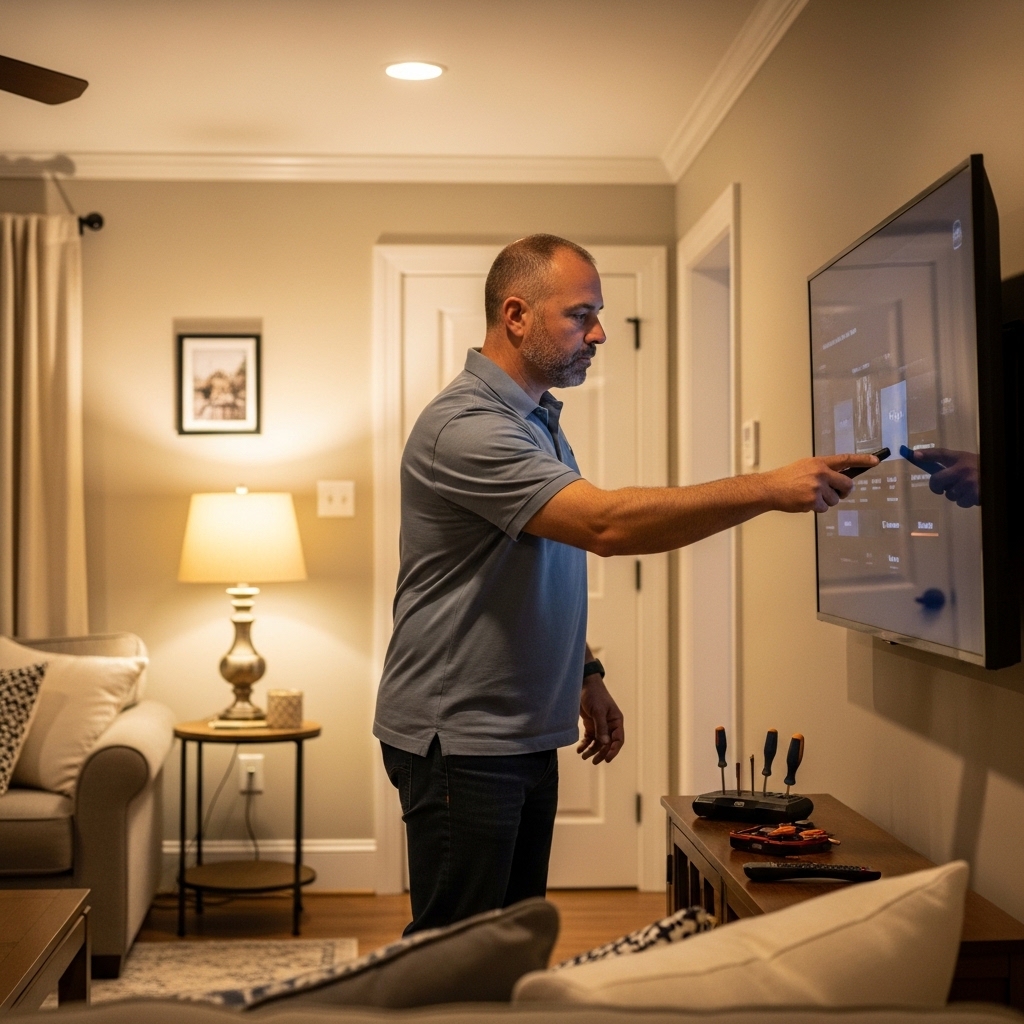

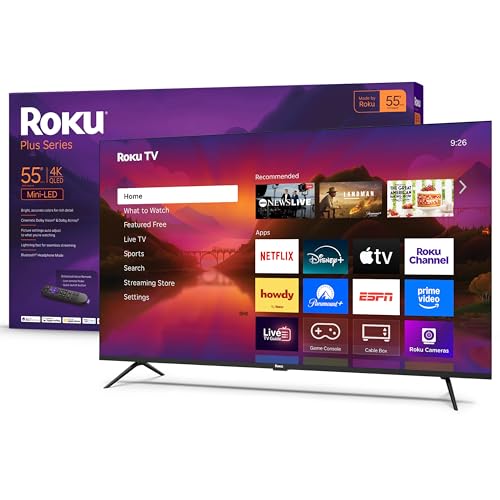
Upgrading an older home television often leads to a wall of retail jargon that creates unnecessary confusion for shoppers. Retail tags frequently blend display resolution, color standards, and network features into a single compound phrase without explaining how those parts work together. Understanding what does 4k uhd smart tv mean helps you separate actual hardware improvements from standard marketing buzzwords. Modern living room displays combine dense pixel grids with internet connectivity to deliver sharp video alongside built-in access to your favorite streaming libraries. Checking out modern 55-inch streaming television options reveals how these combined features streamline home entertainment.
At its core, the term represents three distinct technologies working inside a single chassis: an ultra-high screen resolution, enhanced color and dynamic range standards, and an integrated smart operating platform. Older 1080p high-definition sets cannot match the pixel density or the connected application capabilities present in modern sets. A 4K UHD smart TV connects directly to your home network, eliminates the need for separate streaming sticks in many setups, and renders fine details with improved clarity. Knowing what each specification contributes allows buyers to evaluate entry-level displays against higher-tier models without second-guessing their setup choices.

Pros
- Expansive 65-inch 4K UHD display offers remarkable screen real estate for value-conscious households.
- Direct integration with Fire TV eliminates the need for separate streaming sticks or dongles.
- HDMI eARC port allows straightforward single-cable connection to modern soundbars.
- Comprehensive physical input array includes legacy composite AV jacks and a 3.5mm headphone jack.
Cons
- Direct-lit LED panel lacks local dimming zones, meaning deep dark-room blacks and high-impact specular highlights are limited.
- Standard display capabilities lack advanced high-refresh 120Hz console gaming support.
- Integrated TV speakers benefit from an external soundbar for rich bass and expansive home theater audio.
The Insignia 65-Inch F50 Series belongs to the popular mid-to-large screen size class, designed as an entry-to-mid-tier 4K Ultra HD television powered by the Amazon Fire TV smart platform. Featuring a 65-inch direct-lit LED display, this model is tailored for budget-conscious families, casual movie streamers, and secondary living areas where a large screen is desired without paying premium tier-1 brand markups. With its built-in streaming ecosystem and native 2160p panel resolution, it provides a straightforward, all-in-one entertainment hub for everyday American households.
In terms of display performance, the F50 Series utilizes a direct-lit LED backlighting structure that distributes LEDs across the rear of the panel. This configuration promotes uniform brightness across the entire 65-inch screen while assisting with general color accuracy and contrast. The panel supports HDR10 high dynamic range formatting, enabling compatible movies and series to reveal expanded color gradation and highlight details compared to standard high definition. An integrated 4K upscaler works to enhance legacy 1080p and cable programming to near-Ultra HD quality, though viewers should understand that standard direct lighting without local dimming produces moderate dynamic range rather than theater-grade contrast.
For gaming and hardware connectivity, the television provides a practical selection of inputs, highlighted by three HDMI ports. Everyday gamers using a PlayStation 5, Xbox Series X, or Nintendo Switch can enjoy crisp 4K visual output, though the display is geared toward standard refresh playback rather than specialized high-frame-rate 120Hz performance. A major hardware benefit is the inclusion of an HDMI eARC and ARC port, allowing a single high-speed cable to send uncompressed audio to an external soundbar or AV receiver. Beyond HDMI, the unit includes composite AV inputs for retro electronics, digital optical audio, a 3.5mm headphone jack, coaxial antenna input, an Ethernet port, and built-in Wi-Fi.
The everyday user experience is driven by the Fire TV smart operating system, which consolidates live broadcast channels and over a million streaming episodes across platforms like Prime Video, Netflix, Disney+, and YouTube. The included Alexa Voice Remote streamlines everyday operation by letting viewers search titles, switch inputs, or adjust settings using conversational voice commands. For physical room placement, the television measures 56.91 inches wide, 32.86 inches tall, and 3.4 inches deep, fitting comfortably onto wide media consoles or mounting cleanly to walls using its standardized VESA 400 x 300 pattern.
Potential buyers should consider standard panel trade-offs before purchase. Because this direct-lit LED display lacks full-array local dimming zones, dark-room viewing will show elevated black levels and noticeable graying in dimly lit cinematic scenes rather than ink-like blacks. Furthermore, off-axis viewing may exhibit color desaturation when seated at extreme angles from the screen center. While the integrated audio system includes DTS Virtual:X sound processing for improved acoustic staging, the built-in chassis speakers remain modest, making the addition of an external soundbar via the eARC port highly recommended for immersive audio.
Ultimately, the Insignia 65-Inch F50 Series represents an accessible, high-utility display for viewers seeking big-screen 4K entertainment on a reasonable budget. With integrated Fire TV intelligence, HDR10 support, broad physical connectivity, and user-friendly Alexa voice navigation, it serves as a dependable choice for living rooms, master bedrooms, finished basements, and casual entertainment spaces.
The integrated Fire TV operating system turns this 65-inch television into a complete multimedia center right out of the box, removing the need for external media streaming dongles. Users gain direct access to extensive streaming catalogs through Prime Video, Netflix, Hulu, HBO Max, YouTube, Apple TV+, and Disney+, alongside live TV streaming via Sling TV and Paramount+.
Voice control is built directly into the included Alexa Voice Remote. By pressing the microphone button, users can launch applications, search for specific movies across multiple subscriptions, adjust system settings, or switch between connected HDMI inputs. Additionally, integrated parental control settings allow parents to lock content based on age ratings or specific broadcast channels using a secure PIN.
Connecting external home theater gear to the Insignia F50 is straightforward thanks to its versatile input panel. With three HDMI inputs, users can connect a game console, cable box, and streaming receiver simultaneously. Support for HDMI eARC and ARC simplifies audio wiring by sending audio straight to an external sound system without requiring additional optical cables.
Legacy equipment is supported through composite AV jacks, while digital optical audio and an analog 3.5mm headphone jack provide flexible audio output choices. For installation, the 56.91-inch chassis width pairs with a standard VESA 400 x 300 mounting layout, making it compatible with a wide range of universal wall brackets.
Pros
- Generous 65-inch display size at an accessible value point for living rooms and family spaces
- Built-in Samsung TV Plus delivers massive libraries of free streaming channels out of the box
- Reliable 4K upscaling brings sharper definition to standard cable channels and older streaming titles
- Integrated Alexa voice assistance enables seamless hands-free navigation and volume adjustments
- Smooth frame transitions with Motion Xcelerator minimize noticeable judder during football and basketball games
Cons
- Standard 60Hz refresh rate lacks native 120Hz support for competitive next-gen console gaming
- Lacks full array local dimming, which limits deep black levels in completely dark home theater rooms
- Built-in speakers provide modest bass output, making a dedicated soundbar recommended for cinematic audio
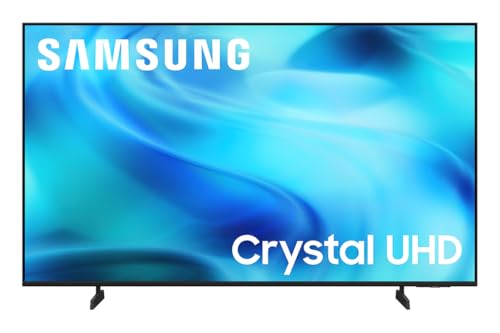
The Samsung 65-Inch Class U8000H Series Crystal UHD Smart TV offers a well-rounded 4K viewing package designed for everyday home entertainment. Geared toward families, apartment dwellers, cord-cutters, and budget-conscious buyers, this LED display brings a spacious 65-inch canvas into living rooms, finished basements, or primary bedrooms. Whether hosting weekend sports watch parties, enjoying family movie marathons, or catching up on morning news, this model aims to provide dependable visuals without complicated calibration steps.
At the core of the display is the Crystal Processor 4K, which works to optimize color expression and deliver clear upscaling for sub-4K cable broadcasts and streaming media. Features like Color Booster help bring vibrant tones to animated movies and nature documentaries, while Motion Xcelerator keeps fast-moving sports and action sequences steady at 60Hz. Although it does not feature full-array local dimming or OLED-level deep blacks, its contrast and brightness are well-suited for moderate to bright living rooms where casual daytime viewing and evening streaming dominate.
For casual gamers using modern consoles, the television delivers low input lag and responsive handling at 4K 60Hz, ensuring smooth playback across adventure titles and sports games. The smart platform offers intuitive navigation, quick app launch times, and built-in Alexa voice control for finding shows and adjusting settings without picking up the remote. In addition, Samsung TV Plus provides cord-cutters with immediate access to over 750 free live channels and thousands of on-demand programs right out of the box, eliminating the immediate need for paid subscriptions.
The exterior sports a clean, minimalist design with slim bezels that keep viewer focus squarely on the screen. Weighing under 32 pounds, the panel remains manageable during setup, whether mounting on a standard VESA bracket or resting on its included media stand feet. HDMI and audio return options support easy connectivity for soundbars, streaming players, and gaming hardware. While the built-in stereo speakers produce intelligible dialogue for sitcoms and news broadcasts, pairing the display with a soundbar is beneficial for rich, room-filling audio during blockbuster movies.
Overall, the Samsung 65U8000H represents a balanced blend of screen size, smart functionality, and everyday picture reliability. While serious home theater purists seeking true black levels or competitive gamers needing 120Hz refresh rates may look toward higher-tier models, this Crystal UHD TV excels for shoppers who want an expansive, easy-to-use smart display for daily family viewing and effortless streaming.
Navigating entertainment is seamless thanks to Samsung's comprehensive smart interface, which organizes favorite streaming platforms like Netflix, Prime Video, Disney+, and YouTube into an easy-to-read dashboard.
A major highlight for cord-cutters is Samsung TV Plus, which grants instant access to hundreds of free live TV channels and vast libraries of on-demand movies without requiring account sign-ups or subscription fees.
Hands-free voice functionality with built-in Alexa makes it easy to search for specific actors, switch inputs, launch apps, or pause playback with simple voice commands, fitting smoothly into modern smart homes.
Sports fans will appreciate the integrated Motion Xcelerator technology, which intelligently calculates and inserts frame transitions in real time to prevent annoying motion blur during high-speed football plays or hockey action.
For gaming setups, the TV automatically switches to a low-latency mode to reduce control lag, delivering crisp 4K visual feedback at 60Hz for consoles like the Xbox Series S or Nintendo Switch.
While competitive esports players may require native 120Hz panels, casual gamers will find the smooth responsiveness and vibrant color palette plenty capable for relaxing evening gaming sessions.

Pros
- Exceptional value for a 50-inch 4K smart TV with Fire TV built in
- Easy voice control with the included Alexa Voice Remote
- Free access to thousands of movies and TV shows through ad-supported channels
- DTS Virtual:X provides surprisingly immersive sound from built-in speakers
- Simple setup and user-friendly Fire TV interface
Cons
- Brightness may be limited in very sunny rooms compared to higher-end models
- Built-in speakers lack deep bass; a soundbar may be needed for a fuller audio experience
- Only 3 HDMI ports; heavy users may need an external switch
The INSIGNIA 50-inch F50 Series LED 4K UHD Smart Fire TV is a budget-friendly television that brings together solid picture quality and the convenience of Amazon's Fire TV platform. Priced well under $200, this TV is designed for homeowners, apartment renters, and families who want a straightforward, capable display for everyday viewing without breaking the bank. It's especially suited for cord-cutters and streamers who rely on apps like Netflix, Prime Video, Disney+, and Hulu, plus free services like Tubi and Pluto TV.
Picture quality on this 4K UHD set is respectable for its price range. The 2160p resolution delivers crisp details, and HDR10 support helps enhance contrast and color in compatible content. While it doesn't use advanced local dimming or high peak brightness like premium OLED or QLED models, the LED panel still produces decent black levels and acceptable brightness for most living rooms or bedrooms. For movie lovers and sports fans, the upscaling of lower-resolution content is satisfactory, making older shows and standard broadcasts look better than on a basic 1080p TV.
Gamers on a budget will appreciate the low input lag and the inclusion of HDMI eARC for connecting a soundbar or gaming console. The TV's 60Hz refresh rate is fine for casual gaming, but competitive players may want a higher refresh rate model. The DTS Virtual:X sound processing creates a wider, more immersive audio stage than typical TV speakers, though dialogue clarity is good, bass is limited. Adding a budget soundbar can dramatically improve the home theater experience.
The Fire TV smart platform is one of the biggest selling points here. It's fast, responsive, and offers a massive library of apps and live TV channels. The included Alexa Voice Remote makes searching for content, controlling smart home devices, or checking the weather as easy as speaking. The TV also supports Apple AirPlay for streaming from iPhones and iPads, which is a nice bonus. Setup is straightforward, and the interface is intuitive for all ages.
Build quality is typical for an entry-level TV, with a sturdy plastic stand and thin bezels that give it a modern look. It's VESA mount compatible (200x200) for wall mounting, which is great for saving space in an apartment or bedroom. The 3 HDMI ports and USB port offer enough connectivity for most users, though heavy gamers or home theater enthusiasts might want more. The remote is comfortable and well laid out, though it relies on batteries (not included).
Overall, the INSIGNIA 50-inch F50 Series is a reliable, no-fuss 4K TV that delivers excellent value for its price. It's perfect for families, streamers, and anyone looking for a secondary TV for a bedroom, dorm, or guest room. While it won't match the performance of high-end OLED or QLED sets, it provides a satisfying viewing experience for everyday content. If you're a budget-conscious shopper who wants a smart TV that just works, this is a solid pick.

Pros
- Exceptional value for a 4K smart TV under $150
- Built-in Fire TV with Alexa voice control is fast and intuitive
- DTS Virtual:X provides surprisingly good sound from built-in speakers
- Easy setup and wall-mounting with VESA compatibility
Cons
- Brightness may be limited in very sunny rooms; best for moderate lighting
- Viewing angles are typical for an LED panel, not as wide as OLED
- Only 60Hz refresh rate, so not ideal for competitive gaming at high frame rates
The INSIGNIA 43" F50 Series LED 4K UHD Smart Fire TV is a straightforward, budget-friendly television designed for everyday entertainment. It combines a 4K resolution panel with HDR10 support and the popular Fire TV smart platform, making it a solid choice for cord-cutters, apartment renters, families, and anyone looking for an affordable secondary TV for a bedroom, dorm, or living room.
Picture quality is respectable for the price point. The 4K resolution delivers crisp details, and HDR10 helps bring out more color and contrast in compatible content. While it won't match the deep blacks of an OLED or the peak brightness of a high-end QLED, the F50 series handles standard streaming, cable, and Blu-ray content well. Upscaling of 1080p and 720p sources is decent, so older shows and YouTube videos still look watchable. Motion handling is adequate for casual viewing, though fast sports or action scenes may show some blur due to the 60Hz panel.
Smart features are where this TV shines. The built-in Fire TV platform is snappy and easy to navigate, giving you one-click access to all major streaming apps like Netflix, Prime Video, Disney+, Hulu, and HBO Max. You also get free ad-supported channels like Pluto TV and Tubi, which is great for cord-cutters. The included Alexa Voice Remote lets you search for content, control smart home devices, and even check the weather using just your voice. Setup is quick, and the interface feels responsive.
Sound quality is a pleasant surprise thanks to DTS Virtual:X technology. The built-in speakers produce a wider, more immersive soundstage than many budget TVs, with clearer dialogue and decent bass. For most living rooms and bedrooms, you won't feel the immediate need for a soundbar, though adding one via the HDMI eARC port will elevate the experience further. Connectivity is generous with three HDMI ports, a USB port, digital optical output, and an Ethernet jack for wired internet.
Design-wise, the TV has a simple, modern look with slim bezels that keep the focus on the screen. The included stand legs are sturdy, and the VESA 200x300 pattern makes wall mounting straightforward. Setup is a breeze, and the remote is comfortable to hold with dedicated buttons for popular streaming services. One limitation is that the panel is edge-lit, so you won't get the local dimming found on pricier models, but for the price, it's a fair trade-off.
Overall, the INSIGNIA 43" F50 Series is an excellent value for budget-conscious shoppers, streamers, and families who want a reliable 4K TV with a smart platform that just works. It's perfect for a bedroom, kids' room, or as a secondary living room TV. If you're looking for a no-fuss, affordable way to enjoy 4K streaming and live TV without cable, this is a smart pick.

Pros
- Excellent color accuracy and vibrancy for a budget QLED, thanks to Hi-QLED technology and Dolby Vision support.
- Integrated Fire TV with Alexa remote provides a smooth, all-in-one smart experience with voice control.
- Game Mode Plus with Variable Refresh Rate and Auto Low Latency Mode reduces input lag and screen tearing for console gaming.
- AI features like upscaling, motion smoothing, and light sensor add practical value for everyday viewing.
Cons
- The 60Hz panel may not satisfy high-refresh-rate PC gamers, though motion interpolation (Motion Rate 120) helps smooth fast action.
- Bright room performance may be limited due to modest peak brightness typical of entry-level QLEDs.
- Fire TV interface includes ads and may not be as customizable as some other smart platforms.
The Hisense 43" E6 Cinema Series Hi-QLED 4K UHD Smart Fire TV (model 43E6QF, 2025) is an entry-level QLED television that aims to pack premium features into an affordable package. It uses Hisense's Hi-QLED color technology to deliver a wide color gamut with rich, vibrant hues that make movies, sports, and games look more lifelike. Combined with support for Dolby Vision and HDR10+ Adaptive, this TV can handle a variety of HDR content with improved contrast and brightness, though it lacks full-array local dimming for deeper black levels. The Fire TV platform is a major plus for cord-cutters, offering easy access to Netflix, Prime Video, Disney+, Hulu, YouTube, and thousands of other apps, all controlled by the included Alexa voice remote. You can press the mic button to search, launch content, check weather, or control smart home devices. For gamers, Game Mode Plus includes Variable Refresh Rate (VRR) and Auto Low Latency Mode (ALLM) to minimize input lag and screen tearing, making it a solid option for casual console gaming on PlayStation or Xbox. The TV also features AI 4K Upscaler, which uses machine learning to sharpen lower-resolution sources, and AI Smooth Motion with MEMC to reduce blur during fast-paced sports and action scenes. While the 60Hz panel means it's not ideal for competitive PC gaming at high frame rates, the motion interpolation helps create a smoother viewing experience for typical content.
Build quality is respectable for the price point. The 43-inch model has a slim profile (2.9 inches deep without stand) and a lightweight design at just under 15 pounds, making it easy to wall-mount using a standard VESA pattern. The two feet are sturdy enough for a desk or media console, though they may require a wide surface. Setup is straightforward: plug in, connect to Wi-Fi, sign in to your Amazon account, and the Fire TV interface walks you through app installation. The remote is ergonomic with dedicated buttons for Prime Video, Netflix, Disney+, and Hulu, plus the Alexa button. One limitation is that the TV uses an edge-lit LED backlight with no local dimming zones, so black levels in dark scenes may appear more grayish, especially in a dark room. However, in typical living room lighting, the picture holds up well. The built-in speakers support Dolby Atmos, but like most flat-panel TVs, they lack deep bass; a separate soundbar would enhance the audio experience. Overall, the Hisense 43E6QF is a strong value for budget-conscious shoppers, families, or anyone needing a secondary TV for a bedroom, apartment, or dorm. It's not a high-end home theater centerpiece, but for its price, it delivers a compelling mix of smart features, gaming enhancements, and vibrant QLED color.
Pros
- Excellent value for a 55-inch 4K smart TV with Fire TV built-in.
- Alexa voice remote makes searching and controlling smart home devices easy.
- DTS Virtual:X provides surprisingly immersive sound from the TV's speakers.
Cons
- Brightness may be limited in very sunny rooms; best for moderate or controlled lighting.
- Built-in speakers lack deep bass; a soundbar is recommended for fuller audio.
- Some users may prefer a more premium design with thinner bezels.
The INSIGNIA 55-inch F50 Series (model NS-55F501NA26) is an LED-backlit 4K UHD smart television that brings a large screen and modern streaming capabilities to an incredibly accessible price point. Designed for the everyday American household, this TV is built around the Fire TV platform, which puts thousands of apps and channels right at your fingertips. Whether you are a cord-cutter looking to ditch cable, a family wanting a second TV for the kids' playroom, or a budget-conscious shopper upgrading from an older HD set, this INSIGNIA model aims to deliver a satisfying 4K experience without breaking the bank.
In terms of picture quality, the F50 Series features 4K Ultra HD resolution (2160p) and supports HDR10 high dynamic range. This means you can expect a noticeable improvement over standard 1080p sets, with more detail in shadows and highlights, and colors that pop more vividly. The LED panel provides decent brightness for a typical living room or bedroom, though it may struggle in very bright, sun-drenched spaces. The TV also upscales lower-resolution content to near-4K quality, so your old DVDs and cable channels will look better than ever. Motion handling is adequate for most content, including sports and action movies, though fast-moving scenes may show slight blur on the standard 60Hz panel.
Where the INSIGNIA truly shines is its smart TV integration. The built-in Fire TV platform is snappy and intuitive, giving you instant access to Prime Video, Netflix, Disney+, Hulu, HBO Max, and a host of free ad-supported channels like Pluto TV and Tubi. The included Alexa Voice Remote lets you search for movies, launch apps, control playback, and even manage compatible smart home devices like lights and thermostats using just your voice. Parental controls are robust, allowing you to block content by rating or channel, making it a family-friendly choice. The TV also supports Apple AirPlay for easy streaming from Apple devices.
Sound quality is a pleasant surprise for a budget TV thanks to DTS Virtual:X technology, which simulates a three-dimensional audio experience from the built-in speakers. Dialogue is clear for news and talk shows, and the TV can fill a medium-sized room with sound. However, for a truly cinematic experience or for bass-heavy action movies and music, you will likely want to add a soundbar or home theater system. The inclusion of HDMI eARC is a major plus, as it allows you to pass high-quality audio to an external sound system without compromise.
Setup is straightforward: the TV comes with a simple stand that requires basic assembly, or you can wall-mount it using the VESA 200x200 pattern. The connections are ample for most users, with three HDMI ports (one with eARC), a USB port, composite AV inputs for older devices, digital optical audio out, an Ethernet port, and built-in Wi-Fi. Cable management is basic, but the overall design is clean and unobtrusive. The remote is comfortable to hold and responsive, though some may miss dedicated number buttons for live TV.
Overall, the INSIGNIA 55-inch F50 Series is a fantastic entry-level 4K smart TV that prioritizes value and streaming convenience. It is ideally suited for budget-conscious shoppers, families, apartment renters, and anyone who wants a big screen for streaming their favorite shows and movies. While it may not satisfy hardcore home theater enthusiasts seeking the deepest blacks or highest brightness, it delivers a solid performance for its price and is a practical choice for everyday entertainment. If you are looking for an affordable way to upgrade to 4K and enjoy the Fire TV ecosystem, this INSIGNIA model is well worth considering.
Decoding 4K Ultra HD and Smart Television Technology
Breaking down modern television terminology reveals that a 4K UHD smart TV combines three specific hardware and software components into a unified entertainment hub. The phrase identifies physical screen resolution, enhanced display signal standards, and an embedded operating system that runs streaming applications without external playback boxes. Examining each part shows how modern screens deliver sharp images, vibrant colors, and straightforward network access.
Deconstructing the Terms: 4K, UHD, and Smart Functionality
Physical screen resolution represents the foundation of this product category. A standard 1080p Full HD television displays 1920 horizontal pixels across 1080 vertical pixels, creating roughly two million individual light points. A 4K display multiplies that density by four, delivering a resolution of 3840 by 2160 pixels that totals more than 8.2 million active screen elements. This tight pixel spacing produces razor-sharp edge definition, clear text rendering, and visible texture on everyday clothing or scenery.
The term UHD stands for Ultra High Definition, which serves as an overarching consumer video standard developed by industry organizations. While broadcast engineers distinguish cinematic 4K (4096 by 2160) from domestic Ultra HD (3840 by 2160), consumer manufacturers use the terms 4K and UHD interchangeably across retail packaging. Beyond raw pixel counts, Ultra HD specifications encompass modern aspect ratios, advanced digital color spaces, and specific frame rate parameters. When a television features UHD branding, it confirms compatibility with modern high-resolution broadcast and streaming signals.
Smart functionality refers to the internal computer hardware and operating platform built directly into the display chassis. Integrated processors, internal flash memory, and wireless networking cards allow the television to run software applications natively. Users can launch on-demand video services, access live broadcast channels, and manage smart home devices without purchasing an external streaming stick. Manufacturers design these platforms to update over home Wi-Fi networks, maintaining application compatibility across years of regular family use.
Display Panel Construction: LED Backlights, Direct Lighting, and Quantum Dots
Behind the millions of pixels sits an illumination system that determines screen brightness, contrast, and color richness. Liquid crystal displays require an independent illumination source behind the panel to produce visible images. Entry-level models frequently use direct lighting arrangements where light-emitting diodes cover the rear surface behind the screen substrate. The Insignia 65″ Class F50 Series LED 4K UHD utilizes direct lit LED technology, creating uniform brightness across a large screen area while helping improve overall picture contrast.
Quantum dot enhancements represent another step forward in LCD panel performance. Instead of relying purely on standard white or blue backlights with conventional color filters, quantum dot screens use microscopic nanocrystals that emit precise red and green light when stimulated. The Hisense 43″ E6 Cinema Series Hi-QLED 4K UHD uses this Hi-QLED color technology to expand color gamut coverage and saturation. Viewers gain richer pastels, deep primary tones, and lifelike skin tones that standard white-LED backlights often struggle to recreate.
Understanding backlight design prevents unrealistic expectations regarding black level depth and dark-room contrast. Direct-lit LCD panels illuminate broad screen segments, meaning pure black areas can occasionally exhibit slight grayish tints in completely dark rooms. Premium formats like Mini-LED address this limitation by dividing the backlight into hundreds of independently controlled dimming zones. If you frequently watch fast sports programming in brightly lit spaces, checking out dedicated high-action sports screens can illustrate how zoned backlights handle challenging motion and high ambient glare.
High Dynamic Range Formats: Expanding Contrast and Color Depth
High Dynamic Range, commonly abbreviated as HDR, transforms home viewing by expanding the contrast ratio between the brightest highlights and the darkest shadows. Standard dynamic range displays restrict luminance levels, which often crushes subtle shadow details and blows out bright sunlight scenes into flat white fields. HDR-compatible panels preserve intricate gradients within glowing embers, sunlit clouds, and deep night skies simultaneously. This contrast enhancement often creates a more dramatic visual upgrade than increased pixel density alone.
Several competing HDR standards exist across commercial streaming platforms and physical media discs. The universal baseline is HDR10, an open standard supported by every modern 4K HDR television, including the INSIGNIA 50″ Class F50 Series LED 4K UHD. HDR10 uses static metadata, establishing a fixed brightness parameter across an entire movie or television episode. While static tone mapping improves basic contrast, dynamic formats offer more granular image control.
Advanced formats like Dolby Vision and HDR10+ Adaptive utilize dynamic metadata to adjust luminance and color balance on a frame-by-frame basis. The Hisense 43E6QF model supports both Dolby Vision and HDR10+ Adaptive through its total HDR solution suite. Dynamic tone mapping ensures dark subterranean film sequences remain legible without dimming subsequent sunny outdoor shots. An ambient light sensor on compatible sets measures room lighting in real time, automatically tuning peak output to prevent eye fatigue during evening viewings.
Image Processing and Video Upscaling for Sub-4K Content
Native 4K content looks stunning, but a vast majority of live cable broadcasts and legacy streaming shows still originate in 720p or 1080p formats. Without intelligent video processing, stretching a standard high-definition signal across an 8.2-million-pixel canvas would produce jagged edges, severe digital noise, and blurry textures. Television manufacturers embed specialized video processors to interpolate missing pixel data before sending the signal to the physical screen. This computational process is known as video upscaling.
Processor engines analyze incoming video frames, identify edge contours, and apply sharpening algorithms to reconstruct missing image elements. The Samsung 65-Inch Class Crystal UHD U8000H Series employs a dedicated Crystal Processor with advanced 4K upscaling to enhance colors and sharpen lower-quality source streams. Similarly, AI-driven upscaling engines on modern Hisense screens analyze visual textures using machine learning models to reduce compression artifacts. As a result, older sitcoms, daytime cable feeds, and home video recordings retain sharp outlines and clean color transitions.
Upscaling hardware cannot miraculously invent authentic ultra-high-definition detail that was never recorded by the original camera sensor. Highly compressed internet streams or low-bitrate standard-definition broadcasts may still exhibit slight macroblocking or soft gradients around fast-moving subjects. Selecting balanced picture presets, such as Filmmaker Mode, ensures internal sharpening filters do not introduce unnatural white halos or grainy digital noise around sharp character outlines. Keeping artificial sharpness sliders near factory-neutral levels preserves the authentic cinematic look of classic productions.
Motion Handling: Native Refresh Rates versus Interpolation Buzzwords
Motion clarity represents one of the most frequently misunderstood specifications in modern consumer electronics. Every television panel features a native hardware refresh rate, which indicates how many physical frames the screen draws per second. Entry-level and mid-range 4K televisions almost universally feature native 60Hz panels, refreshing the picture sixty times each second. This hardware frequency matches standard console gaming targets, broadcast television streams, and typical digital streaming applications.
Marketing terms such as Motion Rate 120 or Motion Xcelerator can easily lead buyers to believe their television features a native 120Hz panel. In reality, these software technologies use motion estimation and motion compensation (MEMC) or backlight scanning to reduce perceived image blur on a native 60Hz panel. Samsung incorporates Motion Xcelerator into the U8000H series to predict and smooth frame transitions during rapid camera pans. This technology helps live sports and fast racing games appear fluid without requiring an expensive native 120Hz display matrix.
Motion interpolation algorithms can sometimes generate the notorious soap opera effect on cinematic films shot at standard 24 frames per second. When aggressive frame interpolation inserts artificial intermediate images into a classic movie, film motion loses its natural cadence and begins to resemble cheap video broadcast footage. Viewers can easily disable motion smoothing or engage Filmmaker Mode in the picture settings menu to restore authentic 24p frame cadence. Turning off aggressive motion filters restores natural film grain and dramatic pacing across your favorite motion pictures.
Smart Operating Systems, Navigation, and Streaming Ecosystems
The smart component of a modern television defines how viewers interact with entertainment on a daily basis. Integrated operating systems eliminate the cable clutter and remote-control confusion associated with secondary streaming set-top boxes. Major platforms include Amazon Fire TV, Samsung Tizen, Roku OS, and Google TV, each offering unique interface layouts and content discovery tools. The INSIGNIA 43″ Class F50 Series LED 4K UHD utilizes Fire TV to integrate live antenna channels and streaming libraries directly onto a single home screen.
Voice control has become a central feature across modern smart platforms. The included Alexa Voice Remote on Fire TV models allows owners to search for titles across multiple subscription apps, switch HDMI inputs, and control smart home lighting using simple voice queries. Samsung provides integrated voice assistance on its Tizen platform, allowing hands-free command execution and smart ecosystem coordination. These connected hubs also support wireless casting protocols, enabling mobile phone screen mirroring and quick photo sharing with visiting family members.
Subscription-free streaming services represent another major convenience built into contemporary smart platforms. Samsung TV Plus delivers hundreds of linear free ad-supported streaming television channels directly through the Tizen guide interface without requiring user subscriptions. Fire TV models provide comparable access to free content streams through platforms like Tubi, Pluto TV, and Fire TV Channels. Viewers gain instant access to news, classic movies, and lifestyle programming immediately after completing initial network setup.
Audio Connectivity, Speaker Limitations, and Soundbar Integration
Modern flat-panel televisions feature ultra-slim enclosures that leave minimal physical space for acoustic speaker drivers. Consequently, built-in downward-firing drivers often struggle to reproduce deep low-frequency bass or project articulate movie dialogue across large living rooms. Manufacturers attempt to compensate by including virtual spatial audio processing, such as DTS Virtual-X on the INSIGNIA 55-inch Class F50 Series LED 4K UHD, to create three-dimensional sound illusions. While virtual surround helps expand stereo width, physical acoustics remain constrained by thin cabinet walls.
Audio Return Channel (ARC) and enhanced Audio Return Channel (eARC) technologies resolve this acoustic shortfall by streaming uncompressed sound directly to external audio gear. Connecting a single high-speed HDMI cable between the television eARC port and a soundbar passes high-bitrate digital audio formats effortlessly. Compatibility with Dolby Atmos audio passthrough ensures multi-channel movie tracks reach your surround receiver with full fidelity and zero conversion degradation. If dialogue clarity remains a high priority for your household, reviewing televisions engineered for sound quality helps identify which display combinations perform best with external speakers.
Utilizing HDMI eARC also enables Consumer Electronics Control (CEC) communication between your home theater devices. When HDMI-CEC is active, powering on your television automatically wakes the connected soundbar and synchronizes volume adjustments to a single remote control. Optical digital outputs remain available on most sets for connecting legacy stereo receivers, though optical cables lack the bandwidth needed for advanced object-based Dolby Atmos formats. Selecting an eARC connection ensures straightforward volume synchronization and complete support for modern home cinema audio formats.
Screen Sizing, Room Placement, and Everyday Viewing Considerations
Selecting the right screen size requires balancing room dimensions against intended seating distance. Because 4K UHD screens pack four times the pixel density of older high-definition displays, viewers can sit closer to larger screens without discerning individual pixel boundaries. Industry viewing standards recommend that a display occupy roughly thirty to forty degrees of your horizontal field of view for an immersive movie experience. For a 65-inch screen, an optimal viewing distance typically falls between seven and nine feet from the panel face.
Room lighting and window placement heavily influence perceived contrast and picture quality. Direct-lit LED panels provide ample brightness for standard family spaces, but unshaded direct sunlight striking the screen can cause noticeable glare and wash out darker shadow details. Positioning the display perpendicular to primary windows minimizes specular reflections across the front glass. Models equipped with ambient light sensors automatically increase panel output during sunny afternoons and dim the backlight at night to ensure comfortable viewing.
Safe physical installation protects your investment and ensures long-term home safety. Large 55-inch and 65-inch panels require two-person lifting during unboxing and stand assembly to prevent flexing the fragile glass matrix. When mounting a display to drywall, always anchor mounting brackets directly into solid wall studs using VESA-compliant hardware rated for the screen weight. Routine maintenance involves dusting the screen gently with a clean dry microfiber cloth, avoiding abrasive cleaners or harsh chemical sprays that could permanently damage protective anti-reflective coatings.
Investing in a 4K UHD smart TV provides a substantial leap in picture detail, color vibrancy, and everyday streaming convenience. By uniting 8.2 million pixels with dynamic HDR processing and an intuitive streaming operating platform, modern displays simplify living room entertainment. Evaluating screen sizes, room lighting, and audio connectivity ensures your chosen model delivers an engaging home theater experience tailored to your family space.




Write Your Review
No reviews yet. Be the first to share your experience!