


Deciding on a new television often comes down to balancing daytime brightness against cinematic contrast. Modern living spaces frequently struggle with high ambient sunlight, where reflection handling and sustained panel luminance dictate picture clarity. In this environment, evaluating which is better oled or qled samsung tv requires looking closely at how self-illuminating pixels stack up against quantum dot backlighting. Viewers wanting maximum daylight impact often turn to bright room television options that push high brightness without washing out color saturation.
While self-emissive organic displays excel at producing pure black levels without haloing, quantum dot LED screens utilize dedicated backlights that deliver dramatic overall screen volume. Gamers and home theater enthusiasts also need to weigh variable refresh rates, processor upscaling, and anti-reflective screen coatings when comparing these panel types. Understanding these hardware distinctions ensures you select the display architecture that best matches your room lighting, viewing angles, and entertainment habits.

Pros
- True OLED black levels with virtually infinite contrast for dark-room cinema immersion
- Glare Free coating significantly cuts reflections during daytime sports and living room viewing
- Exceptional gaming capabilities with up to 165Hz VRR, low input lag, and G-SYNC support
- Powerful 128-neural-network AI processor delivers sharp upscaling for cable and streaming
- Sleek, minimalist design fits comfortably on standard media consoles or flush wall mounts
Cons
- Does not support Dolby Vision HDR formatting, relying instead on HDR10 and HDR10+
- Slim chassis design naturally limits deep bass response without an external soundbar
- Higher initial investment compared to conventional LED and standard QLED televisions
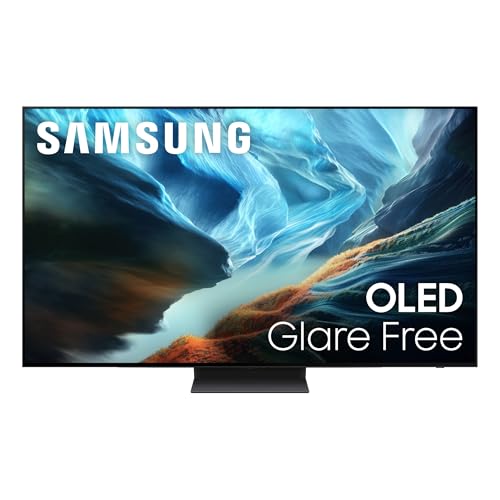
The Samsung 55-Inch Class S90H Series OLED 4K Smart TV represents a high-performance home entertainment display engineered for movie lovers, console gamers, and sports enthusiasts seeking top-tier contrast and smooth motion. Built around self-lit OLED pixels, this model pairs individual pixel-level illumination with Samsung Glare Free technology, making it uniquely versatile for both dark home theater rooms and moderately bright living spaces. Whether you are an apartment renter outfitting a media nook or a homeowner upgrading a main entertainment center, the 55-inch footprint strikes an appealing balance between immersive screen size and manageable room dimensions.
Picture performance is driven by the NQ4 AI Gen3 Processor, which leverages 128 AI neural networks to optimize contrast, sharpness, and color saturation scene by scene. The inherent strength of OLED technology ensures true inky black levels with zero light bleed around bright subtitles, while the Glare Free finish helps diffuse ambient daylight and overhead lamp reflections that typically plague glossy panels. For cable subscribers and classic movie fans, 4K AI Upscaling Pro and Auto HDR Remastering work behind the scenes to sharpen standard 1080p sports feeds and infuse vintage SDR media with expanded dynamic range and vivid highlights.
Gamers will find substantial value in the Ultimate Gaming Pack integration, which supports refresh rates up to 165Hz alongside NVIDIA G-SYNC and AMD FreeSync Premium Pro compatibility. With ultra-low input lag, Auto Low Latency Mode (ALLM), and dedicated gaming dashboard utilities, PC and console gamers can track fast-paced competitive shooters or open-world action titles without tearing or screen stutter. For Sunday football watch parties or hockey games, AI Motion Enhancer Pro tracks rapid ball and puck movement, stabilizing the broadcast image to keep text overlays readable and fast camera pans crisp.
In terms of build quality, the S90H sports a clean Graphite Black profile with razor-thin bezels that give it a floating, modern aesthetic. The central pedestal stand provides reliable stability on standard media consoles, while VESA mounting compatibility offers flexible placement for flush wall setups. Under the hood, the Samsung Tizen operating system delivers quick access to streaming platforms like Netflix, Prime Video, Disney+, and Samsung TV Plus, alongside integrated voice assistant support. While the onboard speakers deliver crisp dialogue for news and sitcoms, the slim chassis naturally limits deep low-end bass, making an external eARC-connected soundbar a sensible addition for true theater rumble.
Like other Samsung televisions, the S90H does not feature native Dolby Vision support, relying instead on HDR10, HDR10+, and HLG for dynamic HDR reproduction. Additionally, viewers in extremely sun-drenched rooms with direct sunlight hitting the screen will want sheer blinds drawn to get the most out of OLED contrast. For cinephiles seeking authentic film mastering, gamers demanding fluid 165Hz response, and families wanting a premium all-around living room display, this 55-inch S90H OLED TV stands out as a well-rounded and deeply satisfying centerpiece.
The Samsung S90H is outfitted with a comprehensive suite of gaming features designed for both current-generation consoles and high-end gaming PCs. Supporting native refresh rates up to 165Hz with Motion Xcelerator technology, this screen delivers exceptionally fluid frame pacing that eliminates ghosting during intense multiplayer matches.
Compatibility with NVIDIA G-SYNC and AMD FreeSync Premium Pro ensures that variable refresh rates stay synchronized with your GPU, preventing frustrating screen tearing and stutter. With Auto Low Latency Mode (ALLM) automatically switching the TV into high-response game mode when a console boots up, input lag remains negligible for competitive play.
Samsung Game Bar provides an on-screen overlay where players can monitor frame rates, adjust aspect ratios, and fine-tune black equalizer settings on the fly. Whether connecting a PlayStation 5, Xbox Series X, or custom gaming rig, the high-bandwidth HDMI connectivity ensures smooth 4K gameplay with full HDR color fidelity.
At the heart of the S90H lies an advanced OLED panel capable of generating infinite contrast, as each individual pixel turns completely off to produce pitch black. This pixel-level precision eliminates the blooming and halo artifacts commonly seen on traditional backlit LED screens during nighttime movie viewing.
A standout feature of this model is the Glare Free panel coating, which disperses incoming reflections without dulling the display's vibrant color palette or deep contrast. This engineering addresses one of the classic drawbacks of OLED panels, making daytime viewing of sports, news, and family programming far more enjoyable in sunlit spaces.
Color reproduction remains richly saturated across wide viewing angles, ensuring that friends and family sitting off to the side enjoy the exact same vivid picture as anyone seated dead-center. Combined with HDR10+ dynamic tone mapping, highlights like sunlight reflections and practical explosions look intensely bright and lifelike.
Pros
- Exceptional contrast and deep black levels enhanced by an anti-reflective Glare Free screen coating
- Outstanding gaming capability with up to 165Hz support, low input lag, G-SYNC, and FreeSync Premium Pro
- Intelligent AI processing delivers clean 4K upscaling and smooth motion handling for live sports
- Wide viewing angles keep color and contrast accurate across entire living room seating setups
Cons
- Does not support Dolby Vision HDR format, utilizing HDR10+ and standard HDR instead
- Built-in speakers provide modest bass performance, making a companion soundbar recommended for cinematic audio
- Premium OLED hardware commands a higher price tag than conventional LED or QLED alternatives
The Samsung 65-Inch Class S90H Series OLED 4K Smart TV stands out as a high-performance display built for home theater purists, console gamers, and sports fans alike. Designed to anchor a busy living room or a dedicated media space, this model brings together self-illuminating OLED pixels with modern AI-driven video processing. Whether you are hosting a lively Super Bowl party, settling down for a Friday family movie marathon, or diving into competitive multiplayer titles, this screen offers the balance of rich contrast and responsive playback that demanding viewers look for.
Picture quality represents one of the strongest highlights of the S90H series. Thanks to OLED HDR+ paired with Glare Free screen technology, the panel delivers true inky blacks without turning into a mirror during bright daylight viewing. The onboard NQ4 AI Gen3 processor utilizes 128 neural networks to drive 4K AI Upscaling Pro and Auto HDR Remastering. This means cable broadcasts, older streaming releases, and classic sitcoms receive noticeable clarity boosts, while high-dynamic-range movies showcase punchy highlights and nuanced shadow detail without washed-out gray tones.
For gaming and live sports, this television is equipped to handle rapid motion with ease. The Ultimate Gaming Pack includes Motion Xcelerator supporting up to a 165Hz refresh rate alongside NVIDIA G-SYNC and AMD FreeSync Premium Pro. Console and PC players benefit from low input lag, tear-free visuals, and quick response times during fast-paced action. Sports fans also benefit from the AI Motion Enhancer Pro, which works to keep fast-moving baseballs, hockey pucks, and on-screen score tickers sharp and readable without jarring motion blur or jitter.
Build quality and smart convenience are equally well considered. Sporting a sleek Graphite Black finish with ultra-thin borders, the display mounts cleanly flush against a wall using standard VESA hardware or sits securely on an entertainment console. Samsung Tizen smart platform supplies straightforward access to essential streaming applications like Netflix, Prime Video, Disney+, and live streaming channels. While the built-in speakers produce clear dialogue for casual news broadcasts, adding a dedicated soundbar or audio receiver is recommended to match the cinematic scale of the picture with deeper bass.
Prospective buyers should consider a few practical trade-offs before purchasing. As with most Samsung displays, this model does not support Dolby Vision, relying instead on HDR10, HDR10+, and HLG formats. Additionally, full-scale OLED displays sit at a premium price point compared to entry-level LED units. For movie lovers who prioritize deep contrast, gamers demanding high frame rates, and households wanting a bright, anti-glare display for daytime viewing, the Samsung S90H offers a well-rounded and deeply satisfying entertainment upgrade.
Gamers looking to pair current-gen consoles or high-end gaming PCs with a responsive screen will find plenty to appreciate in the S90H. With support for refresh rates up to 165Hz through Motion Xcelerator, gameplay feels fluid and responsive during fast turns and rapid firefights. Both NVIDIA G-SYNC and AMD FreeSync Premium Pro are supported, which helps prevent distracting screen tearing and stutter during demanding visual scenes.
Low input latency and auto low latency mode (ALLM) ensure that button presses translate immediately to the screen. The integrated Game Bar provides quick access to essential settings like aspect ratio adjustments, frame rate readouts, and input lag status without needing to leave your game. Whether you are running long campaign sessions on an Xbox Series X or competitive tournaments on a PC, this display delivers smooth, artifact-free performance.
Bright living spaces often present a challenge for traditional OLED televisions, but the S90H addresses this with specialized Glare Free surface treatment. This anti-reflective design disperses ambient light from windows and lamps, preserving deep black levels and vibrant colors even during afternoon viewing sessions. Wide viewing angles ensure everyone on the couch enjoys consistent contrast and color saturation from any seat in the room.
Sports broadcasts receive a noticeable upgrade through AI Motion Enhancer Pro, which intelligently detects and stabilizes high-speed ball movement and scrolling graphics. Combined with Auto HDR Remastering, standard dynamic range sporting events and legacy broadcast feeds gain an extra layer of brightness and crispness that makes live action feel energetic and lifelike.

Pros
- Quantum HDR with HDR10+ delivers impressive contrast and detail in bright and dark scenes.
- AI upscaling improves the look of HD and even standard-def content significantly.
- Samsung Gaming Hub offers a wide selection of cloud games with no hardware needed.
- Built-in Alexa and free streaming channels add great value for cord-cutters.
- Competitive price for a 65-inch QLED with advanced features.
Cons
- No Dolby Vision support, relying on HDR10+ which has less widespread content.
- Built-in speakers may lack deep bass for a truly cinematic experience; a soundbar is recommended.
- Limited to 60Hz refresh rate, which may not satisfy competitive gamers seeking 120Hz.
The Samsung 65Q7F is a 2025 model QLED 4K smart TV that aims to bring premium features to a more accessible price point. It combines Quantum Dot color technology with an AI-powered processor to enhance picture and sound in real time. This TV is designed for homeowners, apartment renters, and families who want a large, vibrant display for everyday entertainment without breaking the bank.
Picture quality is a strong suit here. The Quantum HDR (HDR10+) support delivers punchy highlights and decent black levels for a QLED panel. The AI upscaling is particularly useful for streaming older shows or cable content, making them look noticeably sharper. Colors are rich and accurate, and the TV handles bright room conditions well thanks to good peak brightness. However, it lacks Dolby Vision, which might disappoint home theater enthusiasts who prefer that format's wider availability.
For gamers, the Samsung Gaming Hub is a standout feature. It offers instant access to cloud gaming services like Xbox Game Pass and NVIDIA GeForce NOW without needing a console. The TV also supports Auto Low Latency Mode (ALLM) to reduce input lag, though it's limited to a 60Hz panel. This makes it great for casual and story-driven games, but competitive players may want a 120Hz model. The Object Tracking Sound Lite adds a sense of immersion, but the built-in speakers are average - a soundbar is a worthy upgrade for movie nights.
Smart TV performance is smooth thanks to the Tizen platform and the Q4 AI Gen1 processor. Apps load quickly, and the interface is responsive. Built-in Alexa allows for hands-free control, and Samsung Knox provides solid security for connected devices. The inclusion of over 2,700 free channels via Samsung TV Plus is a huge plus for cord-cutters, covering news, sports, and movies without any subscription.
Setup is straightforward: the TV comes with a simple stand, and VESA mounting is standard. The slim bezels give it a modern look that fits well in any living room or bedroom. Connectivity includes multiple HDMI ports (likely 2.1 on one port for eARC), USB, Wi-Fi, and Bluetooth. One limitation is the lack of HDMI 2.1 bandwidth for 4K at 120Hz, but for most users this won't be an issue.
Overall, the Samsung 65Q7F QLED TV is a strong contender for budget-conscious shoppers, families, and streamers who want a large 4K TV with excellent color, smart features, and gaming flexibility. It's not for hardcore gamers or those needing Dolby Vision, but for daily movie watching, sports, and casual gaming, it delivers impressive value.
The Samsung 65Q7F uses Quantum Dot technology to produce over a billion colors, resulting in vibrant, lifelike images. Quantum HDR with HDR10+ enhances contrast by dynamically adjusting brightness and color scene by scene. This means you get deeper blacks and brighter highlights in compatible content. The AI upscaling is effective at cleaning up lower-resolution sources, making HD and even standard-def look surprisingly sharp. While it doesn't support Dolby Vision, the HDR10+ performance is strong, and the TV handles reflections well in moderately lit rooms. For a QLED, black levels are good but not as deep as an OLED - some blooming may be visible in dark scenes with bright objects.
The Samsung Gaming Hub is the highlight for gamers, providing instant access to cloud gaming services like Xbox Game Pass, GeForce NOW, and Amazon Luna. The TV supports Auto Low Latency Mode (ALLM) to minimize input lag, making games feel responsive. However, the panel is limited to 60Hz, so it's best suited for single-player and story-driven titles rather than competitive shooters that benefit from higher frame rates. The Object Tracking Sound Lite helps with directional audio, but for a truly immersive gaming experience, a dedicated sound system is recommended. The TV also supports HDR10+ Gaming for enhanced visuals in supported titles.
Evaluating Samsung OLED and QLED Display Technologies
Choosing between Samsung OLED and QLED displays comes down to matching your primary viewing space with the inherent strengths of each panel design. Samsung OLED televisions excel in controlled lighting with pixel-level dimming and deep black levels, while Samsung QLED and Neo QLED televisions dominate high-ambient-light environments through sheer luminous power. Neither display technology is universally superior in every living room. Instead, each format solves specific environmental problems through distinct hardware engineering.
Core Panel Architecture: Self-Emissive Pixels Versus Quantum Dot Backlights
The fundamental distinction between these display types lies in how light originates on screen. Samsung OLED panels use millions of microscopic, self-illuminating pixels that generate their own individual brightness and color. When a pixel displays pure black, it turns off entirely, emitting zero light. This self-emissive architecture provides total control over individual picture elements, preventing light from bleeding into adjacent dark areas.
Samsung QLED televisions rely on a transmissive display system that pairs an LED backlight with a microscopic quantum dot enhancement layer. These nano-sized crystals absorb blue backlight illumination and convert it into pure primary red and green light. In standard models, a conventional LED array illuminates the liquid crystal grid from behind or along the edges. Neo QLED configurations advance this structure by replacing traditional diodes with miniaturized Quantum Mini LEDs that pack thousands of light emitters into a thinner chassis.
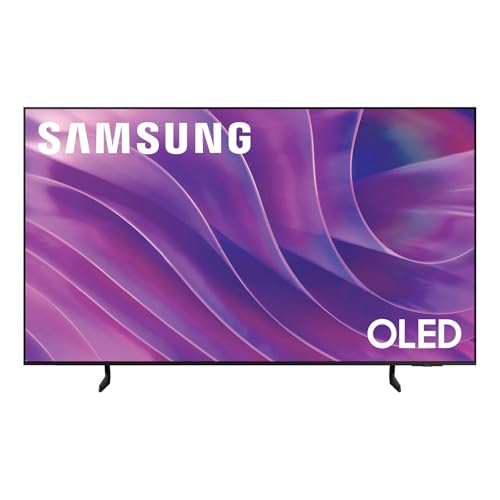
Because transmissive displays require light to pass through polarizing filters and liquid crystals, managing that illumination requires sophisticated local dimming algorithms. The Samsung 65-Inch Class QN70H Series demonstrates how Quantum Mini LED technology improves contrast over basic backlights by shrinking diode size. Meanwhile, self-emissive models like the Samsung 77-Inch Class OLED S84F Series Samsung bypass liquid crystal shutters altogether. This structural difference creates noticeable contrasts in black level performance, brightness capability, and overall panel depth.
Contrast Ratios, Black Depth, and Subtitle Blooming
Contrast ratio represents the luminance gap between the brightest whites and the darkest blacks a television can produce. Because OLED pixels switch off completely, their contrast ratio reaches near-absolute black levels. Dark movie scenes retain uncompromising black levels even when placed directly alongside bright highlights. This characteristic makes OLED displays popular among home theater purists who view films in dark, light-controlled environments.
QLED and Neo QLED displays must physically block backlight illumination using liquid crystal alignment to create dark scenes. Even with high zone counts, some light inevitably scatters around high-contrast edges. Viewers often notice this as blooming or haloing around bright subtitles, pause icons, or white logos against dark letterbox bars. Neo QLED models reduce blooming substantially compared to older edge-lit designs, but they cannot achieve the pixel-level isolation of self-emissive diodes.
Displays like the Samsung 65-Inch Class S90H Series, OLED, 4K deliver crisp boundaries around starfields and midnight landscapes without light halos. On the other hand, high-end Neo QLED displays counteract blooming by utilizing aggressive local dimming algorithms that balance black depth with highlight retention. If your viewing diet consists primarily of widescreen cinematic movies watched in a dark room, OLED provides a cleaner, halo-free experience.
Peak Luminance and Ambient Glare Rejection in Sunlit Rooms
Daytime living room conditions place extreme demands on display hardware. Sunlight streaming through windows can easily wash out dim screens and create distracting mirror-like reflections. In spaces with heavy ambient illumination, QLED and Neo QLED televisions hold a distinct performance advantage. Their dedicated LED backlights generate substantially higher overall sustained luminance across large screen areas than organic diodes can maintain.
OLED displays must manage thermal load and protect organic elements, which causes an automatic brightness limiter to step in during full-screen bright scenes. While OLED handles small specular highlights with stunning precision, expansive bright scenes like snow landscapes or daytime football broadcasts can appear somewhat subdued. Many sports fans seeking high sustained luminance across wide daytime living rooms explore Mini LED TVs for fast action sports because they effortlessly overcome bright ambient conditions.
Samsung addresses daytime reflections on newer OLED models through advanced optical filters. The Samsung 55-Inch Class S90H Series, OLED, 4K incorporates Glare Free technology designed to disperse incoming daylight and eliminate distracting reflections. This filter significantly closes the gap between OLED and QLED for bright rooms. Nevertheless, if your room features uncontrolled skylights or floor-to-ceiling windows, the raw brightness of Neo QLED Mini LED backlights remains the safer choice.
Color Volume and Saturation at Extreme Brightness Levels
Color volume measures a television’s ability to express rich, accurate color shades across every level of panel luminance. Many conventional displays lose color saturation as scenes grow brighter, causing vibrant hues to wash out toward white. Quantum dot technology resolves this problem by utilizing nanocrystals tuned to produce pure, narrow-band primary colors. This enables compatible displays to maintain rich hues even at peak brightness levels.
Samsung QLED televisions, including the Samsung 65-Inch Class QLED Q7F Series Samsung, highlight high color volume coverage across the color spectrum. This means a bright yellow sports car or a vivid sunset retains its exact saturation whether shown in dim lighting or full daylight. Neo QLED displays pair this quantum dot enhancement with Color Booster Pro processing, using artificial intelligence to optimize color tones in real time according to source material.
Samsung OLED televisions counter with exceptional color accuracy and realistic gradation. The Samsung 77-Inch Class OLED S84F Series Samsung features Pantone Validated color reproduction, ensuring authentic expression of human skin tones and natural landscapes. While QLED pushes higher saturation in blindingly bright HDR scenes, OLED delivers subtle, realistic tonality across midtones and shadows. Both formats deliver wide color gamuts, but QLED retains higher saturation at maximum brightness outputs.
Viewing Angle Retention and Sectional Seating Layouts
Seating arrangements strongly influence display satisfaction. Wide living rooms with wrap-around sectional sofas or open-concept kitchen sightlines require screens that maintain picture quality from off-center positions. Transmissive LCD panels typically utilize Vertical Alignment structures that focus light directly forward to maximize contrast. As viewers move past thirty degrees off-axis, standard VA panels often suffer from fading colors and elevated black levels.
Samsung OLED televisions avoid this off-axis degradation completely due to their self-emissive architecture. Because each diode emits light directly at the surface plane in all directions, colors remain vibrant and blacks stay dark even at wide viewing angles. Family members seated at the far edges of a wide couch experience the exact same picture fidelity as someone seated directly in the center sweet spot.
Higher-end Neo QLED displays incorporate specialized optical layers and wide viewing angle filters to mitigate off-axis washout. These layers help broaden the usable viewing cone, but slight contrast loss still occurs compared to a self-emissive screen. If your entertainment space demands consistent picture quality from multiple seating clusters, OLED offers unmatched viewing angle retention.
Gaming Performance, Refresh Rates, and Console Responsiveness
Modern gaming consoles and personal computers demand high-bandwidth connectivity and rapid panel response. When evaluating gaming performance, native refresh rates and pixel transition times take center stage. OLED technology holds an inherent advantage in pixel response speed. Organic diodes switch states nearly instantaneously, eliminating ghosting and trailing artifacts behind fast-moving game characters.
Samsung has aggressively equipped its OLED lineup for high-frame-rate gaming. Both the 65-inch and 55-inch models of the S90H series feature Motion Xcelerator technology supporting up to 165Hz refresh rates. They also include AMD FreeSync Premium Pro and NVIDIA G-SYNC compatibility, ensuring tear-free gameplay across modern graphics cards and consoles. Meanwhile, the S84F OLED series supports smooth 120Hz gaming with responsive input lag for console players.
Samsung QLED displays also cater to gaming enthusiasts through integrated Gaming Hub software and low latency modes. Choosing between these displays for gaming often comes down to screen size and placement. Gamers setting up dedicated entertainment nooks frequently explore medium-sized quantum dot displays to balance visual responsiveness with compact furniture footprints. While QLED delivers vibrant game worlds with zero burn-in anxiety, OLED provides faster pixel response times and higher refresh ceilings.
AI Processing, Motion Smoothing, and Source Upscaling Capabilities
Modern televisions do far more than simply display raw video feeds; they actively analyze and enhance incoming signals. Lower-resolution broadcast television, streaming compression, and fast sports action require robust internal processors. Samsung differentiates its model tiers through distinct generations of Neural Quantum AI processors. These processors utilize specialized neural networks to upscale content, sharpen fine textures, and smooth fast camera pans.
Flagship displays like the S90H OLED feature the NQ4 AI Gen3 Processor, powered by 128 neural networks. This advanced chip drives 4K AI Upscaling Pro and AI Motion Enhancer Pro, smoothing the flight of fast-moving sports balls while keeping surrounding text sharp. The processor also handles Auto HDR Remastering, intelligently transforming standard dynamic range content into expanded contrast profiles.
Mid-range and entry models utilize balanced processing suites. The Samsung 77-Inch Class OLED S84F Series Samsung runs the NQ4 AI Gen2 Processor, while the QN70H Neo QLED utilizes the NQ4 AI Processor for real-time color boosting. Entry-level options like the Q7F QLED rely on the Q4 AI Gen1 Processor. Across both OLED and QLED designs, higher-tier processors provide cleaner noise reduction and more natural upscaling regardless of panel type.
Long-Term Reliability, Static Content Handling, and Panel Care
Long-term panel reliability remains a frequent consideration for consumers planning to keep their television for many years. Because OLED displays use organic compounds that degrade over extended operating hours, prolonged exposure to static graphics carries a theoretical risk of permanent image retention. News banners, sports scoreboards, video game heads-up displays, and computer taskbars all present static graphical elements.
Modern Samsung OLED televisions incorporate comprehensive maintenance routines to protect against image retention. These systems include subtle pixel shifting, logo brightness detection, and automatic screen saver activation during idle periods. For standard viewing habits involving varied streaming content, movies, and rotational gaming, permanent burn-in is exceptionally uncommon. However, commercial environments or computer monitor setups with static windows require conscious care.
Samsung QLED and Neo QLED televisions are completely immune to permanent image retention because they use inorganic quantum dots and durable LED diodes. Users can leave news channels running all day or use the television as a continuous PC monitor without degradation concerns. Proper physical care for both panel types requires using clean, dry microfiber cloths without abrasive chemical sprays to protect delicate anti-reflective screen coatings.
Room Lighting Conditions and Final Buyer Decision Framework
Selecting between Samsung OLED and QLED ultimately hinges on your viewing environment, lighting control, and dominant content habits. If you watch movies primarily in dim or dark rooms, value pristine black levels without subtitle blooming, and want wide viewing angles for sectional seating, Samsung OLED represents the gold standard in picture depth. Its rapid pixel response and high refresh rate support also make it exceptional for enthusiast gaming.
If your television sits in a sun-drenched living room with direct window light, or if you regularly display static news tickers and sports channels throughout the day, Samsung Neo QLED or standard QLED provides clear advantages. Its higher sustained peak brightness cuts through daytime glare effortlessly, while its inorganic architecture guarantees zero risk of image retention. Matching the strengths of each display technology to your room conditions ensures you enjoy optimal picture performance for years to come.





Write Your Review
No reviews yet. Be the first to share your experience!