

Selecting the ideal television display often comes down to balancing room lighting conditions with picture vibrancy. Standard LED screens rely on basic liquid crystal layers illuminated by conventional light-emitting diodes, which can struggle to preserve contrast in sunlit rooms. When direct sunlight streams through living room windows, standard backlights frequently lose depth, leading to washed-out images and faint black levels. Examining the architectural differences between traditional backlighting and quantum dot enhancement helps clarify how each screen technology handles color fidelity and HDR highlights.
Homeowners shopping for an upgrade often wonder which is best tv led or qled when evaluating high-refresh console gaming and cinematic movie streaming. A Quantum Dot LED, or QLED, incorporates a microscopic nanocrystal layer that converts blue light into pure, saturated primary colors with substantial brightness. While entry-level LED models provide adequate everyday viewing at accessible price tiers, modern QLED screens elevate contrast and dynamic range dramatically. Exploring our guide to premium bright-room displays reveals how quantum dot technology overcomes the typical brightness limitations found in standard LED panels.

Pros
- Mini-LED backlighting with local dimming delivers rich contrast and deep blacks for movie night.
- Native 144Hz refresh rate provides fluid motion handling for PC and next-gen console gaming.
- Anti-reflection screen coating significantly reduces distracting glare in sunlit living rooms.
- Comprehensive HDR format support including Dolby Vision IQ, HDR10+ Adaptive, and IMAX Enhanced.
- Built-in subwoofer adds noticeable low-end punch compared to standard flat-screen speakers.
Cons
- Fire TV home screen features sponsored content and promotional banners that some viewers may dislike.
- Off-angle viewing can show slight color desaturation compared to high-end OLED displays.
- Audio performance, while enhanced by the built-in sub, still trails a dedicated multi-speaker soundbar setup.
The Hisense 65-inch U6 Pro Series (65U6SF Pro) represents a modern 4K Mini-LED smart television designed to bridge high-end display technology with accessible living room entertainment. Geared toward U.S. homeowners, apartment renters, avid gamers, sports fans, and movie lovers, this 65-inch display delivers serious visual performance for everything from late-night film screenings to Sunday football watch parties. With its combination of Mini-LED local dimming and quantum dot color, it offers an appealing sweet spot for cord-cutters and families who want cinema-grade immersion without paying flagship OLED prices.
Picture quality stands out thanks to the Hi-QLED panel backed by hundreds of Mini-LED lighting zones. This arrangement allows the screen to achieve deep, inky black levels alongside bright, vibrant specular highlights, virtually eliminating the washed-out gray look common on standard edge-lit displays. Full HDR compatibility is another major strength, as the set supports Dolby Vision IQ, HDR10+ Adaptive, HDR10, and HLG. With the onboard Hi-View AI Engine dynamically optimizing color saturation and tone mapping frame by frame, movie scenes maintain lifelike skin tones and accurate textures validated by Pantone standards.
Fast-paced entertainment receives a noticeable boost from the native 144Hz refresh rate and Motion Rate 480 technology. Gamers connecting a current-generation console or a gaming PC will appreciate the fluid frame rates and crisp response during competitive multiplayer sessions. Sports enthusiasts will likewise benefit from reduced motion blur during rapid soccer passes, hockey slapshots, and deep football passes. The display also incorporates an anti-reflection, glare-free coating that combats direct sunlight from large living room windows, keeping the on-screen action visible and punchy during daytime viewing.
For everyday navigation, the integrated Fire TV operating system brings endless streaming options directly to the forefront. Viewers can easily search across popular apps such as Netflix, Prime Video, Disney+, and YouTube using the voice-enabled remote powered by Alexa+. Audio performance is also elevated beyond basic flat-screen standards courtesy of a dedicated built-in subwoofer and Dolby Atmos processing. Explosions, musical basslines, and dramatic movie scores carry a satisfying physical presence that enhances everyday entertainment without forcing an immediate soundbar purchase.
From a design perspective, the unibody slim aesthetic features razor-thin bezels that keep the focus squarely on the picture. Weighing approximately 40.8 pounds, it can be mounted flush on standard VESA wall brackets or placed on a sturdy media console. While wide viewing angles may show slight color shift when viewed from extreme off-center couch positions, the front-and-center experience remains stellar. For households seeking high-refresh-rate gaming, premium HDR playback, and seamless streaming in an all-in-one package, this 65-inch television offers standout versatility and dependable long-term value.
Competitive players and casual console gamers will find plenty to like about the Hisense U6 Pro. The native 144Hz panel ensures ultra-fast frame rates, making high-speed action in first-person shooters, racing simulators, and sports titles feel crisp, immediate, and responsive.
With built-in support for variable refresh rate technology and auto low latency mode, the display automatically optimizes input lag as soon as a compatible console or gaming rig is detected. Whether setting up for a weekend gaming marathon or casual weeknight sessions, the smooth motion handling keeps distractions to a minimum.
Combining Mini-LED backlights with Hi-QLED quantum dots allows this television to deliver intense contrast and expansive color reproduction. Hundreds of localized dimming zones work in real time to produce rich, dark shadows while maintaining blinding highlight clarity in bright HDR sequences.
Dolby Vision IQ and HDR10+ Adaptive use ambient light sensors to automatically adjust picture parameters based on your living room lighting conditions. From sunny daytime sports viewing to dark home theater movie nights, the screen consistently balances brightness and contrast for optimal detail.

Pros
- Up to 500 local dimming zones deliver deep black levels with minimal backlight haloing.
- Smooth 144Hz native panel with Game Accelerator 240 and VRR excels with modern gaming consoles.
- Robust Onkyo 2.1-channel built-in audio system provides better bass and dialogue clarity than typical flat-panel speakers.
- Comprehensive HDR format support includes both Dolby Vision and HDR10+ for premium movie streaming.
- Intuitive Fire TV platform with hands-free and push-to-talk Alexa+ voice navigation.
Cons
- Fire TV home screen interface presents frequent sponsored content and promotional banners.
- Wide stand footprint requires a spacious TV console if you do not plan on wall mounting.
- Extreme off-angle seating can show slight color desaturation compared to self-lit OLED panels.
The TCL 65-Inch QM64L Series represents an ambitious blend of QD-Mini LED backlighting and Quantum Dot color technology, built specifically for entertainment lovers wanting theater-level contrast without purchasing an ultra-expensive OLED display. Designed for modern living rooms, apartment setups, and dedicated entertainment dens, this 4K UHD television serves movie buffs, sports fans, console gamers, and everyday streamers alike. Whether you are hosting weekend football gatherings, binge-watching your favorite streaming series, or playing competitive multiplayer titles, the QM64L provides the versatility required for busy households.
Picture performance stands out thanks to the Halo Control System featuring up to 500 local dimming zones. By independently adjusting hundreds of lighting clusters behind the screen, the panel produces deep, rich black levels while retaining sparkling highlights in difficult scenes. High peak HDR brightness allows the screen to overpower ambient glare from bright living room windows during daytime viewing. Complete support for high dynamic range formats including Dolby Vision, HDR10+, HDR10, and HLG ensures that streaming platforms like Prime Video, Netflix, and Disney+ render colors and contrast precisely as filmmakers intended.
For console and PC gaming setups, the display offers serious performance enhancements. The native 144Hz refresh rate works in tandem with Variable Refresh Rate (VRR) and Auto Low Latency Mode (ALLM) to eliminate screen tearing and minimize input lag on next-gen consoles. TCL's Game Accelerator 240 and Motion Rate 480 further refine high-speed motion, keeping fast-paced action sequences, car chases, and rapid sports plays sharp without noticeable motion blur. Even during split-second gaming moments or intense Super Bowl downs, the panel manages movement smoothly across its generous 65-inch canvas.
On the software and sound front, this model integrates Amazon's Fire TV platform powered by the Alexa+ voice assistant. Users can search for shows, control smart home devices, and adjust volume using natural speech commands through the included voice remote. Audio performance also receives an upgrade over typical flat screens through an integrated Onkyo 2.1-channel sound system, featuring two 10-watt stereo drivers backed by an internal 20-watt subwoofer. With Dolby Atmos and DTS:X support, dialogue remains crisp and action sequences carry respectable low-end rumble without demanding an external soundbar immediately.
Physical setup is straightforward whether placing the unit on a wide entertainment credenza or mounting it securely using a standard VESA-compatible wall mount. While the HVA panel offers solid viewing angles for everyday family seating, extreme side seating can show minor color shift compared to self-lit panels, and Fire TV's content-heavy home interface may feel busy to minimalist viewers. Overall, based on product specifications and practical design elements, the TCL 65QM64L offers a compelling mix of bright Mini-LED contrast, high-speed gaming capabilities, and integrated smart functionality that makes it a top-tier choice for any family living room or home theater setup.
Gamers will appreciate the specialized hardware packed into the QM64L. With a native 144Hz refresh rate, this television handles high-frame-rate output from current-generation gaming consoles and gaming PCs effortlessly. The inclusion of Auto Low Latency Mode automatically switches the TV into its most responsive gaming profile as soon as a console is detected, keeping input lag low for twitch-reaction shooting and racing games.
Variable Refresh Rate (VRR) support helps prevent screen tearing and frame pacing stutters during graphically intense gameplay. Additionally, the Game Accelerator 240 feature boosts motion clarity for competitive multiplayer sessions, ensuring that rapid camera pans remain crisp. For sports fans watching live broadcast football, basketball, or soccer, Motion Rate 480 smoothing keeps the ball and fast-moving athletes in sharp focus without unnatural soap opera effect artifacts.
The integration of Amazon Fire TV gives viewers immediate access to thousands of streaming channels, including Prime Video, Netflix, Max, YouTube, and Disney+. The platform is further enhanced by Alexa+, which provides conversational search capabilities that let you discover movies by genre, actor, or specific plot points without endless scrolling. The voice remote offers both push-to-talk and hands-free control options for added convenience.
Audio engineering is another distinct highlight of the QM64L. TCL partnered with Onkyo to build a true 2.1-channel sound system directly into the chassis. Equipped with twin 10-watt drivers and a dedicated 20-watt subwoofer, the TV outputs fuller frequency response, punchier bass during action sequences, and significantly clearer dialogue than standard down-firing TV speakers. With Dolby Atmos and DTS:X passthrough, connecting to an advanced external receiver via eARC is seamless whenever you decide to expand your audio setup.

Pros
- Quantum HDR with HDR10+ delivers impressive contrast and detail in bright and dark scenes.
- AI upscaling improves the look of HD and even standard-def content significantly.
- Samsung Gaming Hub offers a wide selection of cloud games with no hardware needed.
- Built-in Alexa and free streaming channels add great value for cord-cutters.
- Competitive price for a 65-inch QLED with advanced features.
Cons
- No Dolby Vision support, relying on HDR10+ which has less widespread content.
- Built-in speakers may lack deep bass for a truly cinematic experience; a soundbar is recommended.
- Limited to 60Hz refresh rate, which may not satisfy competitive gamers seeking 120Hz.
The Samsung 65Q7F is a 2025 model QLED 4K smart TV that aims to bring premium features to a more accessible price point. It combines Quantum Dot color technology with an AI-powered processor to enhance picture and sound in real time. This TV is designed for homeowners, apartment renters, and families who want a large, vibrant display for everyday entertainment without breaking the bank.
Picture quality is a strong suit here. The Quantum HDR (HDR10+) support delivers punchy highlights and decent black levels for a QLED panel. The AI upscaling is particularly useful for streaming older shows or cable content, making them look noticeably sharper. Colors are rich and accurate, and the TV handles bright room conditions well thanks to good peak brightness. However, it lacks Dolby Vision, which might disappoint home theater enthusiasts who prefer that format's wider availability.
For gamers, the Samsung Gaming Hub is a standout feature. It offers instant access to cloud gaming services like Xbox Game Pass and NVIDIA GeForce NOW without needing a console. The TV also supports Auto Low Latency Mode (ALLM) to reduce input lag, though it's limited to a 60Hz panel. This makes it great for casual and story-driven games, but competitive players may want a 120Hz model. The Object Tracking Sound Lite adds a sense of immersion, but the built-in speakers are average - a soundbar is a worthy upgrade for movie nights.
Smart TV performance is smooth thanks to the Tizen platform and the Q4 AI Gen1 processor. Apps load quickly, and the interface is responsive. Built-in Alexa allows for hands-free control, and Samsung Knox provides solid security for connected devices. The inclusion of over 2,700 free channels via Samsung TV Plus is a huge plus for cord-cutters, covering news, sports, and movies without any subscription.
Setup is straightforward: the TV comes with a simple stand, and VESA mounting is standard. The slim bezels give it a modern look that fits well in any living room or bedroom. Connectivity includes multiple HDMI ports (likely 2.1 on one port for eARC), USB, Wi-Fi, and Bluetooth. One limitation is the lack of HDMI 2.1 bandwidth for 4K at 120Hz, but for most users this won't be an issue.
Overall, the Samsung 65Q7F QLED TV is a strong contender for budget-conscious shoppers, families, and streamers who want a large 4K TV with excellent color, smart features, and gaming flexibility. It's not for hardcore gamers or those needing Dolby Vision, but for daily movie watching, sports, and casual gaming, it delivers impressive value.
The Samsung 65Q7F uses Quantum Dot technology to produce over a billion colors, resulting in vibrant, lifelike images. Quantum HDR with HDR10+ enhances contrast by dynamically adjusting brightness and color scene by scene. This means you get deeper blacks and brighter highlights in compatible content. The AI upscaling is effective at cleaning up lower-resolution sources, making HD and even standard-def look surprisingly sharp. While it doesn't support Dolby Vision, the HDR10+ performance is strong, and the TV handles reflections well in moderately lit rooms. For a QLED, black levels are good but not as deep as an OLED - some blooming may be visible in dark scenes with bright objects.
The Samsung Gaming Hub is the highlight for gamers, providing instant access to cloud gaming services like Xbox Game Pass, GeForce NOW, and Amazon Luna. The TV supports Auto Low Latency Mode (ALLM) to minimize input lag, making games feel responsive. However, the panel is limited to 60Hz, so it's best suited for single-player and story-driven titles rather than competitive shooters that benefit from higher frame rates. The Object Tracking Sound Lite helps with directional audio, but for a truly immersive gaming experience, a dedicated sound system is recommended. The TV also supports HDR10+ Gaming for enhanced visuals in supported titles.

Pros
- Mini-LED backlighting produces impressive contrast and dark room black levels
- Native 144Hz refresh rate offers outstanding fluid motion for competitive gaming and sports
- Comprehensive HDR support including Dolby Vision IQ and HDR10+ Adaptive
- Fire TV platform is snappy, easy for families to navigate, and deeply integrated with Alexa
- Filmmaker Mode retains original cinematic frame rates and color balance without soap opera effect
Cons
- Fire TV user interface includes prominent home screen ads and sponsored content recommendations
- Off-angle color saturation and contrast drop slightly when viewed from extreme side angles
- Integrated speakers provide modest bass response, making an external soundbar preferable for home theater setups
The Hisense 65-inch E7 Cinema Series (65E7SF) bridges the gap between budget television pricing and enthusiast-grade display hardware. Combining a Quantum Dot color layer with Mini-LED backlighting and full array local dimming, this television is built for American households that need a versatile screen for family living rooms, basement home theaters, or high-octane gaming dens. It is an appealing choice for homeowners, apartment renters, avid sports fans, console gamers, and cord-cutters seeking a modern centerpiece for their home entertainment system.
Picture quality is anchored by precise Mini-LED light zones that keep dark scenes rich while delivering substantial peak brightness for sunlit spaces. Quantum Dot technology widens the color gamut, producing saturated reds, crisp greens, and authentic skin tones across standard broadcast content and 4K HDR streams. With universal HDR support encompassing Dolby Vision IQ, HDR10+ Adaptive, and standard HLG, the display dynamically adjusts its tone mapping based on the lighting detected by the built-in AI light sensor. Movie lovers can activate Filmmaker Mode to enjoy films precisely as directors shot them, completely bypassing unwanted smoothing artifacts.
For sports enthusiasts and video game fans, motion handling is a primary highlight. The native 144Hz refresh rate and MEMC motion processing keep rapid camera pans clear during Sunday football games, hockey tournaments, or high-speed racing broadcasts. Current-generation gaming consoles and high-end gaming PCs benefit from fluid frame delivery, low input lag, and variable refresh rate capabilities that reduce screen tearing during intense multiplayer sessions.
The smart experience runs on Amazon Fire TV, delivering smooth navigation across essential streaming platforms like Prime Video, Netflix, Disney+, and YouTube. The interface integrates voice controls through the Alexa-enabled remote, allowing viewers to search for movies, adjust settings, and control compatible smart home lighting without interrupting what is on screen. On the audio side, the television features Dolby Atmos decoding, which assists in keeping dialogue distinct during chaotic action sequences, though adding an external soundbar via HDMI eARC will provide the low-end bass punch needed for true cinematic rumbles.
Practicality and setup are straightforward. Weighing under 40 pounds, the display is easy to lift onto a TV stand or secure to a drywall mount using standard VESA brackets. The slim bezels maximize screen area, giving it a clean look in any modern living room. As with many high-contrast panels, the best picture quality is experienced when sitting directly in front of the screen, as extreme off-axis viewing can show slight color desaturation. For shoppers seeking a capable 65-inch television that balances bright room visibility, smooth gaming performance, and easy streaming, this model represents a practical and well-rounded investment.
Gaming on the Hisense 65E7SF is built around its native 144Hz panel, a notable feature in this price category. PC gamers connected via compatible high-bandwidth ports can push frame rates well beyond typical 60Hz limitations, producing buttery-smooth visuals during fast action titles and first-person shooters.
Console players on PlayStation 5 and Xbox Series X benefit from auto low latency mode and variable refresh rate support. These features help prevent screen tearing and keep input lag minimal, ensuring quick button response times during competitive online play.
The Fire TV operating system brings thousands of streaming channels and apps directly to the home screen. Navigation is fluid, and universal search lets users locate titles across multiple subscription platforms without checking individual apps one by one.
With built-in Alexa voice control, changing inputs, launching apps, or checking the weather forecast is hands-free and fast. The platform also integrates smoothly with existing Alexa smart home ecosystems, enabling viewers to manage smart bulbs or check video doorbells directly on the 65-inch screen.
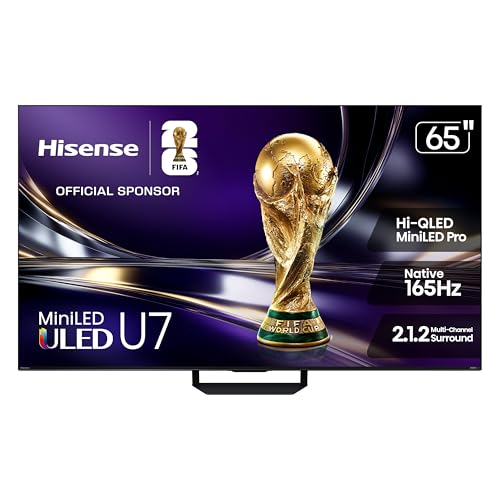
Pros
- High peak brightness and local dimming density provide outstanding contrast in bright and dark rooms
- Native 165Hz panel and low input lag make it ideal for high-framerate competitive gaming
- Effective anti-glare screen coating significantly reduces reflections from nearby windows and lamps
- Built-in 2.1.2 channel speaker system tuned by Devialet offers better dialogue clarity and bass than typical TVs
- Google TV platform is fast, clean, and packed with comprehensive streaming app support
Cons
- Picture contrast and saturation may diminish slightly when viewed from sharp side angles
- Rich menu system and deep gaming settings require some initial tweaking for optimal picture calibration
- At roughly 52 pounds, wall-mounting requires a sturdy bracket and two-person installation
The Hisense 65U7SG is a 65-inch Mini-LED 4K smart television designed to bridge the gap between dedicated home theater displays and ultra-responsive competitive gaming monitors. Built around an advanced Hi-QLED panel illuminated by thousands of precision Mini-LED backlights, this display caters directly to movie lovers, sports enthusiasts, and console or PC gamers. Apartment renters and suburban homeowners with sun-drenched living rooms will appreciate its massive brightness reserves, while families looking for an all-in-one entertainment hub can take advantage of the deeply integrated Google TV streaming platform.
Visual performance stands out thanks to specifications boasting up to 3000 local dimming zones and up to 3000 nits of peak brightness. This combination allows the panel to deliver deep, ink-like black levels alongside searing specular highlights, virtually eliminating blooming around bright subtitles or starry skies during late-night viewing. Colors look remarkably vibrant and true to life with Pantone-validated Hi-QLED color technology, bringing cinematic depth to HDR10+ and Dolby Vision IQ formats. In addition, the screen features a dual-layer anti-reflection filter that helps diffuse harsh daylight from living room windows, preserving contrast even during Sunday afternoon football games.
For console and PC gamers, this model provides serious horsepower through its native 165Hz refresh rate and Game Booster 330 technology. Fast-paced shooters and racing titles benefit from reduced input lag, variable refresh rate (VRR) support, and smooth frame transitions driven by the Hi-View AI Engine Pro and Motion Rate 660 processing. The on-screen Game Bar overlay gives players instant access to critical metrics like real-time frame rates, HDR status, and latency settings without having to pause gameplay. Whether you are running a marathon gaming session or watching high-speed hockey pucks glide across the ice, motion handling remains remarkably sharp and fluid.
The physical design sports slim bezels and a sturdy frame that mounts cleanly on standard VESA-compatible wall brackets or rests securely on media furniture. Onboard sound is significantly more robust than typical flat-panel displays, featuring an integrated 2.1.2 multi-channel audio setup tuned by Devialet with native Dolby Atmos decoding for added spatial depth and vocal clarity. The Google TV interface is responsive and intuitive, grouping recommendations from major services like Netflix, Disney+, Prime Video, and YouTube into a unified dashboard, with Gemini AI assistance on hand for smart voice commands and discovery.
While the feature set is extensive, there are a few practical considerations for buyers to keep in mind. Like most high-contrast VA-style QLED panels, viewing angles can narrow slightly when watching from far off-axis, making central seating ideal for critical movie sessions. Additionally, navigating the extensive picture calibration menus and game settings can present a small learning curve for casual viewers who prefer simple plug-and-play operation. Overall, the Hisense 65U7SG represents a compelling, high-value choice for gamers, movie buffs, and busy households seeking top-tier brightness and fluid high-frame-rate performance without a flagship price tag.
Designed with next-generation consoles and high-end gaming PCs in mind, the Hisense 65U7SG is engineered for speed and precision. Its native 165Hz refresh rate, paired with Game Booster 330 and Variable Refresh Rate (VRR) technology, helps eliminate screen tearing and motion stuttering during fast-paced multiplayer combat. Auto Low Latency Mode (ALLM) automatically detects active consoles to switch the panel into its lowest latency state instantly.
The built-in Game Bar gives players real-time feedback on frame rates, HDR profiles, and display ratios right from an accessible pop-up menu. Fast camera pans in first-person shooters stay crisp without the smear often seen on standard 60Hz panels, making this display an appealing centerpiece for basement gaming setups and competitive console rigs alike.
The combination of Mini-LED backlighting and Hi-QLED quantum dot enhancement produces remarkable picture depth and dynamic contrast. By managing up to 3000 local dimming zones independently, the TV provides pinpoint control over dark backdrops and luminous details, making nighttime movie scenes feel authentic and punchy.
With up to 3000 nits of peak brightness, HDR formats such as Dolby Vision IQ, HDR10+, and IMAX Enhanced pop with intense highlight realism. The panel also features dual-layer anti-glare technology to neutralize reflections from overhead fixtures and sunny living room windows, preserving vivid color saturation throughout the day.

Pros
- Expansive 85-inch display paired with Mini-LED precision offers huge home theater impact at a very competitive value
- Native 144Hz refresh rate ensures crisp motion handling for fast-paced sports and next-gen gaming
- Total HDR versatility with Dolby Vision IQ automatically adapts image contrast to ambient room brightness
- Fire TV operating system is simple to navigate and integrates smoothly with Alexa smart home routines
Cons
- Large 85-inch footprint and 66-pound weight require two people for assembly, mounting, and a very wide media console
- Viewing angles can narrow slightly from extreme side positions, typical of high-contrast VA-style panels
- Built-in speakers provide clear dialogue but benefit greatly from a dedicated soundbar for true cinematic bass
The Hisense 85-Inch E7 Cinema Series 4K Smart Fire TV delivers an immersive big-screen experience built specifically for large living rooms, basement entertainment hubs, and dedicated home theater spaces. Engineered with Hi-QLED Mini-LED backlighting and Full Array Local Dimming (FALD), this massive display caters to movie lovers, competitive console gamers, and sports fans who want high visual impact without paying top-tier flagship prices. Families and cord-cutters will appreciate how easily it transforms standard entertainment spaces into true cinema environments, making weekend sports parties and movie nights feel substantially larger than life.
Picture performance stands out thanks to the combination of Mini-LED backlighting and quantum dot color reproduction. By utilizing thousands of precise light zones, the screen produces deep black levels alongside sparkling highlights, reducing haloing across dark sequences. Advanced AI Picture processing continuously evaluates content scene by scene, automatically tuning contrast, color, and brightness so viewers rarely need to fiddle with complex calibration menus. The included Total HDR suite, which features Dolby Vision IQ and HDR10+ Adaptive, utilizes an integrated ambient light sensor to calibrate tone mapping dynamically based on your room lighting, whether you are watching in a dark room or a sun-drenched family area.
For gamers and sports fans, motion clarity is a major highlight on this model. With a native 144Hz refresh rate paired with AI Smooth Motion and MEMC processing, fast-panning camera movements remain crisp and fluid. Whether tracking a hockey puck across the ice or playing competitive shooters on a connected gaming PC or modern console, motion blur stays minimal. The dedicated Game Mode delivers ultra-responsive low input lag and smooth variable refresh performance, keeping gameplay snappy and immersive across the entire 85-inch viewing surface.
Practicality and user convenience come standard with the built-in Fire TV operating system. Streaming enthusiasts and cord-cutters gain direct access to essential services such as Prime Video, Netflix, Disney+, and YouTube directly from an intuitive home screen. The included voice remote with Alexa integration enables hands-free searches, effortless app navigation, and seamless control over connected smart home accessories. The TV features a slim bezel profile that emphasizes picture over frame, while standard VESA mounting points give homeowners the flexibility to wall mount this display securely or place it on a broad media console.
While this massive display offers impressive visual punch, prospective buyers should consider a few practical factors before purchase. Like many high-contrast LED panels, viewing angles can soften contrast and color saturation for guests seated at extreme off-axis angles. Additionally, while the integrated audio system supports Dolby Atmos processing for clean dialogue, pairing an 85-inch display with a dedicated soundbar or surround sound system provides the audio scale necessary to match such an expansive visual presentation. Managing an 85-inch television also demands careful measurement of doorways, wall studs, and furniture.
Overall, the Hisense 85E7SF represents an outstanding option for shoppers seeking an enormous screen packed with strong visual and gaming specifications. Between its fluid 144Hz panel, Mini-LED precision, and user-friendly Fire TV ecosystem, it meets the demands of movie marathons, weekend sports broadcasts, and modern gaming sessions. If you have the wall space or a wide enough stand, this 85-inch model provides exceptional theater-grade value for any active household.
The integration of Mini-LED backlighting alongside quantum dot color enhancement produces vibrant, lifelike visuals across a massive 85-inch canvas. Full array local dimming ensures that dark night skies maintain deep black tones while bright streetlamps and explosions pop with radiant intensity. This controlled backlighting minimizes light bleeding and cloudy blooming around subtitles or bright objects on dark backgrounds.
HDR compatibility is exceptionally thorough, supporting Dolby Vision IQ, HDR10+ Adaptive, HDR10, and HLG. With Dolby Vision IQ and the built-in AI light sensor, the TV reads the ambient lighting in your room and fine-tunes metadata in real time so shadow details do not disappear in sunny rooms. Additionally, Filmmaker Mode disables unnecessary motion smoothing and artificial sharpening, presenting films with accurate frame rates, colors, and aspect ratios as intended by directors.
Gamers looking for an enormous competitive monitor will find a lot to like in the native 144Hz panel. Fast camera sweeps and high-octane racing games benefit from minimal motion blur and ultra-low input lag, providing immediate tactile response during heated gaming sessions. The display seamlessly supports high frame rate output from modern consoles and gaming PCs.
Variable refresh rate capabilities and auto low latency switching ensure stutter-free, tear-free gameplay without requiring manual toggles. Coupled with AI 4K upscaling, even older 1080p console games look crisp, clean, and well-defined across the expansive screen, turning your living room into an intense arcade and esports arena.
Setting up an 85-inch television requires thoughtful planning regarding room layout, furniture dimensions, and mounting gear. At 74.4 inches wide and weighing over 66 pounds, unboxing and positioning this television is strictly a two-person job. Homeowners choosing to mount should verify stud locations and ensure their wall bracket supports the television's VESA pattern and total weight.
For optimal immersion, an 85-inch screen performs best at viewing distances between 9 and 12 feet. Built-in eARC support makes it simple to run a single high-speed HDMI cable to an external Dolby Atmos soundbar or multi-channel AV receiver, giving you an authentic cinematic soundstage that easily matches the display's imposing scale.

Pros
- Fluid native 144Hz panel ideal for high-framerate console and PC gaming
- Mini-LED local dimming creates strong contrast with minimal blooming
- Anti-glare screen coating significantly reduces reflections in bright rooms
- Built-in subwoofer adds fuller bass response than typical flat-screen speakers
- Comprehensive HDR compatibility including Dolby Vision IQ and HDR10+ Adaptive
Cons
- Fire TV interface prominently features sponsored content and Amazon-centric recommendations
- Viewing angles may show minor color desaturation when watching far off-center compared to OLED panels
- Noticeably heavier than budget edge-lit televisions, requiring secure wall mounting anchors
The Hisense 55U6SF Pro represents a compelling entry in the mid-tier television market, uniting Mini-LED backlighting with the intuitive Fire TV operating system. Designed for versatility, this 55-inch 4K UHD display fits comfortably into suburban living rooms, apartment media setups, and dedicated gaming dens. It is particularly well suited for sports fans hosting weekend watch parties, console gamers wanting smooth high-framerate action, and families looking for a capable everyday streaming hub without overspending.
Visual performance is powered by Mini-LED backlighting divided into precise local dimming zones alongside a Hi-QLED quantum dot layer. According to product specifications, this configuration allows the display to achieve deep black levels, impressive peak brightness, and Pantone-validated color accuracy. Supporting both Dolby Vision IQ and HDR10+ Adaptive, the screen dynamically alters highlight intensity and shadow detail according to room lighting. An anti-reflection, glare-free panel coating further enhances everyday viewing by subduing distracting glares from nearby windows or lamps.
Fast motion is handled with remarkable poise thanks to the native 144Hz refresh rate and Motion Rate 480 processing. Whether you are tracking a hockey puck across the ice or diving into high-speed competitive video games, fast camera pans stay clean with minimal trailing. The panel supports advanced gaming capabilities that help minimize input lag and screen tearing, making it an excellent companion for modern gaming consoles or PC rigs during extended gaming sessions.
Audio performance receives an unexpected boost through a built-in subwoofer integrated into the chassis, rounding out low-frequency rumbles during movie nights and action scenes. Paired with IMAX Enhanced certification and DTS audio decoding, dialogue clarity remains audible even during loud sequences. The Fire TV interface organizes favorite streaming apps such as Prime Video, Netflix, and Disney+ into unified watchlists, while the included remote provides swift voice navigation via Alexa+ for quick search queries and smart home control.
While the display excels in bright-room contrast and gaming speed, viewers should expect minor color saturation roll-off when sitting at wide off-center angles, which is typical for high-contrast panel configurations. In addition, the Fire TV platform frequently surfaces sponsored content across its home screen. Even with these considerations, the combination of a 144Hz panel, Mini-LED local dimming, and anti-glare engineering makes this television a top-tier contender for shoppers seeking high performance at a practical price point.
Mini-LED technology uses miniature light diodes to create tightly controlled local dimming zones, producing inky blacks alongside bright specular highlights. The addition of Hi-QLED quantum dots expands color volume, ensuring natural skin tones, vibrant sports fields, and realistic scenery backed by Pantone color validation.
With wide HDR format coverage including Dolby Vision IQ, HDR10+, and HLG, the TV accurately translates modern high dynamic range masterings. The glare-free screen treatment works efficiently in sunlit living spaces, minimizing window reflections so daytime movies and sports stay crisp and easy to see.
Equipped with a native 144Hz refresh rate, the display caters directly to modern console and PC gamers who demand low input latency and rapid frame transitions. Fast-paced shooters and racing simulations benefit from sharp motion clarity, while automated low latency adjustments help keep controls feeling immediate and responsive during intense gaming sessions.
The high refresh capability works in tandem with the Hi-View AI Engine to reduce motion blur and judder across varied framerates. Whether plugged into a current-generation gaming console or a desktop graphics card, this TV delivers fluid visuals that prevent ghosting and keep competitive play smooth and engaging.

Understanding Display Architecture and Choosing Between LED and QLED
Deciding between a traditional LED television and a QLED display requires understanding how backlight engineering and color conversion layers operate together. Both display types utilize liquid crystal panels illuminated by light-emitting diodes, but the underlying mechanisms that generate color and control luminance differ substantially. Standard LED screens rely on white backlights filtered through passive color filters, whereas QLED panels employ microscopic quantum dots that convert light into pure primary colors. This fundamental structural divergence dictates how well a television produces vibrant colors, handles bright ambient environments, and controls light bleed during dark cinematic sequences.
How Quantum Dot Color Enhancement Alters Picture Performance
Standard LED displays utilize blue LEDs coated with yellow phosphor to simulate white light, which then passes through red, green, and blue color filters. This traditional filtering process absorbs a notable amount of light energy and produces relatively broad spectral peaks, limiting overall color saturation. In contrast, QLED displays position an inorganic quantum dot enhancement film between the backlight array and the liquid crystal layer. When struck by blue LED light, these microscopic semiconductor nanocrystals emit incredibly precise red and green wavelengths, minimizing light loss while expanding the overall color gamut.
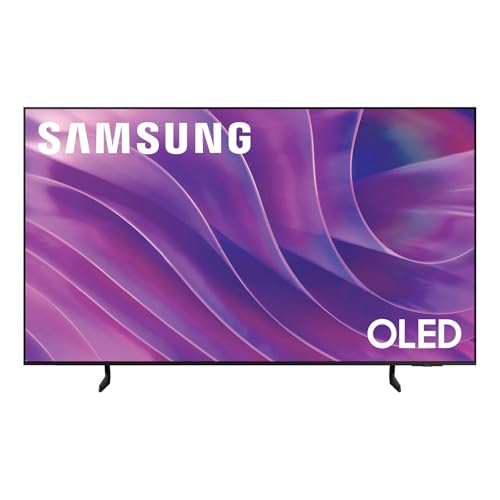
The practical benefit of this quantum dot architecture becomes obvious when watching high dynamic range content with rich color volume. Standard LED televisions often experience color desaturation as scene brightness increases, causing intense highlights like fiery explosions or sunlit skies to appear slightly faded. Because quantum dots maintain their precise color purity even at high luminance levels, a QLED television preserves saturated hues across varying brightness thresholds. Models like the Samsung 65-Inch Class QLED Q7F Series Samsung utilize this nano-sized particle design to render over a billion true-to-life shades without sacrificing tonal accuracy in well-lit living spaces.
Backlight Architecture: Edge-Lit, Direct-Lit, and Mini-LED Systems
The backlighting system behind the screen plays a decisive role in determining image contrast and shadow detail. Basic standard LED televisions frequently employ edge-lit backlights where diodes line the perimeter of the frame, distributing light unevenly across dark scenes. Direct-lit LED models place diodes directly behind the liquid crystal panel, yet they lack granular light control because the entire array dims or brightens uniformly. In contrast, advanced QLED displays elevate contrast performance by incorporating Full Array Local Dimming or precision Mini-LED backlights with individual light zones.
Mini-LED backlighting replaces bulky conventional diodes with thousands of microscopic emitters distributed across hundreds of independent dimming zones. The TCL 65-Inch QM64L Series, for example, integrates its Halo Control System with up to 500 local dimming zones to regulate illumination with remarkable precision. Higher zone density prevents distracting halo artifacts around bright subtitles and keeps dark letterbox bars inky black. Premium configurations like the Hisense 65″ U7 Mini-LED ULED 4K UHD Best scale this engineering up to 3,000 local dimming zones, producing sharp contrast boundaries that standard LED arrays cannot match.
Brightness Benchmarks and Daylight Room Performance
Ambient lighting conditions present a common hurdle for home entertainment setups, especially in modern living rooms with expansive windows. Standard LED televisions generally produce moderate peak brightness levels adequate for dimly lit rooms, but they often struggle against direct afternoon sunlight. When high ambient light reflects off the screen, images on a standard LED panel can appear dim and washed out. A viewer must then squint to make out faint shadow gradients or pull heavy blackout curtains to achieve an acceptable viewing experience.
High sustained peak luminance gives QLED displays a significant practical advantage in brightly lit environments. Mini-LED backlighting paired with quantum dot layers can push peak brightness to remarkable thresholds, allowing specular highlights to cut straight through daylight glare. The Hisense 65-inch U7 Mini-LED model exemplifies this capability with peak brightness output reaching up to 3,000 nits. Additionally, anti-reflection coatings like those on the Hisense 65″ U6 Pro Series Mini‑LED ULED 4K UHD HDR scatter incoming glare, ensuring crisp picture clarity without distracting room reflections.
Native Refresh Rates and Fast Motion Processing
Display refresh rates dictate how cleanly a television presents fast movement during action sequences, live sports, and competitive gaming. Entry-level standard LED models typically operate on a native 60Hz panel, refreshing the image sixty times per second. While 60Hz panels handle standard television broadcasts and casual movie streaming sufficiently, rapid camera pans can exhibit noticeable motion blur or trailing artifacts. Motion estimation and motion compensation processing can help smooth frame transitions, but it cannot fully replicate the fluid clarity of a higher native refresh rate.
Mainstream and premium QLED televisions frequently step up to native 144Hz or even 165Hz panels, doubling or tripling temporal motion resolution. Displays like the Hisense 65″ E7 Cinema Series Hi-QLED Mini-LED 4K and the TCL QM64L series feature native 144Hz refresh rates that keep fast-moving objects crisp and legible. Exploring dedicated Mini-LED sports television options demonstrates how native high-refresh panels eliminate the smearing typical of budget 60Hz screens. Comparing specifications across popular 55-inch QLED models also reveals how mid-sized screens retain native 144Hz fluidity while smaller sub-50-inch screens sometimes drop back to 60Hz.
Next-Gen Console and PC Gaming Capabilities
Modern gaming consoles like the PlayStation 5 and Xbox Series X demand advanced display connectivity that entry-level LED televisions rarely provide. Standard LED displays generally include basic HDMI 2.0 ports capped at 4K resolution at 60Hz, preventing consoles from unlocking their high-framerate output modes. In contrast, modern QLED gaming televisions incorporate high-bandwidth HDMI 2.1 inputs capable of handling uncompressed 4K video signals at 120Hz, 144Hz, or beyond. This extra bandwidth translates into dramatically lower input lag, providing an immediate, responsive feel in fast-paced competitive multiplayer games.
Variable Refresh Rate and Auto Low Latency Mode are essential gaming features that eliminate screen tearing and input delay. Televisions such as the Hisense U7 series incorporate specialized gaming toolbars and support enhanced refresh rates up to 330Hz VRR for responsive PC and console play. A dedicated Game Bar overlay lets gamers monitor active frame rates, toggle HDR settings, and verify low-latency status without interrupting gameplay. Standard LED screens lacking VRR support can suffer from jarring stutter whenever demanding in-game sequences drop below a static 60 frames per second.
High Dynamic Range Format Support and Dynamic Tone Mapping
High Dynamic Range formats supply the visual data that enables televisions to render deep contrast and radiant highlights simultaneously. Standard HDR10 establishes static metadata for an entire film, requiring the television to apply a single compromise tone mapping curve across both dark and bright scenes. Premium dynamic formats like Dolby Vision and HDR10+ transmit frame-by-frame metadata, allowing the screen to adjust brightness levels dynamically for every individual shot. Standard LED televisions often lack the processing power, color volume, and licensing support necessary to decode these advanced dynamic HDR formats effectively.
Leading QLED manufacturers implement broad HDR format support alongside intelligent environmental tone mapping sensors. The Hisense 85″ E7 Cinema Series Hi-QLED Mini-LED 4K and TCL QM64L series decode every major format, including Dolby Vision IQ, HDR10+ Adaptive, standard HDR10, and HLG. These adaptive formats use integrated ambient light sensors to adjust tone mapping based on the lighting in your room, keeping dark shadows visible during daytime viewing. Samsung models like the Samsung 75-Inch Class QN70H Series focus heavily on HDR10+ dynamic tone mapping, utilizing their NQ4 AI processor to optimize contrast without clipping bright highlight details.
Viewing Angles and Panel Sub-Types: VA Versus Wide-Angle Technologies
The physical arrangement of liquid crystal molecules within a television panel directly influences both native contrast and off-axis viewing performance. Vertical Alignment panels are common in both standard LED and QLED displays because their liquid crystals block backlight illumination effectively, yielding high native contrast ratios. However, standard VA panels suffer from narrow viewing cones, causing colors to desaturate and black levels to appear milky when viewed from an angle. In an open-concept living space with wide sectional seating, viewers positioned off to the side may experience a noticeably degraded picture on a basic VA screen.
Display manufacturers address off-axis degradation by pairing quantum dot filters with specialized wide-angle panel designs. The TCL QM64L series incorporates an HVA panel engineered to deliver a 178-degree horizontal and vertical viewing angle, allowing colors to retain their richness across wider seating positions. If your primary seating arrangement places viewers directly in front of the screen, a standard VA panel provides outstanding deep-room contrast. For rooms where viewers frequently watch from diagonal armchairs or an adjacent open kitchen, wide-angle QLED engineering prevents distracting color shifts.
Long-Term Reliability and Static Image Retention
Display longevity and resistance to permanent image degradation represent major decision factors for buyers seeking a television that lasts for years. Unlike self-emissive organic displays, neither standard LED nor QLED televisions utilize organic compounds that degrade unevenly over time. Quantum dot enhancement films are constructed from durable inorganic nanocrystals that remain chemically stable even under continuous high-luminance operation. This inorganic architecture makes QLED panels virtually immune to permanent burn-in caused by static user interface elements or news banners.
This burn-in immunity makes QLED displays exceptionally well-suited for households that leave news tickers, financial banners, or sports score bugs running for hours on end. Video game enthusiasts who play titles with persistent heads-up displays can also enjoy long gaming sessions without worrying about ghost images remaining on the screen. Furthermore, solid-state LED backlights dissipate thermal energy efficiently across the chassis, ensuring consistent brightness output across thousands of viewing hours. Homeowners seeking dependable long-term performance without panel maintenance concerns will appreciate the structural durability inherent to quantum dot technology.
Smart TV Platforms and Operating System Integration
The underlying operating system dictates daily usability, content discovery, and smart home integration across modern televisions. Entry-level LED televisions often run on stripped-down smart interfaces powered by low-cost processors, which can lead to sluggish menu navigation and delayed app launching over time. In contrast, modern QLED models feature sophisticated platforms such as Google TV, Amazon Fire TV, and Samsung Tizen backed by dedicated neural processors. Models like the Samsung Q7F series utilize Samsung Knox Security to protect sensitive login data while providing instant access to thousands of streaming channels without separate subscriptions.
Artificial intelligence processors continuously analyze incoming video feeds to upscale lower-resolution broadcasts and optimize audio reproduction. The Samsung QN70H series employs an NQ4 AI processor with Color Booster Pro, analyzing frames in real time to refine sharpness and enhance color saturation from older cable feeds. Meanwhile, Fire TV models like the Hisense 55″ U6 Pro Series Mini‑LED ULED 4K UHD HDR integrate hands-free Alexa voice control, streamlining content discovery and smart home management. Built-in speaker arrays on premium QLEDs, such as the Onkyo 2.1 system in the TCL QM64L, also deliver cinema-grade sound with Dolby Atmos without demanding an immediate soundbar purchase.
Physical Installation, Mount Weight Ratings, and Cable Routing
Mounting a large flat-panel television safely requires careful attention to chassis dimensions, weight specifications, and wall stud alignment. Flagship displays in the 75-inch and 85-inch classes carry substantial physical mass that demands robust mounting hardware. Homeowners should always anchor VESA-compatible wall brackets directly into solid wooden wall studs rather than relying on hollow drywall anchors. Following manufacturer safety guidelines and securing the help of a second person during lifting prevents physical injury and protects the delicate display panel from flexing during installation.
For tabletop setups, verifying media console dimensions is equally critical before unboxing an oversized television. Many modern displays utilize wide-set pedestal feet positioned near the outer edges of the chassis, requiring entertainment stands that match the full width of the screen. Additionally, ensuring sufficient vertical clearance beneath the bottom bezel allows a soundbar to sit neatly on the stand without blocking the television remote sensor. Taking time to organize cables with secure ties and strain relief clips prevents loose connectors from pulling against fragile HDMI ports over years of display adjustment.
Final Practical Verdict: Determining the Right Television for Your Space
Weighing standard LED displays against QLED technology ultimately hinges on your budget thresholds, ambient viewing environment, and performance expectations. A traditional LED television remains a sensible choice for secondary rooms, guest bedrooms, or utility spaces where casual viewing takes precedence over specular HDR highlights and wide color gamuts. For modest budgets and smaller screen sizes, a standard LED panel delivers reliable everyday functionality without unnecessary financial investment. In these smaller spaces, the extra brightness and color saturation of quantum dots may not be strictly necessary for watching casual broadcast television.
However, for primary living rooms, sun-drenched spaces, dedicated gaming setups, and home theater environments, QLED technology represents an unequivocal upgrade. The combination of quantum dot color purity, high sustained peak brightness, and advanced Mini-LED local dimming delivers vastly superior contrast, vibrant HDR realism, and fluid high-refresh gaming performance. Investing in a capable QLED television ensures that your entertainment setup handles bright daylight reflections effortlessly while rendering films and games with the visual depth their creators intended. Taking into account your room lighting and daily viewing habits makes choosing between standard LED and QLED a straightforward, rewarding decision.



Write Your Review
No reviews yet. Be the first to share your experience!