
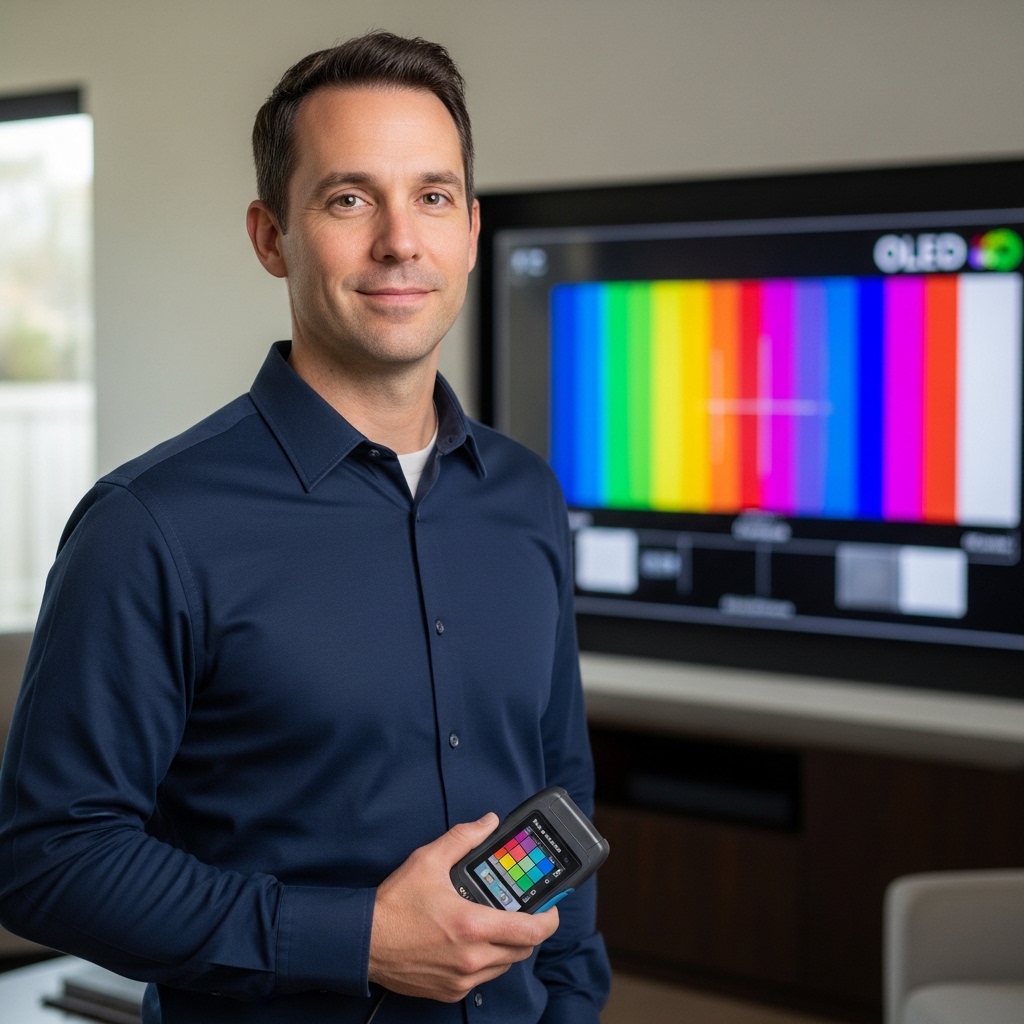

Sunlit living rooms with floor-to-ceiling windows present a serious challenge for traditional flat-panel displays, often washing out dark shadows and turning rich colors into dull gray tones. To solve this dilemma, premium manufacturers introduced advanced backlighting architectures that combine microscopic light sources with color-enhancing nanocrystals. Exploring what is neo qled lcd tv reveals how modern televisions achieve staggering brightness while maintaining precise contrast control. If you have browsed the market for flagship QLED TVs, you likely noticed this specific branding representing the upper tier of liquid crystal display engineering.
At its foundation, this display category upgrades standard quantum dot panels by replacing broad LED arrays with densely packed Quantum Mini LED backlights. These microscopic light emitters allow for hundreds or thousands of individual local dimming zones, which dramatically suppress haloing around bright titles and preserve deep shadow detail. Viewers also gain full color volume across extreme luminance levels without the immediate burn-in anxiety associated with self-emissive panels. Understanding the mechanical differences behind this panel hardware helps buyers choose the right screen for sun-drenched spaces, fast sports broadcasts, and high-frame-rate console gaming.


Understanding Neo QLED LCD TV Architecture and Performance
A what is neo qled lcd tv query centers on a major leap forward in consumer display engineering, merging a dense microscopic Mini-LED backlight array with a quantum dot color enhancement layer. While standard liquid crystal display panels rely on relatively large light-emitting diodes, this architecture shrinks those diodes down to a fraction of their conventional physical footprint. This reduction allows manufacturers to pack thousands of tiny light sources behind the screen, granting far tighter control over luminance and zone illumination. The result is a hybrid display design that pairs the intense brightness of traditional LED screens with contrast levels that approach self-emissive panels.
The Core Engineering: Mini-LED Backlights and Quantum Dot Nanocrystals
At the heart of this display design sits a dense backlight structure powered by micro-meter scale diodes known as Quantum Mini LEDs. Unlike conventional LEDs that use bulky protective packaging and light-diffusing lenses, these miniature diodes feature ultra-thin micro layers that emit light directly through the optical stack. Because these diodes are roughly one-fortieth the height of standard light emitters, engineers can position significantly more of them across the panel surface. This dense concentration delivers immense luminous energy across wide panoramic scenes while preserving subtle highlight details.
Directly in front of this miniature backlight grid sits an optical layer infused with microscopic nanocrystals called quantum dots. When the high-efficiency blue light from the Mini-LED array strikes these semiconductor nanocrystals, they instantly convert that energy into exceptionally pure red and green primary colors. This conversion mechanism enables displays to achieve 100% color volume, ensuring that hues remain saturated and vivid even at blinding output levels. Conventional color filters often wash out or lose saturation under intense backlight drive, but quantum dot layers preserve rich spectral accuracy across the entire brightness range.
Contrast Precision and Local Dimming Zone Management
Liquid crystal displays historically struggled to produce true inky blacks because continuous backlights constantly bleed through the liquid crystal shutter layer. Modern Mini-LED engineering directly resolves this hardware bottleneck by dividing the backlight into hundreds or thousands of individually controlled local dimming zones. A specialized micro-controller analyzes incoming video frames in real time, dimming or completely extinguishing backlights behind dark areas of the image. This dynamic regulation allows deep shadow scenes to remain convincingly black while neighboring highlights shine with intense brilliance.
A primary visual artifact that plagues lower-tier full-array panels is blooming, which appears as an unwanted glowing halo around bright objects on dark backgrounds. By dramatically increasing zone density, Mini-LED displays constrain illumination tightly around bright screen elements such as movie subtitles, starry skies, or studio logos. Viewers watching letterboxed widescreen movies will notice that the horizontal black bars stay deep and uniform rather than glowing with gray light leakage. While high-contrast scenes in pitch-black viewing rooms can still reveal subtle light bleed on challenging patterns, the tight diode grid minimizes haloing far more effectively than traditional edge-lit displays.
Neural Processors and Real-Time Picture Optimization
Controlling thousands of microscopic diodes while managing eight million pixels on a 4K panel requires serious computational horsepower. Premium displays utilize advanced silicon like the NQ4 AI Processor to orchestrate both the backlight array and the liquid crystal shutter in perfect synchronization. Modern chipsets employ sophisticated neural networks that classify incoming video signals by genre, scene composition, and source resolution. This multi-layered intelligence calculates optimal brightness distributions instantly, preventing backlight lag or distracting luminance pumping during rapid scene transitions.
Beyond controlling panel illumination, these processors deliver intelligent upscaling that transforms compressed cable feeds and legacy media into near-native 4K quality. Using algorithms trained on extensive visual libraries, processors restore edge definition, eliminate noise artifacts, and reconstruct fine textures without introducing unnatural ringing. Features like Color Booster Pro actively analyze tonal values scene by scene, boosting vibrant color gamuts while keeping natural skin tones balanced. Furthermore, intelligent processing transforms standard dynamic range content into HDR-like presentations, expanding the contrast baseline of older movies and everyday television broadcasts.
Ambient Light Performance and Daytime Glare Mitigation
One of the greatest operational strengths of these displays is their unmatched capability in bright living rooms with intense ambient daylight. Traditional living spaces with large windows or exposed overhead lighting often overpower standard displays, leaving viewers squinting at washed-out images. Advanced Mini-LED panels generate exceptional sustained peak brightness, allowing vivid HDR highlights to cut directly through severe environmental glare. Viewers can comfortably enjoy daytime programming, news broadcasts, and midday sports without feeling compelled to draw blackout curtains.
In addition to high raw luminance output, these panels incorporate sophisticated anti-reflective screen treatments designed to diffuse specular reflections. Optical coatings spread incoming light across the display surface, reducing sharp mirror-like reflections of lamps and windows into faint, unobtrusive hazes. This surface treatment combines with high sustained brightness to preserve perceptible contrast even when sunlight floods the room. For homeowners planning multi-purpose entertainment spaces, selecting high-output Mini-LED displays for fast motion ensures crisp visibility regardless of the time of day.
Panel Longevity and Zero Risk of Image Retention
Buyers comparing premium display technologies frequently weigh Mini-LED LCD panels against self-emissive organic light-emitting diode alternatives. Organic displays utilize microscopic sub-pixels that degrade unevenly when exposed to static visual elements over extended periods. Because quantum dot LCD panels rely on resilient inorganic nanocrystals and robust silicon-based diodes, the screen is inherently immune to permanent image retention or burn-in. Users can display static news tickers, desktop computer toolbars, video game heads-up displays, and financial channel banners for hours without causing permanent ghosting.
This inorganic foundation also ensures consistent optical performance over many years of heavy household operation. Organic compounds gradually lose peak luminance output as cumulative runtime increases, especially when driven at maximum brightness in sunny rooms. In contrast, inorganic Mini-LED diodes retain their high light output and stable color balance across extended ownership cycles. For families who leave their television playing background programming throughout the day, this durability provides peace of mind and long-term value.
High-Refresh-Rate Gaming and HDMI 2.1 Bandwidth
Modern console and PC gaming demands hardware that can process high frame rates without visual tearing, stutter, or perceptible control lag. Premium Mini-LED screens feature dedicated HDMI 2.1 inputs that support 4K resolution at 120Hz and even 144Hz refresh rates. Variable Refresh Rate technology, including compatibility with standard VRR protocols and AMD FreeSync, synchronizes panel refresh cycles directly to the graphics output of connected consoles. This dynamic synchronization eliminates screen tearing during fast camera sweeps and intense gameplay sequences.
Auto Low Latency Mode automatically detects incoming gaming signals from a PlayStation 5 or Xbox Series X, shifting the television into low-lag Game Mode immediately. In this specialized state, non-essential video post-processing is bypassed, dropping input latency into single-digit milliseconds for instantaneous controller responsiveness. Large-format displays like the Samsung 100-Inch Class Neo QLED QN80F 4K Mini LED leverage this capability to deliver smooth visuals and tear-free gaming at up to 4K 144Hz. Players enjoying fast-paced competitive shooters or racing simulations benefit from crisp motion tracking and razor-sharp object contours.
Integrated Sound Processing and Audio Connectivity
Modern slim-chassis televisions often struggle to generate full-bodied acoustic performance due to tight physical enclosure constraints. To counter this limitation, advanced chassis designs incorporate multi-directional speaker arrays paired with spatial audio processing. Built-in object tracking sound technology uses top and side firing drivers to move audio effects across the screen in tandem with visual action. When a car speeds across the frame or an aircraft flies overhead, acoustic cues follow the motion to build a more immersive listening environment.
For home theater enthusiasts who prefer dedicated external audio hardware, connectivity options remain straightforward and flexible. An enhanced Audio Return Channel port allows uncompressed Dolby Atmos and multi-channel audio tracks to pass directly from the television to an external AV receiver or soundbar over a single high-speed cable. It is essential, however, to plan your HDMI port assignments carefully if you connect multiple gaming consoles. Ensuring your external soundbar connects to the designated eARC port without monopolizing your primary 4K 120Hz gaming inputs avoids annoying cable swaps down the road.
Screen Sizing, Room Placement, and Installation Guidelines
Selecting the ideal screen size requires balancing room dimensions against industry viewing distance standards to maximize immersion without causing eye fatigue. According to guidelines established by the Society of Motion Picture and Television Engineers, a 30 to 40 degree field of view provides the optimal cinematic balance for 4K content. For average living room seating distances between seven and nine feet, a screen like the Samsung 65-Inch Class QN70H Series delivers an expansive viewing angle while fitting easily on standard media consoles. Larger spaces spanning ten to fourteen feet benefit considerably from stepping up to immersive large-screen QLED options that recreate an authentic cinema experience.
When installing an oversized display, structural support and wall anchoring require careful planning and physical safety precautions. Extra-large panels weighing seventy to one hundred pounds or more must always be anchored directly into solid wall studs rather than hollow drywall anchors. Follow standardized VESA mounting dimensions specified in your product manual and verify that your mounting bracket carries a certified weight rating exceeding your television chassis. Large panels measuring 65 inches and above always require two-person lifting to avoid accidental frame twisting or dangerous dropping hazards during placement.
Understanding Viewing Angles and Panel Sub-Types
Prospective buyers should understand how underlying panel alignments affect off-axis viewing performance in open-concept living rooms. Many Mini-LED televisions utilize Vertical Alignment liquid crystal panels, which deliver outstanding native contrast and deep blacks but tend to lose color saturation when viewed from wide side angles. Other models incorporate Advanced Dimension Switching panels that maintain vibrant hues and clear contrast for viewers seated along wide sectional couches. Premium configurations often include specialized optical layers that widen viewing cones, preserving picture consistency across wide seating layouts.
To check off-axis performance in your own living space, assess where family members and guests typically sit relative to the center of the screen. If primary seating wraps widely around the room, testing side-angle color retention ensures that off-center viewers do not experience washed-out shadows or desaturated colors. Positioning the television at eye level also prevents vertical contrast shifting, which can degrade dark-scene fidelity if mounted excessively high above a fireplace mantle. Proper physical positioning maximizes the visual advantages of the underlying Mini-LED backlight array.
Key Selection Criteria for Neo QLED Buyers
When evaluating different models within this technology family, buyers should examine backlight zone density, processing generations, and gaming bandwidth. Entry-tier configurations provide vibrant colors and solid peak luminance, making them fantastic choices for bright everyday living rooms and family spaces. Step-up models introduce higher local dimming zone counts and advanced neural processing engines, delivering superior blooming suppression for dark-room movie viewing. Enthusiasts seeking top-tier gaming performance should verify native 120Hz or 144Hz panel ratings, as compact screen sizes in some lines occasionally step down to 60Hz limits.
Ultimately, this display technology represents an exceptional middle ground between blazing daylight luminance and precise dark-room contrast. By uniting Quantum Mini LEDs with color-expanding quantum dots, these screens eliminate traditional LCD backlight limitations while avoiding organic panel burn-in risks. Whether you are outfitting a sunlit great room, setting up a next-generation gaming rig, or designing a spacious home theater, these panels offer versatile, long-lasting visual performance across all types of entertainment content.
Before finalizing your entertainment setup, verify that your source devices and high-speed cables match the capabilities of your new television. Enabling enhanced HDMI signal formats in the system settings menu ensures full transmission of high-bandwidth HDR, variable refresh rates, and multi-channel audio tracks. Running a quick picture test across familiar bright movies and high-contrast night scenes helps you fine-tune local dimming and brightness settings to match your room lighting. With proper physical placement and customized settings, your Mini-LED quantum dot television will deliver breathtaking visual fidelity for years to come.



Write Your Review
No reviews yet. Be the first to share your experience!