


Shopping for a compact home theater display often leads buyers into an unexpected dilemma when searching for an organic light-emitting diode screen. Anyone trying to determine what is the best 50 inch oled tv quickly discovers that display manufacturers cut glass substrates into specific dimensions that skip this exact footprint. While traditional liquid crystal panels flood the market in this dimension, self-emissive pixels prioritize 48-inch and 55-inch cuts. If you want reference black levels and infinite contrast in a moderate footprint, exploring our budget OLED TV options reveals how close-fitting alternatives perform in real living rooms.
Choosing between an ultra-compact 48-inch OLED chassis and a slightly larger 55-inch frame comes down to physical furniture clearance, viewing distance, and gaming requirements. Genuine OLED panels deliver instantaneous response times, wide viewing angles, and deep contrast that edge-lit displays cannot match. Meanwhile, companion technologies like quantum-dot enhancement and high-refresh gaming modes broaden your choices across nearby sizes. Balancing room lighting, HDMI 2.1 connectivity, and panel care ensures you secure stunning visual clarity that fits your living space perfectly.

Pros
- True OLED black levels with virtually infinite contrast for dark-room cinema immersion
- Glare Free coating significantly cuts reflections during daytime sports and living room viewing
- Exceptional gaming capabilities with up to 165Hz VRR, low input lag, and G-SYNC support
- Powerful 128-neural-network AI processor delivers sharp upscaling for cable and streaming
- Sleek, minimalist design fits comfortably on standard media consoles or flush wall mounts
Cons
- Does not support Dolby Vision HDR formatting, relying instead on HDR10 and HDR10+
- Slim chassis design naturally limits deep bass response without an external soundbar
- Higher initial investment compared to conventional LED and standard QLED televisions
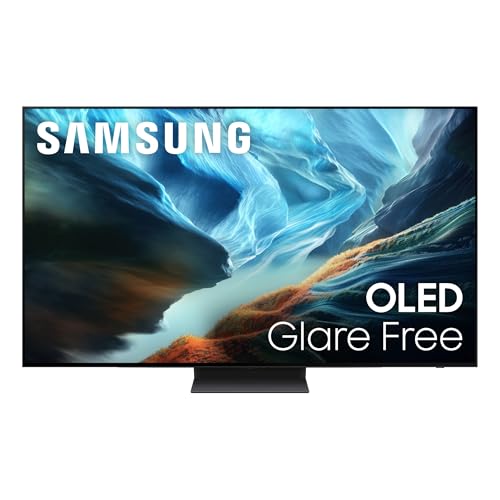
The Samsung 55-Inch Class S90H Series OLED 4K Smart TV represents a high-performance home entertainment display engineered for movie lovers, console gamers, and sports enthusiasts seeking top-tier contrast and smooth motion. Built around self-lit OLED pixels, this model pairs individual pixel-level illumination with Samsung Glare Free technology, making it uniquely versatile for both dark home theater rooms and moderately bright living spaces. Whether you are an apartment renter outfitting a media nook or a homeowner upgrading a main entertainment center, the 55-inch footprint strikes an appealing balance between immersive screen size and manageable room dimensions.
Picture performance is driven by the NQ4 AI Gen3 Processor, which leverages 128 AI neural networks to optimize contrast, sharpness, and color saturation scene by scene. The inherent strength of OLED technology ensures true inky black levels with zero light bleed around bright subtitles, while the Glare Free finish helps diffuse ambient daylight and overhead lamp reflections that typically plague glossy panels. For cable subscribers and classic movie fans, 4K AI Upscaling Pro and Auto HDR Remastering work behind the scenes to sharpen standard 1080p sports feeds and infuse vintage SDR media with expanded dynamic range and vivid highlights.
Gamers will find substantial value in the Ultimate Gaming Pack integration, which supports refresh rates up to 165Hz alongside NVIDIA G-SYNC and AMD FreeSync Premium Pro compatibility. With ultra-low input lag, Auto Low Latency Mode (ALLM), and dedicated gaming dashboard utilities, PC and console gamers can track fast-paced competitive shooters or open-world action titles without tearing or screen stutter. For Sunday football watch parties or hockey games, AI Motion Enhancer Pro tracks rapid ball and puck movement, stabilizing the broadcast image to keep text overlays readable and fast camera pans crisp.
In terms of build quality, the S90H sports a clean Graphite Black profile with razor-thin bezels that give it a floating, modern aesthetic. The central pedestal stand provides reliable stability on standard media consoles, while VESA mounting compatibility offers flexible placement for flush wall setups. Under the hood, the Samsung Tizen operating system delivers quick access to streaming platforms like Netflix, Prime Video, Disney+, and Samsung TV Plus, alongside integrated voice assistant support. While the onboard speakers deliver crisp dialogue for news and sitcoms, the slim chassis naturally limits deep low-end bass, making an external eARC-connected soundbar a sensible addition for true theater rumble.
Like other Samsung televisions, the S90H does not feature native Dolby Vision support, relying instead on HDR10, HDR10+, and HLG for dynamic HDR reproduction. Additionally, viewers in extremely sun-drenched rooms with direct sunlight hitting the screen will want sheer blinds drawn to get the most out of OLED contrast. For cinephiles seeking authentic film mastering, gamers demanding fluid 165Hz response, and families wanting a premium all-around living room display, this 55-inch S90H OLED TV stands out as a well-rounded and deeply satisfying centerpiece.
The Samsung S90H is outfitted with a comprehensive suite of gaming features designed for both current-generation consoles and high-end gaming PCs. Supporting native refresh rates up to 165Hz with Motion Xcelerator technology, this screen delivers exceptionally fluid frame pacing that eliminates ghosting during intense multiplayer matches.
Compatibility with NVIDIA G-SYNC and AMD FreeSync Premium Pro ensures that variable refresh rates stay synchronized with your GPU, preventing frustrating screen tearing and stutter. With Auto Low Latency Mode (ALLM) automatically switching the TV into high-response game mode when a console boots up, input lag remains negligible for competitive play.
Samsung Game Bar provides an on-screen overlay where players can monitor frame rates, adjust aspect ratios, and fine-tune black equalizer settings on the fly. Whether connecting a PlayStation 5, Xbox Series X, or custom gaming rig, the high-bandwidth HDMI connectivity ensures smooth 4K gameplay with full HDR color fidelity.
At the heart of the S90H lies an advanced OLED panel capable of generating infinite contrast, as each individual pixel turns completely off to produce pitch black. This pixel-level precision eliminates the blooming and halo artifacts commonly seen on traditional backlit LED screens during nighttime movie viewing.
A standout feature of this model is the Glare Free panel coating, which disperses incoming reflections without dulling the display's vibrant color palette or deep contrast. This engineering addresses one of the classic drawbacks of OLED panels, making daytime viewing of sports, news, and family programming far more enjoyable in sunlit spaces.
Color reproduction remains richly saturated across wide viewing angles, ensuring that friends and family sitting off to the side enjoy the exact same vivid picture as anyone seated dead-center. Combined with HDR10+ dynamic tone mapping, highlights like sunlight reflections and practical explosions look intensely bright and lifelike.
Pros
- Wide color volume and punchy saturation thanks to the QLED panel
- Dual HDR support with both Dolby Vision and HDR10+ Adaptive
- Snappy Fire TV smart platform with integrated Alexa voice control
- Useful gaming perks including Auto Low Latency Mode and Variable Refresh Rate
Cons
- Panel operates at a standard 60Hz refresh rate rather than high-frame-rate 120Hz
- Color saturation softens when viewing the screen from wide off-center angles
- Built-in dual speakers lack the deep low-end bass of an external soundbar
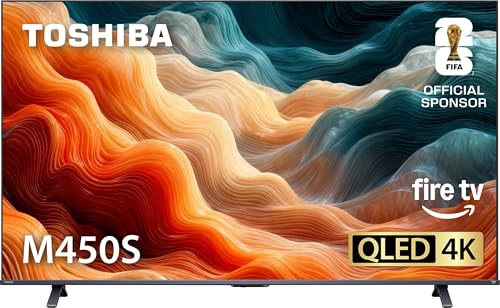
The Toshiba 50-Inch M450 Series QLED 4K Smart Fire TV serves as a feature-packed centerpiece designed for modern entertainment spaces. Whether you are an apartment renter setting up an all-in-one living room display, a cord-cutter ditching cable boxes, or a budget-conscious shopper outfitting a master bedroom, this television offers a strong balance of display quality and connected convenience. Families with kids and casual console gamers will appreciate the blend of straightforward navigation and responsive performance.
Powered by the REGZA AI Engine ZRi Gen3, the television elevates everyday streaming through dependable upscaling and digital noise reduction. The QLED panel leverages quantum dots to produce punchy colors and rich contrast, making animated features and nature documentaries visually engaging. Support for both Dolby Vision and HDR10+ Adaptive ensures high dynamic range content stays balanced across changing ambient room lighting, so highlights pop without blowing out shadow details during evening movie watching.
For casual gamers and sports fans, the M450 Series integrates responsive gaming perks into its dedicated Game Mode. With Auto Low Latency Mode (ALLM) and Variable Refresh Rate (VRR), input response remains smooth, helping prevent screen tearing during fast-paced multiplayer sessions on current-generation consoles. While the screen runs at a standard 60Hz refresh rate rather than 120Hz, motion processing algorithms help keep football games and fast panning sequences reasonably crisp.
Everyday usability remains effortless courtesy of the integrated Fire TV ecosystem. Streaming favorites like Prime Video, Netflix, and Disney+ load briskly, while the Alexa Voice Remote allows you to search for titles, check sports scores, or control smart home gear without endless menu scrolling. On the audio side, REGZA Power Audio utilizes dual clear direct speakers backed by Dolby Atmos processing, which delivers clean dialogue for news and drama shows, though adding an external soundbar via eARC will elevate heavy action soundtracks.
Drawing from clean, Japanese-inspired minimalist aesthetics, the slim bezels and understated stand blend seamlessly into contemporary media consoles or standard VESA wall mounts. Potential buyers should note that like most LED-backlit displays in this tier, viewing angles narrow slightly when watching from far off to the side. Overall, for shoppers looking for a capable 50-inch 4K screen with vibrant quantum dot color, dependable smart features, and modern gaming compatibility, the Toshiba M450 stands out as a well-rounded and sensible value.
The core visual strength of the Toshiba M450 Series comes from its REGZA QLED panel, which utilizes quantum dot technology to produce broader color volume and lifelike saturation compared to entry-level LED displays. Colors appear rich without feeling artificially oversaturated, bringing natural depth to everything from wildlife documentaries to vibrant animated features.
High dynamic range performance is particularly versatile on this model because it supports both Dolby Vision and HDR10+ Adaptive. This dual compatibility means you do not have to worry about which HDR format your favorite streaming service uses. The processing automatically optimizes brightness and contrast levels scene by scene, ensuring bright highlights and darker backgrounds maintain clear separation.
The REGZA AI Engine ZRi Gen3 handles signal processing and 4K upscaling. Lower-resolution broadcasts, cable feeds, and older streaming titles are rendered with enhanced sharpness and reduced visual noise, helping standard HD content look clean and crisp across the 50-inch canvas.
Gamers pairing this display with modern consoles like the PlayStation 5, Xbox Series X, or Nintendo Switch will benefit from the television's dedicated Game Mode. The inclusion of Auto Low Latency Mode (ALLM) automatically detects when a console is powered on, switching the TV to low input lag operation instantly.
Variable Refresh Rate (VRR) support helps eliminate stutter and screen tearing, synchronizing the display refresh with the console frame output for smoother action during fast-moving sequences. While the panel runs at 60Hz rather than 120Hz, casual multiplayer enthusiasts and solo adventure players will find the responsiveness snappy and reliable.
Audio connectivity for gaming is bolstered by eARC capability on the HDMI interface, allowing high-bitrate audio formats from consoles and streaming boxes to pass cleanly to an external AV receiver or compatible soundbar.


Pros
- User-friendly Roku TV interface makes finding favorite streaming apps simple for the entire family.
- Support for both Dolby Vision and HDR10 ensures broad HDR compatibility across top streaming libraries.
- Low input lag in Game Mode provides a snappy response for casual gaming on modern consoles.
- Lightweight build simplifies solo installation and standard VESA wall mounting.
Cons
- Full array backlight lacks local dimming zones, meaning blacks may appear somewhat grayish in pitch-dark rooms.
- Native 60Hz panel may show minor motion blur during fast-moving sports compared to premium high-refresh displays.
- Built-in speakers offer modest bass output, making an external soundbar recommended for a fuller audio experience.
The Hisense 50-Inch R6 Series (50R6G) is an entry-level 4K Ultra HD smart television designed to deliver clean visuals and streamlined streaming without breaking the household budget. Powered by the popular Roku TV platform, this television combines sharp resolution with modern high dynamic range support. It serves as an appealing option for homeowners furnishing a secondary room, apartment renters outfitting an entertainment nook, college students in dorms, and budget-conscious families who prioritize dependable daily viewing.
Picture performance centers around a 4K panel with a full array LED backlight that evenly illuminates the display. With more than 8.3 million pixels, standard high-definition broadcasts and 1080p cable feeds are upscaled with satisfying clarity. The addition of Dolby Vision HDR alongside HDR10 decoding helps supported movies on services like Netflix and Disney+ show improved color depth and noticeable specular highlights. While peak brightness is best suited for moderate indoor lighting rather than sunlit rooms with uncovered windows, the screen provides consistent, natural colors for sitcoms, sports broadcasts, and casual movie viewing.
For gamers and sports fans, the TV includes a dedicated Game Mode alongside Motion Rate 120 image processing. This configuration helps reduce input lag, allowing button presses to register quickly on current gaming consoles. The smart experience remains one of the set's strongest assets thanks to Roku OS. The intuitive home screen organizes streaming apps, broadcast inputs, and cable boxes into an accessible grid. Cord-cutters can easily browse thousands of free and subscription-based channels, while compatibility with external Google Assistant and Amazon Alexa devices allows for convenient voice control over power, volume, and input switching.
From a hardware and design perspective, the Hisense 50R6G features a clean aesthetic with slim bezels that keep the focus on the content. Weighing just 21.6 pounds without its tabletop feet, the display is easy to lift, unpack, and mount using standard VESA wall brackets. DTS Studio Sound handles internal audio processing to optimize dialogue intelligibility so quiet conversations remain legible during late-night bedroom watching, though pairing the set with a modest soundbar will substantially enhance bass response and dynamic range for action films.
Because this model focuses on everyday value, it does not include advanced features like full array local dimming or a native 120Hz refresh rate. Serious home theater enthusiasts who demand inky black levels for pitch-black cinema rooms may want to step up to higher-tier Mini-LED or OLED alternatives. For everyday streaming, kids' cartoon sessions, casual console gaming, and comfortable bedroom viewing, the Hisense 50R6G represents a practical, user-friendly choice that delivers reliable 4K entertainment.
Setting up the Hisense 50R6G takes only a few minutes thanks to the guided on-screen Roku setup process. Connecting to home Wi-Fi, linking a Roku account, and downloading favorite apps such as Netflix, Hulu, Prime Video, and Apple TV occurs smoothly right out of the box. The bundled remote keeps navigation simple with dedicated quick-launch buttons and an intuitive directional pad, making it easy to operate for viewers of all ages.
Beyond standard remote navigation, the television works with the Roku mobile app on iOS and Android devices, unlocking convenient private listening through headphones and smartphone-based keyboard search. Compatibility with Alexa and Google Assistant allows smart home owners to power the display on or off, launch channels, and adjust volume using external smart speakers, providing a seamless hands-free integration into modern connected homes.

Pros
- Google TV interface is user-friendly with excellent voice search and universal watchlist.
- PS5 integration is seamless - TV automatically adjusts picture settings when you plug in the console.
- Triluminos Pro color reproduction looks natural and vibrant out of the box.
- Upscaling via 4K X-Reality PRO improves HD and even SD content to near-4K quality.
- Dolby Vision and Dolby Atmos support at this price point is a strong value for home theater fans.
Cons
- LED panel with edge-lit backlight means black levels are not as deep as OLED or full-array local dimming TVs.
- Built-in speaker, while clear, lacks bass punch and may need a soundbar for truly immersive audio.
- Reflection handling on the 50-inch screen could be better in bright rooms with windows.
The Sony 50-inch BRAVIA 3 (model K-50S30) is a 4K LED smart TV designed to bring reliable picture quality and smart features to a variety of American homes. It uses a standard LED panel with Sony's 4K HDR Processor X1 and Triluminos Pro color technology, offering vibrant colors and decent contrast for everyday viewing. This TV targets homeowners and apartment renters who want a well-rounded set for movie nights, sports, gaming, and streaming without breaking the bank. It also appeals to cord-cutters, families with kids, and tech enthusiasts who appreciate Google TV's simple interface.
Picture quality is the highlight here. The 4K X-Reality PRO upscaling brings new life to HD channels and older streaming content, making them look sharper on the 50-inch screen. Dolby Vision HDR delivers impressive highlights and shadow detail when streaming compatible movies on Netflix or Disney+. Colors are natural and vivid with Triluminos Pro, though the edge-lit LED design means black levels in dark scenes appear more grayish compared to OLED TVs. Motionflow XR does a good job reducing blur during fast sports and action sequences, but some users may notice minor judder in 24fps film content unless the motion smoothing is dialed back.
For gamers, this Sony TV includes exclusive PlayStation 5 features that work automatically: Auto HDR Tone Mapping adjusts the TV's HDR settings as soon as you connect the console, and Auto Genre Picture Mode switches to Game mode to lower input lag. The Game Menu provides easy access to picture settings and assist features like a crosshair overlay. While the TV only supports 60Hz refresh rate, it has low input lag and supports variable refresh rate (VRR) via HDMI 2.1, making it suitable for most console and PC gaming. The HDMI 2.1 port also supports eARC for connecting a soundbar.
Smart TV performance is smooth thanks to Google TV. The interface organizes streaming apps like Netflix, Prime Video, YouTube, Apple TV, and Crunchyroll on a clean home screen. Google Assistant is responsive for searching content or controlling smart home devices. The included remote has a dedicated button for major streaming services, though it lacks a backlit keypad. Sony also includes the Sony Pictures Core app with five movie credits and a 12-month access to classic films, which is a nice bonus for cinephiles.
Set up is straightforward: the two feet attach easily, and the TV is relatively lightweight at 27.1 pounds for a 50-inch model. VESA mount compatibility (200x200) makes wall-mounting simple. The built-in X-Balanced Speaker produces clear dialogue for news and TV shows, but bass is limited. For a better experience with movies or music, pairing with a compatible Sony soundbar is recommended. The TV also supports AirPlay 2 and Chromecast built-in, so streaming from an iPhone or Android device is seamless.
Limitations are realistic for an entry-level 4K LED TV. The edge-lit backlight lacks local dimming, so blooming around bright objects in dark scenes is noticeable. Brightness is adequate for most living rooms but may not combat strong direct sunlight. Viewing angles are average; the picture fades when you sit far off-center. Overall, the Sony BRAVIA 3 is a great choice for families, streamers, and PS5 gamers who want a reliable 4K TV with excellent upscaling, smart features, and Dolby Vision support at a moderate price. It's less ideal for home theater enthusiasts who demand deep blacks or those with exceptionally bright rooms.

Sizing Realities and the Search for Compact OLED Displays
Anyone asking what is the best 50 inch oled tv encounters a unique quirk in television panel manufacturing right away. Display glass fabrication lines produce self-emissive organic light-emitting diode panels in standardized diagonal cuts that skip the 50-inch measurement entirely. Shoppers looking for this specific footprint must decide between sizing down slightly to a 48-inch OLED or stepping up to a 55-inch model. Exploring how these display options operate clarifies which panel architecture best satisfies your viewing habits and available room space.
Mother Glass Manufacturing and the Absence of 50-Inch OLEDs
Commercial television fabrication utilizes massive sheets of substrate known across the consumer electronics sector as mother glass. Engineers cut these expansive sheets in Generation 8.5 and Generation 10.5 facilities to maximize panel output while minimizing leftover scrap. For organic light-emitting diode panels, mathematical optimization produces standard commercial cuts of 42, 48, 55, 65, 77, 83, and 97 inches. Producing a 50-inch emissive panel would create significant unusable margin waste, which keeps panel manufacturers from introducing that exact dimension.
Traditional liquid crystal displays follow different glass geometry that allows factories to mass-produce 50-inch, 70-inch, and 75-inch cuts efficiently. When shoppers encounter retail displays labeled as 50-inch models, those screens feature LED or Mini-LED backlighting behind liquid crystal layers rather than self-illuminating pixels. Retail search filters frequently mix these backlighting methods together, which generates understandable confusion for home theater shoppers. Recognizing this industrial reality redirects your search toward authentic emissive alternatives like 48-inch and 55-inch models, or high-performing 50-inch quantum-dot televisions.
Stepping Down to 48-Inch Displays: The LG OLED C1 Experience
Opting for a 48-inch chassis serves as the most practical choice for media furniture that cannot accommodate wider frames. The LG OLED C1 Series 48” Alexa Built-in 4k Smart TV highlights how effectively this smaller footprint delivers true reference-quality contrast. Equipped with an Alpha 9 Gen 4 Intelligent Processor, the television directs more than eight million self-illuminating pixels with microscopic accuracy. Subpixels turn completely off when displaying black tones, which prevents gray backlight haze and preserves clean separation around subtitles.
A 48-inch screen also integrates smoothly into compact living rooms, master bedrooms, and dedicated desktop gaming desks. Viewers sitting within five to seven feet receive sharp pixel density alongside wide viewing angles that retain uniform color saturation. Supported by built-in Alexa voice control and WiSA audio compatibility, this compact chassis preserves every primary home cinema feature found on larger flagship models. Dropping two inches of diagonal width compared to an imagined 50-inch model rarely diminishes visual engagement, but it gains flawless pixel-level contrast control.
Stepping Up to 55-Inch Panels: Samsung S90H and Roku Pro Series
Allowing five extra inches of diagonal screen space lets you step into the 55-inch tier, which forms the core of modern emissive display innovation. The Samsung 55-Inch Class S90H Series, OLED, 4K represents a notable visual leap by pairing self-illuminating pixels with an NQ4 AI Gen3 processor backed by 128 AI neural networks. Its OLED HDR+ system delivers vivid highlight intensity, while integrated Glare Free screen technology suppresses sharp window reflections. Enthusiasts who play PC or console titles can also access Motion Xcelerator refresh rates reaching up to 165Hz for exceptionally smooth action.
Viewers who prioritize simplified navigation might look instead at the Roku 55-Inch Pro Series Smart TV | 4K OLED 120Hz for everyday living room duty. This television pairs organic emissive black levels with Roku Smart Picture Max, a feature that adjusts processing automatically to match whatever movie or broadcast you select. Native 120Hz motion processing works alongside Dolby Vision HDR and Dolby Atmos decoding to deliver an engaging home theater experience. Stepping up to 55 inches requires a wider media stand, but it rewards viewers with greater immersion and advanced picture processors.
Exploring True 50-Inch Alternatives: QLED and Mini-LED Options
When entertainment centers or recessed wall alcoves impose strict physical boundaries, high-tier 50-inch quantum-dot televisions offer capable alternatives. The Samsung 50-Inch Class QN70H Series utilizes Quantum Mini LED illumination managed by an NQ4 AI processor to create high peak brightness and full color spectrum coverage. While mini-LED backlights rely on localized dimming zones rather than individual self-emissive pixels, they produce punchy highlights that resist strong daytime light. If you regularly watch athletics in sunlit rooms, comparing Mini-LED screens for sports reveals how high sustained luminance helps preserve clarity.
Budget-conscious living rooms can evaluate several standard 50-inch screens that offer dependable 4K streaming platforms. The TOSHIBA 50″ Class M450 Series QLED 4K UHD integrates REGZA Engine ZR processing and Fire TV streaming, while the Westinghouse Roku TV – 50 Inch Smart TV provides bezel-less styling with Dolby Vision support. Movie buffs may appreciate the Sony 50-Inch Class 4K Ultra HD BRAVIA 3 LED with Triluminos Pro color, alongside the straightforward Hisense 50-Inch Class R6 Series 4K UHD Smart Roku. Protecting these displays in busy households with children or pets is easily handled by attaching the Vizomax 49-50 inch TV Screen Protector for LCD directly across the front panel.
Contrast Dynamics and Automatic Brightness Limiter Behavior
Understanding the visual differences between self-emissive displays and backlit panels requires examining how light output shifts across varying content. Organic light-emitting diode displays produce unrivaled localized contrast, displaying pinprick stars, glowing lamps, and neon text against pure dark backgrounds without halos. Emissive panels also employ an Automatic Brightness Limiter algorithm designed to manage power draw and thermal stress across the organic layer. When an image displays expansive white fields, like hockey rinks or bright desert panoramas, this limiter gradually reduces overall screen output.
Backlit televisions behave differently because their separate LED backlights can distribute thermal loads through a deeper cabinet chassis. While a 50-inch Mini-LED display cannot shut off individual pixels, its high full-screen brightness remains steady during snowy sports broadcasts. Viewers who stream content in dark rooms will find the per-pixel precision of an OLED unmatched for film reproduction. Bright-room daytime viewers, however, may appreciate the uniform full-field luminance delivered by traditional high-power backlight assemblies.
Bright Room Performance, Reflections, and Screen Coatings
Ambient room illumination plays a major role in how your eyes perceive shadow detail, contrast, and color richness. Many self-emissive screens incorporate glossy optical filters that yield outstanding clarity in dark rooms, but untreated glass can reflect unshaded windows. Modern television designs tackle this issue through specialized anti-reflective screen coatings. The Glare Free technology featured on the Samsung S90H scatters direct reflections across the panel, helping you watch daytime programs without irritating glare.
Direct sunlight poses another operational concern for organic emissive materials over multiple years of ownership. Intense heat and ultraviolet rays hitting an exposed screen surface can accelerate subpixel wear over time. Positioning an emissive television away from direct sunbeams helps preserve screen performance and avoids elevated black levels. If your living space features uncovered south-facing windows that cannot be shaded, a high-output 50-inch quantum-dot LED display often provides a more forgiving daily setup.
Next-Gen Console and PC Gaming Capabilities
Modern video game platforms like the PlayStation 5 and Xbox Series X benefit greatly from advanced television connectivity and panel speed. Both the LG OLED C1 and Samsung S90H include high-speed 48Gbps HDMI 2.1 inputs that support 4K resolution at 120Hz refresh rates or higher. Players experience low input latency, Auto Low Latency Mode switching, and Variable Refresh Rate support that removes screen tearing during rapid camera pans. Instantaneous subpixel response times eliminate ghosting trails, giving fast-paced shooters and racing simulators exceptional clarity.
Reviewing input specifications across compact displays reveals substantial differences between dedicated gaming screens and general streaming displays. Many standard 50-inch televisions top out at 60Hz native refresh rates, relying on software backlight scanning to mimic faster motion. True self-emissive displays switch pixel states in fractions of a millisecond, which keeps high-speed gameplay significantly cleaner. If your primary entertainment includes competitive multiplayer games, choosing an authentic 48-inch or 55-inch high-refresh display yields a noticeable competitive advantage.
Panel Longevity, Image Retention Safeguards, and Maintenance
Potential display purchasers frequently express concern regarding permanent image retention, commonly known as burn-in anxiety. Early generations of emissive screens faced greater vulnerabilities when static news tickers or bright video game HUD elements remained on screen for hours. Today, modern manufacturers build comprehensive automated protection routines directly into display firmware. Systems like pixel shifting, subtle logo luminance dimming, and background screen refreshers distribute pixel usage continuously across normal viewing cycles.
Maintaining an organic emissive display requires minimal effort if you follow sensible operating practices. The screen must remain connected to live wall power in standby mode so it can run automated short compensation cycles after several cumulative hours of use. Avoid cutting power via wall switches or smart plugs right after turning off the display, as this stops essential panel maintenance routines. For physical cleaning, wiping the glass with a clean, dry microfiber cloth safely removes dust without damaging delicate anti-glare coatings.
Sound Architecture, eARC Passthrough, and Setup Ergonomics
Ultra-thin display cabinets leave very little interior volume for traditional loudspeaker drivers. Consequently, integrated television speakers handle basic dialogue well but lack the low-frequency impact needed for movie soundtracks. The Toshiba M450 employs REGZA Power Audio to project dialogue cleanly, while the LG C1 and Samsung S90H decode multi-channel Dolby Atmos audio streams. To explore how cabinet designs influence acoustic output, our guide to televisions optimized for audio performance illustrates how external soundbars improve compact home entertainment systems.
Routing high-resolution sound through an external soundbar requires an enhanced Audio Return Channel connection. Connecting audio hardware to an eARC port occupies one physical HDMI slot, so checking your total port count remains important if you use multiple gaming consoles. Tables and media consoles also require proper physical clearance so an external soundbar does not block the lower border of the screen or cover remote control receivers. Verifying these spatial dimensions prior to purchase guarantees a clean, unencumbered setup in your room.
Making the Right Display Choice for Your Living Space
Selecting the best display option comes down to matching your physical room boundaries with your primary entertainment diet. If furniture constraints strictly restrict your available width, choosing a 48-inch OLED like the LG C1 gives you reference-level black levels in an accommodating size. You trade away only two inches of diagonal glass compared to an imagined 50-inch format, but you gain peerless dark-room contrast that edge-lit displays cannot duplicate.
When your media stand or wall space has room for a slightly wider chassis, stepping up to a 55-inch OLED such as the Samsung S90H or Roku Pro Series offers deeper visual immersion and powerful AI video processing. Conversely, if your space features strong daylight and demands an exact 50-inch measurement, selecting a Mini-LED or quantum-dot LCD remains a dependable solution. Assessing room lighting, viewing distance, and gaming refresh needs ensures you bring home a display that delivers outstanding picture quality for years to come.


Write Your Review
No reviews yet. Be the first to share your experience!