

Standard liquid crystal displays rely on an external LED backlight to push illumination through liquid crystals, which often leads to distracting gray halos around bright objects on dark backgrounds. Emissive display technology changes this equation completely by allowing every individual pixel to produce its own light and shut off entirely. Understanding how does oled tv work begins with this self-emissive architecture, where organic carbon compounds emit luminescence when charged with electric currents. This fundamental design difference enables true absolute black levels, virtually infinite contrast ratios, and instantaneous pixel response times that traditional backlit panels cannot match.
Modern display shoppers encountering premium home entertainment systems frequently weigh whether to invest in traditional WOLED panels, QD-OLED displays, or advanced Micro Lens Array hardware. While flagship screens deliver stunning high dynamic range highlights, choosing between high-end panels and more accessible budget-friendly OLED models requires understanding how light output, thermal management, and pixel longevity interact. Color volume saturation and full-screen brightness limiters also play critical roles in everyday living room environments. Examining these physical components reveals why self-lit displays remain the gold standard for movie enthusiasts and competitive console gamers alike.

Pros
- Perfect black levels and ultra-wide viewing angles make movie watching exceptional in dark or dim rooms
- Fast 8.5ms input lag and smooth 4K 120Hz response make it double as a high-end gaming monitor
- Acoustic Surface Audio+ produces significantly clearer dialogue than standard down-firing TV speakers
- Cognitive Processor XR delivers some of the cleanest upscaling available for sub-4K cable and streaming content
- Compact 48-inch chassis fits easily into smaller living rooms, bedrooms, or dedicated gaming stations
Cons
- Peak screen brightness does not reach the high levels of modern Mini-LED sets in sunlit rooms
- Only two of the four HDMI ports support full HDMI 2.1 bandwidth, and one doubles as the eARC port
- Carries a premium price tag relative to entry-level LED televisions in the same size category
The Sony 48-Inch A90K BRAVIA XR OLED TV brings Sony's flagship display processing into a compact, versatile form factor. While many ultra-high-end OLEDs cater strictly to sprawling basement home theaters with huge diagonals, this 48-inch display is tailored for apartment dwellers, bedroom movie viewers, and dedicated gamers who want reference-grade picture quality without dominating an entire wall. Powered by the Cognitive Processor XR, it analyzes visual elements the way human eyes perceive them, maximizing realistic depth, fine detail, and smooth color gradation whether you are watching sports or streaming cinematic releases.
Contrast performance is where this screen truly shines. Because each self-lit OLED pixel can switch off completely, viewing films in a dark room yields pure, ink-like blacks with zero backlight haloing or blooming around bright subtitles. Sony's XR OLED Contrast Pro and XR Triluminos Pro work together to maintain vibrant color saturation and natural skin tones even in high-contrast HDR scenes. For movie buffs, full support for Dolby Vision, IMAX Enhanced, and Netflix Adaptive Calibrated Mode ensures films look faithful to studio mastering monitors. Standard cable broadcasts and vintage HD movies also benefit from Sony's refined database upscaling, ensuring clean edges without harsh digital noise.
Console and PC gamers will appreciate the comprehensive gaming toolset packed into this chassis. Equipped with HDMI 2.1 inputs, the TV supports 4K gaming at 120Hz, Variable Refresh Rate (VRR), and Auto Low Latency Mode (ALLM), yielding responsive controls with input lag dropping as low as 8.5ms. If you pair this set with a PlayStation 5, the TV unlocks automated synergy via Auto HDR Tone Mapping and Auto Genre Picture Switch, dialing in optimal HDR curves during initial console setup. Sony's unified Game Menu provides rapid access to black equalizer adjustments, crosshair overlays, and motion blur settings without pulling you out of the action.
Built-in audio on slim flat panels often feels thin and muffled, but Sony addresses this with Acoustic Surface Audio+ technology. Dual electromagnetic actuators vibrate the glass screen directly, projecting sound directly from the exact location where dialogue or sound effects occur on-screen. A built-in subwoofer adds meaningful low-end presence, making dialogue crisper and action sequences fuller without an immediate requirement for an external soundbar. On the software side, Google TV organizes content libraries across Prime Video, Disney+, Netflix, and Apple TV seamlessly, supported by responsive voice commands through Google Assistant and effortless casting via Apple AirPlay 2.
A few practical trade-offs are worth noting before making a purchase. While OLED technology offers unmatched contrast and wide viewing angles, its overall peak luminance cannot rival high-output Mini-LED panels, meaning it performs best in light-controlled spaces rather than living rooms flooded with midday sun. Furthermore, only two of the four HDMI ports provide full HDMI 2.1 bandwidth, and one of those doubles as your eARC audio port for a sound system. Even with those considerations, the Sony A90K stands out as a top-tier choice for enthusiasts who demand zero compromises in picture accuracy, motion clarity, and console responsiveness within a versatile 48-inch footprint.
Powered by the Cognitive Processor XR, the A90K delivers picture performance that closely mirrors reference studio monitors. Because each of the millions of individual OLED pixels emits its own light, black levels are absolute. This completely eliminates the haloing, blooming, and backlight bleed common to traditional edge-lit or full-array LED displays, making night scenes in films remarkably rich and atmospheric.
Color reproduction is handled by XR Triluminos Pro, which produces a broad color spectrum with realistic saturation and delicate skin tones. Rather than simply boosting primary colors to appear vivid, the processor enhances subtle color shifts and fine textures. High dynamic range content mastered in Dolby Vision looks strikingly balanced, with bright highlights popping cleanly against dark backgrounds without washing out shadow details.
The Sony A90K serves as a high-performance monitor alternative for PC battlestations and current-generation gaming consoles alike. With two full-bandwidth HDMI 2.1 ports, the display accepts 4K feeds at a fluid 120Hz refresh rate. Variable Refresh Rate (VRR) eliminates screen tearing during frantic gameplay, while Auto Low Latency Mode (ALLM) automatically switches the screen to game mode when a console boots up.
PlayStation 5 users benefit from exclusive BRAVIA XR optimizations. Auto HDR Tone Mapping configures the console's HDR settings instantly during setup to capture high-contrast detail in bright skies and dark tunnels. An integrated on-screen Game Menu lets players toggle motion blur reduction, adjust black levels to spot enemies lurking in dark corners, and display a persistent aiming crosshair without leaving the game.
Pros
- Full motion swivel and tilt provide excellent viewing flexibility.
- Easy to install with a simple 3-step process and included hardware.
- Solid build quality with heavy-duty robot welding for reliable support.
- Compact and low-profile design saves space and looks clean.
Cons
- Not suitable for drywall installation without proper wall anchors (concrete anchors not included).
- Limited to TVs and monitors up to 26 inches and 22 lbs, so not for larger displays.
- Some users may need to purchase concrete anchors separately for certain wall types.
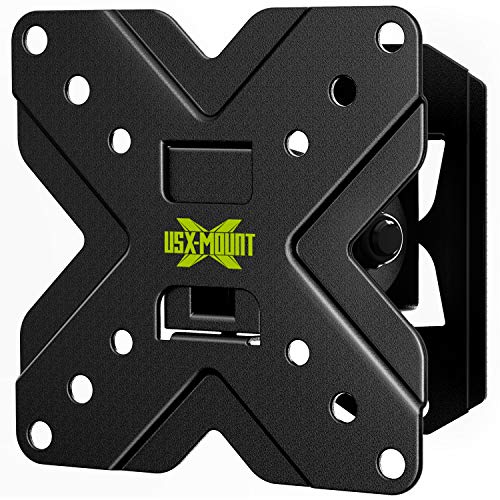
The USX MOUNT XMS002 is a small TV wall mount designed for displays ranging from 10 to 26 inches, with support for VESA patterns up to 100x100mm and a maximum weight of 22 pounds. This makes it an excellent choice for compact TVs or computer monitors in spaces like RVs, kitchens, bedrooms, dorm rooms, or home offices. Its full motion design lets you tilt the screen up or down by 30 degrees and swivel it left or right by 45 degrees, so you can easily adjust the viewing angle whether you're sitting at a desk, lying in bed, or cooking at the counter.
This mount is best suited for homeowners, apartment renters, and budget-conscious shoppers who need a reliable mounting solution without spending a lot. It's also a great pick for RV owners who want to secure a small TV for road trips or camping. The installation process is straightforward with a three-step approach and a helpful manual, allowing most people to set it up in about 20 minutes. However, note that concrete anchors are not included in the package to prevent misuse on drywall, so you'll need to contact the manufacturer if you plan to mount on concrete.
In terms of build quality, the mount features heavy-duty robot welding and industrial design, which gives it a sturdy feel despite its small size. The black finish blends well with most TVs and monitors, and the low-profile design keeps the display close to the wall for a neat appearance. While it doesn't offer cable management channels, the compact nature of the mount makes it easy to hide cables behind the TV.
One limitation to consider is that this mount is only suitable for TVs up to 26 inches and 22 pounds, so it won't work for larger screens. Additionally, it's not recommended for drywall installation alone, as the mount requires a solid wall surface like wood studs or concrete for safe mounting. Some users may find the lack of included concrete anchors inconvenient, but the manufacturer offers them upon request.
Overall, the USX MOUNT XMS002 is a practical and affordable choice for anyone looking to mount a small TV or monitor in a tight space. Its full motion adjustments, easy installation, and solid construction make it a reliable option for improving your viewing experience in RVs, small rooms, or secondary setups. If you need a budget-friendly mount for a compact display, this is a solid pick.


Pros
- Perfect black levels and infinite contrast from self-lit OLED pixels
- Outstanding gaming features with four HDMI 2.1 ports, 120Hz refresh rate, G-Sync, and FreeSync
- Intuitive Magic Remote with point-and-click navigation and built-in voice control
- Dolby Vision IQ and Filmmaker Mode provide exceptional HDR movie playback
- Wide viewing angles ensure consistent colors and contrast from any seat in the room
Cons
- Peak brightness is lower than high-end Mini-LED displays in sun-drenched rooms
- Built-in speakers lack deep bass, making an external soundbar or audio receiver advisable
- Potential risk of permanent image retention if static broadcast logos are displayed for prolonged periods
The LG C1 Series 65-Inch OLED 4K Smart TV represents a benchmark in modern television display technology. Designed with individual self-lit pixels, this television eliminates the need for a traditional LED backlight, allowing each pixel to turn completely off. It is an exceptional match for home theater enthusiasts, avid console gamers, movie collectors, and everyday streaming fans who want reference-level picture clarity in their living room, basement media room, or apartment setup.
Picture quality is where this OLED display truly shines. Because each of the 8.3 million pixels illuminates independently, the display produces perfect black levels and infinite contrast. Dark scenes in films like sci-fi thrillers or nocturnal dramas appear free of backlight bleed or blooming around bright highlights. Supported by the a9 Gen 4 AI Processor 4K, the television analyzes incoming content frame by frame to sharpen textures and preserve lifelike colors. With Dolby Vision IQ and Filmmaker Mode on board, HDR metadata dynamically adjusts to ambient room light, presenting content just as directors intended.
For gaming enthusiasts playing on PlayStation 5, Xbox Series X, or high-end PC rigs, the C1 provides an unmatched feature suite. All four HDMI ports offer full HDMI 2.1 bandwidth, delivering 4K gaming at a smooth 120Hz refresh rate. Variable Refresh Rate (VRR), Auto Low Latency Mode (ALLM), NVIDIA G-Sync compatibility, and AMD FreeSync Premium ensure tear-free visuals and ultra-low input lag. The integrated Game Optimizer dashboard lets players quickly view frame rates, toggle low latency settings, and tweak black stabilizer levels without leaving gameplay.
Everyday convenience is powered by LG webOS, which provides swift access to leading streaming platforms including Netflix, Prime Video, Disney+, Apple TV+, and YouTube. The included Magic Remote acts as a motion-controlled air mouse, making text entry and menu navigation remarkably fluid compared to standard directional pads. Voice control is baked right in with Alexa support, enabling quick hands-free adjustments, channel surfing, and smart home management. Sports fans will also appreciate the wide viewing angles, which preserve color accuracy and contrast even when watching from the far side of a crowded sectional sofa.
Build quality reflects premium craftsmanship, highlighted by an ultra-thin panel profile and clean metal accent trim. The unit supports standard VESA 300x300 mounts for clean wall installation, though cable management channels on the back also keep desktop setups tidy. In terms of limitations, OLED panels generally do not reach the scorching peak brightness levels of high-end Mini-LED screens, meaning direct sunlight from unshaded windows can produce reflections. Furthermore, while the built-in 40-watt speaker system supports Dolby Atmos processing for clear dialogue, serious cinephiles will want a dedicated soundbar or surround sound system for impactful bass.
For shoppers seeking a versatile 65-inch screen that balances cinema-grade movie playback with top-tier gaming responsiveness, the LG C1 remains one of the smartest investments in home entertainment. It excels across late-night movie viewing, weekend gaming sessions, and sports watch parties, delivering an immersive visual experience that elevates any entertainment space.
Gamers will find the LG C1 well equipped for current-generation consoles and gaming PCs. With four full-bandwidth HDMI 2.1 inputs, players do not have to swap cables between multiple consoles to enjoy 4K at 120 frames per second. Support for NVIDIA G-Sync and AMD FreeSync Premium helps eliminate screen tearing and stuttering during high-speed action titles.
The dedicated Game Optimizer menu gathers all critical performance settings into a clean overlay. Gamers can adjust genre-specific picture modes, toggle low latency modes, and check active frame rates on the fly. Near-instantaneous pixel response time keeps fast-moving visuals exceptionally crisp during fast-paced first-person shooters and racing games.
The standout attribute of the LG C1 is its self-emissive OLED panel. Unlike traditional LED-backlit televisions that rely on local dimming zones, each individual pixel controls its own light output. This architecture yields absolute blacks and prevents the gray haloing effect that often surrounds subtitles or bright objects in dark rooms.
Color reproduction is equally impressive, covering nearly the entire DCI-P3 color space for deep, saturated hues that remain accurate across varied lighting conditions. Wide viewing angles ensure that off-axis seating positions in large living rooms experience the exact same contrast and color richness as the center seat.


Pros
- Infinite contrast ratio with true inky blacks and vibrant HDR color performance
- Top-tier gaming suite featuring 120Hz, G-Sync, FreeSync Premium, and ultra-low input lag
- Intuitive webOS 23 interface with broad app support and hands-free voice control
- Wide viewing angles ensure colors and contrast stay consistent from any seat in the room
- Extra peace of mind provided by the included 2-year CPS protection plan
Cons
- OLED panels generally reach lower peak brightness levels than premium Mini-LED TVs in sun-drenched rooms
- Built-in speakers lack deep low-end bass, making a soundbar upgrade recommended for full impact
- Included accessory cable is HDMI 2.0 rather than full bandwidth HDMI 2.1
The LG 65-Inch C3 OLED Smart TV bundle combines one of the most acclaimed OLED evo displays on the market with added accessories and extended warranty protection. Built around self-lit pixel technology, this television eliminates traditional LED backlights to produce true, zero-nit black levels and infinite contrast. Paired with LG's advanced α9 AI Processor Gen6, the panel dynamically fine-tunes color, sharpness, and brightness scene by scene. Whether you are outfitting a dedicated basement home theater, upgrading your living room setup, or building an elite gaming station, this 65-inch display delivers the premium visual benchmark that home cinema enthusiasts and gamers seek.
Real-world picture performance stands out across all types of content, from late-night streaming to Sunday football. Because each individual pixel can turn off completely, dark scenes in movies appear rich and detailed without the annoying blooming or backlight bleed common to standard LED displays. Color volume and HDR reproduction remain vibrant, supporting Dolby Vision for theater-like contrast and nuanced highlights. Viewing angles are virtually flawless, ensuring family members seated on the edges of the sectional sofa experience the same punchy colors and crisp contrast as someone sitting dead center. The α9 processor handles lower-resolution cable broadcasts and sports streams effortlessly, applying intelligent upscaling and smooth motion processing to eliminate judder during fast-moving athletic plays.
For gamers playing on modern consoles like the PlayStation 5 or Xbox Series X, or high-end gaming PCs, the LG C3 remains an industry powerhouse. The native 120Hz refresh rate teams up with an instantaneous response time of under 0.1 milliseconds to produce ultra-fluid movement free from ghosting. With official support for NVIDIA G-Sync, AMD FreeSync Premium, and Variable Refresh Rate (VRR), screen tearing is effectively eliminated during high-speed action. Auto Low Latency Mode (ALLM) automatically detects connected gaming consoles and switches to optimal low-latency picture presets so your button presses register instantly.
In terms of smart connectivity and build quality, the C3 showcases sleek craftsmanship with razor-thin bezels and a remarkably slim profile. Running on webOS 23, the interface organizes streaming favorites like Netflix, Disney+, Prime Video, and YouTube into intuitive quick cards, responding quickly to voice commands through built-in Amazon Alexa, Apple HomeKit, or the Magic Remote. On the audio side, built-in speakers provide clear dialogue and virtualized surround sound via Dolby Atmos and AI Sound Pro. While everyday sitcoms and news broadcasts sound articulate, home theater enthusiasts will likely want to pair the TV with an eARC-compatible soundbar or surround sound system to get the deep, rumbling bass that matches the screen's visual grandeur.
Practical living room placement should factor in lighting conditions. While OLED evo technology delivers higher brightness than older OLED generations, high-end Mini-LED displays can still push higher peak lumens in sun-drenched rooms with open curtains. For dark to moderately lit living spaces and nighttime family movie viewings, however, the picture quality is hard to beat. The bundled 24-month CPS warranty adds valuable long-term peace of mind, making this comprehensive bundle an exceptional investment for movie lovers, streamers, and competitive gamers looking for a top-tier 65-inch 4K television.
Console and PC gamers will find that the LG C3 is purpose-built for fast-paced interactive entertainment. The 120Hz panel ensures silky smooth motion across demanding action titles, racing sims, and first-person shooters. With response times clocking in under 0.1 milliseconds, input lag is virtually nonexistent, translating your controller inputs directly to the screen with zero perceived delay.
Support for both NVIDIA G-Sync and AMD FreeSync Premium guarantees compatibility whether you plug in a gaming laptop, a custom desktop rig, or a current-generation console. The LG Game Optimizer dashboard gives you quick access to frame rate counters, black stabilizer adjustments, and VRR settings on the fly without exiting your gameplay session.
At the heart of the LG C3 is the OLED evo panel, which provides independent pixel-level illumination. By avoiding the light-diffusing backlight arrays of regular LED screens, the TV produces perfect blacks, meaning dark space scenes or shadowy movie sequences display zero haloing around bright stars and subtitles.
High Dynamic Range handling is elevated by Dolby Vision and LG's Brightness Booster algorithms. HDR highlights glisten against dark backdrops, while the α9 AI Processor Gen6 intelligently analyzes faces, foreground objects, and backgrounds to add depth and natural texture to every frame.
The Mechanics, Engineering, and Real-World Behavior of OLED Televisions
At its core, how does oled tv work through direct electroluminescence, where organic semiconductor films generate light when energized by an electrical current. Unlike standard liquid crystal displays that require a separate continuous LED backlighting unit, every single pixel in an OLED panel functions as its own light source. This self-emissive architecture allows the television to turn individual pixels completely off, achieving absolute black levels with zero light leakage. When millions of self-lit diodes operate simultaneously across a 4K resolution matrix, the screen produces unmatched dynamic range, lifelike color depth, and viewing angles that remain stable from almost any seated position.
The Physics of Self-Emissive Pixels and Organic Layers
An OLED panel consists of multiple microscopic thin-film layers sandwiched between two conductive electrodes. An anode injects positive charges or holes, while a cathode injects negative electrons into the emissive organic layer. As these opposing charges meet within the specialized organic material, they bind together to create energetic states known as excitons. When these excitons relax into a lower energy state, they release that energy directly as visible light photons without requiring any secondary illumination source.
Because no backlight unit is needed behind the display, OLED panels can be manufactured with exceptionally thin physical profiles. A glass substrate supports an active matrix thin-film transistor layer, which acts as the electronic roadway controlling the precise electrical voltage delivered to each subpixel. By modulating this current with microsecond speed, the television processor dictates the exact brightness of every individual dot on the screen. Shutting off the current entirely drops the luminance of that specific pixel to zero nits, creating the inky black backdrop that defines reference home cinema picture quality.
Subpixel Architectures: Traditional WOLED vs QD-OLED vs Micro Lens Array
Manufacturers implement self-emissive technology using distinctly different subpixel engineering designs. Traditional White OLED panels, pioneered by LG Display and utilized across popular screens like the LG C1 Series and Sony A90K, stack multiple blue, yellow, and red organic layers to produce a unified white light emission. This white light then passes through colored microscopic filters to create red, green, and blue subpixels, along with an uncolored clear subpixel added to boost overall white brightness. While this WRGB structure delivers outstanding efficiency, the white subpixel can dilute color saturation slightly at peak brightness levels in the brightest highlights.
Quantum Dot OLED technology takes a fundamentally different engineering path by utilizing an array of pure blue organic emitters. Instead of passing white light through subtractive color filters, QD-OLED channels blue light through printed layers of semiconductor nanocrystals known as quantum dots. These quantum dots absorb the high-energy blue photons and convert them into pure red and green light with remarkable spectral purity. Displays utilizing this architecture, including modern Samsung OLED lineups, preserve wide color volume across high luminance thresholds, covering extensive portions of the Rec. 2020 color spectrum.
Micro Lens Array engineering, often referred to as META technology, represents another major leap in traditional WOLED efficiency. Microscopic convex lenses numbering in the billions are layered directly over the organic emissive stack to redirect light that would otherwise bounce internally and be lost as heat. By refocusing this trapped luminescence forward toward the viewer, MLA panels achieve substantially higher peak luminance without consuming additional electrical power or increasing thermal stress. This hardware advancement allows modern WOLED displays to rival the highlight punch of premium QD-OLED panels while preserving the proven longevity of WRGB architectures.
Understanding Brightness Limits: Peak Highlights and Automatic Brightness Limiting
High dynamic range performance on an OLED panel operates under different physical constraints than backlit LED televisions. When displaying small, concentrated specular highlights such as glistening reflections, streetlights, or starfields across two percent or ten percent screen windows, an OLED can output intense peak luminance. These localized bursts of bright light stand out dramatically against the surrounding pure black pixels, creating a high perceived contrast ratio. The human visual system interprets this vast intrascene contrast as exceptional clarity and visual depth.
Full-screen sustained brightness behaves differently due to thermal safeguards and power supply restrictions. An integrated hardware protection algorithm known as the Automatic Brightness Limiter monitors the average picture level of incoming video signals in real time. If a scene contains broad expanses of bright white, such as a televised hockey match or a sun-drenched snowstorm, the limiter automatically dims the overall panel output to prevent overheating. While this prevents thermal damage to the delicate organic materials, viewers transitioning from high-output Mini-LED panels designed for sports may notice that full-field white screens look dimmer than expected.
Ambient room lighting also influences how viewers perceive contrast and brightness on different panel types. In a dark home theater environment, even moderate peak brightness creates an intensely cinematic HDR presentation because the eye adjusts to the zero-nit black floor. In sun-drenched living rooms, however, unshaded windows can compete with the panel luminance and expose ambient reflections. Newer OLED models address this challenge by incorporating specialized anti-reflective surface coatings and higher-efficiency panel stacks that sustain stronger output across variable lighting conditions.
Image Processing Engines and Real-Time Picture Upscaling
Raw panel hardware requires sophisticated processing power to translate digital source feeds into clean visual imagery. Advanced chipsets, such as the Sony Cognitive Processor XR and the LG Alpha series, analyze scene elements simultaneously to optimize color grading, depth mapping, and edge definition. These processors cross-reference objects against internal visual databases to recreate realistic textures and preserve facial tones. Without intelligent video processing, high-resolution 4K panels would simply magnify compression artifacts and visual noise from everyday cable feeds.
Near-black gradation handling represents one of the most demanding tasks for any emissive television processor. Because OLED pixels transition rapidly from total darkness to active illumination, poorly processed signals can exhibit digital macroblocking, posterization, or chrominance overshoot. Leading processing engines utilize multi-step temporal noise reduction and smooth gradation filters to smooth out 8-bit color banding in dark gradients. This processing accuracy ensures that shadowy scenes in cinematic films reveal subtle background details rather than harsh digital steps or crushed blacks.
Motion handling on OLED displays presents a unique visual characteristic caused by instantaneous pixel response times. Because organic diodes change state in under 0.1 milliseconds, there is virtually zero ghosting or pixel trail behind moving objects. However, low-frame-rate content such as 24-frame-per-second movies can exhibit a noticeable stutter effect during wide horizontal camera pans when displayed via sample-and-hold technology. High-end processors address this by offering subtle motion interpolation and de-judder controls that stabilize camera pans without introducing an unnatural soap opera effect.
Burn-In Protection and Panel Maintenance Routines
Concerns surrounding permanent image retention, commonly referred to as burn-in, remain a frequent discussion point for prospective OLED buyers. Burn-in occurs when static visual elements, such as news channel tickers, video game heads-up displays, or scoreboard graphics, wear down specific organic subpixels unevenly over thousands of cumulative hours. Because organic compounds degrade gradually with electrical use, subpixels driven continuously at maximum brightness lose peak output faster than surrounding areas. When this happens, a faint ghost of that static image can remain visible across solid backgrounds.
Modern OLED manufacturers combat differential subpixel wear through multi-tiered automated protection systems. Pixel shifting mechanisms imperceptibly move the entire onscreen image by several pixels over time to prevent static edges from resting permanently on identical diodes. Logo luminance limiters detect stationary graphic banners and reduce the voltage applied to those specific zones without dimming the remainder of the action. Premium displays also integrate dedicated aluminum heatsinks bonded to the rear of the panel glass, drawing away excess heat to keep operational temperatures low.
Internal compensation cycles provide another essential layer of defense against permanent degradation. When an OLED television is placed into standby mode after four or more hours of cumulative viewing, it automatically executes a short compensation cycle that equalizes voltage across the subpixel matrix. Occasional deep pixel cleaning cycles run automatically after several hundred hours of operation to maintain uniformity across the entire surface. Owners should always leave their television plugged into an active wall outlet so these critical background cycles can run undisturbed during standby periods.
Mother Glass Substrate Cuts and Commercial Screen Sizing Realities
Shoppers searching for consumer OLED televisions frequently wonder why sizes like 40-inch, 50-inch, 70-inch, or 75-inch are absent from retail shelves. The availability of screen sizes is dictated by mother glass substrates manufactured in Generation 8.5 and Generation 10.5 glass fabrication facilities. Cutting mother glass requires precise mathematical partitioning to minimize unusable scrap material and maintain manufacturing efficiency. As a result, consumer OLED TVs are standardized exclusively in 42-inch, 48-inch, 55-inch, 65-inch, 77-inch, 83-inch, and 97-inch diagonal form factors.
Consumers migrating from older LCD setups must map their existing room dimensions to these standard OLED increments. A viewer seeking a replacement for an older 50-inch television should look toward either a compact 48-inch model like the Sony A90K or step up to a mainstream 55-inch display. Similarly, buyers accustomed to standard 75-inch living room screens will find that a 77-inch OLED panel serves as the ideal direct upgrade. Those planning dedicated theater spaces can even explore large-format OLED cinema screens to capture an expansive field of view with reference-grade contrast.
Desktop monitor applications represent another distinct category within the self-emissive display ecosystem. While compact 32-inch OLED panels have entered the market, these models are produced and marketed strictly as computer gaming monitors rather than consumer televisions. They feature specialized display aspect ratios, monitor-specific connectivity such as DisplayPort, and desktop firmware configurations. Buyers seeking a compact television for bedrooms, RV installations, or dual-purpose office setups should focus their search on 42-inch or 48-inch commercial TV options instead.
High-Speed Connectivity and Next-Generation Gaming Architecture
Modern gaming consoles and high-end personal computer graphics cards demand exceptional display bandwidth that OLED panels are uniquely equipped to handle. Full-bandwidth HDMI 2.1 ports providing up to 48Gbps throughput allow televisions to transmit uncompressed 4K video signals at 120Hz or 144Hz refresh rates with 10-bit HDR color. This rapid transmission rate combines with sub-millisecond pixel response times to deliver ultra-responsive gameplay with minimal motion blur. Fast-paced competitive titles benefit immediately from input latency measurements that consistently drop below ten milliseconds in dedicated Game Mode.
Variable Refresh Rate support synchronizes the display refresh rate dynamically with the rendering speed of the connected gaming system. Prominent VRR implementations, including HDMI Forum VRR, Nvidia G-Sync Compatible certification, and AMD FreeSync Premium, eliminate screen tearing and frame pacing judder. Displays such as the LG C1 and LG C3 include specialized on-screen game dashboards that allow players to monitor real-time frame rates and adjust shadow detail on the fly. Handheld consoles can also tap into big-screen performance through dockable controllers like the CRKD Nitro Deck, routing high-definition visuals smoothly to the panel.
Audio passthrough requires careful port planning when integrating soundbars and multichannel AV receivers into a high-performance setup. Televisions featuring enhanced Audio Return Channel functionality often share this eARC protocol on one of their high-bandwidth HDMI 2.1 inputs. If a display provides only two full-speed 48Gbps ports, connecting an eARC audio system leaves only one high-bandwidth port available for a modern gaming console. Enthusiasts running multiple next-generation consoles alongside high-end sound hardware should verify whether their chosen display includes four dedicated HDMI 2.1 ports to avoid manual cable swapping.
Room Lighting Environments, Reflection Handling, and Mounting Safety
Panel surface treatments play a vital role in preserving perceived image quality across diverse living room lighting environments. Traditional WOLED panels generally employ high-gloss or semi-gloss anti-reflective filters that disperse direct reflections while maintaining deep black levels under ambient light. In contrast, first-generation QD-OLED displays lack an internal polarizing layer, which can cause black levels to elevate slightly and take on a subtle magenta tint in brightly illuminated rooms. Choosing the right panel architecture therefore depends heavily on whether viewing occurs primarily in dark cinema conditions or sunlit living spaces.
Physical installation demands careful handling due to the delicate, ultra-slim glass construction of modern OLED televisions. Because the panel chassis can measure only a fraction of an inch thick at its edges, applying uneven pressure during unboxing or lifting can crack the internal glass substrate. Display manufacturers consistently recommend a two-person lift, supporting the screen from the reinforced bottom housing rather than grasping the thin upper corners. Ensuring that wall brackets align accurately with standard VESA mounting patterns prevents structural twisting and guarantees secure mechanical support.
Compact screens and secondary displays require specialized mounting hardware that accommodates unique spatial limitations. Articulating brackets like the USX MOUNT small TV monitor bracket provide flexible tilt and swivel adjustments, making them suitable for smaller displays in bedrooms, compact studios, or mobile setups. Regardless of the screen size, securing mounting brackets into solid wall studs or rated concrete anchors remains essential for safety. Proper cable management also ensures that heavy high-speed HDMI cables do not pull downward on recessed input boards, protecting sensitive internal connectors over years of use.
Summary of Operational Realities for Future Display Owners
Owning an OLED television delivers an extraordinary visual experience defined by absolute black levels, boundless contrast, and rapid response times. Realizing the full potential of this technology requires matching panel architecture to your viewing environment and maintaining sensible usage habits. Keeping the display connected to standby power ensures automated maintenance cycles run smoothly, while selecting the proper commercial screen size creates comfortable viewing distances. By understanding how organic self-emissive diodes function, viewers can enjoy reference-grade visual performance across films, streaming series, and next-generation video games for many years.


Write Your Review
No reviews yet. Be the first to share your experience!