

A bedroom television can feel awkward when its stand crowds a walkway, sits too high for comfortable viewing, or leaves devices and cords scattered around the room. A useful starting point is to match the furniture to the TV’s actual footprint and the bedroom layout, rather than relying on the screen’s diagonal size alone. That distinction matters because the advertised screen size doesn’t tell you where the TV’s feet land or how much room a stand needs.
This guide explains how to choose the right tv stand for your bedroom with practical checks for width, height, storage, and placement. The available options include a freestanding console with open shelves and a compact corner stand with a VESA mount, so the better configuration depends on your TV, floor plan, and devices. For more compact-screen furniture ideas, see our compact TV stand sizing guide, and browse TV stands with vertical storage if you need a different storage arrangement.
Top Products
Pros
- Compact 45-inch footprint easily fits smaller bedrooms, dorms, and studio apartments
- Open shelf design allows free ventilation for gaming consoles and hassle-free HDMI cable runs
- Eight independent leveling feet eliminate screen wobble on uneven flooring
- Rustic industrial grey styling pairs cleanly with modern home entertainment equipment
Cons
- Width is limited to TVs measuring 50 inches or smaller, ruling out large 55-inch and 65-inch panels
- Completely open design does not conceal power cords or clutter behind cabinet doors
- Slim 11.8-inch depth may feel tight for oversized audio receivers or bulky subwoofers
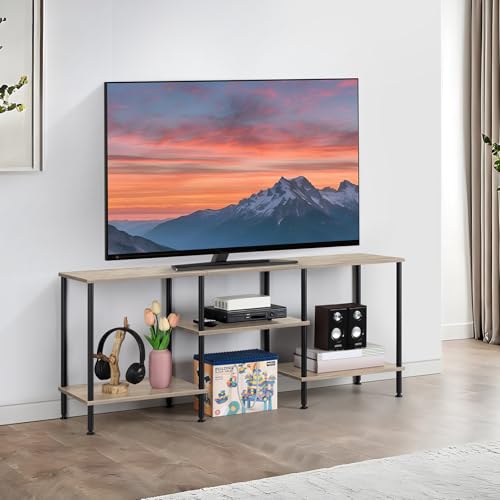
The Luplom 50-Inch Rustic Grey TV Stand is a specialized low-profile entertainment console engineered to support modern flat-screen televisions and home media hardware. Designed primarily for compact spaces, this media center measures 45 inches wide, 11.8 inches deep, and 19 inches tall, making it a natural fit for homeowners, apartment renters, college students, and bedroom TV buyers who want a tidy entertainment hub without sacrificing square footage.
When planning a home viewing setup, display positioning and screen stability play a big role in long-term enjoyment. This console easily holds flat-panel 4K LED, QLED, and OLED displays up to 50 inches, maintaining a steady foundation with a 100-pound maximum load limit. At 19 inches high, it places screens at an ergonomic eye level whether you are binge-watching shows from bed, hosting weekend sports watch parties from the couch, or streaming casual workout videos. The lower profile helps minimize neck fatigue and preserves comfortable viewing angles across compact rooms.
For gamers and cord-cutters running multiple devices, equipment storage and heat dissipation are critical. The stand features three wide open tiers that provide plenty of room for high-heat devices like the PlayStation 5, Xbox Series X, or Nintendo Switch, alongside compact 4K streaming boxes like Roku, Apple TV, or Fire TV. Because there are no enclosed rear panels or glass doors, ambient airflow moves freely around delicate electronic components, helping to prevent hardware throttling during long gaming sessions. The open architecture also allows for simple cable management, letting you connect HDMI cables, power cords, and soundbar optical leads without squeezing through tight grommets.
Construction pairs rigid black steel framing with rustic grey finished shelving. The dual-material build provides substantial torsional rigidity, while eight adjustable screw-in feet beneath the base allow you to compensate for uneven hardwood, tile, or thick area rugs. This level of balance keeps your flat panel secure, reducing the risk of accidental tipping if children or pets bump the furniture during active movie nights or living room gatherings.
While this console provides solid utility for compact spaces, buyers with larger home theater systems should consider its dimensional boundaries. It cannot comfortably host TVs beyond 50 inches, and the 11.8-inch shelf depth may not accommodate extra-deep legacy surround sound receivers. However, for anyone setting up a secondary bedroom screen, an apartment gaming station, or a neat streaming nook on a budget, this entertainment center delivers dependable support, convenient component storage, and understated modern style.
Assembly of the Luplom TV console is straightforward, typically requiring roughly 20 minutes thanks to clearly labeled hardware and an included step-by-step installation guide. The lightweight 16.4-pound overall frame makes positioning and shifting the stand easy for a single person during room rearranging.
The eight adjustable feet at the base are particularly useful for bedroom corners, basement entertainment rooms, and older apartments with slightly sloping floors. Simply twist each foot pad until the top display platform is entirely level before setting your television and media peripherals into place.
The three-tier layout allows for functional hardware separation across your entire streaming and audio setup. The top deck holds your flat-panel television or compact soundbar, while the middle and lower shelves comfortably hold gaming consoles, streaming hubs, Blu-ray players, and game controllers.
Thanks to the fully open perimeter, routing HDMI 2.1 cables, Ethernet leads, and power cables between devices and wall outlets requires minimal effort. Gamers also benefit from maximum natural cooling, preventing unnecessary heat buildup around high-performance consoles.
Pros
- Ultra-compact footprint fits easily into tight corners and small rooms
- Integrated universal TV mount eliminates wall drilling in rental properties
- Three open shelves provide practical storage for streaming players and consoles
- Adjustable rubber feet maintain balance on uneven floors
Cons
- Restricted to smaller displays up to 42 inches in size
- Open frame requires external cable ties to conceal dangling wires
- Shelves have compact dimensions best suited for slim electronic devices
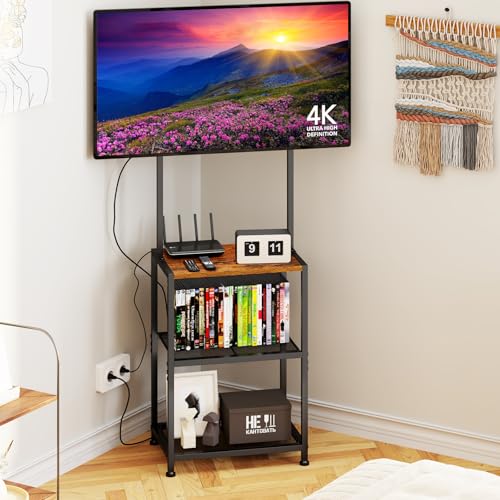
The Cottage Charm Universal Small Corner TV Stand is a floor-standing media unit featuring an integrated display mount and three open storage tiers. Designed specifically for tight living spaces, it serves as a self-contained media hub that frees up tabletop space while avoiding the permanence of wall drilling. Apartment renters, college students in dorms, and budget-conscious homeowners looking to add a reliable television display to a master bedroom, guest suite, or personal home gym will find its footprint especially practical.
In everyday viewing scenarios, the stand supports 14-inch to 42-inch displays equipped with standard VESA mounting patterns. Standing 48 inches tall, the bracket raises smaller screens like popular 32-inch and 40-inch smart TVs to an ergonomic height for watching movies or sports from a bed, desk, or lounge chair. Because it maintains a steady upright position, viewers can position their screen to minimize window glare and maintain optimal color contrast and picture clarity in rooms with limited layout flexibility.
Build quality centers on a rigid alloy steel frame paired with rustic brown wood composite shelves. The structural uprights support the weight of modern lightweight LED and QLED panels without unwanted wobbling. Underneath the base, individual rubber feet twist to compensate for uneven floorboards or deep pile carpet, ensuring that your screen stays level. The three stacked shelves easily hold compact devices such as streaming sticks, 4K media streamers, compact soundbars, or gaming consoles like the Nintendo Switch.
Assembly and day-to-day handling are straightforward, requiring only basic mechanical fasteners included in the package. Because the stand uses an open-frame design rather than an enclosed cabinet, routing power cords, HDMI connections, and audio cables between your devices and the television is direct and simple. Adding a few hook-and-loop straps along the rear steel post keeps all cabling neat and tucked away from view.
As a practical limitation, this unit is engineered strictly for small to mid-sized screens up to 42 inches and will not accommodate larger living room screens or bulky vintage audio receivers. For anyone looking to set up a secondary television for binge-watching shows, streaming workouts, or late-night gaming in a compact room, this stand provides an affordable, sturdy, and clean-looking solution.
With overall dimensions of roughly 17 inches wide by 12 inches deep and 48 inches high, this floor stand fits comfortably into sharp 90-degree room corners or alongside dressers. Before installation, confirm that your television utilizes a compatible VESA mounting pattern and falls between 14 and 42 inches in screen size.
During assembly, adjust each of the four bottom rubber feet individually after setting the stand in its final room position. This ensures the frame is entirely stable before attaching your TV. Keeping your heaviest media device on the bottom tier helps anchor the center of gravity for maximum everyday stability.
How to Match a Bedroom TV Stand to the Room
Choosing a bedroom stand is a small-space planning decision as much as a furniture decision. The unit needs to support the television, fit the available floor area, and leave enough usable space for the bedroom’s normal routines. A stand that looks compact in a product listing can still obstruct a closet door or narrow the route around a bed.
Measure the TV and its feet, not just the screen diagonal
A screen’s advertised diagonal measurement runs from one corner of the display to the opposite corner. It is not the same as the television’s outside width, and it doesn’t describe the distance between its feet. Measure the TV from its leftmost to rightmost edge, then measure the outer span of the feet if the set uses legs near the edges.
The top surface should support the complete base footprint, with the feet fully resting on the stand rather than hanging over an edge. A few inches of extra width on each side can provide a more balanced appearance and some placement tolerance, but it cannot compensate for feet that extend beyond the furniture. Check the television manual for its base arrangement and installation guidance before deciding that a stand is wide enough.
The Luplom 50 Inch TV Stand for Bedroom Rustic Grey TV measures 45 inches wide, 11.8 inches deep, and 19 inches high. Its product information says it is designed for TVs under 50 inches and lists a maximum weight capacity of 100 pounds. Treat the screen-size description as a starting point, then verify your television’s actual width, foot spacing, and weight against the stand’s listed dimensions and capacity.
That check is especially important for bedroom TVs with wide-set legs. A television may have a diagonal measurement that sounds compatible but still have feet too far apart for the top. A center pedestal may occupy less width, though the pedestal’s full base still needs a stable, unobstructed surface. Don’t place a television so its support points sit partly off the edge.
Choose height for bed viewing, not a generic room rule
Viewing height depends on the bed, mattress, pillows, and the position you usually watch from. A common seated-viewing reference places the center of the screen near seated eye level, often around 42 inches from the floor, but that figure is not a universal bedroom target. A viewer propped up in bed may have a different comfortable sightline than someone sitting upright on a chair.
To assess the setup, sit or recline in the position you use most often and look toward the planned screen location. Consider the screen center rather than only the bottom edge, and avoid a placement that makes you hold your chin up for extended viewing. If the TV will be watched from multiple positions, prioritize the most frequent one and check whether a modest change in stand height improves the angle.
The Luplom unit’s listed height is 19 inches, but that measurement alone cannot determine whether the display will sit comfortably for your bed. Add the television’s base and screen dimensions to the stand height to estimate the screen center. The corner stand has a floor stand with a VESA mount, so its screen position may differ from a TV resting directly on a console; confirm the mount’s adjustment range and your TV’s VESA pattern before purchase.
Room layout also affects usable height and viewing angle. A stand placed beside a tall bed frame or at an angle in a corner may position the screen differently relative to the viewer. Mark the approximate screen center with removable tape before moving furniture, then check the sightline from the bed. This simple planning step can reveal a height problem before assembly.
Use the bedroom footprint to choose a stand shape
A straight console usually works best when it can sit against a wall without blocking circulation. Measure the intended location, including nearby drawers, doors, and the bed’s walking clearance, rather than measuring only the wall section. Include the stand’s depth in that check: the Luplom is listed at 11.8 inches deep, a useful dimension to compare with the room’s available floor space.
A corner arrangement can make sense when the screen needs to face the bed from an angled position or when a wall is already occupied. The Cottage Charm 14 Inch to 42 Inch Small Corner TV Stand is described as a compact floor stand for small spaces and corners. Its product information lists compatibility with 14-inch to 42-inch TVs that have a VESA mount, with a note to verify rack dimensions if the television lacks one.
Don’t assume every bedroom corner has enough clear space for a corner stand. Baseboards, outlets, window trim, closet doors, and the screen’s viewing angle can all affect placement. Measure the stand’s footprint and compare it with the actual corner geometry, then make sure the television can face the intended viewing position without creating a snag point in the walking path.
Renters who can’t drill into walls may prefer a freestanding floor unit to a wall-mounted console. These two listed options are floor-standing designs, so they don’t require the TV to be mounted to a wall as part of the stand configuration. Still, use the assembly and safety instructions supplied with the furniture, and consider suitable anti-tip hardware where the manufacturer provides or recommends it.
Match open storage to the devices you actually keep
Bedroom storage needs vary: one setup may hold only a streaming box, while another needs room for a game console, disc player, or small audio device. Both listed stands have three open storage shelves, which can keep commonly used accessories accessible and avoid hiding them behind cabinet doors. The open arrangement also leaves devices visible, so it may not suit someone who wants to conceal every component.
The Luplom description identifies its shelves as suitable for items such as DVD players, game consoles, and audio equipment, but it does not provide individual shelf dimensions or shelf load limits. Measure each device, including plugs and cable bends, before assuming it will fit. The Cottage Charm description likewise identifies three open shelves for set-top boxes, remotes, books, and decorations, without listing compartment measurements.
For a game console or receiver, compare the device’s height, width, and depth with the shelf opening and available clearance. Leave the device’s required ventilation space clear and follow its manufacturer’s placement guidance. Open shelving avoids enclosing the component behind a solid door, but it does not establish a specific cooling performance or guarantee that a device will remain within its recommended operating conditions.
Open shelves also make everyday items easy to reach, which can be useful when a remote or headphones tend to disappear into bedding. The tradeoff is visible clutter: adapters, controllers, and cables may remain in view. Group small accessories in a container that fits without obstructing vents, and avoid stacking equipment in a way that blocks access or airflow.
Separate weight capacity from shelf capacity
Weight limits apply to specific parts of furniture, so a stated maximum for the whole stand or top should not be assumed to cover every shelf equally. The Luplom listing gives a maximum capacity of 100 pounds, but does not state individual open-shelf limits. The Cottage Charm information describes a sturdy metal-and-wood structure but supplies no numeric weight rating in the provided details.
Compare the television’s weight with the rating for the surface that will carry it, using the stand manufacturer’s instructions to interpret the rating. Then account for other items placed on that same surface rather than treating the full capacity as available to the TV alone. If a product does not state the relevant load limit, seek clarification from the seller or manufacturer instead of estimating it from appearance.
Distribute stored items sensibly and keep heavier components on shelves that the manufacturer identifies as suitable for their load. A shelf can look substantial without having a published capacity, and an overall frame description does not establish the limit of each panel. Stop using a unit if a surface visibly bows, hardware loosens, or the frame becomes unstable, and consult the product instructions before attempting a repair.
Neither product’s supplied details specify center support legs, anti-tip hardware, or formal stability certifications. That absence does not prove a feature is missing, but buyers should check the complete listing and assembly documentation. In a bedroom with children or pets, use manufacturer-recommended anti-tip hardware when available, and don’t treat an open-frame appearance or adjustable feet as a substitute for anchoring guidance.
Plan cords and power access before assembly
The supplied specifications do not list rear cable grommets or a dedicated cord-routing channel for either stand. Plan for that limitation if the TV and accessories will sit close to a wall. Check the outlet location, device cable lengths, and plug shapes before positioning the unit, so cords are not pinched between the frame and the wall.
Route low-voltage signal cables and power cords according to their manufacturers’ instructions, keeping connections accessible for maintenance. Avoid overloading an outlet or power strip, and don’t run household power cords through improvised openings or in ways that can damage the insulation. If you need an in-wall power solution, use a properly rated product and qualified installation where appropriate.
Open shelving can make it easier to see which cable belongs to which device, but it can also leave loose cords visible. Short cable ties or reusable organizers can help gather slack without crushing or sharply bending cables. Keep power adapters from blocking a device’s ventilation area, and leave enough slack to disconnect equipment without pulling the stand or television.
Bedroom placement can make access especially important because a stand may sit close to a bed, dresser, or wall outlet. Confirm that you can reach the plugs without moving a loaded unit. If the planned route crosses a walking path, rearrange the equipment or use an appropriate cable-management product rather than leaving a loose cord where someone could catch a foot.
Compare construction and assembly details carefully
The Luplom description identifies a combination of metal and wood materials, with a metal frame and wooden parts. It also lists eight adjustable support feet and says the package includes an installation manual and accessories. The Cottage Charm description likewise states that it combines metal and wood and has adjustable rubber feet intended to help accommodate uneven floors.
Those details offer a more useful comparison than assuming that a product’s finish reveals its exact material grade. The supplied information does not identify solid hardwood, a particular engineered-wood core, or a quantified finish durability rating. Buyers who care about panel composition, cleaning restrictions, or long-term finish care should consult the full manufacturer information rather than treating the general word “wood” as a precise specification.
Both products are described as straightforward to assemble, but the supplied details don’t establish an independent assembly time or guarantee a particular difficulty level. Read the manual before beginning, lay out parts on a protected surface, and confirm each panel and fastener against the instructions. Tighten hardware as directed, without forcing a misaligned connection that could damage a panel or leave the frame racked.
Adjustable feet can help the base sit more evenly on a floor, but they don’t increase the stand’s rated load or correct an assembly error. Check the unit for rocking after assembly and again after moving it into place. Follow the manufacturer’s guidance for leveling, floor protection, and any wall attachment, especially if the TV’s position or room traffic could make the furniture easier to bump.
Make the choice from the room outward
Start with the bedroom’s usable footprint and the location from which the TV will be watched. Then verify the television’s physical width, foot spacing, weight, and mount pattern, rather than relying on the diagonal screen label. This order prevents a visually appealing stand from becoming a poor match for the room or the TV base.
The Luplom option may suit a buyer who wants a 45-inch-wide, 19-inch-high console with three open shelves and a listed 100-pound maximum capacity. Its listed compatibility is for TVs under 50 inches, but actual base dimensions and weight still need checking. The Cottage Charm corner design may suit a smaller TV arrangement where corner placement matters, provided the set is within its stated screen range and VESA requirements are met.
Neither description supplies every detail a buyer might want, including individual shelf measurements, shelf load ratings, or specified cable openings. Treat those unknowns as items to verify, not as features to assume. A stand with the right overall shape can still be unsuitable if a device cannot fit safely, the TV feet exceed the top, or the cords cannot reach their connections cleanly.
For additional compact-space context, this media furniture placement guide covers another type of TV stand layout, though its fireplace feature may not be relevant to a bedroom setup. Use any related design ideas only when they match your room and equipment. The deciding check remains straightforward: confirm the stand’s footprint, TV support points, viewing position, storage needs, and manufacturer safety guidance before ordering.
A bedroom stand is a sound choice when the TV sits fully supported, the screen is comfortable to view from bed, and the furniture leaves the room usable. Verify missing specifications with the manufacturer, especially shelf limits and cable-routing details. Then assemble and position the stand according to its instructions, and use recommended safety hardware where applicable.


Write Your Review
No reviews yet. Be the first to share your experience!