
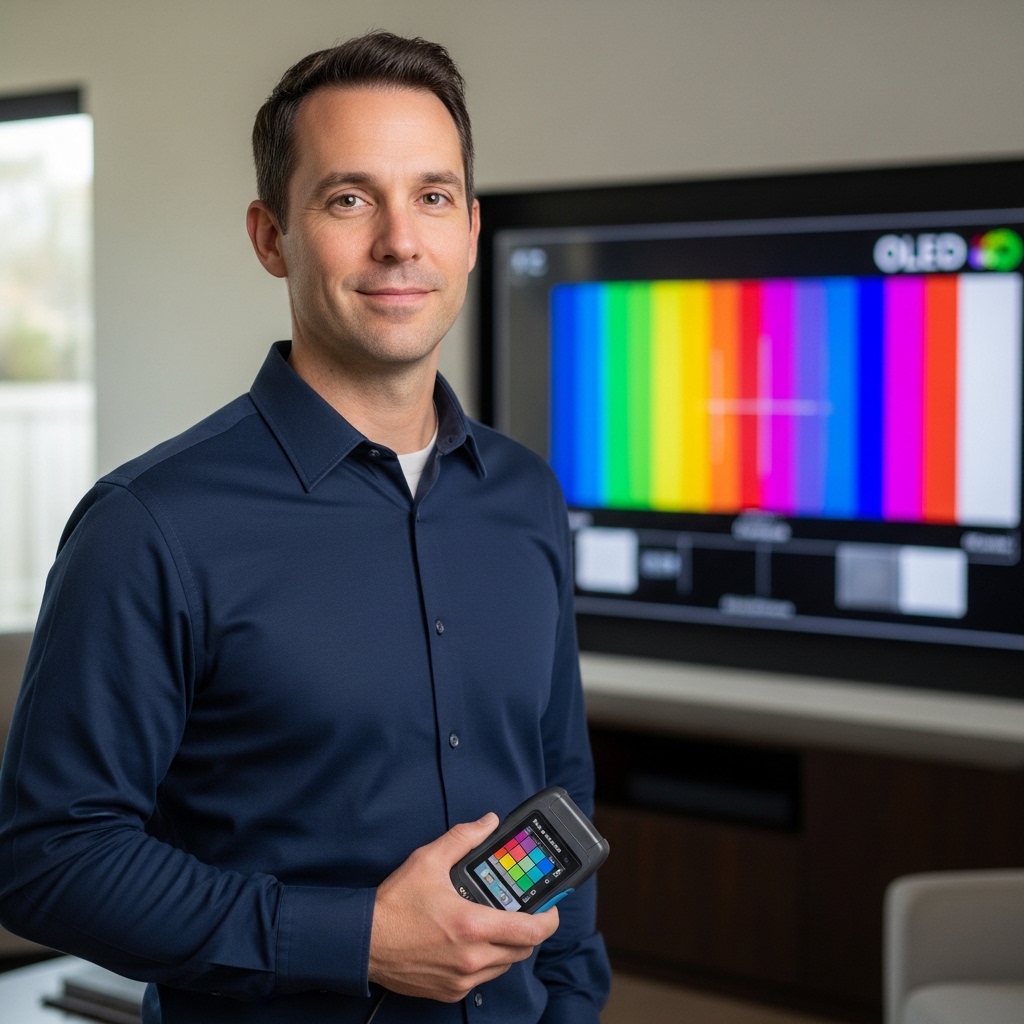

Ultra-high-definition display panels transformed home theater expectations over the past decade, sparking widespread curiosity about when was 8k tv released to consumer living rooms. Sharp unveiled the earliest commercial 8K monitor in Japan in 2015, but mass-market consumer models from mainstream manufacturers arrived globally in late 2018 and 2019. These early sets introduced 7680×4320 resolution, packing over thirty-three million pixels into massive screens to create remarkably dense imagery. While buyers initially marvelled at the sheer pixel count, the early adoption cycle quickly highlighted the sharp contrast between ultra-dense hardware and everyday broadcast signals.
Early adopters often weighed the substantial cost premium against the absence of native ultra-high-definition media, turning attention toward how well internal processors could elevate existing 4K and 1080p feeds. That reality caused many viewers to cross-shop emerging flagships against budget 75-inch displays that offered expansive viewing angles without requiring bleeding-edge processing budgets. Modern entertainment systems now pair these high-resolution panels with intelligent machine-learning processors and ambient background applications to provide visual depth even during idle hours. Understanding this release timeline helps home theater enthusiasts evaluate whether an ultra-high-resolution screen matches their viewing space and content habits today.


The Evolution and Practical Reality of 8K Television Technology
Tracking the initial commercial arrival of 8K displays explains why ultra-high-resolution hardware debuted years ahead of native broadcast and streaming content. Early consumer electronics manufacturers pushed display boundaries to showcase engineering supremacy, even while external media infrastructure remained firmly anchored in standard definition and 4K signals. That timeline influenced how subsequent television generations approached physical connections, internal scaling algorithms, and panel illumination. Today, understanding this trajectory helps home theater shoppers evaluate whether pixel density translates into real visual performance in their living rooms.
The Commercial Debut: Tracing the First 8K Display Releases
Commercial 8K display technology made its public retail debut in late 2015 when Sharp launched an eighty-five-inch monitor in Japan. That pioneering screen targeted commercial broadcast facilities and medical research labs rather than residential living rooms. Standard media devices could not connect easily because home video interfaces lacked the bandwidth to transmit uncompressed thirty-three-megapixel signals over a single wire. Consequently, the display required four separate HDMI cables running in parallel to render a single picture across the glass.
Consumer-ready 8K televisions arrived in global retail stores during the final months of 2018 when Samsung launched its first production models in Europe and North America. Rival manufacturers followed at major trade exhibitions in early 2019, introducing flagship OLED and LCD panels designed for consumer homes. These initial lineups centered on screen sizes measuring seventy-five inches, eighty-two inches, and eighty-five inches. Brands recognized that building screens smaller than sixty-five inches offered minimal visual benefit for typical seated viewers.
Early units commanded premium prices that restricted adoption to dedicated enthusiasts and commercial showcases. These displays arrived without companion physical media formats or mainstream streaming support. Display engineers understood this media shortage from the outset of development. Because of that limitation, the commercial viability of the format depended on internal video processing rather than native feeds from day one.
Hardware Milestones: From Multi-Cable Feeds to HDMI 2.1 Integration
Early multi-cable connection methods proved impractical for everyday home theater integration, accelerating the development of unified interface standards. The release of the HDMI 2.1 specification established a vital turning point for modern ultra-high-resolution hardware. This standard expanded physical transmission bandwidth from eighteen gigabits per second up to forty-eight gigabits per second. That bandwidth leap allowed a single cable to transmit uncompressed 8K video at sixty frames per second with dynamic HDR metadata.
Fixed Rate Link technology replaced legacy signaling protocols to maintain stable transmission over high-speed copper interconnects. Without these signaling improvements, early panels frequently suffered from handshake drops or required heavy chroma subsampling that compromised color fidelity. Modern ports also integrated Display Stream Compression, permitting higher refresh rates without visible detail degradation. Manufacturers quickly retired clumsy external breakout boxes in favor of sleek onboard HDMI 2.1 controller chips.
Maintaining stable performance requires verified Ultra High Speed cables that undergo stringent electrical certification. Uncertified or aging cables frequently cause intermittent blackouts, audio dropouts, and HDCP authentication errors. High-bandwidth signals remain vulnerable to signal attenuation over long distances, with passive copper cables often struggling beyond fifteen feet. Dedicated home theater installations frequently employ active optical HDMI cables to preserve signal integrity across extended wall runs.
The Native Content Bottleneck and the Rise of AI Upscaling
Native 8K streaming media remains scarce across major entertainment platforms and conventional cable networks. Streaming providers face massive data distribution costs when delivering thirty-three-megapixel video streams to consumer households. Standard broadcast television still relies heavily on 720p or 1080i signals, creating a significant resolution discrepancy on high-density screens. To bridge this wide gap, television designers developed sophisticated machine-learning upscaling engines.
Modern video processors analyze source frames against extensive image databases to reconstruct lost textural details in real time. Rather than duplicating existing pixels through basic interpolation, these processors recognize edges, shapes, and textures to sharpen content intelligently. Balanced processing prevents artificial ringing artifacts and suppresses noise common in compressed cable feeds. When fed clean 4K disc content, top-tier processors deliver dense images that closely mimic native rendering.
Because native Hollywood releases remain uncommon, many owners utilize their displays for ambient room enhancement when movies are not playing. Wallpaper tools like Dark Fireplace HD FREE – Enjoy the winter by Goosefly turn expansive screens into calming hearths with crackling audio effects. Similarly, ambient applications such as FREE Romantic Fireplace Ambiance HD from Rapid Ideas provide soothing seasonal imagery for large living areas. These applications allow homeowners to repurpose massive displays into decorative interior accents during quiet evenings.
Human Visual Acuity and the Critical Viewing Distance Equation
Human ocular biology dictates clear boundaries regarding how much detail the eye can distinguish at varying distances. Standard twenty-twenty vision resolves details down to approximately one arcminute of visual angle. Seated too far from a display, the human eye blends adjacent pixels together, neutralizing the spatial advantage of higher pixel density. Perceiving the individual detail of thirty-three million pixels requires sitting considerably closer than standard room layouts suggest.
On a seventy-five-inch panel, a viewer with sharp eyesight must sit within five feet to distinguish native 8K detail from high-bitrate 4K. Moving back to a standard eight-foot or ten-foot couch distance renders the perceived sharpness of both resolutions virtually identical. On massive eighty-five-inch or ninety-eight-inch panels, this resolving threshold extends outward, making ultra-dense pixel layouts far more practical. Choosing screen sizes under sixty-five inches rarely yields visible clarity gains over a quality 4K screen from typical seating positions.
Perceived sharpness also depends heavily on contrast performance, color volume, and motion stability rather than pixel count alone. A panel with deep black levels and intense highlight punch often appears sharper to human perception than a washed-out high-resolution screen. This visual phenomenon explains why premium 4K screens frequently outshine entry-tier high-resolution panels in side-by-side viewings. Calculating viewing distances realistically prevents consumers from paying for resolution advantages that human eyesight cannot register from the sofa.
Panel Architecture: Mini-LED Backlights, Quantum Dots, and 8K OLEDs
Engineering liquid crystal displays with thirty-three million pixels introduces steep optical hurdles regarding backlight transmission. Dense subpixel grids contain smaller individual apertures that naturally block more light from passing through the liquid crystal layer. This physical reality forces backlights to work harder to achieve bright HDR highlights without washing out adjacent dark areas. To compensate for reduced aperture ratios, manufacturers adopted advanced Mini-LED arrays paired with quantum-dot films.
Mini-LED backlights employ thousands of miniature diodes clustered into dense local dimming zones across the screen. These precise zones allow the television to brighten small highlights while keeping black letterbox bars deep and ink-like. Effective dimming algorithms suppress halo blooming around bright text and specular reflections. Viewers seeking fast motion handling frequently compare these backlight arrays to specialized Mini-LED sports displays engineered for rapid pixel response and glare suppression.
Self-emissive OLED panels take a contrasting architectural approach by utilizing individually controlled pixels that illuminate independently. Fabricating self-lit pixels at thirty-three-megapixel density requires exceptional manufacturing precision that keeps production costs extremely high. Because each microscopic subpixel must generate its own light, managing heat dissipation while sustaining full-screen luminance remains an ongoing technical challenge. Consequently, high-density Mini-LED models represent the predominant consumer choice, while self-emissive options occupy bespoke luxury niches.
Energy Regulations, Power Consumption, and Thermal Management
The elevated illumination requirements of dense liquid crystal panels naturally increase operational electrical draw over conventional displays. Powerful backlight systems and complex image processing processors produce substantial heat that demands efficient chassis dissipation. Television engineers incorporate internal metal heatsinks and passive venting channels to prevent thermal buildup from degrading internal electronics. In recent years, strict international regulatory standards directly altered how these screens operate out of the box.
The European Union instituted updated Ecodesign energy efficiency regulations that placed strict power consumption caps on large retail screens. These regulations initially raised concerns that high-density televisions could face retail bans across European markets. Manufacturers complied by implementing conservative default energy-saving modes that dim overall screen luminance during initial setup. Users seeking peak HDR brightness must manually navigate system settings to disengage these restrictive power throttles.
Disabling energy-saving modes unlocks vibrant highlight capability, but it also increases household power consumption and heat output. When mounting large chassis against drywall, homeowners should ensure adequate clearance around ventilation grilles to support continuous passive airflow. Maintaining proper spacing prevents heat buildup from stressing power supply components during extended movie marathons. Safe physical clearance protects both your display hardware and wall mounting hardware over years of regular use.
Gaming Performance and Next-Gen Interface Requirements
Interactive gaming represents one of the few consumer applications capable of rendering native ultra-high-resolution graphics in real time. Enthusiast graphics cards can output high-resolution signals through certified HDMI 2.1 connections when driving modern gaming setups. Modern displays feature low-latency gaming presets that disengage extraneous video processing to keep controller responsiveness sharp. Fast button response ensures seamless interaction during competitive online matches and high-speed driving simulations.
Variable Refresh Rate protocols eliminate distracting visual screen tearing by synchronizing the display refresh cycle with incoming frame output. Dedicated on-screen gaming menus enable players to monitor active frame rates, black level stabilization, and input latency without interrupting gameplay. Modern televisions also implement Auto Low Latency Mode to automatically engage responsive settings whenever a compatible console powers on. These integrated features create an intuitive gaming environment that requires minimal manual menu adjustments.
Rendering graphics at thirty-three million pixels places extreme demands on even the most capable graphics hardware. Most modern systems utilize intelligent temporal reconstruction techniques to render internally at lower resolutions before upscaling to the panel. This computational rendering pipeline preserves fluid frame rates while displaying crisp visual detail on ultra-dense screens. Keeping television system firmware current ensures uninterrupted compatibility with new graphics driver updates and game console patches.
Home Theater Audio Synergy and Room Integration
Expansive visual presentations require matching acoustic depth to deliver an engaging home theater experience. Slim modern chassis profiles provide limited physical space for large speaker enclosures or powerful bass transducers. Integrated speakers often struggle to articulate subtle movie dialogue amidst explosive surround-sound action sequences. Discerning home theater builders frequently evaluate televisions engineered for sound quality or invest in outboard soundbars and multi-channel audio receivers.
Enhanced Audio Return Channel connections pass uncompressed object-based audio streams directly to external sound hardware through an HDMI link. This direct audio conduit ensures that spatial formats like Dolby Atmos reach your sound system without timing discrepancies or compression loss. Fine-tuning audio delay sliders in your display menu keeps spoken dialogue tightly synchronized with on-screen lip movements. Flawless audio synchronization prevents distracting temporal mismatches from breaking cinematic immersion.
Homeowners can also enhance their entertainment rooms with calming environmental soundscapes during downtime. Calming applications such as FREE Green Rainfall HD – Relaxing Rainy Ambience by Goosefly blend gentle rainy audio with lush scenic visuals. These programs take advantage of multi-channel speaker systems and wide display glass to create a restful household atmosphere. Utilizing ambient software prevents large screens from resting as vacant black slabs when active viewing sessions conclude.
Long-Term Viability and Modern Purchase Considerations
Evaluating modern television options requires balancing headline resolution figures against overall contrast, brightness, and room layout factors. Buyers should carefully evaluate their seating distance, room ambient light, and primary viewing content before selecting an ultra-dense panel. Sitting eight or nine feet away from a seventy-five-inch screen generally makes a flagship 4K display with superior contrast a more rewarding choice. However, viewers building dedicated theaters with eighty-five-inch or ninety-eight-inch displays can genuinely appreciate the invisible pixel structure of high-resolution panels.
Previous-generation clearance sets often present attractive opportunities for buyers desiring top-tier chassis craftsmanship and high-grade anti-glare filters. Because manufacturers equip their highest-tier displays with premium components, clearance inventory provides luxury build quality at discounted rates. Verifying that a display offers certified HDMI 2.1 inputs, dependable smart platform support, and solid warranty backing protects your home entertainment investment. Approaching your purchase with grounded optical expectations ensures that your selected television delivers lasting visual enjoyment.


Write Your Review
No reviews yet. Be the first to share your experience!