

Finding high-resolution display hardware for compact spaces often leads shoppers to ask which tv manufacturers make 32” 4k tvs for bedrooms, kitchens, or home workstations. Most mainstream television production focuses heavily on screen sizes measuring 55 inches and above, leaving smaller spaces with fewer native ultra-high-definition options. While shoppers frequently weigh affordable 40-inch displays against smaller form factors, finding true 3840 x 2160 resolution in a standard 32-inch television chassis remains surprisingly challenging. Many standard retail lineups stop at 1080p Full HD resolution because manufacturing economics heavily favor larger glass panels.
A select group of hardware brands still provides options for buyers who require high pixel density in compact spaces. Established market leaders like Samsung deliver premium compact displays, while specialized manufacturers introduce rolling smart screens designed for flexible room placement. Comparing these options with compact 24-inch TV alternatives highlights how display purpose, software platforms, and panel engineering differ across compact form factors. Understanding the distinct differences between traditional televisions and mobile smart displays helps ensure you select the right display panel for your specific room layout.


Pros
- True cord-free convenience with a hefty 20,000 mAh internal battery and rolling base
- Vibrant 4K UHD resolution with multi-touch functionality and anti-glare glass
- Versatile screen adjustment supporting height changes, tilt, and vertical portrait mode
- Strong onboard specs featuring 8GB RAM and 128GB internal storage for apps and media
- Broad device casting with AirPlay, Google Cast, and Miracast built right in
Cons
- Substantial 40-pound total weight makes carrying it between floors cumbersome despite the smooth rolling wheels
- Mobile-style Android interface functions differently than traditional living room TV operating systems
- Does not deliver the extreme peak brightness or deep blacks of high-end home theater OLED panels
The Cugima 32-Inch 4K Smart Portable TV is a hybrid display designed to bridge the gap between a giant interactive tablet and a full-featured television. Mounted on a heavy-duty rolling stand with an integrated battery, it specifically caters to apartment renters, busy families, work-from-home professionals, and casual streamers who want their entertainment to follow them. Whether you are following a recipe tutorial in the kitchen, wheeling a workout video into your home gym, or keeping the kids occupied with interactive learning apps, this rollable display offers exceptional flexibility without demanding permanent wall mounting.
Visual performance is anchored by a 32-inch 4K Ultra HD panel featuring responsive multi-touch input and anti-glare glass. Based on product specifications, the 4K resolution provides sharp text and rich detail for streaming movies, browsing websites, or showing presentations. The anti-glare surface helps reduce reflections from overhead fixtures and nearby windows, while the wide viewing angles allow groups to watch comfortably during casual family movie nights. While it lacks specialized home theater features like high-zone local dimming, its color clarity and sharp pixel density deliver satisfying results across standard streaming and everyday video playback.
Under the hood, the display runs an Android-powered operating system with access to Google Play, paired with 8GB of RAM and 128GB of onboard storage. This generous hardware package prevents the stutter and slow app loading times common on entry-level smart TVs. Navigating through popular services like Netflix, Hulu, Prime Video, or YouTube feels snappy either via touch gestures or using the included remote control. Additionally, wireless casting via Apple AirPlay, Google Cast, and Miracast makes mirroring your iPhone, Android phone, or laptop effortless, while the built-in HD camera provides smooth video conferencing through Google Meet or Zoom.
What sets this mobile screen apart is its physical versatility. The sturdy white base houses smooth-gliding castor wheels and a 20,000 mAh rechargeable battery designed to deliver up to 8 hours of cord-free runtime. The articulating stand allows users to adjust height, tilt back and forth, and pivot between standard landscape orientation and tall portrait mode. That vertical orientation works especially well for scrolling through TikTok, reading digital sheet music, or following mobile fitness workouts. Physical connectivity is equally generous, offering HDMI, USB, Type-C, and headphone ports alongside reliable dual-band Wi-Fi and Bluetooth.
As with any specialized mobile display, there are realistic trade-offs to keep in mind. At 40 pounds, moving the unit across high door thresholds or up flights of stairs requires physical effort, even though the rolling castors make flat-floor navigation seamless. The mobile Android interface operates more like a large tablet than a traditional Roku or Fire TV interface, which may require a slight adjustment period for users accustomed to standard TV remotes. Overall, the Cugima 32-Inch 4K Portable TV stands out as a practical, space-saving media hub for tech enthusiasts, students, and active households who value cordless versatility over a fixed living room display.
The rolling castor base and built-in 20,000 mAh battery make this portable TV uniquely adaptable across multiple rooms. Moving from the living room to the patio or bedside requires no unplugging or untangling of cords, offering true cordless entertainment for up to 8 hours depending on brightness and usage.
The height-adjustable pole, tilt mechanics, and 90-degree screen rotation allow for tailored ergonomics whether you are sitting on a couch, standing during an exercise routine, or relaxing in bed. It delivers practical mobility that standard flat-panel displays cannot match.
Featuring an Android operating system, 8GB of RAM, and 128GB of internal storage, the system runs streaming and productivity apps smoothly. Users can directly download platforms like YouTube, Hulu, and Disney+ or mirror content wirelessly via AirPlay, Google Cast, and Miracast.
In addition to wireless links, standard HDMI, USB, and Type-C ports let you connect game consoles, external media drives, or a work laptop, turning the screen into a portable presentation monitor or casual gaming station.
Examining 32-Inch 4K Television Availability and Display Technologies
Navigating the compact display market reveals that true 32-inch 4K televisions are surprisingly scarce among mainstream household entertainment brands. While consumers routinely expect 4K Ultra HD resolution across large screens, the 32-inch category splits between traditional 1080p sets, designer televisions, and mobile smart displays. Understanding the specific brands producing these compact panels helps clarify whether a standard television, a computer monitor, or a portable rolling screen best satisfies your room requirements.
Why Major Television Brands Prioritize Larger 4K Panels
Global display panel fabrication explains why dominant television brands such as Sony, LG, and TCL largely bypass 32-inch 4K televisions. Commercial fabrication plants produce massive mother glass sheets designed to be cut efficiently into standard consumer sizes like 55, 65, and 75 inches. Slicing mother glass into 32-inch segments with dense 3840 x 2160 pixel grids requires precise lithography that drives up production expenses without yielding proportional profit margins. Consequently, panel manufacturers reserve high-density 32-inch production runs almost exclusively for desktop computer monitors.
Human visual acuity also influences retail demand for compact high-resolution televisions. At an average viewing distance of five to eight feet in a bedroom, normal human eyesight struggles to distinguish individual pixels on a 32-inch screen. Full HD 1080p resolution provides sufficient visual sharpness at those distances, reducing consumer willingness to pay a premium for 4K pixel density on small screens. Television makers therefore focus their resources on screen sizes where 4K resolution provides an immediate, noticeable visual upgrade.
Desktop computer monitors bridge the gap for shoppers who sit much closer to their display. When positioned two feet away at an office desk, the high pixel density of a 32-inch 4K panel becomes instantly apparent for text clarity and creative workflows. However, desktop monitors lack integrated TV tuners, traditional remote controls, and family-friendly smart TV interfaces. This separation leaves buyers looking for a true 32-inch 4K television dependent on specialized product lines or alternative portable formats.
Samsung and the Traditional Television Landscape
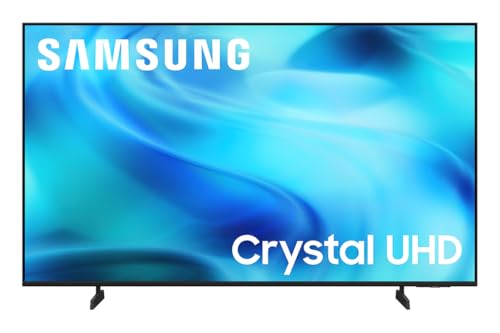
Samsung remains one of the few prominent global brands offering high-end display technology in the 32-inch category. The company addresses aesthetic-focused shoppers with the SAMSUNG 32-Inch Class QLED 4K LS03B Series, bringing premium design to smaller quarters. This model incorporates Quantum Dot color enhancements and a distinctive matte display surface designed to simulate real framed art on a wall. By integrating customizable bezels and artwork display modes, Samsung justifies the engineering cost of bringing refined panel components to a compact screen size.
Alongside its designer offerings, Samsung also maintains practical Full HD alternatives such as the Samsung 32 inch 1080P FHD F6000F Full HD Smart TV for secondary rooms. This model recognizes that many viewers prioritize reliable smart platform connectivity and robust security over raw pixel counts in smaller spaces. Featuring High Dynamic Range decoding, Object Tracking Sound Lite, and Knox Security protection, this television provides a complete smart entertainment environment. It delivers balanced contrast and fine-tuned color reproduction suited for bedrooms, dorms, and home offices where standard viewing distances make 1080p practical.
Software longevity plays an essential role in Samsung smart displays across all screen dimensions. Samsung includes its One UI Tizen operating system, which provides straightforward access to major streaming platforms and the Samsung TV Plus service. Tizen receives extended automated security and feature updates, protecting connected home devices from unauthorized applications. Furthermore, free ad-supported streaming channels give viewers immediate access to live news and entertainment without requiring additional subscription hardware.
Specialized Portable Displays: The Rise of Cugima and Kumezo
Niche electronics manufacturers have revolutionized the compact display market by reimagining the 32-inch form factor as a versatile mobile entertainment hub. Rather than confining screens to static wall brackets, brands like Cugima and kumezo construct freestanding rolling monitors with integrated smart software. These displays integrate 3840 x 2160 Ultra HD touchscreens into mobile pedestals, bridging the gap between large interactive tablets and dedicated smart televisions. The resulting hardware caters to modern lifestyles where screens move fluidly across kitchens, home gyms, and patios.
The Cugima 32 Inch 4K Smart Portable TV on Wheels exemplifies this flexible design philosophy by combining a high-resolution touch panel with true cordless portability. Driven by a built-in 20000 mAh rechargeable battery, the screen operates for up to eight hours away from wall outlets. Its height-adjustable caster base supports smooth tilt, swivel, and full ninety-degree rotation between landscape and portrait orientations. This mechanical adaptability makes the display equally adept at streaming movies or displaying vertical social media feeds and fitness routines.
Similarly, the kumezo 32 Inch 4K Smart Portable TV, Qualcomm CPU emphasizes responsive computational performance and multimodal input. Powered by a Qualcomm Snapdragon 685 processor, this unit incorporates eight gigabytes of system memory and one hundred twenty-eight gigabytes of local storage. The display includes an integrated five-megapixel webcam and an air mouse remote equipped with a six-axis gyroscope for intuitive wrist-motion control. Hidden wheels inside the circular base preserve clean room aesthetics while allowing users to transition the screen across living areas effortlessly.
Pixel Density Versus Viewing Distance: Evaluating 4K Against 1080p at 32 Inches
Evaluating screen resolution requires examining pixel density relative to your planned seating arrangement. A 32-inch display running native 4K resolution provides approximately one hundred thirty-eight pixels per inch, creating exceptionally fine detail with invisible pixel structure. By contrast, a 1080p Full HD panel of the same size yields roughly sixty-nine pixels per inch. In close-up desk environments where a viewer sits within two to three feet, the difference in edge clarity, small text rendering, and icon definition is obvious.
Perceptual advantages diminish rapidly as viewing distance increases beyond four feet. When seated on a bed or couch six to eight feet away, normal human eyesight cannot resolve individual pixel boundaries at sixty-nine pixels per inch. Both 1080p and 4K displays appear virtually identical in sharpness at typical bedroom distances. Therefore, purchasing a 4K panel primarily delivers noticeable benefits if you intend to interact closely with the display, utilize touchscreen controls, or connect a personal computer for detail-oriented tasks.
Bandwidth and video processing requirements also differ substantially between the two resolutions. Streaming native 4K media demands higher internet bandwidth and stable wireless network throughput to prevent buffering drops. When watching standard cable broadcasts or older television shows mastered in 720p or 1080i, television processing hardware must upscale incoming frames to fill the screen. Reliable scaling engines prevent noisy edge ringing, ensuring lower-resolution video signals display cleanly on high-density glass panels.
Panel Technology, Color Reproduction, and Anti-Glare Treatments
Screen surface treatments dramatically influence perceived picture quality in bright, sunlit rooms. Glossy glass panels often reflect overhead lighting, lamps, and uncovered windows, washing out dark scenes and creating distracting mirror effects. Models featuring anti-reflection matte surfaces, such as Samsung The Frame, diffuse ambient light across the panel surface. This diffusion preserves contrast in well-lit spaces and allows artwork or photography to retain an authentic canvas-like texture without harsh glare spots.
Color reproduction represents another critical dividing line between basic compact panels and high-tier models. Standard LED-backlit screens use conventional white backlights that can produce slightly muted greens and reds. Displays incorporating Quantum Dot technology utilize specialized nanocrystals that purify backlighting to deliver wider color gamuts. These quantum layers help preserve color saturation across varied brightness levels, preventing bright skies or vibrant landscapes from appearing bleached during daytime viewing.
High Dynamic Range performance on 32-inch televisions differs significantly from large home cinema displays. While expansive living room screens often deploy advanced Mini-LED display technology with hundreds of local dimming zones, compact televisions generally rely on edge-lit or direct-lit backlight configurations. These smaller panels decode HDR metadata, adjusting tone curves to show highlights and shadow details. However, without dense arrays of individual dimming zones, compact displays produce moderate highlight intensity rather than theater-grade specular brilliance.
Operating System Ecosystems: Tizen Versus Google EDLA Android
Smart platform architecture determines how effortlessly you navigate streaming apps, manage connected smart devices, and organize entertainment. Samsung One UI Tizen platform provides a streamlined, television-first interface engineered specifically for directional remote controls. Major streaming services come preinstalled or readily downloadable through the integrated store, while the home screen offers personalized recommendations. Tizen emphasizes robust security architecture, utilizing hardware-backed Knox encryption to safeguard user credentials, connected accounts, and smart home sensor data.
Portable rolling displays from Cugima and kumezo utilize Android operating systems certified under Google Enterprise Device Licensing Agreement standards. Running official builds of Android 14 or Android 16 with Google Play Store certification, these screens unlock extensive mobile application libraries. Users can install dedicated fitness software, video conferencing tools, drawing platforms, and mobile games alongside standard media streaming services. The inclusion of responsive multi-touch screens transforms the operating system into an expansive tablet experience that feels natural to swipe and tap.
Wireless content sharing varies across these platforms based on supported casting protocols. Samsung displays provide smooth integration with Apple AirPlay and SmartThings mirroring for compatible mobile devices. Android-powered portable displays expand wireless connectivity by supporting Google Cast, Apple AirPlay, and Miracast protocols out of the box. This broad protocol support allows family members or office colleagues to beam content effortlessly from laptops, tablets, or smartphones without requiring third-party adapter dongles.
Compact Audio Challenges and External Connectivity
Physical cabinet dimensions inherently limit acoustic output in 32-inch television designs. Slender enclosures cannot accommodate large speaker drivers or generous acoustic resonance chambers, restricting low-frequency bass extension. Downward-firing or rear-mounted miniature drivers frequently sound thin or struggle to project intelligible dialogue in bustling kitchens and echoey bedrooms. Sophisticated audio processing, such as Samsung Object Tracking Sound Lite, simulates directional audio movement, but processing algorithms cannot fully overcome physical acoustic constraints.
Viewers seeking richer, more immersive audio often compare these compact speakers against televisions optimized for sound quality equipped with multi-channel integrated speaker arrays. Adding a compact soundbar or powered desktop speakers dramatically enhances vocal clarity and environmental sound effects. Fortunately, modern compact televisions include HDMI eARC ports or optical digital audio outputs, enabling direct, uncompressed audio transmission to external sound gear without lip-sync latency.
Portable rolling monitors resolve audio delivery through integrated dual-speaker modules tuned for dialogue clarity and near-field listening. Because these mobile units frequently host video calls via integrated webcams, their internal speaker and microphone arrays prioritize vocal intelligibility over thunderous cinematic bass. Built-in Bluetooth transceivers also let users pair wireless headphones quickly, creating private listening environments for late-night viewing without waking household members.
Mounting Flexibility, Stand Ergonomics, and Room Placement
Mounting options dictate how effectively a 32-inch display integrates into your daily living space. Traditional static televisions feature standard VESA bolt patterns on their rear chassis, accommodating low-profile wall mounts or articulating swivel brackets. Mounting a compact display on an articulating arm works exceptionally well in kitchens or craft rooms, allowing you to angle the screen toward countertops or seating areas. When installing on drywall, always anchor mounting brackets directly into wall studs using manufacturer-rated hardware to prevent structural sagging.
Wheeled mobile displays offer unprecedented placement flexibility by detaching the screen from architectural walls. Heavy circular bases equipped with concealed caster wheels roll smoothly across hardwood, tile, and low-pile carpets without tipping over. The ability to pivot the display into vertical portrait mode proves particularly advantageous for reading sheet music, scrolling social video feeds, or participating in full-body workout tutorials. When your activity finishes, the entire entertainment station rolls effortlessly into an unused corner or closet.
Selecting the right manufacturer ultimately hinges on balancing screen mobility, software preferences, and viewing distance. If your goal is a dedicated wall-hung display that blends seamlessly with interior decor, Samsung QLED art displays provide refined industrial design. Conversely, if you require a cordless, interactive screen that travels between rooms and supports touch navigation, portable Android displays from specialized brands deliver unmatched utility. Analyzing your space, interaction style, and installation preferences guarantees you choose the ideal compact screen configuration.



Write Your Review
No reviews yet. Be the first to share your experience!