
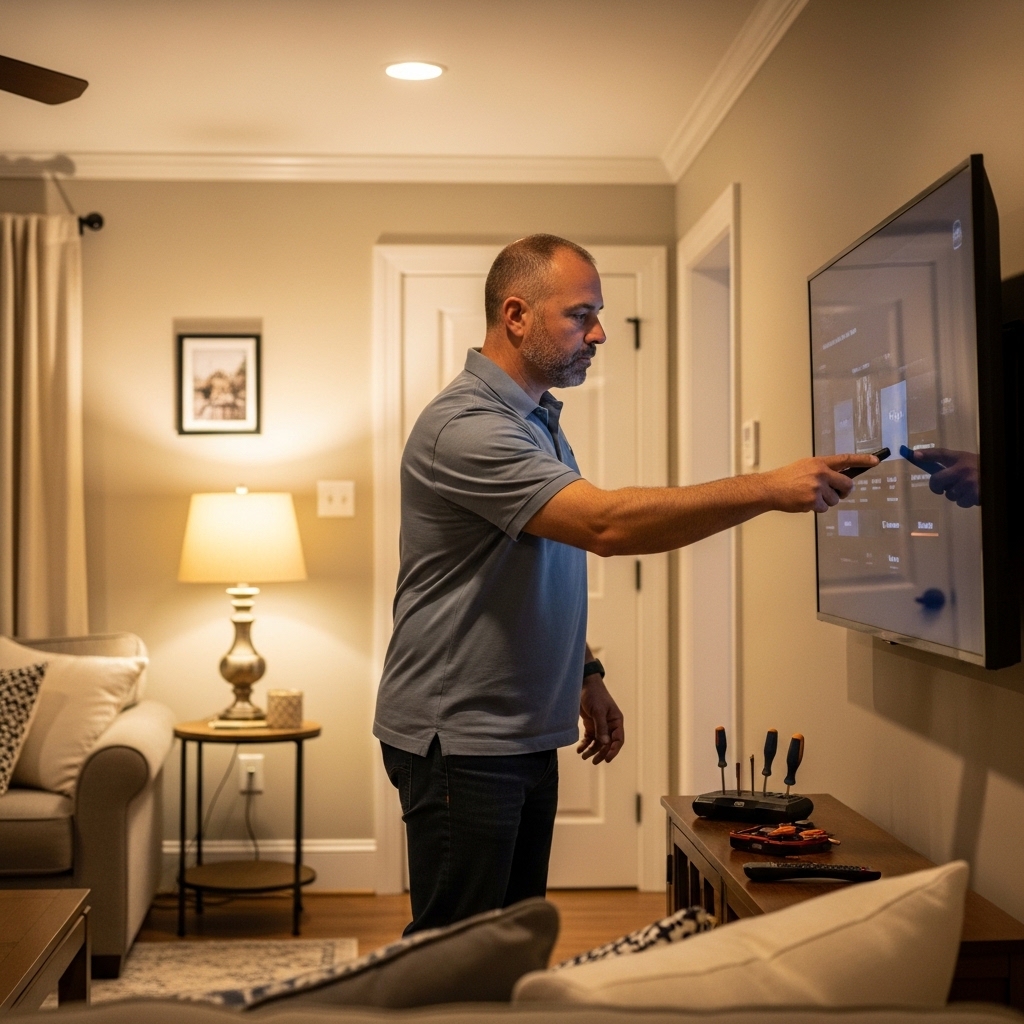

Stepping into a modern television showroom often presents a wall of vibrant displays, yet understanding exactly what is a 4k tv screen remains a common hurdle for home entertainment shoppers. Standard high-definition televisions once set the benchmark for household entertainment, but modern visual standards demand significantly greater pixel density to eliminate visible grain on larger panels. When you sit closer to a large display, an older resolution can reveal individual picture elements and jagged edges around fine lines. Upgrading to an Ultra High Definition panel packs millions of additional pixels across the glass, transforming movies, sports, and casual streaming into sharp, lifelike presentations.
The practical benefit extends far beyond raw pixel counts, directly influencing how image processors upscale low-resolution cable feeds and handle high dynamic range highlights. Finding the right display requires balancing panel illumination, motion processing, and room lighting conditions to prevent washed-out colors. If you plan to stream modern video feeds, pairing your setup with a dedicated 55-inch streaming television can deliver balanced viewing without overwhelming standard room dimensions. Exploring how these panels function ensures you invest in hardware that delivers genuine visual clarity rather than paying for empty marketing buzzwords.
Pros
- Delivers crisp 4K Ultra HD picture clarity with dynamic HDR10+ color support.
- Alexa+ voice integration simplifies content discovery across numerous streaming platforms.
- Supports Xbox cloud gaming without requiring an expensive physical video game console.
- Extremely compact and lightweight design remains completely hidden behind your display.
- Provides quick access to a huge catalog of live, free, and subscription entertainment channels.
Cons
- Relies on HDR10+ without listed support for Dolby Vision dynamic metadata.
- Xbox cloud gaming performance depends heavily on home Wi-Fi stability and requires a separate paid subscription.
- The home screen displays sponsored banners and promotional content rows that some viewers may find cluttered.
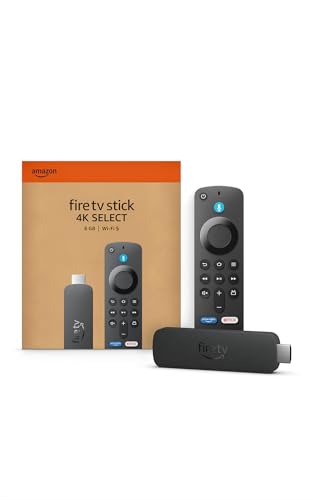
The Amazon Fire TV Stick 4K Select serves as a dedicated streaming media player built to transform any standard television into an intelligent entertainment display. Designed primarily for cord-cutters, apartment renters, busy families, and bedroom TV users, this compact dongle attaches directly to an open HDMI port. It presents a cost-effective way to modernize older flat-screen sets or replace sluggish built-in smart TV interfaces with an updated, responsive operating system.
Regarding visual performance, the device supplies crisp 4K Ultra HD playback with high dynamic range support via HDR10+. Connected to an HDR10+ capable LED, QLED, or OLED TV, viewers can enjoy enhanced contrast ratios, punchy colors, and clear highlights during movie nights or weekend sports broadcasts. Fast motion handling remains smooth for live hockey matches or football games, provided your home Wi-Fi delivers sufficient bandwidth to prevent buffering drops.
Smart functionality stands out through the modernized Fire TV user experience, backed by natural voice interaction through Alexa+. Rather than endlessly scrolling through distinct apps, viewers can speak naturally to find specific genres, track down actors, or manage playback across services like Prime Video, Netflix, Disney+, and Max. Furthermore, the inclusion of Xbox cloud gaming through Xbox Game Pass turns your living room TV into a casual console, allowing users to pair a wireless Bluetooth gamepad and play blockbuster titles directly over the cloud.
In terms of hardware build and everyday practicality, the player measures just over four inches long and weighs less than a tenth of a pound. This low-profile profile easily hides behind slim wall-mounted displays without demanding complex cable management or bulky shelf space. Connectivity relies on standard HDMI along with Wi-Fi, making the initial configuration quick and straightforward for non-technical users looking to stream workout videos, news updates, or late-night shows.
A few practical considerations are worth observing before choosing this model. The specifications highlight HDR10+ rather than Dolby Vision, which might leave dedicated home theater buffs wanting broader premium HDR format support. Furthermore, while the cloud gaming feature works well for casual play, competitive gamers may notice occasional latency depending on home network congestion, and an active Xbox Game Pass subscription is required.
For everyday viewers, apartment living rooms, student dorms, and guest bedrooms, the Fire TV Stick 4K Select delivers remarkable utility. It combines reliable 4K playback, an expansive library of free and premium streaming apps, and smart voice assistance into an unobtrusive footprint. Whether organizing family cartoon marathons or catching the big game with friends, this streaming player provides a practical, straightforward upgrade for modern home entertainment.
The updated interface prioritizes speed, helping family members pin their favorite applications directly to the home bar for one-click access. Integration with Alexa+ enables conversational searches, meaning you can ask for movies by quote or ask for recommendations based on mood, eliminating repetitive remote clicking.
For casual gamers, the ability to stream Xbox titles straight to the television via Xbox Game Pass provides an accessible alternative to buying a dedicated console. Players simply connect a compatible Bluetooth controller, launch the app, and play major titles with low input lag on solid Wi-Fi connections.
Physical installation requires only seconds, as the stick slots right into any open HDMI port on the back or side of your television. Because it draws power via an included cable and adapter, it stays hidden away, keeping living room entertainment consoles clean and wire-free.
The player pairs effortlessly with home Wi-Fi networks and guides users through a fast on-screen setup process. Once connected, users can also control compatible smart lights, thermostats, and security cameras straight from the couch using the included voice remote.
Pros
- Generous 65-inch display size at an accessible value point for living rooms and family spaces
- Built-in Samsung TV Plus delivers massive libraries of free streaming channels out of the box
- Reliable 4K upscaling brings sharper definition to standard cable channels and older streaming titles
- Integrated Alexa voice assistance enables seamless hands-free navigation and volume adjustments
- Smooth frame transitions with Motion Xcelerator minimize noticeable judder during football and basketball games
Cons
- Standard 60Hz refresh rate lacks native 120Hz support for competitive next-gen console gaming
- Lacks full array local dimming, which limits deep black levels in completely dark home theater rooms
- Built-in speakers provide modest bass output, making a dedicated soundbar recommended for cinematic audio
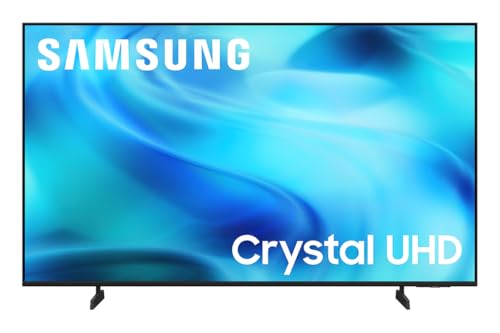
The Samsung 65-Inch Class U8000H Series Crystal UHD Smart TV offers a well-rounded 4K viewing package designed for everyday home entertainment. Geared toward families, apartment dwellers, cord-cutters, and budget-conscious buyers, this LED display brings a spacious 65-inch canvas into living rooms, finished basements, or primary bedrooms. Whether hosting weekend sports watch parties, enjoying family movie marathons, or catching up on morning news, this model aims to provide dependable visuals without complicated calibration steps.
At the core of the display is the Crystal Processor 4K, which works to optimize color expression and deliver clear upscaling for sub-4K cable broadcasts and streaming media. Features like Color Booster help bring vibrant tones to animated movies and nature documentaries, while Motion Xcelerator keeps fast-moving sports and action sequences steady at 60Hz. Although it does not feature full-array local dimming or OLED-level deep blacks, its contrast and brightness are well-suited for moderate to bright living rooms where casual daytime viewing and evening streaming dominate.
For casual gamers using modern consoles, the television delivers low input lag and responsive handling at 4K 60Hz, ensuring smooth playback across adventure titles and sports games. The smart platform offers intuitive navigation, quick app launch times, and built-in Alexa voice control for finding shows and adjusting settings without picking up the remote. In addition, Samsung TV Plus provides cord-cutters with immediate access to over 750 free live channels and thousands of on-demand programs right out of the box, eliminating the immediate need for paid subscriptions.
The exterior sports a clean, minimalist design with slim bezels that keep viewer focus squarely on the screen. Weighing under 32 pounds, the panel remains manageable during setup, whether mounting on a standard VESA bracket or resting on its included media stand feet. HDMI and audio return options support easy connectivity for soundbars, streaming players, and gaming hardware. While the built-in stereo speakers produce intelligible dialogue for sitcoms and news broadcasts, pairing the display with a soundbar is beneficial for rich, room-filling audio during blockbuster movies.
Overall, the Samsung 65U8000H represents a balanced blend of screen size, smart functionality, and everyday picture reliability. While serious home theater purists seeking true black levels or competitive gamers needing 120Hz refresh rates may look toward higher-tier models, this Crystal UHD TV excels for shoppers who want an expansive, easy-to-use smart display for daily family viewing and effortless streaming.
Navigating entertainment is seamless thanks to Samsung's comprehensive smart interface, which organizes favorite streaming platforms like Netflix, Prime Video, Disney+, and YouTube into an easy-to-read dashboard.
A major highlight for cord-cutters is Samsung TV Plus, which grants instant access to hundreds of free live TV channels and vast libraries of on-demand movies without requiring account sign-ups or subscription fees.
Hands-free voice functionality with built-in Alexa makes it easy to search for specific actors, switch inputs, launch apps, or pause playback with simple voice commands, fitting smoothly into modern smart homes.
Sports fans will appreciate the integrated Motion Xcelerator technology, which intelligently calculates and inserts frame transitions in real time to prevent annoying motion blur during high-speed football plays or hockey action.
For gaming setups, the TV automatically switches to a low-latency mode to reduce control lag, delivering crisp 4K visual feedback at 60Hz for consoles like the Xbox Series S or Nintendo Switch.
While competitive esports players may require native 120Hz panels, casual gamers will find the smooth responsiveness and vibrant color palette plenty capable for relaxing evening gaming sessions.

Pros
- Rich quantum dot color enhancement elevates everyday 4K streaming and movies
- Intuitive Roku OS interface is exceptionally easy for kids, parents, and guests to navigate
- Enhanced voice remote features an integrated lost remote finder and quick shortcut buttons
- Bluetooth Headphone Mode provides effortless private listening on mobile devices or wireless headphones
- Lightweight 20.5-pound chassis makes solo unboxing and wall mounting quick and hassle-free
Cons
- Standard 60Hz refresh rate lacks native 120Hz support for high-end competitive console gaming
- HDR10 performance is best suited for moderate room lighting rather than ultra-bright sunlit spaces
- Audio profile prioritizes vocal clarity over deep, cinematic sub-bass
The Roku 55-Inch Select Series 4K QLED Smart TV brings quantum dot color performance and Roku's famously simple operating system to an accessible 55-inch form factor. Designed primarily for everyday home viewing, this display is tailored for cord-cutters, apartment renters, busy families, and streamers who want a reliable centerpiece without navigating complex menus. Whether you are hosting a weekend watch party for football or setting up an inviting entertainment hub in a master bedroom, this TV prioritizes instant accessibility and clean visual presentation.
Visual performance centers around a 4K resolution QLED panel that utilizes quantum dots alongside HDR10 decoding to present punchy colors and sharp edge definition. The integrated Roku Smart Picture engine actively processes incoming video feeds, optimizing color saturation and picture modes depending on whether you are watching live sports, cartoons, or nighttime dramas. While contrast levels and black performance remain solid for standard indoor lighting, peak HDR highlights are tuned for balance rather than blistering brightness. Viewing angles are typical for LED-backlit LCD panels, making dead-center seating the sweet spot for movie lovers.
Streaming usability is where this model truly shines, anchored by Roku OS. The interface keeps all your physical inputs, favorite streaming services like Netflix and Disney+, and free live TV channels organized on a clean, customizable grid. The included enhanced voice remote simplifies navigation with direct voice search, programmable app shortcuts, and an invaluable lost remote finder feature that sounds an audible alert when misplaced in couch cushions. Smart home integration rounds out the experience, supporting Apple AirPlay, Siri, Amazon Alexa, and Google Assistant for effortless media casting.
Acoustic performance is tailored for vocal clarity, ensuring movie dialogue and sports commentary remain easily understandable without constantly raising the volume. For late-night entertainment after the kids are asleep, Bluetooth Headphone Mode lets you pipe sound directly to wireless headphones. Physically, the TV weighs an agile 20.5 pounds and features a frameless bezel design that gives it a clean, modern aesthetic. Standard VESA mount compatibility and lightweight construction make solo wall mounting or tabletop stand installation straightforward.
Gamers should note that the panel runs at a standard 60Hz refresh rate without advanced HDMI 2.1 features like 4K at 120Hz or variable refresh rates, meaning competitive esports players may prefer a dedicated high-refresh gaming monitor. In rooms flooded with direct afternoon sunlight, users may also notice some screen reflections. Nevertheless, for budget-conscious homeowners, apartment dwellers, and casual viewers seeking bright QLED colors and simple, frustration-free streaming, the Roku 55-Inch Select Series delivers dependable daily entertainment value.
The 55-inch QLED display leverages quantum dot technology to deliver a wider color spectrum than standard entry-level LED panels. With native 4K resolution and HDR10 support, streaming 4K movies and modern nature documentaries reveals fine textures and realistic foliage hues.
Roku Smart Picture automatically adjusts picture modes behind the scenes, eliminating the need to fiddle with advanced calibration settings every time you swap between live sports, classic films, or sitcoms. Streaming apps load quickly over the built-in Wi-Fi, offering stable playback across thousands of free and subscription-based channels.
The enhanced voice remote stands out as one of the most practical everyday upgrades on the Roku Select Series. You can search across multiple streaming services at once by speaking into the remote, set one-touch personal shortcuts for go-to channels, and activate the lost remote finder when it slips out of sight.
Apple AirPlay compatibility allows iPhone, iPad, and Mac users to mirror vacation photos or cast personal videos directly to the screen with zero setup hassle. Hands-free voice assistance via Amazon Alexa or Google Assistant devices provides effortless power, volume, and playback control across your connected home.

Pros
- Quantum dot QLED panel produces vivid colors and sharp 4K resolution across all types of content
- Streamlined Roku TV interface makes app navigation effortless for viewers of all tech comfort levels
- Enhanced voice remote includes a practical lost remote finder feature
- Bluetooth Headphone Mode offers easy private listening without disturbing family members
- Broad smart home compatibility with Apple AirPlay, HomeKit, Alexa, and Google Assistant
Cons
- Standard 60Hz panel does not support native 120Hz high-frame-rate gaming for next-generation consoles
- Supports HDR10 but does not include dynamic Dolby Vision processing
- Color saturation softens slightly when viewed from wide off-center angles
The Roku 65-Inch Select Series Smart TV brings quantum dot color technology and streamlined streaming together in an accessible big-screen display. Designed primarily for living rooms, family spaces, and master bedrooms, this 4K QLED TV serves homeowners, apartment renters, cord-cutters, and streaming enthusiasts who want a vibrant viewing experience without complicated menus. By combining sharp 4K resolution with Roku's user-friendly interface, it caters effectively to movie lovers, sports fans, and casual gamers looking for dependable everyday entertainment.
When viewing movies or watching weekend football, the QLED panel provides noticeably punchy color volume and solid overall brightness compared to basic entry-level LED displays. Support for HDR10 enhances highlights during dramatic movie scenes, while Roku Smart Picture works behind the scenes to clean up incoming cable or streaming signals and select ideal picture modes automatically. Motion handling remains smooth during fast sports action and action flicks, though wide off-axis viewing angles can show mild color fading if guests sit far to the side of the screen.
The integrated Roku TV operating system stands out for its fast app loading, responsive menus, and clean layout that eliminates unnecessary clutter. Searching for movies across Netflix, Prime Video, Disney+, and free live channels takes seconds thanks to the responsive voice remote. Roku also includes a built-in lost remote finder that chirps to reveal remotes tucked deep between couch cushions. Smart home flexibility is another strong asset, as the TV integrates with Apple AirPlay, Apple HomeKit, Amazon Alexa, and Google Assistant for effortless casting and hands-free control.
Built-in audio performance is tuned to prioritize dialogue clarity, ensuring spoken lines in news broadcasts and quiet movie scenes remain intelligible without constant volume adjustments. Late-night viewers will appreciate Bluetooth Headphone Mode, which streams TV audio directly to wireless earbuds so kids or partners can sleep undisturbed. The exterior features a modern frameless aesthetic that keeps visual attention on the 65-inch screen, complemented by sturdy dual feet and standard VESA wall mount compatibility for easy installation on living room walls or media consoles.
While this display excels in overall value and usability, dedicated home theater buffs and competitive gamers should consider its hardware boundaries. The screen operates at a standard 60Hz refresh rate rather than 120Hz, and it does not feature premium Dolby Vision HDR processing. However, for everyday streamers, families watching weekend blockbusters, and sports fans wanting an expansive 65-inch screen with rich QLED color, the Roku Select Series delivers a well-rounded and remarkably convenient package that makes daily viewing thoroughly enjoyable.
The combination of a 4K resolution panel and quantum dot QLED technology allows this display to reproduce vibrant, lifelike colors across movies, documentaries, and nature shows. Roku Smart Picture actively analyzes incoming video signals to adjust sharpness, contrast, and color balance dynamically, ensuring streaming video looks crisp even when older broadcast content is upscaled.
With support for HDR10, high-contrast scenes display distinct highlights and solid shadow detail. While it performs admirably in moderately lit living rooms thanks to good peak brightness and reflection handling, setting the TV directly across from uncovered sunny windows might still cause mild reflections. Overall, the display offers a clean, vivid picture that easily satisfies regular television viewing and movie watching.
Roku OS continues to provide an exceptionally straightforward navigation experience, presenting your favorite streaming apps, inputs, and free live TV channels in a customizable home grid. The enhanced voice remote eliminates tedious on-screen typing, letting you jump straight into content across thousands of apps by speaking into the microphone.
Multi-platform smart home support lets you stream family vacation photos from an iPhone with Apple AirPlay or control basic playback using Alexa and Google Assistant devices. Features like personalized sports hubs, interactive party games, and Bluetooth Headphone Mode round out a versatile platform designed for hassle-free daily entertainment.
Pros
- Smooth 4K playback with wide HDR format support including Dolby Vision and HDR10+
- Wi-Fi 6 support offers stable high-bandwidth wireless performance for 4K video and cloud gaming
- Console-free cloud gaming via Xbox Game Pass adds huge entertainment value for casual players
- Included voice remote provides reliable universal TV power and volume controls
Cons
- Xbox cloud gaming requires a separate subscription and compatible Bluetooth game controller
- Home screen interface features prominent ad placement and sponsored content recommendations
- Power adapter is required for optimal operation, which may occupy an extra wall outlet behind wall mounts
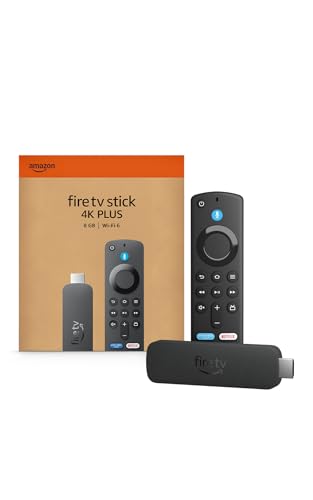
The Amazon Fire TV Stick 4K Plus is a compact streaming media player designed to bring modern smart TV capabilities, vibrant 4K resolution, and cloud gaming to any compatible television display. This streaming dongle is a practical upgrade for apartment renters, homeowners, cord-cutters, college students, and budget-conscious movie lovers who want to revamp an older 4K panel or bypass sluggish built-in smart TV interfaces. Whether you are setting up a secondary bedroom TV, building a living room family entertainment hub, or outfitting a basement recreation room, this device provides instant access to major streaming networks and digital media services.
Based on product specifications, this media stick delivers crisp 4K Ultra HD playback with high dynamic range support across Dolby Vision, HDR10+, and standard HDR10. On compatible OLED, QLED, or LED screens, content benefits from refined contrast, deep black levels, and vibrant color saturation during dark thriller scenes or bright outdoor sporting events. Fast-moving sports and action sequences stream smoothly without noticeable frame judder, provided your internet connection is reliable. On the audio side, pass-through support for immersive Dolby Atmos lets movie enthusiasts pair the device with dedicated soundbars or multi-channel home theater receivers for crisp dialogue and dynamic room-filling surround sound.
A notable advantage for casual gamers and tech enthusiasts is native support for Xbox cloud gaming directly through the Fire TV platform. Users with an active Xbox Game Pass Ultimate membership and a compatible Bluetooth wireless controller can stream popular titles without needing a full console setup under the television. To keep cloud gaming responsive and high-bitrate 4K movie streams buffer-free, the stick integrates Wi-Fi 6 hardware. This wireless standard handles multiple active devices on a home network with lower latency, which helps prevent resolution drops during family movie nights or weekend gaming marathons.
The hardware features a slim plug-in form factor that connects directly into an HDMI port on the back or side of your television, keeping living room cable management tidy and discrete. The package includes an Alexa Voice Remote equipped with dedicated power, volume, and mute buttons, allowing viewers to control both their television hardware and media playback with a single handheld unit. Fire TV includes conversational Alexa+ search, which lets viewers locate titles by genre, actor, or mood across different subscription libraries without cumbersome on-screen typing.
While the device offers impressive versatility, there are a few practical factors to weigh before purchasing. The Fire TV home screen heavily integrates sponsored content and ad banners alongside recommended titles, which some users may find cluttered compared to minimalist streaming platforms. In addition, cloud gaming requires an external Bluetooth controller and a robust high-speed broadband connection, meaning it does not replace the raw offline graphics fidelity of a dedicated home console. Lastly, the stick operates best when connected to wall power using the supplied AC adapter, which can complicate ultra-tight flush wall-mount installations if an outlet is out of reach.
Overall, the Amazon Fire TV Stick 4K Plus represents an outstanding balance of visual fidelity, modern Wi-Fi 6 wireless stability, and versatile entertainment options for American households. It is especially well suited for cord-cutters looking to consolidate subscriptions, sports fans who demand stable live streams, and families seeking an affordable way to upgrade an existing bedroom or living room 4K TV. For shoppers who want cinematic Dolby Vision playback and cloud gaming convenience in an unobtrusive footprint, this streaming stick is an easy recommendation.
The refreshed Fire TV interface organizes live channels, streaming services, and rented titles into clean, accessible rows that minimize search friction. Viewers can easily pin their most-used applications, including Netflix, Disney+, Prime Video, YouTube, and Max, directly to the main navigation bar for instant access.
With Alexa+ conversational voice search, navigating extensive libraries is hands-free and intuitive. Viewers can ask for specific movie genres, query sports scores, check local weather updates, or control compatible smart home devices like living room smart lights and video doorbells without pausing entertainment.
Thanks to cloud integration with Xbox Game Pass, this streaming stick turns your existing television into a virtual gaming display. By pairing a standard wireless Bluetooth controller, players can jump into console-quality games without purchasing bulky hardware or waiting on massive file downloads.
The inclusion of Wi-Fi 6 ensures lower packet latency and steady throughput, which is essential for cloud gaming responsiveness. While competitive esports players will still prefer a hardwired gaming console with high refresh rates and variable refresh rate (VRR) support, casual gamers and families will appreciate the accessibility and variety available right from their TV remote.

Pros
- Quantum dot QLED panel provides rich color volume and solid HDR10 contrast for everyday viewing.
- Responsive Roku OS interface makes streaming, app switching, and live TV navigation remarkably simple.
- Enhanced voice remote includes a handy lost remote finder feature and customizable shortcuts.
- Bluetooth Headphone Mode enables effortless private listening for late-night entertainment.
Cons
- Standard 60Hz refresh rate lacks native 120Hz high-frame-rate support for competitive next-gen gaming.
- Does not feature advanced local dimming for inky black levels in pitch-black home theater rooms.
- Built-in speakers provide clear dialogue but lack deep low-end bass without an external soundbar.
The Roku 50-Inch Select Series 4K QLED Smart TV serves as an accessible, entertainment-focused display engineered to bring quantum dot color technology to everyday living spaces. Geared toward apartment renters, busy families, cord-cutters, and budget-conscious movie watchers, this 50-inch screen strikes a versatile balance between compact sizing and immersive entertainment. Whether you are outfitting a primary apartment living room, setting up a secondary bedroom TV, or upgrading a family bonus room, this model emphasizes straightforward operation and vibrant picture quality without complicated menu systems.
In terms of visual performance, the inclusion of a QLED panel provides noticeably punchy color saturation and improved brightness compared to standard entry-level LED displays. Support for HDR10 highlights specular details in modern 4K streaming shows and movies, while Roku Smart Picture technology works behind the scenes to analyze incoming signals and adjust picture modes automatically. While it does not incorporate full array local dimming for true inky blacks in completely dark home theater basements, its overall contrast and color volume remain well-suited for well-lit living rooms during afternoon football watch parties or evening family movie nights.
Gamers and streamers will appreciate the TV's responsive operation and low input lag for casual console play. Although restricted to a standard 60Hz refresh rate rather than advanced 120Hz gaming standards, it handles Nintendo Switch, PlayStation, and Xbox gaming smoothly for casual players and weekend tournaments. The standout highlight remains the Roku OS platform, which provides instantaneous access to essential services like Netflix, Disney+, Prime Video, and a massive library of free ad-supported live channels. Navigation is remarkably snappy, while smart home compatibility with Apple AirPlay, Apple Home, Alexa, and Google Assistant makes casting media effortless.
The exterior hardware features an attractive frameless bezel design that gives the TV a sleek, modern profile that blends seamlessly with any decor. Weighing under 17 pounds, the lightweight chassis makes handling and mounting onto standard VESA wall brackets exceptionally straightforward. Built-in stereo speakers are specifically tuned for dialogue clarity so you can catch every line of television drama or sports commentary without straining. For late-night entertainment, the Bluetooth Headphone Mode allows users to route audio straight to wireless headphones, while the enhanced voice remote includes a lost remote finder that ends frantic searches between couch cushions.
Realistic expectations are necessary regarding home theater extremes. Enthusiasts seeking deep black levels for high-end cinematic setups or competitive gamers demanding HDMI 2.1 120Hz VRR capabilities may need to explore premium displays at higher price tiers. However, for everyday viewers, college dorm rooms, guest bedrooms, and cost-conscious households seeking reliable 4K clarity, seamless streaming, and intuitive controls, this 50-inch QLED model represents an exceptionally practical home entertainment solution.
The integrated Roku TV operating system remains one of the cleanest and easiest smart platforms available for streaming households. The home screen offers personalized recommendations and eliminates endless scrolling by organizing your favorite streaming services, connected inputs, and live television options in one central location.
Cord-cutters benefit from instant access to The Roku Channel, providing hundreds of free live TV channels spanning news, sports, movies, and daytime programming right out of the box. Setup takes just minutes over fast Wi-Fi, and automatic software updates ensure the interface stays fresh and secure over time.
Smart home users can take advantage of broad ecosystem support, including Apple AirPlay for mirroring photos and videos directly from iPhones or iPads. Hands-free convenience is further expanded with support for Roku Voice, Siri, Amazon Alexa, and Google Assistant for quick volume changes, input switching, and title searching.
Unboxing and setting up the Roku 50-Inch Select Series TV is designed to be user-friendly, even for solo installers. At a physical weight of approximately 16.8 pounds, lifting and positioning the display onto standard media consoles or entertainment centers requires minimal effort.
For wall mounting, the display is compatible with standard VESA wall brackets, making it easy to hang in master bedrooms, guest rooms, or apartment living spaces where saving floor space is a priority. The slim profile and clean cable arrangement keep clutter to an absolute minimum.
On-screen setup guides you step-by-step through Wi-Fi pairing, streaming account activation, and input configuration. Within minutes of plugging in the power cord, the television is ready to stream shows, connect cable boxes, or hook up your favorite gaming consoles.
Everything You Need to Know About 4K TV Screens
A 4K display represents an engineering milestone in consumer electronics, fundamentally altering how digital signals translate into physical light on your wall. At its foundation, a 4K panel houses four times as many individual pixels as an older 1080p Full HD display. This dense pixel structure creates an image that appears seamless, sharp, and realistic from standard living room distances. Understanding how this screen technology operates involves examining physical pixel grids, backlight architectures, color reproduction methods, and real-time video processing.
Pixel Density and Resolution Mechanics
Digital video resolution describes the exact grid of picture elements, or pixels, arranged across a display panel. A standard 1080p high-definition television contains 1920 horizontal pixels by 1080 vertical pixels, amounting to roughly two million individual points of light. In contrast, an Ultra HD display packs 3840 horizontal pixels and 2160 vertical pixels across the exact same physical space. This geometric increase results in approximately 8.3 million distinct pixels working simultaneously to reproduce visual details.
This fourfold increase in pixel count creates a dramatically smaller dot pitch, meaning the microscopic distance between adjacent pixels shrinks considerably. On an older display, sitting too close causes the visual phenomenon known as the screen-door effect, where the thin black borders between pixels become visible. With 8.3 million pixels packed tightly together, those structural gaps become virtually invisible to the naked human eye. Fine architectural details, individual grass blades during live broadcasts, and subtle textures on clothing render with lifelike sharpness.
The practical advantage of this tight pixel grid becomes even more pronounced as screen dimensions expand into larger living room formats. A 65-inch television operating at standard 1080p resolution spreads two million pixels across a vast surface, causing visible softness and pixelation. Applying 3840 x 2160 pixels to that same 65-inch surface maintains crisp edge definition and sharp text rendering. Viewers can sit significantly closer to larger screens without suffering eye strain or perceiving pixel grid boundaries.
How Panel Technologies Direct Light and Color
Resolution defines the quantity of pixels, but the underlying panel architecture dictates how those pixels produce illumination and contrast. Most mainstream displays utilize transmissive Liquid Crystal Display (LCD) structures illuminated by Light Emitting Diode (LED) backlights. In these systems, light passes through liquid crystal layers and red, green, and blue color filters to assemble images. Models like the Samsung 65-Inch Class Crystal UHD U8000H Series utilize dedicated Crystal Processors to coordinate this light transmission for vibrant living room viewing.
Quantum Dot displays, commonly branded as QLED, introduce a microscopic layer of semiconductor nanocrystals between the LED backlight and the liquid crystals. When struck by blue LED light, these quantum dots emit highly saturated, spectrally pure red and green wavelengths. Products such as the Roku 50-Inch Select Series Smart TV 2026-4K QLED, Roku 55-Inch Select Series Smart TV 2026-4K QLED, and Roku 65-Inch Select Series Smart TV 2026-4K QLED leverage this technology to deliver richer color volume. This architectural enhancement helps colors stay vibrant and accurate even when daytime ambient light fills your viewing room.
Self-emissive panels, such as OLED displays, take a completely different architectural approach by eliminating the centralized LED backlight entirely. Each individual subpixel produces its own light and can switch off completely, creating absolute black levels with infinite native contrast. While standard LED and QLED screens rely on zone-based backlight dimming, self-emissive diodes eliminate the distracting haloing artifacts commonly seen around bright white subtitles. Choosing between high-brightness QLED systems and high-contrast OLED options depends largely on your room lighting and dark-room home theater priorities.
High Dynamic Range and Wide Color Reproduction
High Dynamic Range (HDR) fundamentally alters picture quality by expanding the contrast ratio between the darkest shadows and the brightest specular highlights. While 4K resolution provides the canvas of physical pixels, HDR dictates the dynamic luminance and color depth displayed within each of those pixels. Standard dynamic range video uses an older eight-bit color scale that limits displays to roughly 16.7 million distinct shades. Modern HDR standards expand this palette to ten-bit or twelve-bit color, allowing compatible panels to render over one billion individual color variations.
Different HDR formats handle brightness metadata in distinct ways to optimize panel performance. Baseline HDR10 utilizes static metadata, establishing a fixed peak brightness ceiling for an entire movie regardless of scene variations. Advanced formats like HDR10+ and Dolby Vision employ dynamic metadata, instructing the display processor to recalibrate peak brightness and shadow tones frame by frame. Connecting a media player like the Amazon Fire TV Stick 4K Plus (newest model) provides support for both Dolby Vision and HDR10+, ensuring your display decodes complex lighting data accurately.
Dynamic tone mapping represents the internal processor algorithm that fits high-luminance master video signals to your screen’s actual physical brightness limits. When a movie grades a sunlight glare at thousands of nits, an entry-level or mid-range panel must compress that highlight to avoid clipping details into pure white. Displays with robust processing analyze incoming frames to retain cloud textures and glinting reflections without dimming the surrounding environment. Without capable tone mapping, high-contrast HDR content can appear murky or artificially blown out.
Upscaling Engines and Legacy Broadcast Processing
A significant portion of daily television consumption still originates from sub-4K sources, including 720p cable feeds, 1080i sports broadcasts, and compressed streaming apps. If a 4K display displayed a 1080p signal natively without processing, the picture would occupy only one-quarter of the physical screen area. To fill all 8.3 million pixels, every modern panel incorporates an internal video processing engine that performs real-time upscaling. Sophisticated upscalers do far more than simply duplicate existing pixels; they actively analyze surrounding pixel structures to reconstruct missing image data.
Hardware upscalers, such as the Crystal Processor 4K found in Samsung displays or Roku Smart Picture processing, evaluate spatial patterns to sharpen soft edges. These chips identify edges, gradients, and textures, applying intelligent spatial filtering to reduce compression artifacts and mosquito noise. Broadcast feeds often contain digital grain from heavy transmission compression, which cheap processors can inadvertently magnify into harsh visual noise. Capable upscaling engines isolate fine details like facial contours while smoothing flat backgrounds to preserve a natural, cinematic presentation.
Viewers who watch live broadcast content through terrestrial tuners also depend heavily on upscaling to enjoy crisp sports and local news. Exploring broadcast reception methods illustrates how receiving uncompressed over-the-air signals provides your TV processor with cleaner source data to upscale into Ultra HD. Clean source material allows edge-enhancement filters to generate convincing definition without introducing distracting ringing lines around high-contrast subjects. Upscaling quality represents one of the most critical differentiators between budget displays and performance-engineered panels.
Motion Handling, Refresh Rates, and Artifact Reduction
Pixel clarity means little if fast-moving objects dissolve into blurry streaks during live sports or action sequences. Native refresh rate refers to the physical frequency at which the display panel can redraw an entirely new image each second. Standard entry-level displays operate at 60Hz, updating sixty times per second, while higher-tier displays feature native 120Hz or 144Hz panel hardware. Fast-paced hockey broadcasts and competitive video games benefit noticeably from higher refresh frequencies, which minimize motion blur and trailing.
Television manufacturers often market proprietary motion technologies, such as Motion Estimation and Motion Compensation (MEMC) or Samsung Motion Xcelerator, to smooth frame transitions. These algorithms calculate the difference between consecutive frames and insert artificially generated transition frames in between. While MEMC can clarify rapid athletic movements, aggressive motion smoothing frequently introduces the unnatural soap opera effect into cinematic 24-frame-per-second movies. Understanding how to customize or disable motion smoothing in your picture settings ensures films retain their intended artistic cadence.
Sports enthusiasts seeking fluid camera pans across large playing fields often turn to specialized backlight scanning and fast panel response times. Checking options among Mini-LED displays for high-motion sports demonstrates how dense backlight arrays and high native refresh rates preserve fine ball tracking during quick action. When a display pairs rapid pixel response with precise backlight pulsing, fast motion remains crisp without dimming overall screen luminosity. Balancing frame interpolation settings helps prevent stutter without making dramatic dialogue scenes look like cheap video recordings.
Gaming Capabilities, Input Lag, and Bandwidth Demands
Modern gaming demands rapid communication between consoles or computers and the television screen to maintain responsive controls. Input lag measures the brief delay in milliseconds between a controller button press and the corresponding action appearing on the display. Dedicated Game Modes bypass heavy image processing pipelines, dropping input latency well below 15ms for immediate physical feedback. Playing fast-paced multiplayer titles on a display without a dedicated Game Mode often feels sluggish due to processing overhead.
HDMI port bandwidth dictates the resolution and frame rate ceiling your display can accept from external sources. Legacy HDMI 2.0 ports top out at 18Gbps, capping signals at 4K at 60Hz, while full-spec HDMI 2.1 ports provide up to 48Gbps of transmission speed. This higher bandwidth enables native 4K gaming at 120Hz alongside uncompressed 10-bit HDR and full 4:4:4 color chroma sampling. Furthermore, Variable Refresh Rate (VRR) synchronization prevents unsightly horizontal screen tearing by matching panel refresh cycles directly to the console graphics output.
Cloud gaming has introduced a convenient alternative that bypasses traditional console hardware entirely. Compact streaming devices like the Amazon Fire TV Stick 4K Select (newest model) and the Amazon Fire TV Stick 4K Plus (newest model) allow players to stream major Xbox Game Pass titles directly over fast Wi-Fi. Because the heavy visual rendering happens on remote cloud servers, the local television screen only needs to handle video decoding and low-latency display presentation. Pairing a stable network connection with responsive display modes makes high-fidelity gaming accessible without bulky desktop equipment.
Screen Sizing, Viewing Distances, and Room Placement
Selecting an appropriate screen size involves understanding the optical limits of human vision relative to your seating arrangement. Because 4K pixels are microscopic, sitting too far from a modest screen prevents the human eye from resolving the additional detail over standard 1080p. The Society of Motion Picture and Television Engineers (SMPTE) recommends a thirty-degree field of view for standard living room entertainment, while THX recommends roughly forty degrees for cinematic immersion. Calculating your seating distance ensures you fully appreciate the dense pixel structure of your new panel.
For a 50-inch or 55-inch display, an optimal viewing distance typically sits between six and eight feet from the glass. If your room layout places the sofa nine to twelve feet away, stepping up to a 65-inch or 75-inch screen becomes essential to perceive genuine 4K benefits. Browsing guides on budget big-screen televisions highlights how larger displays preserve visual impact in spacious family rooms. Positioning a large screen at eye level prevents neck fatigue and maintains consistent color saturation across the entire surface.
Viewing angles also play a critical role in your room placement strategy, particularly if your seating layout includes wide sectional sofas. Vertical Alignment (VA) panels, standard on many LED and QLED displays, provide deep native contrast but lose color saturation when viewed off-center. In-Plane Switching (IPS) and OLED displays preserve color uniformity across wide angles, making them ideal for broad family gathering spaces. Evaluating where viewers typically sit relative to the television helps determine whether high-contrast VA panels or wide-angle display alternatives suit your home best.
Smart Platforms, Interface Speed, and Audio Passthrough
The physical screen serves as your window, but the smart operating system dictates how effortlessly you navigate streaming apps, inputs, and live channels. Platforms like Roku OS, found on the Roku Select Series, prioritize straightforward grid navigation and rapid content discovery. Amazon Fire TV emphasizes personalized recommendations with Alexa integration, while Samsung Tizen provides built-in Samsung TV Plus options for instant streaming. Fast system processors and sufficient onboard memory keep interface menus snappy, preventing frustrating delays when switching between major media applications.
Integrated television speakers face severe physical constraints due to ultra-thin panel enclosures, often resulting in flat, muffled dialogue and minimal bass impact. High-definition soundtracks demand external audio hardware, making connection protocols an essential part of your setup consideration. Modern displays incorporate HDMI Enhanced Audio Return Channel (eARC) ports, which transmit uncompressed multi-channel audio directly to soundbars or AV receivers. High-bandwidth eARC handles immersive object-based formats like Dolby Atmos without the compression compromises associated with older digital optical connections.
Managing your HDMI port allocation ensures audio equipment does not bottleneck external gaming systems or media streaming devices. Some mid-range televisions share their eARC connection with one of their few high-bandwidth 4K 120Hz inputs, forcing gamers to choose between audio quality and gaming frame rates. Inspecting the port layout on the rear panel before final cable management prevents unexpected configuration conflicts. Utilizing high-speed certified cables guarantees reliable data handshakes between your screen, soundbar, and peripheral source devices.
Practical Setup Steps and Screen Maintenance
Unboxing and installing a large 4K television requires careful physical handling to protect the delicate internal panel layers. Manufacturers strongly recommend two-person lifting protocols for screens 50 inches and larger to avoid torquing the chassis during transit. When mounting to a wall, always secure VESA-compliant brackets directly into structural wall studs rather than relying on hollow drywall anchors. Ensure power cords and HDMI cables have sufficient slack to prevent strain on internal input boards over time.
Initial software configuration plays a massive role in picture quality, as factory default settings often activate aggressive energy-saving modes and overly blue Vivid picture presets. Switching your display to Movie, Cinema, or Filmmaker Mode immediately establishes accurate color temperatures and correct gamma tracking. Disabling ambient light sensors prevents the screen from dimming unexpectedly during dark cinematic scenes when room lighting shifts. Calibrating basic brightness, contrast, and sharpness controls ensures you see films exactly as their creators intended.
Routine panel care preserves optical clarity and prevents permanent damage to delicate anti-reflective screen coatings. Never spray commercial glass cleaners, ammonia, or alcohol-based solvents directly onto the screen, as these chemicals strip protective optical filters. Instead, gently wipe dust and fingerprints using a dry, lint-free microfiber cloth with minimal physical pressure. Shutting off the display when not in use prevents unnecessary heat accumulation and prolongs the lifespan of internal LED backlights.
Investing in an Ultra High Definition display upgrades your entire visual entertainment ecosystem by bringing cinema-grade resolution directly into your home. Focusing on the interplay between pixel density, backlight control, dynamic range processing, and room layout ensures you select a screen that fits your daily viewing lifestyle. Whether streaming television series, enjoying live sports, or exploring next-generation gaming worlds, a properly configured 4K display delivers breathtaking realism. Taking the time to understand these technical specifications transforms an ordinary living room into an immersive visual sanctuary.





Write Your Review
No reviews yet. Be the first to share your experience!