


Upgrading an entertainment setup often begins with deciphering complex display terminology and confusing retail jargon. Buyers shopping for a new screen frequently wonder about the exact specifications behind modern screens and ask what is the meaning of 4k ultra hd tv. At its core, this label represents a massive leap in spatial clarity, packing millions of additional pixels into the screen to eliminate visible grid lines. If you are comparing mid-sized options for casual movie viewing, pairing these technical metrics with a dedicated 55-inch streaming TV helps bring cinematic detail straight into standard living spaces.
However, raw pixel counts tell only part of the story when evaluating modern home cinema hardware. High Dynamic Range formatting, intelligent color reproduction, and responsive processor engines all influence the final image you see on screen. Thin cabinet profiles also challenge internal audio drivers, which makes exploring displays with balanced sound quality an essential priority for dialogue clarity. Understanding how these features interact ensures that your next display investment delivers both sharp resolution and dependable real-world performance.
Pros
- Excellent value for a 4K HDR smart TV with a large app selection and free live TV.
- Fast performance with Wi-Fi 6 and a responsive quad-core processor for smooth navigation.
- Built-in Alexa voice control makes finding content and managing smart home devices effortless.
- Four HDMI inputs provide plenty of connectivity for gaming consoles, soundbars, and streaming devices.
Cons
- Built-in speakers may lack deep bass for home theater enthusiasts; a soundbar is recommended for fuller audio.
- Brightness may not be ideal for very bright rooms with direct sunlight; best for moderate lighting conditions.
- Limited to 60Hz refresh rate, so not the best choice for competitive gamers seeking high frame rates.
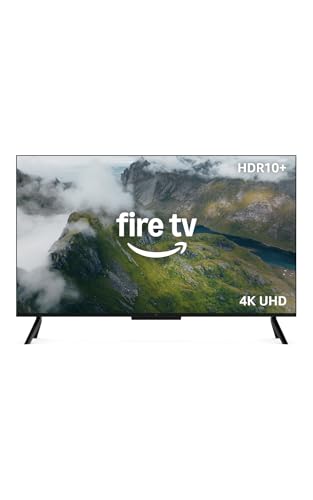
The Amazon Fire TV 43-inch 4-Series is a 4K Ultra HD smart TV designed to deliver a great entertainment experience without breaking the bank. It's an LED-backlit LCD TV that supports HDR10+ for enhanced contrast and color, making it a solid choice for movie lovers, families, and cord-cutters who want a simple, all-in-one streaming solution. With its built-in Fire TV platform and Alexa voice control, this TV is especially suited for streamers and anyone who wants to easily access Netflix, Prime Video, Disney+, Hulu, and thousands of other apps.
Picture quality is a strong point for this price range. The 4K resolution combined with HDR10+ support brings out details in both bright and dark scenes, so you'll notice improved clarity in your favorite movies and shows. While it doesn't have local dimming or the deep blacks of an OLED, the contrast is respectable for an LED TV, and colors look natural and vibrant. Motion handling is adequate for most content, though fast-paced sports or action movies may show some judder. Viewing angles are typical for an LED panel, so it's best to sit directly in front for the best picture.
Gaming performance is decent for casual gamers. The 60Hz panel and standard input lag are fine for most console games, but competitive players may want a TV with a higher refresh rate and VRR support. However, the ability to stream games via Amazon Luna and Xbox Game Pass without a console is a neat bonus for families and casual gamers. The four HDMI inputs give you plenty of room to connect a gaming console, soundbar, and streaming stick.
The smart TV experience is where this model shines. The Fire TV platform is fast and intuitive, with a new quad-core processor and Wi-Fi 6 support ensuring apps load quickly and navigation feels snappy. Alexa voice control is deeply integrated, letting you search for content, control smart home devices, or even ask for the weather with natural language. The included Alexa Voice Remote has preset buttons for popular apps, making it easy to jump straight to your favorites. The Ambient Experience feature is a nice touch, waking the TV to show artwork or a clock when you enter the room.
Setup is straightforward: plug in the TV, connect to Wi-Fi, and sign into your Amazon account. The TV comes with a simple stand, and VESA mounting is supported for wall installation. Sound quality from the built-in speakers is clear for dialogue and everyday viewing, but bass is limited. For a more immersive experience, especially for movies and gaming, pairing with a soundbar is recommended. The design is clean with slim bezels, though the TV is a bit thick compared to premium models.
Overall, the Amazon Fire TV 43-inch 4-Series is an excellent value for budget-conscious shoppers, apartment renters, and families who want a reliable 4K smart TV with a great streaming platform. It's perfect for a living room, bedroom, or dorm setup where ease of use and content access are top priorities. While it has some limitations in brightness and sound, its combination of features, performance, and price makes it a smart buy for everyday entertainment.

Pros
- Quantum HDR with HDR10+ delivers impressive contrast and detail in bright and dark scenes.
- AI upscaling improves the look of HD and even standard-def content significantly.
- Samsung Gaming Hub offers a wide selection of cloud games with no hardware needed.
- Built-in Alexa and free streaming channels add great value for cord-cutters.
- Competitive price for a 65-inch QLED with advanced features.
Cons
- No Dolby Vision support, relying on HDR10+ which has less widespread content.
- Built-in speakers may lack deep bass for a truly cinematic experience; a soundbar is recommended.
- Limited to 60Hz refresh rate, which may not satisfy competitive gamers seeking 120Hz.
The Samsung 65Q7F is a 2025 model QLED 4K smart TV that aims to bring premium features to a more accessible price point. It combines Quantum Dot color technology with an AI-powered processor to enhance picture and sound in real time. This TV is designed for homeowners, apartment renters, and families who want a large, vibrant display for everyday entertainment without breaking the bank.
Picture quality is a strong suit here. The Quantum HDR (HDR10+) support delivers punchy highlights and decent black levels for a QLED panel. The AI upscaling is particularly useful for streaming older shows or cable content, making them look noticeably sharper. Colors are rich and accurate, and the TV handles bright room conditions well thanks to good peak brightness. However, it lacks Dolby Vision, which might disappoint home theater enthusiasts who prefer that format's wider availability.
For gamers, the Samsung Gaming Hub is a standout feature. It offers instant access to cloud gaming services like Xbox Game Pass and NVIDIA GeForce NOW without needing a console. The TV also supports Auto Low Latency Mode (ALLM) to reduce input lag, though it's limited to a 60Hz panel. This makes it great for casual and story-driven games, but competitive players may want a 120Hz model. The Object Tracking Sound Lite adds a sense of immersion, but the built-in speakers are average - a soundbar is a worthy upgrade for movie nights.
Smart TV performance is smooth thanks to the Tizen platform and the Q4 AI Gen1 processor. Apps load quickly, and the interface is responsive. Built-in Alexa allows for hands-free control, and Samsung Knox provides solid security for connected devices. The inclusion of over 2,700 free channels via Samsung TV Plus is a huge plus for cord-cutters, covering news, sports, and movies without any subscription.
Setup is straightforward: the TV comes with a simple stand, and VESA mounting is standard. The slim bezels give it a modern look that fits well in any living room or bedroom. Connectivity includes multiple HDMI ports (likely 2.1 on one port for eARC), USB, Wi-Fi, and Bluetooth. One limitation is the lack of HDMI 2.1 bandwidth for 4K at 120Hz, but for most users this won't be an issue.
Overall, the Samsung 65Q7F QLED TV is a strong contender for budget-conscious shoppers, families, and streamers who want a large 4K TV with excellent color, smart features, and gaming flexibility. It's not for hardcore gamers or those needing Dolby Vision, but for daily movie watching, sports, and casual gaming, it delivers impressive value.
The Samsung 65Q7F uses Quantum Dot technology to produce over a billion colors, resulting in vibrant, lifelike images. Quantum HDR with HDR10+ enhances contrast by dynamically adjusting brightness and color scene by scene. This means you get deeper blacks and brighter highlights in compatible content. The AI upscaling is effective at cleaning up lower-resolution sources, making HD and even standard-def look surprisingly sharp. While it doesn't support Dolby Vision, the HDR10+ performance is strong, and the TV handles reflections well in moderately lit rooms. For a QLED, black levels are good but not as deep as an OLED - some blooming may be visible in dark scenes with bright objects.
The Samsung Gaming Hub is the highlight for gamers, providing instant access to cloud gaming services like Xbox Game Pass, GeForce NOW, and Amazon Luna. The TV supports Auto Low Latency Mode (ALLM) to minimize input lag, making games feel responsive. However, the panel is limited to 60Hz, so it's best suited for single-player and story-driven titles rather than competitive shooters that benefit from higher frame rates. The Object Tracking Sound Lite helps with directional audio, but for a truly immersive gaming experience, a dedicated sound system is recommended. The TV also supports HDR10+ Gaming for enhanced visuals in supported titles.
Pros
- Easy setup and intuitive Fire TV interface with Alexa voice control.
- Good 4K HDR picture quality with HDR10+ support for improved contrast.
- Fast performance thanks to new quad-core processor and Wi-Fi 6 connectivity.
- Ambient Experience mode adds a decorative touch when the TV is not in use.
- Competitive price for a feature-rich 50-inch 4K smart TV.
Cons
- Brightness may be limited in very sunny rooms, reducing HDR impact.
- Built-in speakers are adequate for casual use but lack deep bass; a soundbar is recommended for better audio.
- Only 60Hz panel, not ideal for high-refresh-rate gaming or fast-paced sports if you prefer smoother motion.
The Amazon Fire TV 50-inch 4-Series is a solid entry-level 4K smart television designed primarily for streaming enthusiasts, cord-cutters, and families looking for a straightforward, all-in-one entertainment solution. With the latest Fire TV platform built right in, it offers seamless access to popular apps like Netflix, Prime Video, Disney+, Hulu, and more, plus free live TV channels with no subscription required. The included Alexa Voice Remote Enhanced makes it easy to search for content, control smart home gadgets, or ask for weather updates using natural speech.
In terms of picture quality, the 4-Series delivers 4K Ultra HD resolution with HDR10+ support, which enhances contrast and color accuracy for a more lifelike viewing experience. While not as bright as premium LED or OLED models, it handles dark scenes reasonably well thanks to improved contrast from HDR10+. Motion handling and upscaling of lower-resolution content are decent for this price range, making it suitable for movies, TV shows, and everyday news. For dark room movie nights, the TV performs admirably, though in brightly lit living rooms you may notice some glare.
The Fire TV platform is one of the easiest to navigate, with a clean home screen that organizes apps, live TV, and recommendations. Alexa integration is a standout feature- you can change channels, launch apps, adjust volume, or even control compatible smart lights without touching the remote. The Omnisense technology is a neat addition: sensors detect when you enter the room and wake the display to show artwork or quick-access menus, adding a touch of convenience and style to any space.
Gaming on this TV is geared toward casual and cloud-based play. You can stream titles from Amazon Luna or Xbox Game Pass without a console using your phone as a controller. However, with a 60Hz panel and no VRR or HDMI 2.1 support, it is not built for competitive or high-framerate gaming. For family-friendly titles or party games, it works fine. The four HDMI inputs provide plenty of connectivity for a soundbar, cable box, and a console, plus eARC support ensures easy audio setup.
Setup is straightforward: attach the two feet or mount it using the VESA pattern (standard 200x200). The bezels are slim, giving the 50-inch screen a modern look that blends into most living rooms or bedrooms. The included remote has dedicated buttons for popular streaming services, making access quick. Overall build quality is good for its price, with a stable stand and lightweight construction (under 19 pounds).
Realistically, the main limitations are brightness and built-in sound. In very bright rooms, HDR highlights may not pop as much, and the speakers lack bass for an immersive audio experience. A budget soundbar like the Amazon Fire TV Soundbar would complement this TV well. Despite these trade-offs, the Fire TV 50-inch 4-Series offers exceptional value for streamers, families, and anyone new to 4K smart TVs. It is a reliable choice for a secondary bedroom TV, a family room for kids and movies, or a primary living room for cord-cutters who prioritize streaming ease over absolute picture perfection.
Defining 4K Ultra HD: Pixel Density, Display Standards, and Real-World Visual Performance
Understanding what is the meaning of 4k ultra hd tv starts with how digital images are rendered across modern screens. The term describes an ultra-high-definition display standard delivering crisp textures and refined clarity. While the baseline specification defines a precise pixel grid, televisions combine this resolution with advanced brightness, color reproduction, and digital processing. Evaluating these elements together gives viewers an accurate understanding of everyday visual performance.
The Resolution Breakdown: 3840 by 2160 Pixels Explained
The core technical definition of a 4K Ultra HD television centers on a resolution of 3840 horizontal pixels by 2160 vertical pixels. Multiplying these dimensions produces roughly 8.3 million individual picture elements across the screen surface. Consumer display manufacturers adopted this format because it exactly doubles both horizontal and vertical pixel counts of high definition. This arrangement preserves the standard 16:9 widescreen aspect ratio without introducing image distortion or letterboxing.
In professional digital cinema, the term 4K originally referred to a projection standard measuring 4096 by 2160 pixels. Consumer electronics groups adapted the standard for home living rooms by standardizing on 3840 by 2160 pixels under the Ultra HD name. This slight horizontal adjustment allows standard high-definition broadcasts to scale evenly across the matrix. As a result, viewers enjoy sharp image outlines and clean diagonal lines without jagged artifacts.
4K Versus 1080p Full HD: Perceptual Clarity and Subpixel Density
Comparing 4K Ultra HD against legacy 1080p Full HD reveals a significant leap in pixel density. A standard 1080p panel features 1920 horizontal pixels and 1080 vertical pixels, totaling about 2.07 million pixels. A 4K display packs four times as many pixels into the exact same physical screen area. This higher density makes individual pixels practically invisible to the human eye from standard seating distances.
The visual advantage of dense pixel arrays becomes especially clear on screens larger than fifty inches. On older 1080p displays of that scale, sitting close often exposed individual subpixels, creating a screen-door effect. A 4K Ultra HD panel keeps fine details, such as stadium netting and facial textures, crisp and natural. Viewers can sit closer to larger screens without seeing visible pixels, creating a far more immersive experience.
Why Resolution Alone Is Not Enough: The Role of High Dynamic Range
Sharp resolution creates geometric clarity, but High Dynamic Range provides the contrast and luminance depth that elevates picture quality. HDR allows compatible screens to show brighter specular highlights alongside deeper, more detailed shadows. Without sufficient contrast, high-resolution images can appear sharp yet visually dull in dark environments. Basic HDR10 applies fixed tone mapping across an entire movie, while dynamic standards like HDR10+ and Dolby Vision optimize scenes frame by frame.
Color reproduction is another vital factor tied to modern Ultra HD video delivery. Older standard high-definition broadcasts relied on the limited Rec. 709 color space. Ultra HD standards expand coverage toward Wide Color Gamut spaces like DCI-P3 and BT.2020. This wider color spectrum lets televisions render subtle gradations in foliage, sunsets, and skin tones that older televisions could never reproduce.
Peak luminance dictates how convincingly a screen displays these expanded color ranges. Entry-level televisions often read HDR metadata, yet their physical backlights lack the brightness needed to render punchy highlights. More capable panels push higher luminance through advanced light assemblies, making neon lights and reflections pop realistically. Dynamic tone mapping helps compensate by adjusting scene values internally to prevent blown highlights or crushed shadow details.
Video Processing and Upscaling Engines for Sub-4K Content
Most daily broadcast content is not transmitted in native 4K resolution. Cable feeds, regional sports broadcasts, and over-the-air channels generally output signals in 720p or 1080i high-definition formats. A 4K Ultra HD screen must process these lower-resolution signals so they fill 8.3 million pixels without looking soft. Without intelligent upscaling, simply stretching pixels causes blurry textures, compression artifacts, and noticeable digital noise.
Modern processors, like Samsung’s Q4 AI Gen1 processor found on select displays, evaluate incoming frames using intelligent pattern algorithms. These engines sharpen soft edges, reduce broadcast noise, and reconstruct missing texture details in real time. Fast quad-core processors in entry-level Fire TV models also work continuously to stabilize frame rendering and minimize motion stutter. Capable processing ensures that standard streaming shows and legacy media look crisp on an Ultra HD screen.
Panel Technologies in Modern 4K Displays: LED, QLED, and Beyond
The phrase 4K Ultra HD refers only to resolution, not the underlying panel technology producing light. Standard LED-backlit LCD televisions place white light-emitting diodes behind liquid crystal shutters to generate pictures. While dependable and bright, basic direct-lit LED backlights struggle with deep black levels because illumination bleeds into dark regions. This backlight bleed can make letterbox bars on widescreen movies appear dark gray rather than black.
Quantum Dot technology, commonly known as QLED, adds microscopic nanocrystals between the backlight and the LCD layer. When excited by blue light, these quantum dots produce pure red and green wavelengths, expanding total color volume. Displays like the Samsung 65-Inch Class QLED Q7F Series Samsung use this method to retain vibrant colors even in brightly lit rooms. This configuration produces rich, saturated imagery without raising long-term panel degradation concerns.
Shoppers seeking deeper contrast and minimal haloing around bright subtitles often look toward advanced backlight configurations. If sports clarity and daytime reflection control are main goals, reviewing Mini-LED TVs for sports illustrates how thousands of tiny diodes improve local dimming control. Meanwhile, self-emissive OLED panels control light at each individual pixel for absolute black levels. Choosing the right panel technology depends heavily on ambient light conditions in your room.
Screen Sizing, Room Placement, and Optimal Viewing Distance
Choosing screen dimensions requires understanding how viewing distance influences perceived detail. The human eye can only resolve fine 4K detail when sitting within an optimal range relative to display size. If a viewer sits too far from a modest screen, eye physiology blurs extra pixels together, making the picture look like 1080p. Sitting too close to an oversized display can cause neck fatigue during rapid camera movements.
Guidelines from organizations like SMPTE recommend maintaining a 30 to 40 degree field of view for cinema immersion. For a 43-inch display like the Amazon Fire TV 43″ 4-Series (newest model), an ideal distance spans roughly five to six feet. As seating distances increase, exploring budget 75-inch TV options allows viewers sitting nine to eleven feet away to appreciate full 4K clarity. Correctly matching screen proportions to room seating protects fine visual detail.
Mounting logistics and safety precautions also demand attention when installing a large-format screen. Heavy televisions must be fastened securely into wall studs using load-rated VESA brackets rather than hollow wall anchors. Using two people to unbox and lift large displays prevents twisting the thin chassis or damaging the panel surface. Positioning the center of the display near seated eye level prevents neck strain and preserves horizontal viewing angles.
Native Refresh Rates Versus Artificial Motion Smoothing
Motion clarity is an independent performance factor distinct from 4K resolution. A television’s native refresh rate indicates how many times per second the panel draws a new frame, measured in Hertz. Most entry-level 4K televisions operate at a native 60Hz rate, refreshing sixty times per second. Higher-tier gaming and sports displays often feature native 120Hz panels, rendering fast camera pans with reduced blur and smoother motion.
Brands frequently invent marketing terms, such as Motion Rate, to advertise artificial motion interpolation features. These algorithms insert generated intermediate frames between broadcast frames to reduce perceived judder. While helpful for fast sports broadcasts, this processing can make standard 24-frame-per-second films look artificially smooth, creating the soap opera effect. Film enthusiasts typically turn off aggressive motion smoothing in picture menus to preserve intended cinematic cadence.
Gaming Performance: HDMI Bandwidth, Input Lag, and Refresh Synchronization
Modern gaming consoles and graphics cards depend on high-speed display connections to deliver 4K imagery at high frame rates. Standard HDMI 2.0 ports deliver roughly 18 gigabits per second of bandwidth, limiting uncompressed 4K signals to 60Hz. Upgraded HDMI 2.1 ports provide up to 48 gigabits per second, allowing 4K gaming at 120Hz with full chroma resolution. Features like Auto Low Latency Mode automatically engage Game Mode when a console powers on.
Input latency measures the delay between pressing a controller button and seeing the on-screen reaction. Game Mode turns off non-essential video processing filters, reducing latency below fifteen milliseconds for precise controller feedback. Variable Refresh Rate technology syncs panel refresh cycles with the fluctuating frame output of connected hardware. This synchronization eliminates distracting screen tearing during complex gaming scenes, keeping movement fluid and responsive.
Audio Connectivity: HDMI eARC and Chassis Acoustic Tradeoffs
Slim cabinet designs in modern 4K televisions leave little internal physical space for substantial speaker enclosures. Down-firing built-in speakers frequently struggle to reproduce deep bass notes and can make dialogue hard to understand. Improving overall audio performance usually requires connecting an external soundbar or multi-channel surround sound system. Choosing a television equipped with an enhanced Audio Return Channel port makes external audio setup simple.
An HDMI eARC port provides greater audio transmission bandwidth than older optical cables, supporting uncompressed Dolby Atmos passthrough. This connection also supports system audio control, letting you adjust external speaker volume using your primary television remote. If you connect game consoles alongside soundbars, ensure the eARC port does not take up one of your only high-speed gaming inputs. This planning avoids port bottlenecks and keeps high-refresh video and surround audio working together.
Smart Operating Systems and Interface Responsiveness
The built-in smart platform controls how easily you navigate streaming apps, search for content, and adjust system inputs. Operating systems like Amazon Fire TV offer built-in voice searching and expansive app libraries. Displays such as the Amazon Fire TV 50″ 4-Series (newest model) include ambient sensors that present artwork when motion is detected in the room. Similarly, Samsung’s Tizen platform provides dedicated hubs for cloud gaming, connected smart accessories, and free streaming channels.
System responsiveness relies heavily on internal processing hardware and wireless network components. Slower processors can cause sluggish app launches, choppy menu scrolling, and frustrating remote delays. Screens featuring modern quad-core processors and Wi-Fi 6 connectivity handle high-bitrate 4K streaming without buffering interruptions. Regularly installing software updates and clearing old application caches keeps system navigation snappy and protects network privacy over time.
Practical Guidance for Choosing Your Next 4K Ultra HD Display
Selecting the right 4K Ultra HD television requires matching panel strengths with your room lighting and viewing habits. Sunlit living rooms benefit from the high peak brightness and vivid color volume of Quantum Dot LED displays. Dark viewing rooms allow viewers to appreciate the deep contrast and clean black levels of advanced local dimming or OLED technologies. Calculating your seated viewing distance ensures that your screen size reveals true 4K clarity without causing visual fatigue.
Understanding your primary entertainment sources prevents paying for unnecessary features. Buyers focused on streaming shows and movies should prioritize accurate HDR decoding and natural picture presets over high-refresh gaming ports. Console and PC gamers should ensure the television supports HDMI 2.1 bandwidth, low input latency, and variable refresh rates. Balancing resolution, panel illumination, and connectivity ensures that your new 4K television delivers dependable performance for years to come.



Write Your Review
No reviews yet. Be the first to share your experience!