
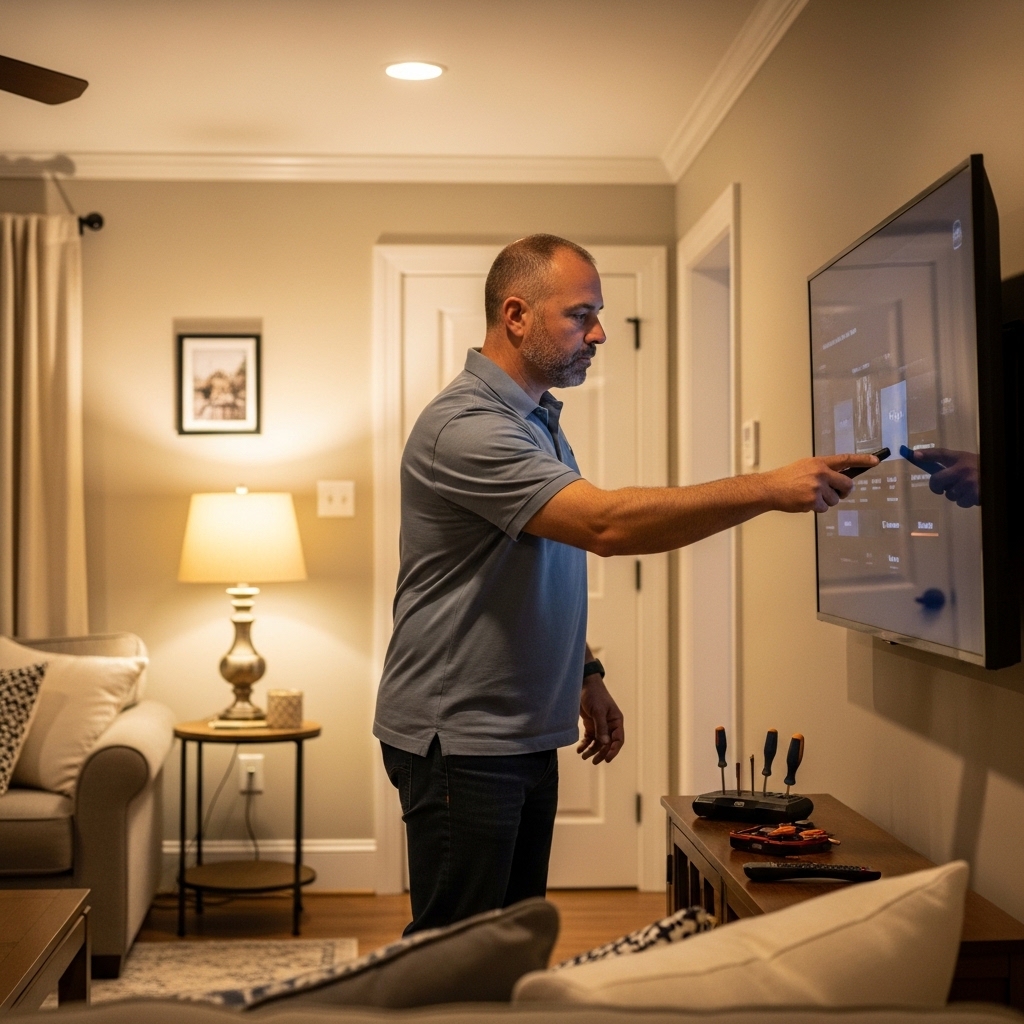

Connecting modern streaming hardware to older or secondary displays often raises immediate hardware compatibility concerns. Many shoppers wondering will 4k roku work on any tv want to know whether an ultra-high-definition streaming player can operate on a standard 1080p flat screen or an aging bedroom monitor. The direct answer is reassuring because digital video interfaces maintain backwards compatibility across multiple hardware generations. However, achieving true 4K resolution and high dynamic range color requires specific display hardware that older screens lack.
Upgrading your entertainment setup often starts with selecting capable streaming television options or pairing an external media player with an existing screen. Whether you are adding a standalone streaming stick or evaluating integrated smart platforms, understanding port bandwidth, content protection handshakes, and power requirements prevents setup frustration. This guide examines how 4K Roku hardware interfaces with various televisions, what performance compromises occur on non-4K displays, and how to verify your hardware before plugging in.

Pros
- Clean 4K HDR10 picture with Roku Smart Picture automatic optimization
- Fast, user-friendly Roku interface with extensive streaming app availability
- Handy Bluetooth Headphone Mode for private bedroom and apartment listening
- Seamless smart home integration with Apple AirPlay, Alexa, and Google Assistant
- Lightweight build and slim bezels fit easily on small stands or wall mounts
Cons
- Standard 60Hz refresh rate does not support 120Hz high-frame-rate competitive console gaming
- Modest peak brightness means HDR highlights may look less dramatic in brightly lit sunrooms
- Compact built-in speakers emphasize vocal clarity but offer limited low-end bass for movie explosions
The Roku 43-Inch Select Series 4K Smart TV delivers an accessible balance of Ultra HD resolution, streamlined streaming, and user-friendly features. Designed primarily for apartment dwellers, bedroom viewing, dorm rooms, or secondary entertainment spaces, this LED television serves budget-conscious shoppers, busy families, and dedicated cord-cutters who want reliable performance without complicated calibration menus.
At its core, the display utilizes a 4K panel delivering four times the pixel density of standard high-definition screens. With support for HDR10 and Roku Smart Picture technology, the television analyzes incoming signals to enhance color vibrancy and balance contrast automatically. While it does not include full array local dimming or the ultra-high peak brightness found on premium flagship screens, it produces crisp detail and satisfying black levels for everyday viewing, casual sports matches, and streaming movie nights.
The built-in Roku operating system stands out as one of the most intuitive streaming platforms available. Channels such as Netflix, Disney+, Prime Video, and YouTube launch briskly, while access to free live TV provides dozens of options right out of the box. Navigating the interface feels responsive thanks to the included Roku Voice Remote, which allows users to search across apps, change inputs, and adjust volume hands-free. Broad smart home compatibility with Apple AirPlay, Alexa, Siri, and Google Assistant also ensures effortless media casting directly from smartphones or tablets.
Built-in speakers on smaller flat screens can sometimes struggle, but this model features dedicated speech clarity tuning to make television dialogue intelligible at reasonable volume levels. A standout feature for apartment residents and night owls is the Bluetooth Headphone Mode, allowing private audio listening directly through personal wireless headphones. For gaming, casual console players will appreciate low input latency and crisp 4K imagery, although serious competitive gamers should note the panel operates at a standard 60Hz refresh rate without native HDMI 2.1 120Hz support.
Weighing roughly 13 pounds, the television features a modern frameless aesthetic that blends neatly into any room decor. Setup takes mere minutes, requiring simple screw-in legs or standard VESA wall mount installation. For shoppers seeking a straightforward, high-value 4K screen for cozy living rooms, guest bedrooms, home offices, or kids playrooms, the Roku 43-Inch Select Series provides a dependable and frustration-free home entertainment solution.
The Roku Select Series TV centers on the acclaimed Roku OS, known for its uncluttered home screen and swift navigation. Streaming enthusiasts get instantaneous access to major subscription apps alongside thousands of free live TV channels, sports hubs, and news broadcasts without recurring subscription costs for basic programming.
Smart home connectivity is particularly versatile on this model. With Apple AirPlay built in, iPhone, iPad, and Mac users can mirror photos, stream vacation videos, or beam playlists directly to the 43-inch display. Voice commands through Roku Voice, Amazon Alexa, or Google Assistant make launching specific shows, adjusting volume levels, and switching inputs entirely hands-free.
Weighing only 13 pounds, this 43-inch television is exceptionally easy to unbox and assemble by a single person. The included two-pole stand attaches securely using standard screws, fitting comfortably on smaller media consoles and bedroom dressers without requiring deep furniture surfaces.
For wall mounting, the slim chassis supports standard VESA patterns, allowing owners to utilize low-profile fixed mounts or full-motion articulating brackets. The straightforward initial setup wizard connects to home Wi-Fi networks in just a couple of minutes, auto-detects connected devices, and walks users through remote pairing without technical hassle.

Pros
- Mini-LED QLED panel offers excellent contrast and color accuracy for the price point, ideal for mixed-use living rooms.
- Roku platform provides the fastest app launches and the largest free channel lineup, including live local news and sports.
- Voice remote with lost remote finder and personal shortcuts simplifies daily use for families and tech enthusiasts.
- Built-in subwoofer enhances bass response for a more immersive movie and sports viewing experience without extra gear.
Cons
- Refresh rate is limited to 60Hz, so hardcore gamers seeking 120Hz VRR may want to consider a more gaming-focused TV.
- Peak brightness may be just adequate for bright, sunlit rooms; users with very bright windows might notice reflections.
- Limited to two HDMI ports according to specifications (though not explicitly listed), which could be tight for multi-device setups.
The Roku 65-inch Plus Series Mini-LED QLED TV represents a smart evolution of the Roku TV lineup, blending advanced backlight technology with the familiar ease of the Roku platform. This model is a 4K QLED television that uses Mini-LEDs to enhance contrast and brightness, making it a strong contender for homeowners, apartment renters, and families looking for a versatile everyday TV. It's particularly well-suited for cord-cutters who rely on streaming, as Roku offers hundreds of free channels alongside premium apps like Netflix, Hulu, and Disney+.
Picture quality is the star here. The Mini-LED backlight system allows for more precise local dimming than standard LED TVs, resulting in deeper black levels and less blooming around bright objects. Combined with the QLED layer, colors are rich and vibrant, and Dolby Vision HDR adds striking highlights that make movies and sports feel more dynamic. The AI-powered Roku Smart Picture Max automatically adjusts color and sharpness for different scenes, which means less need for manual calibration during a movie marathon or a Sunday afternoon football game.
For gamers, the 60Hz panel handles casual and mainstream titles well, with low input lag for responsive gameplay. However, it lacks HDMI 2.1 features like 120Hz VRR, so it's not optimized for competitive console gaming. But for family game nights, puzzle games, or streaming-based gaming services, it performs admirably. Sports fans will appreciate the good motion handling and the dedicated sports channels available through the Roku platform, along with live local news via the built-in antenna if you add one.
Sound quality is a pleasant surprise. The built-in subwoofer gives extra bass for explosions and music, while Dolby Atmos processing creates a wider soundstage. Dialogue remains clear even during quiet scenes, which is great for late-night viewing. For those who prefer private listening, Bluetooth headphone mode works seamlessly without waking others.
Setup is straightforward: attach the metal stand legs (or wall-mount using the VESA pattern), plug in, and connect to Wi-Fi. The Roku interface guides you through activation quickly. The enhanced voice remote features a lost remote finder button, personal shortcuts for favorite apps, and voice search across thousands of channels. It also works with Apple AirPlay for sharing from iPhones and iPads, and with Alexa or Google Assistant for hands-free control.
One realistic limitation is the TV's peak brightness. While fine for most living rooms, very bright rooms with direct sunlight may reduce perceived contrast. Also, the number of HDMI ports is limited (likely two), so users with multiple consoles, soundbars, and streaming sticks may need an HDMI switch. Nonetheless, for its price point, the Roku 65-inch Plus Series delivers a compelling combination of picture quality, smart features, and value. It's a solid choice for families, streamers, and anyone wanting a capable TV for daily entertainment without breaking the bank.
The picture quality of the Roku 65-inch Plus Series is driven by its Mini-LED backlight, which provides hundreds of dimming zones to improve contrast. This allows for deeper black levels in dark scenes, while QLED technology boosts color volume up to 90% of the DCI-P3 gamut. Dolby Vision and HDR10 support ensure compatible content looks punchy and lifelike. The TV also includes a Smart Picture Max AI mode that analyzes incoming signals and adjusts brightness, color, and sharpness automatically, so you rarely need to fiddle with settings.
Viewing angles are decent for a VA-based panel, though colors may wash out slightly when seated far off-center. For typical living room setups where viewers sit directly in front, this is not an issue. Reflection handling is average; in dimly lit rooms it's excellent, but bright windows might cause some glare. Overall, for the price, the picture quality is impressive and well-suited for movie nights, binge-watching, and sports.

Pros
- Brilliant 4K playback with HDR10+ compatibility enhances movie nights and sports streaming.
- Discreet plug-in design hides behind the TV without blocking adjacent HDMI ports.
- All-in-one voice remote eliminates the need to juggle separate TV power and volume remotes.
- Roku platform offers responsive navigation and a massive selection of free and premium channels.
- Simple setup makes it ideal for upgrading older smart TVs, bedroom displays, or guest room setups.
Cons
- Lacks Dolby Vision support, which some high-end 4K home theater owners might prefer.
- Requires a wall outlet adapter if your TV USB port provides insufficient power.
- Does not include an integrated Ethernet port, relying entirely on home Wi-Fi connectivity.
The Roku Streaming Stick Plus is a dedicated 4K streaming media player engineered to modernize any television setup with fast access to digital entertainment. It caters directly to cord-cutters, apartment dwellers, movie enthusiasts, and busy families who want an intuitive smart TV experience without replacing their current display. Whether you are outfitting a primary living room screen, a guest bedroom display, or a college dorm TV, this compact dongle provides a straightforward streaming upgrade.
On the video performance front, the device streams in ultra-high-definition 4K resolution and supports HDR10+ formatting. When connected to a compatible 4K TV, viewers can expect rich contrast, accurate color rendering, and sharp picture clarity during family movie nights or weekend sports streaming sessions. The HDR processing helps preserve highlight details in bright daylight scenes and prevents shadow crushing in darker dramatic films, providing a noticeable visual lift over standard 1080p streaming sticks.
At the heart of the experience is the renowned Roku operating system, which remains one of the cleanest and easiest navigation interfaces on the market. Users get access to massive libraries of on-demand content, including Netflix, Disney+, Prime Video, and Max, alongside an extensive catalog of free ad-supported live television. The included voice remote speeds up searches across multiple services, while integrated TV power and volume controls eliminate everyday remote clutter on the coffee table.
From a hardware and design perspective, the stick form factor is built for convenience and clean installations. Measuring just under four inches in length, it slips neatly into any rear or side HDMI port without obstructing adjacent inputs, making it an excellent match for tight wall-mounted TVs. Power can often be drawn directly from a standard TV USB port, which minimizes visible cords. Built-in Wi-Fi connectivity handles multi-room wireless setups, making travel between home, hotel rooms, and vacation rentals seamless.
While the device excels at general streaming tasks, there are a few practical trade-offs to keep in mind. The unit relies entirely on wireless networking, meaning users with congested Wi-Fi routers cannot plug in a direct wired Ethernet cable without third-party adapters. In addition, home theater purists seeking advanced Dolby Vision mastering will need to look to higher-tier players, as HDR support here is focused around HDR10 and HDR10+. Some older TV USB ports might also fail to deliver enough amperage, necessitating the use of a standard wall outlet.
Overall, the Roku Streaming Stick Plus represents an exceptionally practical purchase for streamers, sports fans, and families seeking dependable 4K performance at an accessible price. It transforms sluggish, outdated smart TV interfaces into responsive entertainment hubs with minimal physical footprint. For everyday living room viewing, secondary bedroom displays, or portable streaming on the go, this stick delivers strong everyday value.
The Roku OS interface provides a clutter-free, customizable home screen where your favorite streaming apps sit front and center. You can quickly launch major platforms like YouTube, Hulu, Apple TV+, and ESPN without wading through aggressive full-screen banner advertisements.
Cord-cutters benefit from deep integration with The Roku Channel, offering hundreds of free live linear channels covering local news, weather, sports commentary, and classic sitcoms. Unified subscription management also allows you to consolidate billing across various premium services into a single profile.
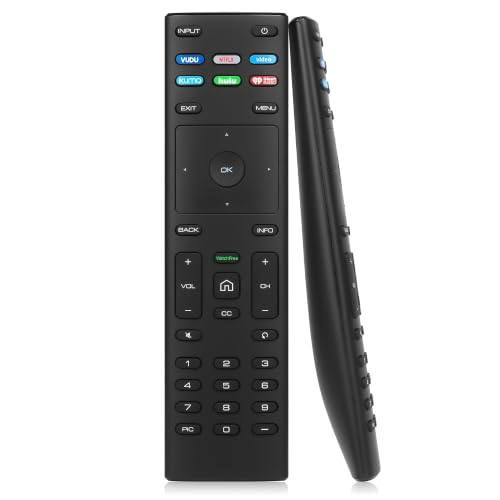
The included voice remote allows users to press a button and speak natural commands to launch movies, locate favorite actors, or switch genres. Furthermore, its universal power and volume buttons sync directly with your television, streamlining daily TV operation down to a single handheld controller.
Setting up the Roku Streaming Stick Plus requires just a few minutes, making it well-suited for non-technical users and quick bedroom TV upgrades. You simply plug the stick directly into an available HDMI port on the back or side of your television.
For cable management, the stick can frequently run off a 5V USB port built into your TV using the included cable, eliminating the need to drop power cords down through walls or behind furniture. If your TV does not output sufficient USB power, the stick can easily be plugged into a nearby wall outlet.
Once connected, on-screen prompts guide you through Wi-Fi network pairing, account activation, and remote calibration for TV volume and power controls. Its slim footprint keeps neighboring HDMI slots completely unobstructed for gaming consoles or soundbars.

Pros
- Low-profile stick stays hidden behind the television and avoids blocking neighboring HDMI inputs.
- Convenient voice remote controls TV power and volume, eliminating the need for a secondary remote.
- Fast, responsive Roku interface with a customizable home screen and convenient live TV guide.
- Capable of drawing power directly from compatible TV USB ports for a truly wire-free appearance.
Cons
- Resolution tops out at standard 1080p HD, lacking 4K UHD and HDR support for advanced displays.
- Some older TVs with low-power USB ports may require an optional AC wall adapter.
- Lacks hands-free voice commands, requiring a press of the microphone button on the remote.
The Roku Streaming Stick HD is an ultra-compact media player engineered to modernize standard HDTVs, older flat panels, and secondary displays into fast, capable smart TVs. Based on product specifications and user feedback, this pocket-sized streamer is exceptionally well suited for apartment renters, college students in dorms, cord-cutters, and families outfitting a guest room, kids playroom, or master bedroom. Its discreet form factor plugs directly into any available HDMI port and remains completely hidden behind the television frame, making it a great pairing for clean wall-mounted installations.
When connected to standard 720p or 1080p high-definition television panels, the stick delivers crisp video playback and steady motion handling for everyday entertainment. While it does not support 4K resolution or HDR formats such as Dolby Vision or HDR10, HD sitcoms, network broadcasts, and streaming movies retain sharp detail and balanced color reproduction across compatible screens. Sports fans and news followers can watch live broadcasts with consistent frame pacing, avoiding noticeable judder as long as a stable home Wi-Fi connection is maintained.
At the center of the experience is Roku OS, celebrated for its uncluttered tile layout, speedy menu navigation, and minimal app loading lag. The included voice remote simplifies the entire living room setup by incorporating essential television power and volume controls, allowing you to retire the original TV remote for regular daily viewing. Voice search works smoothly to locate titles, actors, and specific genres without the tedium of on-screen typing. Audio is passed directly through HDMI to television speakers, soundbars, or AV receivers, preserving crisp dialogue clarity and dependable stereo separation.
In terms of build and design, the stick measures only 3.7 inches long, which prevents it from crowding adjacent HDMI ports or digital optical outputs on tight TV input panels. The ability to draw power directly from an adjacent USB port on your television helps maintain a neat aesthetic free of hanging wall cords. Dual-band Wi-Fi connectivity keeps streaming connections reliable even when the stick is nestled behind a dense TV chassis, and the lightweight construction holds up well for travelers who prefer having their own login credentials ready in hotel rooms.
Initial installation is remarkably straightforward: plug the stick into an HDMI port, connect the USB power lead, follow the on-screen network prompts, and sign into your streaming services. There are practical limitations to keep in mind, however. Because playback resolution caps out at HD, owners of 4K LED, QLED, or OLED home theater centerpieces will prefer a dedicated 4K model to take full advantage of their display panel. Additionally, certain older televisions with weak USB power output may prompt an on-screen warning, requiring connection to a standard wall outlet.
For budget-focused shoppers, bedroom setups, kitchen displays, or anyone seeking to upgrade an aging secondary TV, the Roku Streaming Stick HD delivers dependable performance and unmatched user convenience. It eliminates remote clutter, consolidates live sports and free streaming channels, and hides neatly out of sight behind your television frame.
The Roku operating system continues to stand out for its straightforward home screen and broad channel availability. Users can customize app placement to prioritize services like Netflix, Disney+, Hulu, and YouTube right at the top of the menu. Navigating between apps feels fluid, with fast launch times that outpace many sluggish built-in smart TV interfaces found on older televisions.
A standout feature is the Roku Sports Zone, which centralizes game times, broadcast networks, and streaming destinations for your favorite sports teams. Coupled with The Roku Channel, which offers hundreds of free ad-supported live television networks, local news feeds, and movies, the platform provides expansive content variety right out of the box without requiring expensive cable packages.
Installing the Roku Streaming Stick HD takes only a few minutes from unboxing to streaming. Its slim body slides directly into an open HDMI port without requiring bulky extension brackets in most television arrangements. Once inserted, connecting the included USB cable to your television USB port delivers operating power, keeping the entire entertainment space free from drooping cords.
The on-screen setup assistant guides you through connecting to your home Wi-Fi network and calibrating the voice remote to control your television brand for power and volume toggles. Roku account linking is handled quickly via a mobile device or browser, ensuring that your preferred channels and subscription preferences populate without complex manual entry.
Pros
- Supports both Dolby Vision and HDR10+ dynamic formats for rich picture contrast on compatible displays
- Voice remote combines streaming navigation with TV power and volume controls for easy daily operation
- Slim stick form factor stays hidden behind wall-mounted TVs and does not crowd neighboring inputs
- Long-range wireless receiver maintains steady connections in rooms with weaker Wi-Fi reception
Cons
- Requires power from an external wall outlet or a powered USB port on the back of your television
- Does not include an integrated Ethernet port for wired home theater network connections without an adapter
- Final video quality and audio depth remain dependent on your television panel and sound hardware
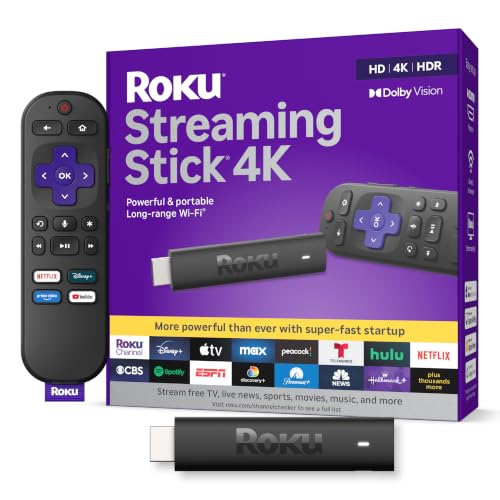
The Roku Streaming Stick 4K is an ultra-compact media streaming device engineered to plug directly into an available HDMI port on modern flat-screen televisions. Designed to deliver an intuitive and fast entertainment experience, this compact player serves as an effortless upgrade for homeowners, apartment renters, and families dealing with slow or outdated smart TV operating systems. Whether you are setting up a dedicated media room, adding smart features to a secondary bedroom display, or turning an older 4K panel into a modern cord-cutting hub, this streaming stick provides immediate access to thousands of streaming services and free live TV channels.
Picture quality remains a central highlight based on manufacturer specifications and user impressions. With support for 4K Ultra HD at 60 frames per second alongside high dynamic range formats like Dolby Vision and HDR10+, the device allows compatible screens to showcase deep black levels, expanded contrast, and rich color accuracy. Streaming blockbuster films or high-profile sporting events on platforms such as Netflix, Disney+, or Prime Video reveals sharp textures and vibrant highlights. The included Roku operating system handles video decoding efficiently, ensuring smooth motion rendering and clean upscaling when viewing standard high-definition programming.
Practical design details make this stick especially appealing for neat home theater setups. Unlike bulkier streaming boxes that require tabletop shelf space, this device plugs flush behind the television, making it an excellent match for wall-mounted displays and minimalist entertainment centers. Its slim profile prevents obstruction of neighboring HDMI inputs, leaving ample room for gaming consoles, Blu-ray players, or soundbar eARC connections. The built-in long-range Wi-Fi receiver is embedded directly along the power cable, which helps minimize signal interference behind dense television chassis and keeps 4K video streams steady across household rooms.
Daily operation is straightforward thanks to the included Roku voice remote. Home viewers can power on the television, adjust audio volume levels, and mute playback directly from the handheld controller, significantly reducing coffee table clutter. The built-in voice search functionality allows users to locate specific actors, genres, or movie titles across various streaming libraries without typing on an onscreen keyboard. Navigation feels snappy, with rapid app launch times that make switching between live news broadcasts, workout videos, and family movie marathons quick and frustration-free.
While this streaming player excels in convenience, a few practical limitations exist. The device requires continuous power from either an included AC adapter or a sufficiently powered USB port on the back of the TV, which adds a short cable run. Home theater enthusiasts seeking hardwired gigabit networking will also note the absence of a native Ethernet port, requiring an optional USB adapter for wired internet. Nevertheless, for streamers, sports fans, and cord-cutters seeking reliable 4K picture quality, robust HDR support, and simple navigation at a reasonable price, the Roku Streaming Stick 4K represents one of the most dependable streaming upgrades available.
High dynamic range makes a noticeable difference when watching movies and prestige television series on modern 4K screens. The Roku Streaming Stick 4K features compatibility with both Dolby Vision and HDR10+, allowing your television to interpret dynamic scene-by-scene metadata for balanced brightness and shadow detail. This helps prevent bright skies from washing out while preserving shadow nuances in darker cinematic sequences.
Because the device automatically detects your display panel capabilities during initial setup, it optimizes the video signal without requiring complicated manual display adjustments. For movie lovers who stream across multiple platforms, having broad HDR format support ensures that content looks as close to the director vision as your television screen allows.
Setting up the Roku Streaming Stick 4K takes only a few minutes. You simply insert the stick into any open HDMI port on your television, connect the included power cable with the embedded Wi-Fi receiver, and plug the USB cable into a wall outlet or compatible USB power port. The on-screen wizard guides viewers through wireless network connection, display resolution detection, and remote programming for television volume and power controls.
The straightforward physical footprint also makes this streaming stick an exceptional choice for travel. Apartment dwellers and frequent travelers can quickly unplug the stick and take their customized subscriptions, watchlists, and settings to dorm rooms, hotel suites, or vacation rentals without needing to sign into unfamiliar smart TV platforms.

Pros
- Swift menu responsiveness and rapid application loading across major streaming platforms
- Comprehensive HDR support including Dolby Vision and HDR10+ alongside Dolby Atmos audio pass-through
- Ethernet jack and Wi-Fi 6 provide versatile, high-speed networking choices for smooth 4K playback
- Backlit, rechargeable voice remote eliminates recurring battery purchases and fumbling in dark home theaters
Cons
- Desktop box form factor requires dedicated shelf space compared to compact streaming sticks
- Demands an external AC wall outlet rather than drawing power directly from standard TV USB ports
- Advanced cloud gaming features are more limited compared to specialized gaming consoles
The Roku Ultra stands as a dedicated high-performance 4K streaming media player tailored to bring modern entertainment capabilities to any living room, bedroom, or dedicated media space. Designed specifically for cord-cutters, movie buffs, sports fans, and busy families, this tabletop unit breathes new life into existing displays by upgrading older smart TV interfaces with an intuitive, lag-free operating system.
Visual and audio performance remain central to the viewing experience. Based on product specifications, the device handles 4K resolution effortlessly while delivering high dynamic range content via Dolby Vision, HDR10+, and standard HDR10. When paired with a capable OLED, QLED, or Mini-LED display, viewers can enjoy deep black levels, wide color gamuts, and balanced highlight details across blockbuster films and live sporting events. For audio enthusiasts, Dolby Atmos pass-through feeds multi-dimensional sound directly to soundbars or AV receivers, ensuring dialogue clarity and deep surround immersion during movie nights.
Under the hood, the hardware provides a noticeably snappy experience, with apps launching rapidly and menus scrolling smoothly. Network stability is anchored by Wi-Fi 6 connectivity, which helps maintain steady bitrates even in homes with multiple active smart devices. Home theater owners who demand rock-solid connections can take advantage of the rear Ethernet port for wired streaming, eliminating buffering during big game live streams or 4K HDR marathons.
The included Roku Voice Remote Pro adds considerable day-to-day convenience to the entertainment setup. Built-in motion-sensing backlighting ensures you can navigate controls in a darkened home theater room without turning on lamps. Hands-free voice commands let viewers launch shows, adjust volume, or search titles across services using simple verbal prompts. Furthermore, the integrated rechargeable battery eliminates disposable battery waste, while the lost remote finder provides an easy way to locate the controller when it slips between couch cushions.
While the player offers substantial capabilities, practical considerations should be kept in mind. Unlike slim streaming sticks that tuck entirely out of sight, the Roku Ultra is a tabletop unit that requires a flat surface near the television, along with an available HDMI port and standard electrical wall outlet. Additionally, viewers interested in heavy cloud gaming services will find the platform focused primarily on video entertainment rather than graphics-intensive interactive gaming.
For apartment renters, suburban homeowners, and budget-conscious tech buyers who want a premium streaming hub without replacing an otherwise great television, the Roku Ultra offers tremendous value. Its blend of broad format support, dependable networking, and comfortable hands-free remote functionality makes it a standout choice for daily household viewing.
Roku OS remains celebrated for its straightforward, uncluttered home screen that lets users organize preferred apps such as Netflix, Max, Prime Video, and Apple TV quickly. The clean design helps families with kids and casual viewers find content without wading through confusing promotional menus or sponsored clutter.
Beyond subscription services, the platform provides direct access to hundreds of free live TV channels, local news, and weather broadcasts via The Roku Channel. Integrated voice controls allow quick cross-app search results, presenting choices based on pricing and platform availability so viewers avoid paying twice for movie rentals.
Private listening flexibility is enhanced with Bluetooth Headphone Mode, which enables direct wireless pairing between the box and your favorite Bluetooth earbuds. This makes late-night television watching, bedroom streaming, or high-volume action movies enjoyable without disturbing resting family members.
Setting up the Roku Ultra takes only a few minutes out of the box. Users simply connect a high-speed HDMI cable to an available port on their television or receiver, plug the power adapter into an outlet, and follow the on-screen guided setup instructions to connect to the home network.
Connectivity options are well suited for versatile home entertainment environments. The inclusion of Wi-Fi 6 delivers efficient wireless range and speed for homes with modern routers, while the physical Ethernet port provides a reliable wired alternative for basement home theaters where wireless signals may be weak.
The compact footprint measures roughly 5 inches across, allowing it to nestle cleanly beside soundbars, atop media consoles, or inside ventilated TV stands without generating clutter or requiring complicated mounting hardware.
Understanding 4K Roku Compatibility Across Different Televisions
A 4K Roku device will physically connect to and operate on virtually any television equipped with a standard HDMI port. If you plug a 4K streaming stick into an older 1080p or 720p high-definition screen, the player automatically scales down its video output to match the display panel. You will not receive a true ultra-high-definition picture on a non-4K panel, but you will still gain access to the complete streaming interface, responsive navigation, and thousands of channels. Achieving native 4K playback and vibrant high dynamic range color requires matching hardware specifications across the entire video transmission chain.
The Core Mechanics of HDMI Handshakes and Resolution Scaling
Modern digital displays communicate their capabilities to source devices through Extended Display Identification Data during an initial HDMI handshake. When you connect a device like the Roku Streaming Stick 4K with Voice Remote to an HDMI input, the media streamer queries the television to identify supported resolutions and refresh rates. If the screen reports a maximum native resolution of 1080p at 60Hz, the Roku operating system automatically limits its rendering pipeline to high definition. This automatic downscaling ensures that older flat screens display clean video without signal errors or out-of-range warnings.
Resolution downscaling produces clean, stable images, but it cannot invent physical pixels that the display hardware lacks. A 1080p television contains roughly two million individual pixels, whereas a true 4K panel contains over eight million pixels. Feeding a 4K stream into an older set means the streaming player samples down the high-bitrate video to fill the available display grid. High-definition television owners frequently notice that downscaled 4K streams look remarkably crisp due to the higher source bitrate, even though the physical resolution remains capped at 1080p.
Users who want to force a specific output resolution can bypass the automatic detection tool within the Roku system settings. Navigating to the display type menu allows you to manually select between 720p, 1080p, and 4K options at standard television refresh rates. Manual configuration helps troubleshoot handshake conflicts where an aging display misreports its resolution capabilities to the streaming player. Keeping the setting on automatic detection remains the recommended approach for most living room setups because it prevents blank screen errors.
HDCP 2.2 Content Protection and Port Bandwidth Demands
High-bandwidth Digital Content Protection represents the single most common obstacle when connecting 4K streaming players to older television sets. Streaming platforms such as Netflix, Prime Video, and Disney require HDCP 2.2 compliance before transmitting commercial 4K ultra-high-definition video streams. Many early 4K televisions manufactured before the broad adoption of HDMI 2.0 included older HDCP 1.4 ports that restrict incoming signals. If your television lacks HDCP 2.2 support on the specific HDMI port in use, the streaming stick drops the incoming feed down to standard 1080p high definition.
Hardware port placement on your television chassis also dictates whether you experience full video bandwidth or restricted signals. Many budget and early-generation 4K displays only support HDCP 2.2 and full 18Gbps bandwidth on one or two designated HDMI inputs. The remaining ports on the television often operate under older HDMI 1.4 specifications that cap incoming signals at thirty frames per second for 4K content. Checking the port labels on the rear or side panel of your television ensures you insert the streaming device into a fully capable input.
When a content protection handshake fails, the display typically produces a purple error screen or an HDCP unauthorized notification. Resolving this issue usually requires toggling the HDMI input mode within your television menu settings from standard to enhanced format. If the television firmware remains outdated, updating the display operating system can resolve persistent handshake dropouts. In cases where the television hardware simply lacks HDCP 2.2 silicon, standard high-definition streaming remains the fallback operating mode.
High Dynamic Range Formats: HDR10, HDR10+, and Dolby Vision
High dynamic range expands contrast ratios and color reproduction far beyond the boundaries of standard dynamic range video. Premium players such as the Roku Ultra, Ultimate Streaming Player decode multiple dynamic metadata formats including HDR10, HDR10+, and Dolby Vision. However, sending an HDR signal to a television that only supports standard dynamic range will not produce expanded color or brighter highlights. The streaming player detects the display capabilities and converts incoming HDR content into an accurate standard dynamic range color space to avoid washed-out visuals.
Television manufacturers implement HDR support inconsistently across budget, mid-range, and flagship display models. Entry-level displays might accept an HDR10 signal while lacking the panel brightness and local dimming zones required to display meaningful highlight punch. Advanced formats like Dolby Vision and HDR10+ utilize dynamic frame-by-frame metadata to optimize contrast on capable displays. If your television lacks Dolby Vision processing hardware, the streaming player seamlessly steps down to the universal HDR10 baseline profile.
Owners of quantum dot or Mini-LED displays experience the most noticeable visual impact from premium streaming devices. Devices like the Roku Streaming Stick Plus with Voice Remote supply the raw HDR10+ signal necessary to drive modern wide color gamut panels. Matching an HDR-capable player with an HDR-capable screen ensures that bright highlights and deep shadow tones appear as intended by cinematographers. If you connect that same streaming stick to an older bedroom television, the device gracefully disables HDR metadata while maintaining stable playback.
Electrical Power Delivery: Integrated USB Ports Versus Wall Adapters
Compact streaming sticks draw electrical power via a micro-USB or USB-C connection situated along the side of the chassis. Many television owners attempt to power their streaming stick directly from a service USB port located on the television chassis. While this approach eliminates dangling cables, standard television USB ports frequently provide only 0.5 amps of electrical current. High-performance 4K streaming sticks require at least 1.0 to 1.5 amps of consistent current to handle intensive 4K video decoding and dual-band wireless reception.
Insufficient electrical power creates intermittent hardware behavior that users often misdiagnose as a defective streaming stick or damaged television port. Low power symptoms include unexpected system reboots, recurring home screen freezes, and on-screen warnings indicating insufficient power supply. Underpowered streaming sticks may also drop wireless network connections when processing dense 4K video bitrates. Using the dedicated wall power adapter and cable included in the retail packaging provides reliable voltage and prevents random reboot cycles.
Standby power states also differ depending on whether you power the streaming player from the television or a wall outlet. Televisions that cut power to internal USB ports when turned off force the streaming device to undergo a complete boot cycle every time you power on the screen. Running power directly from a continuous wall outlet keeps the streaming device in a low-power sleep state that wakes instantly when you press the remote control. Wall power also permits background firmware updates during overnight hours, keeping channel apps current without disrupting movie viewing.
Standalone Roku Streaming Devices Versus Integrated Roku Smart TVs
Deciding between attaching an external streaming stick and purchasing an integrated smart television depends on your viewing needs and budget. Standalone players like the Roku Streaming Stick HD with Voice Remote or 4K variants let you upgrade the smart interface of any television without replacing the entire display panel. This modular approach extends the functional lifespan of high-end older displays whose native smart software has become obsolete or unsupported. External players also travel easily, allowing you to bring your personalized channel subscriptions and settings to hotels or vacation homes.
Integrated smart televisions combine the display hardware, audio system, and streaming operating system into a single cohesive enclosure. Models like the Roku 43-Inch Select Series Smart TV 2026-4K HDR TV streamline room setup by eliminating external dongles, power cables, and input switching. Integrated sets also benefit from automated video optimization tools such as Roku Smart Picture, which analyzes incoming broadcast signals and adjusts picture presets in real time. For compact spaces and secondary rooms, an integrated smart television provides a clean, single-remote entertainment hub.
Larger living rooms often benefit from advanced display technologies paired directly with high-performance processing hardware. The Roku Smart TV – 65-Inch Plus Series, Mini-LED TV unites Mini-LED backlighting, quantum dot color, and native Dolby Vision decoding inside a single chassis. Choosing between an all-in-one television and a modular stick comes down to whether your existing television panel delivers satisfactory contrast, viewing angles, and brightness. If your existing screen still produces rich colors, adding an external 4K player represents a remarkably practical path to modern streaming.
Audio Pass-Through and Home Cinema Connectivity
Streaming media quality involves sound reproduction just as much as sharp pixel counts and vivid color grading. When connecting a 4K streaming player directly to an HDMI port on your television, the audio signal travels through the display audio processor. Many older televisions only decode basic stereo PCM or legacy Dolby Digital signals, stripping out immersive surround formats before sending sound to an external soundbar. Consulting a detailed television sound quality guide helps identify how modern digital audio standards interact with external audio equipment.
Home cinema enthusiasts seeking object-based audio formats like Dolby Atmos must verify their television audio passthrough specifications. Modern 4K streaming players can pass uncompressed Dolby Atmos over an HDMI eARC connection to a compatible soundbar or multi-channel receiver. If your television only features an older optical TOSLink port or standard HDMI ARC, the audio signal becomes compressed into a lossy surround format. Advanced players like the Roku Ultra feature robust digital passthrough modes to accommodate diverse audio setups.
Audio delay and lip-sync mismatch can emerge when older televisions process incoming high-bandwidth HDMI video streams alongside digital audio. The Roku operating system provides manual audio leveling and dialogue enhancement features directly through the options menu. Adjusting digital audio output formats from auto-detect to passthrough can resolve delay issues by allowing the soundbar or receiver to decode the audio stream directly. Verifying audio settings after connecting your streaming stick ensures crystal-clear dialogue and punchy home cinema dynamics.
Older Non-HDMI Televisions and Analog Adapter Considerations
Connecting modern streaming hardware to legacy tube televisions or early flat screens without HDMI inputs requires active signal conversion. Modern 4K Roku players output encrypted digital signals exclusively through HDMI connectors and cannot directly interface with analog RCA composite or component ports. Third-party digital-to-analog converter boxes can convert an HDMI video stream into standard definition analog composite video for vintage sets. However, purchasing an active converter often introduces handshake latency, letterboxing distortion, and potential HDCP transmission failures.
Converting an ultra-high-definition digital signal down to standard-definition 480i analog video defeats the purpose of buying a 4K streaming player. Small text within modern streaming channel menus becomes difficult to read on low-resolution 4:3 cathode-ray tube displays. Active digital-to-analog converters also require external power supplies and introduce extra cables that clutter your entertainment cabinet. For older rooms, upgrading to modern affordable compact televisions often proves far more practical than managing multiple adapter boxes.
If you must maintain a legacy display for retro gaming or nostalgia, selecting an older Roku player with native composite outputs is safer than adapting a 4K stick. Modern 4K streaming hardware expects high-bandwidth digital communication that analog circuits cannot deliver. Even when an analog converter successfully displays video, streaming apps may refuse to load high-definition video assets due to missing HDCP handshakes. Sticking with HDMI-equipped displays ensures consistent performance, full remote responsiveness, and hassle-free channel operation.
Practical Setup Steps and Handshake Troubleshooting
Setting up a 4K Roku streaming player on any television begins with connecting the device to an open HDMI port and securing stable power. Power on your television and switch the input selector to match the specific HDMI port where the player is seated. Once the familiar purple setup screen appears, follow the on-screen prompts to pair your voice remote and connect to your local wireless network. The setup assistant will automatically test your display connection and report whether it detected 720p, 1080p, or 4K HDR video capabilities.
If the display test produces a blank black screen or flickering video, the television and streaming player failed to negotiate a stable digital handshake. Power cycling both the television and the streaming player by unplugging them from the wall outlet for sixty seconds clears cached HDMI port data. If signal dropouts persist, inspect the physical connection and avoid excessive cable bending that can compromise high-speed signal integrity. Moving the streaming device to a different HDMI input on the television often isolates port-specific bandwidth limitations.
Enabling HDMI-CEC controls inside your television system settings simplifies daily living room operation. Consumer Electronics Control allows the Roku voice remote to control television power and adjust volume levels directly without juggling multiple remotes. In the Roku settings menu under system control, verify that one-touch play and remote power controls are toggled on. Taking a few moments to calibrate picture settings and audio preferences completes your setup, ensuring smooth streaming enjoyment on any connected screen.
Matching your streaming hardware to your television display ensures you enjoy responsive navigation, rich app support, and dependable daily playback. While a 4K Roku will work reliably on virtually any screen sporting an HDMI connection, maximizing resolution and high dynamic range color requires an HDCP 2.2 compliant 4K display. Taking stock of your television port specifications, providing dedicated wall power, and configuring proper audio passthrough will deliver a seamless entertainment experience across any television in your home.





Write Your Review
No reviews yet. Be the first to share your experience!