
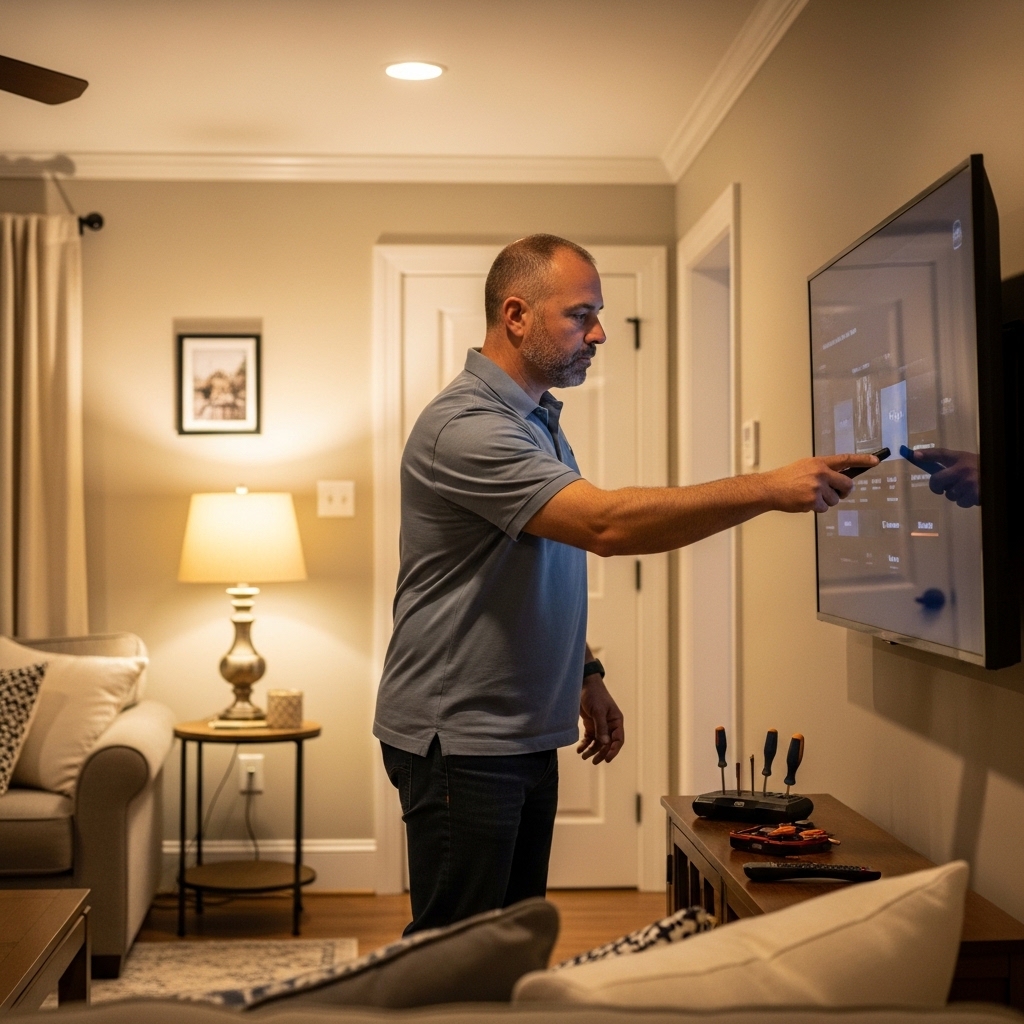

Shoppers browsing for a compact television for a bedroom, kitchen, or home office often wonder why no 32 inch 4k tv models appear on retail display shelves. Compact living quarters frequently demand a screen that fits tight furniture consoles or modest wall brackets, yet the television industry seems fixated almost exclusively on massive 55-inch and 65-inch panels. Consumers looking to purchase a small display naturally expect modern Ultra High Definition clarity, only to discover that the vast majority of compact screens remain locked at standard 1080p Full HD or even basic 720p resolutions. Exploring affordable 40-inch television options highlights this exact industry divide, as smaller form factors rarely receive the advanced panel treatments common to living room displays.
The curious absence of compact 4K displays stems from a combination of glass fabrication economics, optical physics, and consumer willingness to spend. Producing an Ultra HD panel requires cutting millions of microscopic liquid crystal subpixels onto a compact substrate, which significantly increases manufacturing expenses without providing an obvious visual payoff at typical viewing distances. High processing costs, thermal limits, and slim profit margins historically discouraged brands from building premium 32-inch sets. But modern display hardware is beginning to shift, creating distinct choices between specialized 4K smart screens, high-density desktop monitors, and vibrant 1080p displays enhanced with quantum dot color.
Top Products

Pros
- Distinctive Morandi white finish adds an elegant, designer touch to any living space
- Hi-QLED quantum dot layer offers richer color rendition than standard 1080p LED sets
- Fire TV OS provides seamless navigation, extensive streaming app access, and quick live TV discovery
- Compact central stand fits easily onto narrow nightstands and small desks
- Voice control via the Alexa remote streamlines searching and everyday media playback
Cons
- Full HD 1080p resolution rather than 4K Ultra HD
- Standard 60Hz panel lacks premium gaming features like VRR or 120Hz refresh rates
- Compact internal speakers lack deep low-end bass for cinematic action scenes
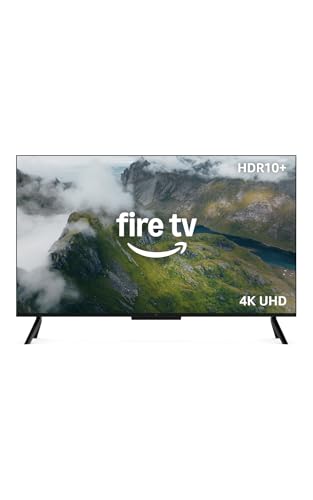
The Hisense 32-Inch S5 DécoTV Series (32S5QF) is a compact Full HD smart television tailored specifically for spaces where aesthetic appeal matters just as much as picture performance. Built around a crisp 1080p Hi-QLED panel, this display steps away from the utilitarian look of standard budget screens by featuring a subtle Morandi white finish and softly rounded contours. Its fluid central pedestal allows it to sit gracefully on dressers, kitchen counters, or dorm room desks without demanding wide entertainment furniture.
This television is particularly well-suited for apartment renters, college students, home office workers, and homeowners seeking an attractive secondary display for a master bedroom, guest room, or breakfast nook. Cord-cutters and casual streamers will appreciate the integrated Fire TV ecosystem, which combines broadcast networks, free ad-supported streaming television, and subscription channels onto one intuitive dashboard. It also serves as a charming option for parents looking for a neat kids room TV that complements lighter room decor.
In terms of visual performance, the inclusion of quantum dot technology on a 32-inch screen is a noteworthy upgrade over traditional entry-level LED panels. The Hi-QLED layer widens the color gamut, producing richer reds, deeper greens, and accurate flesh tones when watching animated features, streaming nature documentaries, or following daytime sports. While it runs at a standard 60Hz refresh rate and tops out at 1080p resolution, pixel density at this 32-inch size remains noticeably sharp from typical viewing distances. For casual console gaming or streaming workout sessions, input response feels sufficiently snappy, while DTS Virtual: X audio processing elevates vocal frequencies so dialogue remains clear even at lower volumes.
The exterior design of the S5 DécoTV demonstrates thoughtful attention to everyday home styling. Its Morandi white enclosure softens the television presence against neutral walls, making the screen look more like a piece of modern tabletop decor than an imposing black rectangle. Beneath the hood, the Fire TV platform delivers smooth navigation across major apps like Prime Video, Netflix, YouTube, and Disney+. The included Alexa voice remote simplifies daily operation, letting viewers search across multiple streaming catalogs, check morning forecasts, or control compatible smart home lighting with simple voice commands.
Shoppers should keep a few realistic expectations in mind before finalizing their setup. Because this is a 32-inch Full HD display, it does not support native 4K playback, nor does it include advanced high-end gaming specifications such as 120Hz refresh rates or variable refresh rate (VRR) tech. Additionally, while the built-in stereo speakers with DTS Virtual: X are perfectly adequate for casual sitcoms and morning news, bass presence remains modest, so action movie fans might eventually want to pair it with a compact Bluetooth speaker or soundbar.
For anyone in the market for a stylish, space-conscious television that avoids the cookie-cutter black plastic aesthetic, the Hisense 32S5QF represents a very sensible choice. It blends quantum dot color richness, seamless Fire TV streaming, and an artistic white chassis into a compact package that looks right at home in any cozy bedroom, studio apartment, or multipurpose room.
The aesthetic appeal of the Hisense S5 DécoTV is easily one of its primary highlights. Most televisions on the market rely on uniform black plastic borders, but the Morandi white finish and fluid lines on this unit allow it to integrate smoothly into Scandinavian, minimalist, or contemporary decor schemes.
Thanks to the compact central stand, placement options expand dramatically. Rather than requiring wide TV benches like sets with spread-out feet, this display rests comfortably on narrow end tables, floating shelves, or vanity dressers, making it an excellent match for compact urban bedrooms and student housing.
With Fire TV integrated directly into the system, cord-cutters have immediate access to thousands of channels, streaming applications, and live broadcast integrations without needing an external streaming stick. The home interface makes switching between live antenna TV and on-demand streaming services completely painless.
The included Alexa voice remote adds great day-to-day utility. By holding the voice button, users can quickly pull up movie genres, launch specific shows on Prime Video or Netflix, set sleep timers before bed, or view connected security camera feeds right on the 32-inch screen.


Pros
- Excellent color volume and accuracy thanks to Quantum Dot technology, even in bright rooms.
- Smooth 144Hz VRR gaming performance for console and PC gamers.
- Sleek, ultra-slim design that looks great on a wall or stand.
- Free access to thousands of channels via Samsung TV Plus without any subscription.
Cons
- 32-inch screen size may be too small for larger living rooms or home theater setups.
- Built-in speakers may lack deep bass for an immersive audio experience; a soundbar is recommended.
- Limited HDMI 2.1 ports could restrict connectivity for multiple high-bandwidth devices.
The Samsung 32-Inch Class QLED Q8F 4K UHD Smart TV (2025 Model) is a compact yet feature-packed television designed for viewers who want premium picture quality in a smaller form factor. This QLED TV uses Quantum Dot technology to deliver over a billion shades of color that remain vibrant and accurate even in bright rooms, making it a strong choice for bedrooms, apartments, or kitchens where lighting conditions vary.
This TV is best suited for apartment renters, bedroom viewers, cord-cutters, and casual gamers who value a sleek design and smart features. The AirSlim profile allows it to sit nearly flush against the wall, creating a clean, modern look. The built-in Samsung TV Plus platform provides thousands of free channels, so you can watch news, sports, movies, and more without any subscription fees. For streamers, the Tizen smart platform offers quick access to Netflix, Disney+, Prime Video, and other popular apps.
Picture quality is a highlight here. The QLED panel produces rich, saturated colors with excellent brightness, and the Q4 AI Processor upscales lower-resolution content to near-4K quality. While it doesn't support Dolby Vision, it does handle HDR10+ content well, offering good contrast and detail in supported movies and shows. Motion handling is smooth thanks to the 144Hz refresh rate, which also benefits gamers by supporting VRR for tear-free gameplay.
Gaming performance is a pleasant surprise for a 32-inch TV. With support for up to 4K 144Hz VRR, it can handle fast-paced titles on next-gen consoles or gaming PCs. Input lag is low, making it responsive for competitive play. However, the limited number of HDMI 2.1 ports may require some cable management if you have multiple devices.
Setup is straightforward: the TV comes with a simple stand, and VESA mounting is compatible for wall installation. The included remote is user-friendly and includes Alexa for voice control. Sound quality from the built-in speakers is adequate for casual viewing, but dialogue clarity and bass response may leave home theater enthusiasts wanting more. A soundbar or external audio system is a worthwhile upgrade for movie nights or sports events.
Overall, the Samsung Q8F is a solid choice for anyone looking for a high-quality small-screen TV with excellent color, smart features, and gaming chops. It's not meant for large living rooms or dedicated home theaters, but for a bedroom, dorm, or secondary viewing area, it delivers impressive performance and value.
The Engineering and Market Realities Behind 32-Inch 4K Displays
The core explanation for the scarcity of 32-inch 4K televisions rests on two pillars: display manufacturing economics and human eye biology. When manufacturers design consumer televisions, they balance component costs against what everyday shoppers are willing to pay for a secondary screen. Understanding how panel foundries cut motherglass and how human vision perceives pixel density reveals why brands prioritize larger screens for Ultra HD resolution while leaving smaller displays to specialized hardware niches.
Manufacturing Economics and Motherglass Fabrication Cuts
Television panels originate from gigantic sheets of substrate glass called motherglass in massive generation 8.5 or generation 10.5 fabrication plants. Display foundries program precise cutting patterns on these glass sheets to maximize usable area and minimize wasted material around the edges. Modern glass production is optimized specifically to cut standard living room screen dimensions, such as 55-inch, 65-inch, and 75-inch panels, which achieve glass utilization rates exceeding ninety percent. Carving out 32-inch panels from these same modern fabrication lines creates awkward scrap margins that inflate the base production cost per square inch.
Fabricating an Ultra HD matrix on a 32-inch diagonal requires placing 3,840 horizontal pixels and 2,160 vertical pixels across a very compact physical surface. This configuration yields a pixel density of roughly 138 pixels per inch, compared to just 68 pixels per inch on a standard 65-inch 4K panel. Etching microscopic thin-film transistors at such extreme densities requires tighter lithography tolerances and cleanroom precision similar to computer monitor fabrication. When a tiny transistor defect occurs during production, an entire panel must be discarded, lowering manufacturing yields.
Lower production yields inevitably push manufacturing costs higher. Television brands operate on razor-thin profit margins in entry-level categories where shoppers expect low prices for bedroom or dorm room sets. Because building a 32-inch 4K panel costs nearly as much as manufacturing a 50-inch 4K panel, brands face a commercial paradox. Few consumers are willing to pay the price of a mid-size living room set for a screen that measures just 32 inches diagonally.
Foundries also prioritize their limited cleanroom capacity for high-margin products. When production lines can produce lucrative laptop displays, premium tablet panels, or high-volume large televisions, dedicating line capacity to niche small television panels makes little financial sense. Consequently, display manufacturers reserve high-density 32-inch glass almost exclusively for specialized commercial monitors or high-end desktop displays rather than mass-market televisions.
Human Visual Acuity and the Viewing Distance Equation
Human optical anatomy plays a decisive role in why television makers rarely produce small Ultra HD screens. Normal 20/20 human vision possesses an angular resolution limit of approximately one arcminute, which represents one sixtieth of a single visual degree. At standard living room or bedroom viewing distances, the human eye cannot resolve individual pixels once pixel density exceeds that physiological threshold. Viewing a 32-inch screen from a typical distance of six to eight feet renders the individual pixels of a 4K resolution screen completely indistinguishable from those of a standard 1080p display.
To perceive any meaningful sharpness increase from a 32-inch 4K panel, a viewer must sit roughly two to three feet away from the glass. Sitting that close creates an immersive desktop computer workstation environment, but it does not represent how people watch television. Most television viewers lean back on a sofa or watch from a bed across the room. At those distances, the human visual system simply blurs the microscopic pixel structure of 1080p and 4K together into an identical perceived image.
Because everyday viewers cannot see the added detail across the room, marketing a 32-inch 4K television produces weak customer satisfaction. Buyers who spend extra money expecting a dramatic leap in picture clarity often feel disappointed when the screen looks virtually identical to their older 1080p television from across the bedroom. Television manufacturers recognized this visual limitation early in the 4K transition cycle and directed their engineering budgets toward screen sizes where Ultra HD delivers undeniable visual impact.
Comparing these viewing realities with mainstream 55-inch televisions for streaming illustrates the optical difference clearly. On a 55-inch display, 4K resolution provides tangible texture and depth from normal living room seating positions. The visual geometry works in favor of larger screens, leaving the 32-inch category focused on color enhancements and compact physical footprints rather than dense pixel grids.
The Cost Threshold of 4K Video Processing Silicon
A television requires far more than just a raw display panel to produce an image; it demands sophisticated internal processing silicon. Rendering native 4K content, upscaling sub-4K cable broadcasts, and executing dynamic tone mapping requires substantial computational power. The system-on-chip inside an Ultra HD television must process over eight million pixels per frame at sixty or one hundred and twenty frames per second, demanding high-bandwidth memory and robust thermal dissipation.
Integrating a capable video processor adds significant expense to the television motherboard. Processors such as the Samsung Q4 AI Processor analyze incoming signals in real time, sharpening low-resolution sources and adjusting contrast frame by frame. Adding these advanced chips, alongside licensed High Dynamic Range decoders and high-bandwidth HDMI controllers, drives the bill of materials well past typical budget constraints. Manufacturers producing entry-level 32-inch screens prefer simpler 1080p system boards that operate on low power and require minimal silicon investment.
Thermal management also complicates compact 4K chassis engineering. Dense pixel arrays require brighter backlights to push light through smaller liquid crystal apertures, generating elevated heat within a cramped enclosure. Dissipating that thermal load inside an ultra-thin frame without noisy active cooling fans requires custom heat spreaders and rigid internal framing. These design necessities further elevate production costs, driving compact sets out of the budget category.
Licensing fees also represent a hidden cost barrier for budget displays. Supporting modern audio and video standards like Dolby Vision, HDR10+, and multichannel audio decoding requires royalty payments per manufactured unit. On a flagship living room television, licensing fees represent a negligible fraction of the total retail price. On a compact display intended for budget-conscious consumers, those same fixed fees consume a massive portion of the manufacturer profit margin.
Why Computer Monitors Dominate the 32-Inch 4K Space
While 32-inch 4K televisions remain rare, 32-inch 4K computer monitors represent a thriving and competitive market sector. The fundamental difference lies in viewing distance and workstation ergonomics. Desktop PC and Mac users position themselves between twenty and thirty-six inches from the display glass. At arm-length viewing distances, 138 pixels per inch provides razor-sharp typography, seamless digital workspace scaling, and crystal-clear image editing.
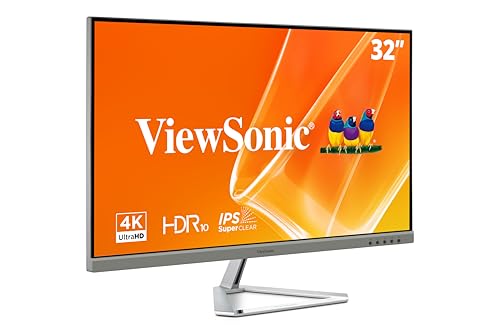
Dedicated displays like the ViewSonic VX3276-4K-MHD 32 Inch 4K UHD Monitor showcase why the computer space embraced this form factor. Featuring an MVA panel, HDR10 content support, and an ultra-slim profile, this monitor delivers crisp Ultra HD entertainment for desktop cinema and productivity alike. Built-in ViewMode presets allow quick switching between game, movie, web, and text modes, optimizing contrast curves and gamma response for close-up viewing tasks.
Desktop monitors also cater to professional connectivity requirements that televisions often ignore. The inclusion of DisplayPort, Mini DisplayPort, and dual HDMI inputs allows simultaneous connections to laptops, desktop towers, and streaming boxes. Eye-care features like integrated Flicker-Free technology and hardware Blue Light Filters protect vision during extended work or movie marathons, addressing comfort needs specific to desk environments.
However, using a monitor as a bedroom television introduces functional compromises that buyers must weigh carefully. Computer monitors generally lack integrated smart operating systems, RF antenna tuners, and traditional handheld infrared remotes. While integrated stereo speakers may be present, they rarely provide room-filling audio, and navigating menu settings via chassis buttons can feel awkward compared to standard television remotes. Users typically must attach an external streaming stick to bridge the smart platform gap.
Examining Rare Exceptions: The Premium 32-Inch 4K Television
Although rare across the broader market, premium 32-inch 4K smart televisions do exist for buyers who refuse to sacrifice picture clarity in compact rooms. Samsung addressed this high-end compact niche directly with models like the Samsung 32-Inch Class QLED Q8F 4K UHD Smart TV. Rather than treating the 32-inch format as an entry-level budget compromise, this display incorporates flagship-grade picture engineering into a space-saving chassis.
Powered by the Samsung Q4 AI Processor, this compact television scales lower-resolution content up to 4K resolution with AI-enhanced color and audio processing. The display leverages Quantum Dot technology to achieve one hundred percent color volume, maintaining rich color fidelity across variable brightness levels. An AirSlim design provides a clean, low-profile wall appearance, blending naturally into bedrooms, executive offices, or luxury kitchen installations where bulky sets look out of place.
Shoppers can also find this hardware configured in dedicated packages like the Samsung QN32Q8FAAFXZA 32 Inch Class QLED Q8F 4K bundle with a WireLogic Ruby 8ft Ultra High Speed HDMI cable. The supplied high-speed cable supports up to 48Gbps data rates, ensuring reliable bandwidth for high-frame-rate video feeds, HDR passthrough, and eARC audio connectivity. Another bundled option provides the Samsung QN32Q8FAAFXZA 32 Inch Class QLED Q8F 4K display paired with an Amber protection plan and an alcohol-free screen cleaning kit for safe anti-reflective panel care.
Gaming capabilities on this compact Samsung series represent an exceptional engineering feat. The manufacturer lists support for Variable Refresh Rate gaming at up to 4K 144Hz, delivering tear-free motion clarity for PC rigs and modern gaming consoles. Built-in Tizen smart software offers extensive free channel streaming through Samsung TV Plus alongside integrated Alexa voice controls, proving that compact dimensions can coexist with high-end display technology when shoppers accept a premium price point.
High-Definition Alternatives: When 1080p QLED Makes Practical Sense
For most viewers seated across a bedroom or dining area, raw pixel resolution matters far less than contrast, color saturation, and cabinet aesthetics. This reality makes high-performance Full HD televisions an attractive, cost-effective alternative to expensive 4K panels. Modern quantum dot enhancement layers allow 1080p displays to produce color depth and dynamic range that easily surpass older edge-lit panels.
The Hisense 32-Inch S5 DécoTV Series Hi-QLED FHD exemplifies this practical design philosophy. Featuring Hi-QLED color technology, this 1080p smart television delivers vibrant, true-to-life shades that elevate casual viewing without incurring the steep costs of an Ultra HD panel. Its art-inspired aesthetic incorporates a Morandi white finish with flowing curves and a fluid central stand, blending smoothly into cozy bedroom corners or contemporary living spaces.
Smart platform usability on this Hisense model is powered by Fire TV, giving viewers immediate access to live channels, streaming applications, and a live channel guide. An Alexa voice remote allows seamless content searches, timers, and smart home controls. Audio processing benefits from DTS Virtual:X decoding, which enhances dialogue clarity and creates wider virtual acoustic presence from compact built-in chassis speakers.
Choosing an advanced 1080p QLED television over an elusive 4K screen provides noticeable visual benefits where they matter most. Because human vision at six feet cannot resolve the extra pixels of 4K on a 32-inch screen anyway, prioritizing wide color gamut coverage and intuitive smart streaming yields a visibly richer entertainment experience. Shoppers gain premium aesthetic design and vibrant color while avoiding unnecessary silicon surcharges.
Viewing Distance Geometry and Field-of-View Calculations
Determining whether a 32-inch 4K screen fits a specific room layout requires evaluating viewing distance geometry. Industry cinema standards from organizations like SMPTE and THX recommend a thirty-degree to forty-degree field of view for immersive video playback. On a massive screen, achieving that field of view allows viewers to relax across a spacious living room. On a 32-inch screen, geometry forces viewers much closer to the physical display glass.
To achieve a thirty-degree field of view on a 32-inch television, the seating position must be located roughly 4.3 feet away from the screen. Increasing the immersion to a cinematic forty-degree field of view requires pulling the seating position inward to approximately 3.2 feet. Seating arrangements beyond five feet cause the screen to occupy less than twenty-five degrees of human vision, making it behave like a casual background monitor rather than an engaging home theater centerpiece.
When viewers sit beyond five feet, the optical threshold for discerning 4K detail collapses entirely on a 32-inch diagonal. The human retina simply lacks the resolving power to separate adjacent subpixels at that angular scale. This geometric limitation explains why sports fans seeking high-speed action often migrate toward Mini-LED displays for sports in larger 55-inch or 65-inch sizes, where high sustained brightness and wide fields of view deliver realistic motion tracking.
Carefully measuring room seating distances prevents costly buying mistakes. If the intended mounting location on a bedroom dresser sits seven or eight feet away from the headboard, purchasing an expensive 32-inch 4K display yields zero discernible sharpness benefit over a quality 1080p QLED display. Conversely, if the screen sits directly on a corner desk or workstation where viewing occurs within three feet, an Ultra HD panel provides striking, visible clarity.
Choosing Between a Small 4K Television and a 4K Monitor
Buyers determined to secure a 32-inch 4K display must decide between a dedicated smart television like the Samsung Q8F series and a high-resolution desktop monitor like the ViewSonic VX3276-4K-MHD. Each display category solves distinct user needs, and selecting the right hardware depends on how media content enters the room. Examining audio connectivity, input ports, and interface controls helps clarify the best path.
Dedicated smart televisions excel in standalone entertainment environments where simplicity matters. A television incorporates an integrated smart operating platform like Tizen or Fire TV, bringing native streaming apps, broadcast tuners, and voice remotes into a unified package. Televisions also feature HDMI eARC audio passthrough, allowing direct, uncompressed audio transmission to an external soundbar or AV receiver. For viewers wanting a straightforward bedroom display controlled via a handheld remote from bed, a native television represents the most practical choice.
Desktop 4K monitors provide superior input versatility for mixed-use computer workstations and gaming setups. Monitors feature DisplayPort connections alongside HDMI ports, providing seamless connectivity for PC graphic cards, Mac laptops, and game consoles. They often feature aggressive anti-glare matte coatings designed to disperse harsh overhead office lighting, minimizing reflections during daytime productivity sessions. However, using a monitor for casual bedroom viewing typically requires adding a streaming stick, external powered speakers, and a separate universal remote.
Mounting specifications also differ across display categories. While both televisions and monitors frequently adhere to standard VESA mounting patterns, monitors are engineered with lightweight desk arms and articulated monitor mounts in mind. Televisions feature broader internal chassis bracing designed for flush wall brackets and furniture stands. Verifying the weight rating and screw thread pitch before mounting ensures secure installation regardless of the chosen screen type.
Summary of Practical Solutions for Compact Living Spaces
Navigating the compact display market requires matching physical room dimensions to realistic display capabilities. The historical lack of 32-inch 4K televisions is not an oversight by manufacturers, but a calculated response to fabrication costs and human optical limits. Understanding these factors empowers buyers to select hardware that fits their practical daily viewing habits without overspending on invisible specifications.
Viewers who sit close to their screens at a desk or intimate workstation will gain genuine visual rewards from high-density 4K hardware. In those close-up scenarios, selecting a versatile display like the ViewSonic 32-inch 4K monitor or the premium Samsung Q8F 4K QLED television provides pristine text clarity and detailed gaming textures. For these close-range setups, the extra pixel density justifies the investment.
For standard bedroom, kitchen, and guest room viewing where seating sits several feet away, choosing a feature-rich 1080p display like the Hisense S5 DécoTV represents the smartest value. Prioritizing quantum dot color enhancement, elegant decor-friendly chassis styling, and responsive smart streaming platforms delivers an enjoyable entertainment experience that fits compact living spaces perfectly.



Write Your Review
No reviews yet. Be the first to share your experience!