
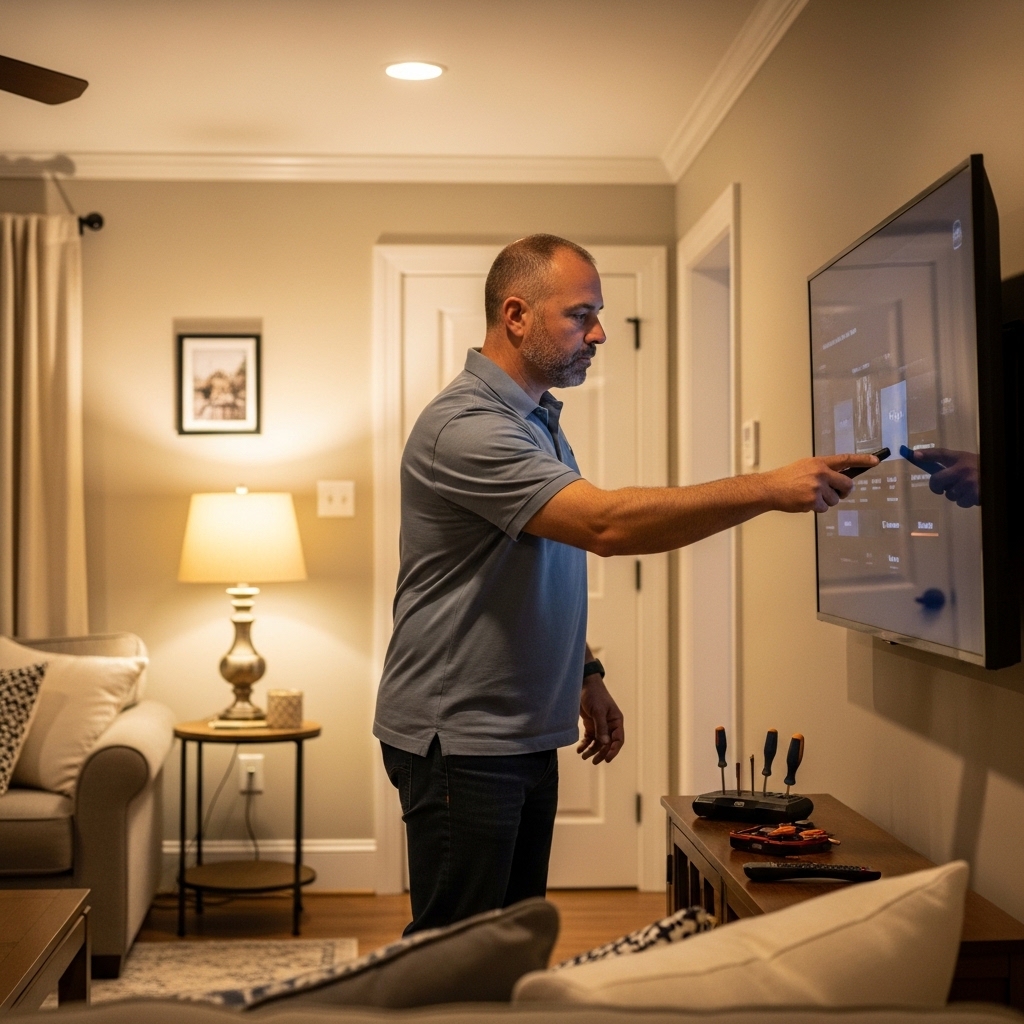

Upgrading to an Ultra High Definition television promises four times the pixel resolution of standard 1080p displays, yet many viewers sit down and immediately wonder what tv programs are in 4k. Cable providers and standard over-the-air networks still distribute the majority of their channels in 720p or 1080i high definition, which relies entirely on internal TV processing engines to fill the display. Understanding where to locate genuine Ultra HD content prevents the frustration of watching heavily compressed video on a capable 55-inch streaming television.
The reality of modern television is that pristine native 4K resolution has migrated almost exclusively to major streaming services, high-budget prestige series, nature documentaries, and select live sporting events. Premium streaming applications deliver expansive libraries featuring High Dynamic Range (HDR) formats like HDR10+ and Dolby Vision, bringing out specular highlights and rich color volumes that standard cable cannot replicate. Equipping your home entertainment center with reliable streaming hardware and proper network bandwidth ensures your screen displays every pixel exactly as production directors intended.
Pros
- Delivers crisp 4K Ultra HD picture clarity with dynamic HDR10+ color support.
- Alexa+ voice integration simplifies content discovery across numerous streaming platforms.
- Supports Xbox cloud gaming without requiring an expensive physical video game console.
- Extremely compact and lightweight design remains completely hidden behind your display.
- Provides quick access to a huge catalog of live, free, and subscription entertainment channels.
Cons
- Relies on HDR10+ without listed support for Dolby Vision dynamic metadata.
- Xbox cloud gaming performance depends heavily on home Wi-Fi stability and requires a separate paid subscription.
- The home screen displays sponsored banners and promotional content rows that some viewers may find cluttered.
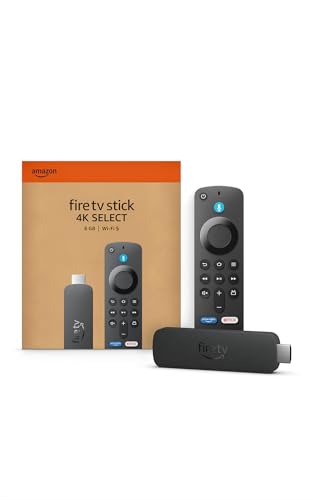
The Amazon Fire TV Stick 4K Select serves as a dedicated streaming media player built to transform any standard television into an intelligent entertainment display. Designed primarily for cord-cutters, apartment renters, busy families, and bedroom TV users, this compact dongle attaches directly to an open HDMI port. It presents a cost-effective way to modernize older flat-screen sets or replace sluggish built-in smart TV interfaces with an updated, responsive operating system.
Regarding visual performance, the device supplies crisp 4K Ultra HD playback with high dynamic range support via HDR10+. Connected to an HDR10+ capable LED, QLED, or OLED TV, viewers can enjoy enhanced contrast ratios, punchy colors, and clear highlights during movie nights or weekend sports broadcasts. Fast motion handling remains smooth for live hockey matches or football games, provided your home Wi-Fi delivers sufficient bandwidth to prevent buffering drops.
Smart functionality stands out through the modernized Fire TV user experience, backed by natural voice interaction through Alexa+. Rather than endlessly scrolling through distinct apps, viewers can speak naturally to find specific genres, track down actors, or manage playback across services like Prime Video, Netflix, Disney+, and Max. Furthermore, the inclusion of Xbox cloud gaming through Xbox Game Pass turns your living room TV into a casual console, allowing users to pair a wireless Bluetooth gamepad and play blockbuster titles directly over the cloud.
In terms of hardware build and everyday practicality, the player measures just over four inches long and weighs less than a tenth of a pound. This low-profile profile easily hides behind slim wall-mounted displays without demanding complex cable management or bulky shelf space. Connectivity relies on standard HDMI along with Wi-Fi, making the initial configuration quick and straightforward for non-technical users looking to stream workout videos, news updates, or late-night shows.
A few practical considerations are worth observing before choosing this model. The specifications highlight HDR10+ rather than Dolby Vision, which might leave dedicated home theater buffs wanting broader premium HDR format support. Furthermore, while the cloud gaming feature works well for casual play, competitive gamers may notice occasional latency depending on home network congestion, and an active Xbox Game Pass subscription is required.
For everyday viewers, apartment living rooms, student dorms, and guest bedrooms, the Fire TV Stick 4K Select delivers remarkable utility. It combines reliable 4K playback, an expansive library of free and premium streaming apps, and smart voice assistance into an unobtrusive footprint. Whether organizing family cartoon marathons or catching the big game with friends, this streaming player provides a practical, straightforward upgrade for modern home entertainment.
The updated interface prioritizes speed, helping family members pin their favorite applications directly to the home bar for one-click access. Integration with Alexa+ enables conversational searches, meaning you can ask for movies by quote or ask for recommendations based on mood, eliminating repetitive remote clicking.
For casual gamers, the ability to stream Xbox titles straight to the television via Xbox Game Pass provides an accessible alternative to buying a dedicated console. Players simply connect a compatible Bluetooth controller, launch the app, and play major titles with low input lag on solid Wi-Fi connections.
Physical installation requires only seconds, as the stick slots right into any open HDMI port on the back or side of your television. Because it draws power via an included cable and adapter, it stays hidden away, keeping living room entertainment consoles clean and wire-free.
The player pairs effortlessly with home Wi-Fi networks and guides users through a fast on-screen setup process. Once connected, users can also control compatible smart lights, thermostats, and security cameras straight from the couch using the included voice remote.
Where to Find Native 4K TV Programs and Ultra HD Content
Native Ultra High Definition programming transformed home entertainment from simple pixel multiplication into an immersive cinematic experience. While hardware manufacturers began selling 4K screens over a decade ago, content distribution networks required years to develop the broadband infrastructure necessary for smooth delivery. Today, knowing what tv programs are in 4k requires understanding the divide between on-demand streaming networks, premium live event production, and traditional legacy cable systems. Viewers who rely solely on basic television packages often miss out on the incredible clarity, wider color gamuts, and realistic contrast ratios modern panels produce.
Streaming Platforms Delivering Original 4K Television Series
Subscription streaming platforms represent the primary destination for native 4K scripted television series and big-budget episodic dramas. Production leaders such as Netflix, Amazon Prime Video, Apple TV+, and Disney+ mandate that their flagship original programming is captured using certified 4K cinema cameras. Acclaimed series like Stranger Things, The Lord of the Rings: The Rings of Power, and The Mandalorian serve as premier showcases for ultra-high-definition clarity. Watching these productions reveals crisp background textures, fine clothing weaves, and subtle facial nuances that standard high definition smears.
Securing 4K resolution on streaming platforms often involves specific subscription tiers that catch viewers off guard. Netflix, for example, confines its 4K Ultra HD and Dolby Atmos streaming to its top-tier Premium plan, while entry-level tiers cap playback quality at 1080p high definition. Platforms like Prime Video and Apple TV+ include 4K playback across their core catalogs, although select services now restrict dynamic HDR formats behind supplementary plans. Checking your active subscription level is an essential step to ensure your screen receives full 2160p video files rather than downscaled streams.
Specialty streaming hubs such as Max, Paramount+, and Peacock also host expanding selections of 4K television programs and prestige miniseries. Max reserves Ultra HD resolution for its highest subscription tier, offering dramatic titles like House of the Dragon and The Last of Us in master-grade presentations. Paramount+ delivers series such as Star Trek: Strange New Worlds in 4K with Dolby Vision mastering, while Peacock streams select original comedies and drama pilots in 4K HDR. Inspecting the on-screen badge beside a title confirms whether a specific season supports high-resolution playback before starting an episode.
Live Sports Broadcasts Available in 4K Ultra HD
Live sports programming remains the most coveted category of television for high-resolution viewing, but live 4K availability follows a different production model than pre-recorded streaming series. Major networks including Fox Sports, NBC Sports, and ESPN produce select high-profile athletic events in 4K, including playoff football games, the World Series, and Premier League soccer matches. Pairing this fast-moving content with a capable Mini-LED display for fast sports highlights the fluid motion and crisp stadium detail that standard broadcast feeds lack. However, regular weekly regular-season games are still primarily transmitted in legacy high-definition formats.
Understanding how networks handle sports production clarifies why some 4K sporting events look markedly sharper than others. Several sports broadcasters capture on-field cameras in 1080p high dynamic range at high frame rates, then upscale the composite program feed to 4K for digital distribution. This hybrid production pipeline still provides significant benefits over standard 720p cable feeds by delivering enhanced contrast, richer grass colors, and cleaner compression lines around player jerseys. True end-to-end 4K sports broadcasts, such as select European soccer matches and golf tournaments, utilize full 4K production trucks to deliver unmatched realism.
Accessing 4K sports broadcasts generally requires using proprietary network applications or subscribed multichannel live television services. The Fox Sports app frequently provides complimentary 4K HDR streams of major events when users authenticate with their television provider credentials. Multichannel streaming platforms such as Fubo and YouTube TV maintain dedicated 4K event channels that light up during scheduled games, though they typically require dedicated 4K add-on packages. Prime Video has also entered the live sports arena by streaming Thursday Night Football with advanced encoding profiles designed to optimize high-motion clarity for home viewers.
Why Cable and Over-the-Air Networks Lag Behind Streaming
Traditional cable systems and satellite television distributors face substantial bandwidth bottlenecks that prevent them from broadcasting regular television programs in native 4K. Legacy coaxial cable infrastructure uses quadrature amplitude modulation channels that have finite data capacity shared across hundreds of simultaneous television networks and broadband internet subscribers. Allocating the significant data rates required for a single uncompressed 4K channel would force cable providers to eliminate multiple high-definition channels. Consequently, linear cable channels remain locked in 720p or 1080i video standards that date back more than two decades.
Over-the-air broadcast networks face similar physical constraints within the public radio frequency spectrum. The established ATSC 1.0 broadcast standard utilized by local NBC, CBS, ABC, and Fox affiliates lacks the transmission bandwidth to deliver native 4K signals across city regions. While viewers utilizing modern antennas for broadcast reception enjoy uncompressed 1080i and 720p pictures with significantly fewer compression artifacts than cable feeds, native 4K transmissions remain unavailable over ATSC 1.0. Upgrading over-the-air television to genuine 4K requires the widespread rollout and adoption of the ATSC 3.0 NextGen TV broadcast standard.
The ATSC 3.0 standard uses modern High Efficiency Video Coding compression to make over-the-air 4K broadcast signals technically viable. Broadcasters in select major metropolitan markets have begun transmitting NextGen TV signals, but the majority of initial programming consists of upscaled 1080p feeds with high dynamic range rather than native 4K source video. Broadcasters cite the immense capital expense of replacing control room infrastructure, transmission antennas, and remote field cameras as the main barrier to full 4K adoption. For the immediate future, viewers seeking regular 4K episodic television must continue looking toward high-speed internet connections and streaming platforms.
Essential Hardware and Bandwidth Requirements for 4K Playback
Delivering pristine 4K video files from remote content servers to your living room screen demands modern playback hardware and robust digital interfaces. A dedicated external streaming media player, such as the Amazon Fire TV Stick 4K Select (newest model), provides the necessary processing muscle to decode high-efficiency video streams without frame dropping or navigation lag. Modern players feature support for advanced dynamic HDR formats like HDR10+, integrated voice navigation through Alexa+ to locate 4K titles swiftly, and cloud gaming capabilities through Xbox Game Pass. Utilizing a dedicated streaming device often delivers a faster, cleaner interface than aging built-in smart TV operating systems that struggle with bloated memory caches.
Physical hardware connections require strict adherence to high-bandwidth digital content protection standards. Streaming 4K Ultra HD video requires an HDMI port that supports HDCP 2.2 or HDCP 2.3 copy protection protocols on both the media streamer and the television display. Connecting a 4K streaming stick to an older HDMI port rated only for HDCP 1.4 will trigger an automatic handshake failure, forcing the streaming application to downgrade the video resolution to standard 1080p. High-speed HDMI cables rated for at least 18 gigabits per second are essential to carry 4K video signals at 60 frames per second alongside multi-channel surround sound formats without signal dropouts.
Consistent internet bandwidth serves as the vital lifeline for uncompressed 4K television streaming. Most major streaming applications recommend a minimum sustained download speed of 25 megabits per second for a single 4K stream, though maintaining 50 megabits per second or higher provides a comfortable buffer against household network congestion. If multiple smart devices share your home Wi-Fi network, local bandwidth drops can cause streaming apps to dynamically downscale picture resolution to prevent buffering pauses. Placing your wireless router near your entertainment center or utilizing dual-band five gigahertz Wi-Fi connections helps ensure a stable, continuous data stream for uninterrupted 4K enjoyment.
High Dynamic Range Formats Accompanying 4K TV Programming
Evaluating 4K television programs involves more than counting the 3840 by 2160 pixels arranged across your display panel. The true visual leap in modern television production comes from High Dynamic Range (HDR) mastering, which dramatically expands the contrast ratio and color palette of each scene. HDR allows production studios to preserve intense highlights, such as bright explosions or glistening sunlight on water, while simultaneously maintaining deep shadow details in dark rooms. Without high dynamic range, a 4K image simply looks sharper, but with HDR, the image gains realistic three-dimensional depth and striking optical realism.
Different television programs and streaming networks utilize competing HDR formats to transmit dynamic luminance instructions to your television. HDR10 represents the baseline open standard supported by virtually all 4K televisions, applying static contrast parameters across an entire movie or episode. Advanced formats like Dolby Vision and HDR10+ utilize dynamic metadata, adjusting brightness, specular highlights, and color saturation on a scene-by-scene or frame-by-frame basis. This dynamic adjustment prevents dark scenes from looking crushed and ensures bright daylight scenes never appear blown out or washed out on panels with moderate peak brightness.
Live 4K television broadcasts typically rely on Hybrid Log-Gamma (HLG), an HDR standard developed collaboratively by the BBC and NHK for broadcast efficiency. HLG packages standard dynamic range and high dynamic range signals into a single broadcast transmission, allowing legacy displays and modern HDR screens to read the same feed simultaneously. When tuning into a live 4K sporting event or concert special, your television processor recognizes the incoming HLG metadata and automatically engages expanded color and luminance processing. Ensuring your television supports multiple HDR standards, including HLG and HDR10+, guarantees optimal picture delivery across both live and on-demand programs.
How to Verify Your TV Program Is Actually Playing in True 4K
Many viewers assume their screen is displaying 4K Ultra HD simply because their television panel has a 4K resolution sticker on the frame. Because streaming applications use adaptive bitrate streaming engines, a show will quietly degrade to 1080p or 720p if your internet connection dips, all without displaying any error message or pausing playback. To verify active video quality, access the on-screen information bar of your streaming application or press the status button on your television remote. A genuine 4K stream will display clear technical labels indicating 2160p resolution, UHD badges, and active HDR or Dolby Vision indicators.
Television picture settings also provide immediate confirmation of incoming high-resolution content. When your television detects a native 4K signal paired with high dynamic range metadata, it automatically switches its internal picture mode from standard SDR to an HDR or Dolby Vision profile. An on-screen pop-up banner briefly showing the HDR format logo usually appears in the upper corner of the screen when playback begins. If you open your TV picture settings menu during playback and see standard brightness controls rather than HDR peak luminance adjustments, the application is feeding your screen a standard dynamic range broadcast.
Checking internal application diagnostics on devices that support developer menus can reveal real-time streaming bitrates and frame rates. On platforms like YouTube, toggling the Stats for nerds overlay provides precise data showing current viewport resolution, source video resolution, and buffer health. If the source resolution reads lower than 3840 by 2160, you may need to enter the application settings menu and manually adjust the streaming quality from automatic to maximum. Ensuring you are not tethered to low-power mobile hotspot limits or data-saver modes on your streaming account also prevents unauthorized resolution downgrades.
Maximizing Video Quality for Sub-4K Television Broadcasts
Even the most dedicated home theater enthusiast will regularly encounter television programs, news broadcasts, and older films produced solely in 720p or 1080p high definition. Modern 4K displays utilize sophisticated image processing chips that employ neural networks, spatial filters, and edge-smoothing algorithms to upscale lower-resolution signals across the eight million pixels of the screen. A high-quality internal upscaler analyzes adjacent pixels and reconstructs missing fine details without introducing harsh digital ringing artifacts or exaggerated halos around edges. Selecting a display with robust video processing ensures that daily cable news and sports broadcasts look clean and natural.
Optimizing television picture presets plays a crucial role in preventing low-resolution broadcasts from looking artificial or overly noisy. Factory default picture settings like Vivid or Dynamic mode apply aggressive artificial sharpening and excessive saturation that exaggerate compression noise, macroblocking, and pixelation on standard cable feeds. Switching your television to Filmmaker Mode or Cinema preset disables artificial edge enhancement and sets color temperature to the industry-standard D65 white point. This calibration allows the TV processor to present standard definition and high-definition content with smooth gradients and faithful color tones.
Motion interpolation settings should also be carefully adjusted to match the type of television programming on screen. Features marketed under names like motion smoothing, TruMotion, or Auto Motion Plus insert calculated artificial frames between original broadcast frames to reduce judder. While subtle motion smoothing can help stabilize fast-moving live sports broadcasts, it introduces a distracting soap opera effect during cinematic television series and scripted dramas. Turning off artificial motion interpolation or selecting custom low-strength de-judder settings preserves the original 24-frame-per-second film cadence intended by directors.
Navigating the landscape of 4K television programs requires aligning the right streaming services, capable playback hardware, and sufficient network speeds with your Ultra HD display. While traditional cable providers continue to lag behind, the world of on-demand streaming and premium live sports broadcasts offers an unprecedented wealth of breathtaking 4K entertainment. Equipping your home theater with a modern streaming stick, verifying active HDR signals, and dialing in accurate picture presets guarantees you experience every television show with stunning clarity and rich, authentic color.




Write Your Review
No reviews yet. Be the first to share your experience!