

Stepping into an electronics showroom or browsing online listings often leaves shoppers wondering whether a larger screen actually delivers crisper detail or simply blows up the image. Understanding exactly how many pixels in a 65 inch 4k tv helps you evaluate whether this popular screen size provides the sharp visual clarity your living room demands. Modern displays rely on dense pixel grids to render lifelike textures, razor-sharp text, and smooth photographic gradients. When you compare a large panel against a smaller screen like a 55-inch television for streaming, the underlying pixel architecture reveals how seating distance and screen dimensions interact.
Every standard Ultra High Definition television displays an identical grid pattern across its panel, regardless of brand engineering or backlighting technology. The total count always measures 3,840 horizontal pixels by 2,160 vertical pixels, yielding a total of 8,294,400 active pixels. While that resolution remains fixed across every modern 4K screen, the perceived sharpness depends on pixel density, ambient lighting, and intelligent upscaling processors. Exploring how these millions of picture elements work alongside advanced Mini-LED and QLED backlights ensures you select the right display for your entertainment space.

Pros
- Mini-LED backlighting with local dimming delivers rich contrast and deep blacks for movie night.
- Native 144Hz refresh rate provides fluid motion handling for PC and next-gen console gaming.
- Anti-reflection screen coating significantly reduces distracting glare in sunlit living rooms.
- Comprehensive HDR format support including Dolby Vision IQ, HDR10+ Adaptive, and IMAX Enhanced.
- Built-in subwoofer adds noticeable low-end punch compared to standard flat-screen speakers.
Cons
- Fire TV home screen features sponsored content and promotional banners that some viewers may dislike.
- Off-angle viewing can show slight color desaturation compared to high-end OLED displays.
- Audio performance, while enhanced by the built-in sub, still trails a dedicated multi-speaker soundbar setup.
The Hisense 65-inch U6 Pro Series (65U6SF Pro) represents a modern 4K Mini-LED smart television designed to bridge high-end display technology with accessible living room entertainment. Geared toward U.S. homeowners, apartment renters, avid gamers, sports fans, and movie lovers, this 65-inch display delivers serious visual performance for everything from late-night film screenings to Sunday football watch parties. With its combination of Mini-LED local dimming and quantum dot color, it offers an appealing sweet spot for cord-cutters and families who want cinema-grade immersion without paying flagship OLED prices.
Picture quality stands out thanks to the Hi-QLED panel backed by hundreds of Mini-LED lighting zones. This arrangement allows the screen to achieve deep, inky black levels alongside bright, vibrant specular highlights, virtually eliminating the washed-out gray look common on standard edge-lit displays. Full HDR compatibility is another major strength, as the set supports Dolby Vision IQ, HDR10+ Adaptive, HDR10, and HLG. With the onboard Hi-View AI Engine dynamically optimizing color saturation and tone mapping frame by frame, movie scenes maintain lifelike skin tones and accurate textures validated by Pantone standards.
Fast-paced entertainment receives a noticeable boost from the native 144Hz refresh rate and Motion Rate 480 technology. Gamers connecting a current-generation console or a gaming PC will appreciate the fluid frame rates and crisp response during competitive multiplayer sessions. Sports enthusiasts will likewise benefit from reduced motion blur during rapid soccer passes, hockey slapshots, and deep football passes. The display also incorporates an anti-reflection, glare-free coating that combats direct sunlight from large living room windows, keeping the on-screen action visible and punchy during daytime viewing.
For everyday navigation, the integrated Fire TV operating system brings endless streaming options directly to the forefront. Viewers can easily search across popular apps such as Netflix, Prime Video, Disney+, and YouTube using the voice-enabled remote powered by Alexa+. Audio performance is also elevated beyond basic flat-screen standards courtesy of a dedicated built-in subwoofer and Dolby Atmos processing. Explosions, musical basslines, and dramatic movie scores carry a satisfying physical presence that enhances everyday entertainment without forcing an immediate soundbar purchase.
From a design perspective, the unibody slim aesthetic features razor-thin bezels that keep the focus squarely on the picture. Weighing approximately 40.8 pounds, it can be mounted flush on standard VESA wall brackets or placed on a sturdy media console. While wide viewing angles may show slight color shift when viewed from extreme off-center couch positions, the front-and-center experience remains stellar. For households seeking high-refresh-rate gaming, premium HDR playback, and seamless streaming in an all-in-one package, this 65-inch television offers standout versatility and dependable long-term value.
Competitive players and casual console gamers will find plenty to like about the Hisense U6 Pro. The native 144Hz panel ensures ultra-fast frame rates, making high-speed action in first-person shooters, racing simulators, and sports titles feel crisp, immediate, and responsive.
With built-in support for variable refresh rate technology and auto low latency mode, the display automatically optimizes input lag as soon as a compatible console or gaming rig is detected. Whether setting up for a weekend gaming marathon or casual weeknight sessions, the smooth motion handling keeps distractions to a minimum.
Combining Mini-LED backlights with Hi-QLED quantum dots allows this television to deliver intense contrast and expansive color reproduction. Hundreds of localized dimming zones work in real time to produce rich, dark shadows while maintaining blinding highlight clarity in bright HDR sequences.
Dolby Vision IQ and HDR10+ Adaptive use ambient light sensors to automatically adjust picture parameters based on your living room lighting conditions. From sunny daytime sports viewing to dark home theater movie nights, the screen consistently balances brightness and contrast for optimal detail.

Pros
- Exceptional picture quality with Mini LED technology and AI processing for vibrant colors and deep contrast.
- Exclusive PS5 integration enhances gaming with automatic HDR and picture mode adjustments.
- Robust smart TV platform with Google TV, voice control, and broad streaming app support.
- Impressive motion handling at 120Hz, ideal for sports and high-action content.
Cons
- Premium pricing may not suit budget-conscious shoppers.
- Built-in sound, while good, may still benefit from a dedicated soundbar for fuller audio.
- Some users may find the Google TV interface occasionally sluggish with heavy app loads.
The Sony BRAVIA 5 65-inch TV (2025 model) is a Mini LED 4K smart TV that combines advanced backlighting with AI-driven picture processing. It's designed for homeowners, apartment renters, home theater enthusiasts, gamers, sports fans, movie lovers, families, cord-cutters, streamers, and tech enthusiasts who demand top-tier picture quality and smart features. This TV is also a strong candidate for gift buyers looking for a premium home entertainment upgrade.
Picture quality is the standout feature here. The Mini LED backlight, controlled by Sony's XR Backlight Master Drive, delivers impressive brightness and deep black levels, resulting in excellent contrast for HDR content. The XR Processor with AI enhances color, contrast, and clarity in real time, making everything from streaming movies to live sports look vivid and detailed. Dolby Vision and IMAX Enhanced support further elevate the cinematic experience, while XR Motion Clarity keeps fast action blur-free.
Gamers will appreciate the 120Hz refresh rate and exclusive PlayStation 5 features like Auto HDR Tone Mapping and Auto Genre Picture Mode, which automatically optimize picture settings for gaming and streaming. The Game Menu centralizes gaming picture settings and assist features. With HDMI 2.1 support and low input lag, this TV is well-suited for competitive gaming and immersive single-player titles.
The Google TV platform provides easy access to all major streaming apps, including Netflix, Disney+, Prime Video, and more. Voice control via Google Assistant, along with Apple AirPlay 2 and Google Cast, makes content discovery and casting simple. The TV also includes SONY PICTURES CORE for access to movies and IMAX Enhanced content.
Build quality is solid, with a sleek black design and slim bezels that look great in any living room or home theater setup. The TV weighs 58 pounds and measures 57 x 32.88 x 13.63 inches, making it suitable for wall mounting with a standard VESA pattern. The included remote is functional, though some users may prefer a backlit option.
While the built-in speakers deliver clear dialogue and support Dolby Atmos, they may lack the bass and immersion of a dedicated soundbar. The premium price reflects the advanced technology, but for those seeking top-tier picture quality, gaming features, and smart TV convenience, the Sony BRAVIA 5 is a compelling choice. It's ideal for movie nights, Super Bowl parties, gaming marathons, and everyday streaming.
Pros
- Excellent picture quality with QLED, Dolby Vision, HDR10+ Adaptive, and full-array local dimming.
- Fast and responsive smart TV experience thanks to Wi-Fi 6 and a new quad-core processor.
- Convenient hands-free Alexa controls and Omnisense wake feature for instant use.
- Great value for a 65-inch QLED TV with premium features at a competitive price.
- Privacy-focused with a microphone disconnect switch.
Cons
- Built-in audio may not satisfy home theater enthusiasts; a soundbar is recommended for immersive sound.
- No HDMI 2.1 ports for 4K 120Hz gaming; best suited for casual streaming and cloud gaming.
- Limited to Fire TV ecosystem; users preferring Roku or Google TV may need an external streamer.
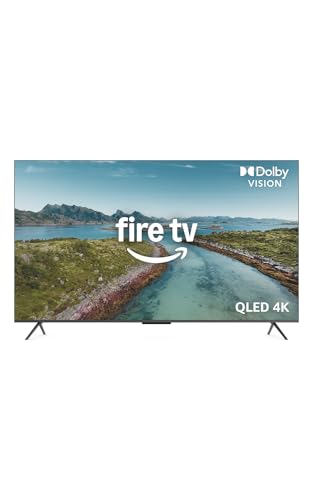
The Amazon Fire TV 65" Omni QLED Series is a 4K smart television that brings together impressive QLED picture quality with the convenience of the Fire TV platform. Designed for families, cord-cutters, and streamers, this TV offers a rich set of features at a price that won't break the bank. With hands-free Alexa built right in, you can search for shows, control smart home devices, or check the weather without ever picking up a remote.
Picture quality is a standout here. The QLED panel paired with full-array local dimming delivers deep blacks, bright whites, and punchy colors that pop off the screen. Dolby Vision and HDR10+ Adaptive work together to optimize every scene based on your room's lighting, making movie nights and Sunday football look fantastic. The color accuracy is solid out of the box, and viewing angles are respectable for a QLED TV, though they may narrow slightly when viewed from extreme sides.
The smart TV experience is fast and fluid. Wi-Fi 6 support ensures stable streaming even on crowded networks, and the quad-core processor makes navigating menus and launching apps like Netflix, Prime Video, and Disney+ feel snappy. The Omnisense sensor wakes the TV when you walk into the room, showing a screensaver of artwork or jumping straight to content. It's a small touch that feels premium and futuristic.
For gamers, the Fire TV Omni QLED includes access to Amazon Luna and Xbox Game Pass Ultimate, letting you stream top titles without a console. Keep in mind this TV lacks HDMI 2.1 ports and does not support 4K at 120Hz, so hardcore console gamers who demand the highest refresh rates may want to look elsewhere. But for casual cloud gaming or family game nights using phones as controllers, it works great.
Setup is straightforward. The TV comes with a simple stand that's easy to assemble, and VESA mounting holes make wall installation a breeze. Four HDMI inputs give you room for a soundbar, gaming console, and streaming stick if desired. The included remote has dedicated buttons for popular services, and the microphone switch offers peace of mind for privacy-conscious users.
If you're a cord-cutter who lives on streaming services, a family looking for a big screen for movie nights, or a tech enthusiast wanting a smart TV that thinks ahead, the Amazon Fire TV 65" Omni QLED Series delivers strong value. Just plan on adding a soundbar if you want more immersive audio, and accept that it's tailored to Amazon's ecosystem. Overall, it's a practical, feature-rich choice for most living rooms.
The Complete Guide to 4K TV Resolution, Pixel Density, and Screen Sizing
Every modern Ultra HD display built today delivers a massive grid of light-emitting points that form the images you see on screen. When asking how many pixels in a 65 inch 4k tv, the definitive answer is exactly 8,294,400 pixels arranged across horizontal and vertical axes. While this raw number remains consistent across every brand and manufacturer, the way those pixels perform varies dramatically based on panel engineering, backlighting, and processing power. Understanding the math behind this pixel structure allows you to optimize your living room setup, choose the right viewing distance, and get the most out of your entertainment investment.
The Exact Pixel Math: Calculating Screen Resolution and Subpixel Architecture
The standard Ultra High Definition resolution measures exactly 3,840 horizontal pixels by 2,160 vertical pixels. Multiplying these two dimensions together yields precisely 8,294,400 distinct points of light across the entire display surface. This grid provides exactly four times the visual information found in an older 1080p Full HD television, which operates with only 2,073,600 pixels. The transition from older high-definition formats to 4K represents one of the most substantial leaps in consumer picture clarity over the past two decades.
Beyond the total pixel count, each individual pixel contains smaller building blocks known as subpixels. In a conventional liquid crystal display or Mini-LED panel, every single pixel comprises three dedicated subpixels representing red, green, and blue light. Multiplying 8,294,400 pixels by three subpixels reveals that a 65-inch screen actually houses 24,883,200 individual colored subpixel elements. These minute subpixels adjust their luminous intensity in concert to create the millions of color shades and subtle gradients visible in modern films.
Screen Size Versus Resolution: Why Every 4K TV Has the Same Pixel Count
Many shoppers mistakenly assume that a larger television physically contains more pixels than a smaller one. In reality, a 65-inch 4K television contains the exact same number of pixels as a 43-inch, 55-inch, or 85-inch 4K model. Because the 4K Ultra HD specification requires a fixed resolution of 3,840 by 2,160 pixels, the physical screen dimensions do not alter the overall pixel count. Instead, increasing the screen size merely alters the physical dimensions of the pixels themselves.
On a 65-inch screen with a standard 16:9 widescreen aspect ratio, the active display area spans roughly 56.7 inches in width and 31.9 inches in height. Distributing 3,840 pixels across 56.7 inches means each individual pixel measures approximately 0.37 millimeters wide. If you examine an 85-inch screen displaying the same 4K feed, those pixels must be stretched across a broader surface, resulting in slightly larger individual pixel dimensions. Conversely, on a smaller 43-inch screen, those same 8.3 million pixels are compressed into a much tighter physical footprint.
Pixel Density Explained: Understanding Pixels Per Inch on a 65-Inch Panel
Pixel density describes how tightly packed those millions of picture elements are across the visible screen area, typically measured in pixels per inch. To calculate the pixel density of a 65-inch 4K television, engineers divide the diagonal pixel resolution by the diagonal screen size in inches. Calculating the square root of 3,840 squared plus 2,160 squared produces approximately 4,405.6 diagonal pixels. Dividing that figure by 65 inches yields a pixel density of approximately 67.8 pixels per inch.
While 68 pixels per inch might seem low compared to modern smartphones that exceed 400 pixels per inch, viewing distance fundamentally alters perceived clarity. Handheld mobile screens are viewed from just ten to twelve inches away, requiring extreme pixel density to prevent visible jagged edges. Televisions, on the other hand, are viewed from several feet back across a furnished living room or media space. At normal seating distances, a density of 68 pixels per inch blends into a continuous, seamless photographic image that appears completely free of individual dot patterns.
Optimal Seating Distance: How Human Visual Acuity Resolves 8.3 Million Pixels
Human visual acuity sets a natural optical threshold for how much detail our eyes can resolve at varying distances. Standard healthy 20/20 vision allows an individual to distinguish two points separated by roughly one arcminute, which equals one-sixtieth of a degree of visual arc. If you sit too far from a 65-inch screen, your eyes cannot physically resolve all 8,294,400 pixels, causing the image to appear identical to standard 1080p. If you sit too close, however, your eyes can detect the individual pixel structure, which can cause subtle visual fatigue.
Industry standards developed by organizations like the Society of Motion Picture and Television Engineers provide precise guidelines for screen placement. For a 65-inch television, the recommended mixed-use viewing distance spans between seven and nine feet from the panel surface. Film enthusiasts seeking a dramatic theater experience often prefer sitting closer, around 5.5 to 6.5 feet, where the screen occupies a 40-degree field of view. Within this optimal seating window, the 8.3 million pixels provide stunning immersion without exposing scan lines or pixel boundaries.
The Role of Panel Technology: Mini-LED, QLED, and Backlight Precision
Resolution determines how many pixels exist on screen, but backlighting technology dictates how convincingly those pixels display brightness and deep contrast. Traditional LED televisions use large light-emitting diodes spread across the back of the panel, which can lead to noticeable haloing around bright objects. In contrast, Mini-LED backlighting utilizes thousands of microscopic diodes grouped into hundreds of individually controlled local dimming zones. By turning off backlights behind dark areas while illuminating bright highlights, Mini-LED arrays prevent light leakage across adjacent pixels.
The Mini-LED television for watching sports demonstrates how precision illumination keeps fast-moving action punchy and distinct against stadium turf. Consider how the Hisense 65″ U6 Pro Series Mini‑LED ULED 4K UHD HDR pairs Mini-LED illumination with Hi-QLED quantum dots and Pantone-validated color accuracy. Similarly, the Sony BRAVIA 5 65 Inch TV, Mini LED deploys an XR Backlight Master Drive to direct thousands of tiny diodes with surgical precision. For value-conscious buyers, the Amazon Fire TV 65″ Omni QLED Series integrates full-array local dimming to elevate contrast above basic edge-lit displays.
Image Processing and Upscaling: Rendering Sub-4K Broadcasts and Cable
A 4K screen always displays 8,294,400 pixels, but the content you watch rarely arrives in native Ultra HD format. Standard over-the-air broadcasts and cable feeds typically transmit content in 720p or 1080i high-definition formats. A 720p broadcast contains only 921,600 pixels of visual information, meaning your television must generate over seven million additional pixels to fill the panel. Without sophisticated onboard video processing, stretching that lower-resolution image across a 65-inch screen produces soft textures, jagged diagonal lines, and distracting compression artifacts.
Modern television chipsets utilize neural networks and real-time algorithmic interpolation to calculate what missing pixels should look like. For instance, the XR Processor with AI technology inside the Sony BRAVIA 5 cross-analyzes incoming video signals to reconstruct realistic textures and restore clean edges. The Hi-View AI Engine inside the Hisense U6 Pro automatically adapts its upscaling algorithms depending on whether you are watching live sports, movies, or gaming streams. Meanwhile, quad-core processors in the Amazon Fire TV Omni QLED ensure seamless content navigation while decoding variable streaming bitrates without dropped frames.
High Frame Rates and Motion Handling: Refresh Rates Versus Pixel Response
Displaying pristine static images is only half of a television panel’s job; it must also refresh those 8.3 million pixels dozens of times per second. Native panel refresh rate indicates how many complete image frames the hardware can draw in a single second. While standard entry-level panels operate at 60Hz, premium options like the Sony BRAVIA 5 feature a native 120Hz panel, and the Hisense U6 Pro reaches a blistering native 144Hz. Higher refresh rates ensure that fast camera pans in live sports and high-octane gaming sequences remain exceptionally crisp and legible.
Manufacturers often advertise exaggerated motion marketing terms like Motion Rate 480 to highlight artificial backlight scanning techniques. However, genuine motion clarity requires fast physical pixel response times alongside variable refresh rate support. Console gamers playing on PlayStation 5 or Xbox Series X benefit immensely from dedicated HDMI 2.1 connectivity supporting 4K resolution at 120Hz with Auto Low Latency Mode. To preserve the director’s cinematic vision during 24-frame-per-second films, viewers should disable aggressive motion smoothing in the picture menu to eliminate the jarring soap opera effect.
High Dynamic Range and Color Depth: Why Resolution Is Only Half the Picture
Pixel count establishes the structural canvas, but High Dynamic Range determines the emotional impact and visual depth of the picture. Standard dynamic range displays operate with limited 8-bit color palettes that produce roughly 16.7 million achievable hues. Modern 4K HDR displays utilize 10-bit color processing, expanding that palette to over one billion distinct real-world shades. Technologies such as XR Triluminos Pro and Hi-QLED utilize quantum dots to produce pure red and green primary light, preventing color desaturation in brightly lit scenes.
Advanced dynamic HDR formats elevate the viewing experience further by optimizing tone mapping instructions frame by frame. Both the Hisense U6 Pro and Sony BRAVIA 5 support Dolby Vision and HDR10+, which command the panel to balance peak specular highlights against shadowy backgrounds. The Amazon Fire TV Omni QLED also incorporates Dolby Vision and HDR10+ Adaptive, dynamically adjusting brightness based on changing ambient light in the room. When bright highlights pop without crushing deep shadow detail, the human brain perceives the 8.3 million pixels as noticeably sharper and more realistic.
Practical Placement, Room Lighting, and Wall Mounting Considerations
Ambient lighting conditions in your room exert a massive influence on how clean and clear your television screen appears. Sunlight streaming through side windows can reflect off the screen glass, washing out dark scenes and obscuring fine 4K detail. Panels equipped with anti-reflection and glare-free coatings, like the specialized screen on the Hisense U6 Pro, disperse incoming light to keep contrast intact. Placing your television away from direct opposite-facing windows ensures that daytime viewability remains punchy and free of irritating reflections.
Physical installation requires careful planning because a 65-inch display represents a substantial structural footprint on any wall. You should always recruit a second person to assist during lifting and alignment to avoid placing undue physical stress on the thin chassis. When utilizing a VESA-compliant wall mount, secure the mounting lag bolts directly into solid wall studs rather than relying on hollow drywall anchors. Checking horizontal alignment with a bubble level and leaving a couple of inches of rear ventilation space prevents heat buildup and protects internal components over time.
Audio Synchronization, Ports, and External Sound Integration
Sleek, ultra-thin cabinet designs leave very little physical room for traditional high-displacement speaker enclosures. Some sets incorporate specialized internal audio, such as the built-in subwoofer on the Hisense U6 Pro or acoustic multi-audio enhancements on the Sony BRAVIA 5. However, serious entertainment spaces benefit greatly from adding a dedicated external soundbar or multi-channel surround sound system. Examining televisions tuned for audio performance demonstrates how expansive acoustic dynamics complement pristine visual resolution.
Connecting modern audio hardware relies heavily on the HDMI eARC port located on the side or rear connection panel. Unlike older optical connections, an Enhanced Audio Return Channel passes uncompressed Dolby Atmos and DTS:X audio tracks directly from streaming apps to your receiver. When connecting external gear, check port labels carefully so your high-bandwidth gaming consoles do not conflict with the single designated eARC port. Enabling passthrough mode in your television’s digital sound settings ensures zero lip-sync audio delay during fast-paced movie sequences.
Final Recommendations for 65-Inch 4K Television Buyers
Knowing that every 65-inch 4K television contains exactly 8,294,400 pixels helps clear away marketing confusion and refocus your buying decision on what truly matters. Raw pixel quantity remains identical across the entire market, meaning picture quality is defined by panel contrast, backlight dimming, and color processing. Balancing these technical features against your room lighting and seating distance ensures you enjoy a truly cinematic experience. Whether you prioritize blazing 144Hz refresh speeds, studio-calibrated processing, or hands-free smart home voice controls, a modern 65-inch display delivers exceptional entertainment value.



Write Your Review
No reviews yet. Be the first to share your experience!