
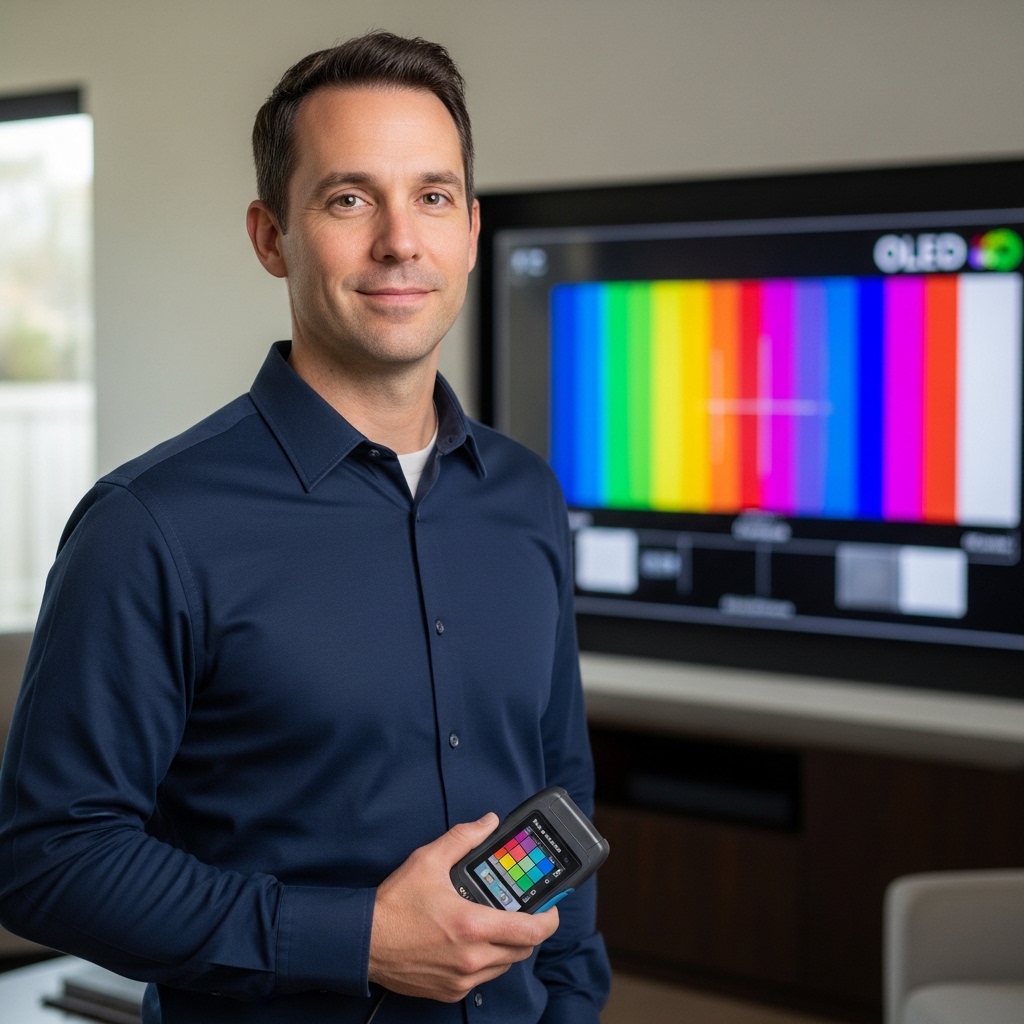

Connecting a modern console or gaming PC often introduces complex display settings that leave players wondering how their television handles different output signals. Many gamers ask whether can a 4k 60hz tv run 1080p 120hz by dropping resolution to unlock smoother frame rates during fast action gameplay. When comparing options against high refresh rate displays for sports and competitive multiplayer titles, the relationship between display hardware and transmission bandwidth often causes confusion. This misunderstanding usually stems from desktop computer monitors, where certain scalers historically allowed custom timings when rendering lower pixel counts.
Consumer televisions operate under strict internal hardware boundaries established by the physical timing controller and the underlying pixel substrate. Understanding whether a display can accept or visibly present a high-frame-rate signal requires looking beyond marketing buzzwords, software settings, and interface cables. A screen cannot simply trade spatial resolution for temporal frequency unless the internal driving circuitry supports that rate natively. By examining the mechanics of display panels, HDMI interface specifications, and source communication handshakes, you can determine exactly what your current entertainment setup can accomplish.

Pros
- Certified 48Gbps bandwidth reliably supports 4K at 120Hz and 8K at 60Hz video feeds.
- Full compatibility with eARC enables uncompressed Dolby Atmos soundbar connectivity.
- Generous 10-foot reach accommodates wall mounts and spacious entertainment centers.
- Sturdy gold-plated connectors and durable jacket offer dependable signal integrity.
- Exceptional value for budget-conscious home theater enthusiasts and console gamers.
Cons
- Standard PVC jacket is slightly stiffer than premium braided cable alternatives.
- Connector housing profile may feel snug on tightly spaced side-facing TV ports.
- Ten-foot length might leave excess slack for compact desktop gaming monitors.
The Amazon Basics Ultra High Speed HDMI 2.1 Cable is an essential accessory engineered to connect modern smart displays with high-performance video sources. Designed to meet official 48Gbps specifications, this 10-foot cable handles the demanding bandwidth requirements of next-generation home entertainment. It is ideally suited for apartment renters, homeowners, console gamers, sports fans, and budget-conscious cord-cutters who need a reliable link between their television and media gear without spending premium prices on specialty boutique cables.
For picture quality and video fidelity, this cable ensures your display receives every bit of data your source device outputs. Whether hooked up to a high-end OLED TV, a vibrant Mini-LED panel, or a family QLED screen, it reliably passes full 4K resolution at 120Hz as well as 8K at 60Hz. Viewers streaming high-bitrate 4K movies or tuning in for weekend football games can enjoy vibrant color volume, striking contrast, and wide color gamuts. It also seamlessly handles dynamic HDR standards like Dolby Vision and HDR10+, helping your screen maintain accurate tone mapping and peak brightness during dimly lit cinema scenes or bright outdoor sporting events.
Gamers pairing modern consoles like the PlayStation 5 or Xbox Series X to a 120Hz gaming TV will find this cable delivers where it matters most. Thanks to full 48Gbps throughput, it supports Variable Refresh Rate (VRR) and Auto Low Latency Mode (ALLM), eliminating screen tearing and maintaining minimal input lag during fast-paced online matches or campaign marathons. The high bandwidth eliminates the annoying signal dropouts and black screens that frequently plague older HDMI cables pushed past their rating.
Audio performance is equally impressive thanks to comprehensive support for Enhanced Audio Return Channel (eARC). Home theater enthusiasts connecting their smart TV to an external Dolby Atmos soundbar or multi-channel AV receiver can pass uncompressed object-based surround sound directly through a single connection. Dialogue clarity in family movies remains crisp, while deep bass rumbles through action sequences without audio-sync lag or compression artifacts.
In terms of build quality and practical setup, the cable features a flexible black PVC outer jacket and corrosion-resistant gold-plated connectors. The 10-foot length is generous enough to route cleanly through in-wall raceways, down behind deep media cabinets, or around articulating TV wall mounts. While the thicker PVC jacket makes it slightly less pliable than fabric-braided cords, it offers plenty of durability for everyday living room setups, dorm rooms, and basement theaters. It represents a practical, high-value investment that allows viewers to experience the full potential of their 4K and 8K entertainment gear.
Console and PC gamers looking to maximize modern displays will appreciate the full 48Gbps bandwidth provided by this cable. Connecting a PlayStation 5, Xbox Series X, or high-end graphics card to an HDMI 2.1 gaming television unlocks ultra-smooth 4K gameplay at fluid 120 frames per second. High refresh rate gaming transforms fast-moving action titles, racing simulators, and first-person shooters with razor-sharp motion handling and reduced judder.
The cable also supports critical gaming enhancements like Variable Refresh Rate (VRR), Auto Low Latency Mode (ALLM), and Quick Frame Transport (QFT). These protocols synchronize display refresh rates with your console frame output, eliminating screen tearing and stutter during intense tournament play. Because the cable meets strict transmission standards, gamers can count on responsive, low-latency performance during extended multiplayer sessions.
Integrating this cable into an existing entertainment center makes routing high-resolution audio and video straightforward. The 10-foot length provides plenty of slack when connecting wall-mounted OLED or QLED televisions to low-profile entertainment consoles, soundbars, or streaming boxes. It helps eliminate tension on TV ports while allowing for clean cable management behind furniture.
Full eARC capability simplifies home audio by sending high-bitrate Dolby Atmos, DTS:X, and uncompressed 7.1 audio tracks from smart TV streaming apps straight to an AV receiver or soundbar. Movie lovers can settle in for weekend film nights knowing dialogue will stay centered and sound effects will deliver immersive directional fidelity.


Pros
- Full 48Gbps throughput easily supports high-frame-rate 4K 120Hz gaming without frame drops
- In-wall CL3 certification allows for neat, hidden living room and home theater installations
- Reliable eARC performance ensures full-resolution spatial audio reaches your sound system
- Sturdy copper build prevents signal attenuation over the entire 15-foot distance
Cons
- Thicker protective jacket makes bending around sharp 90-degree corners behind slim mounts slightly stiff
- Provides more speed and bandwidth than necessary for basic 1080p bedroom streaming TVs
- 15-foot length may create excess cable bulk in very small entertainment console setups
The Highwings 15-foot 8K HDMI 2.1 cable is a high-bandwidth video and audio link engineered to bridge the gap between high-end displays and modern media source devices. Designed with a generous 15-foot reach and an in-wall CL3 fire safety rating, this cable connects OLED, QLED, and Mini-LED 4K televisions to gaming consoles, media receivers, and PCs. It offers a clean, dependable solution for homeowners, apartment dwellers, and home theater enthusiasts who prefer routing wires cleanly behind drywall.
This cable suits console gamers jumping into competitive multiplayer matches, movie lovers streaming 4K HDR releases on family movie night, and sports fans hosting big game watch parties. Whether your display is mounted above a living room console or serving as a dedicated basement theater screen, the connection stays consistent. Tech enthusiasts running powerful graphics cards and cord-cutters streaming high-bitrate media through external players will appreciate the absence of handshake delays and black screens.
On the performance front, the cable handles 4K at 120Hz and 144Hz, as well as 8K at 60Hz, thanks to its 48Gbps transmission rate. It supports key gaming protocols such as Variable Refresh Rate (VRR) and Auto Low Latency Mode (ALLM), which eliminate screen tearing and input lag when paired with capable gaming TVs. For home theater audio, the enhanced Audio Return Channel (eARC) capability ensures uncompressed Dolby Atmos and DTS:X tracks travel without loss from the TV to an external soundbar or multi-channel receiver.
Build quality focuses on longevity and signal protection. Built with copper wiring and robust shielding, the cable guards against electromagnetic and radio frequency interference that can disrupt long-distance data transmission. The CL3 fire-resistant jacket allows for safe in-wall installation without violating standard residential building codes. In addition, the durable gold-plated connectors offer a snug fit in display ports, preventing accidental disconnects during TV repositioning.
A practical limitation to consider is cable flexibility. Because of the heavy shielding and durable in-wall protective jacket, the cord is somewhat stiff compared to standard short patch cables. Homeowners mounting ultra-slim TVs flush against drywall may need right-angle adapters or extra room in their recessed wall boxes. Furthermore, for a secondary bedroom TV running a basic 1080p streaming stick, this high-speed cable provides more capability than the hardware can utilize.
Based on product specifications and user feedback, the Highwings 15-foot HDMI 2.1 cable is an excellent investment for anyone upgrading to modern 4K 120Hz screens or outfitting a clean home theater. It delivers the speed, spatial audio support, and reach required to get the best out of current visual technology at an accessible price point.
Routing cables inside drywall is one of the easiest ways to give your living room a clean, professional appearance. The CL3 rating on this Highwings cable means its outer jacket resists burning and produces minimal smoke, meeting U.S. residential safety requirements for running wiring through wall cavities between studs.
To get the most out of your home theater audio, connect this cord to the dedicated eARC port on your smart TV and soundbar. This setup enables high-bitrate audio formats like Dolby TrueHD and DTS-HD Master Audio to flow freely, ensuring movie dialogue remains crisp while action sequences retain their full room-filling impact.
The Technical Reality of Refresh Rates on 4K 60Hz Televisions
The short answer to whether a true 4K 60Hz television can display a 1080p signal at 120Hz is almost universally no. If the internal panel hardware is engineered to cycle sixty times per second, it cannot physically refresh its pixels one hundred and twenty times per second regardless of incoming signal resolution. While video bandwidth drops significantly when shifting from ultra high definition down to standard high definition, bandwidth reduction does not alter the physical scan capabilities of the panel. Understanding why this limitation exists requires exploring how television hardware processes and renders visual information.
Native Panel Architecture and Timing Controller Constraints
Every flat-panel television contains a specialized circuit board known as a timing controller, commonly referred to as a T-Con board. The T-Con board acts as the central conductor for the display, translating processed video data into row and column electrical charges that dictate pixel state. On a native 60Hz television, this controller and its associated column drivers are physically engineered to scan the entire display surface sixty times every second. Increasing that cycle to 120Hz would require double the clock frequency and electrical cycling capacity from these internal microchips.
Beyond the control circuitry, the physical response properties of the liquid crystal or emissive diode layer represent a mechanical limitation. Panels built specifically for 60Hz duty cycles frequently utilize driving voltages and thin-film transistor arrays optimized strictly for sixteen-millisecond refresh windows. Attempting to force these components to transition states within an eight-millisecond frame window would lead to severe ghosting, voltage instability, or complete synchronization failure. Manufacturers do not engineer excess headroom into budget or standard panels simply to accommodate off-specification signal timings.
Because these hardware limitations exist at the physical component level, firmware updates or menu adjustments cannot turn a true 60Hz display into a high-frame-rate screen. The panel either possesses the physical electronics to cycle at 120Hz or it remains locked to its design ceiling. When a video source attempts to transmit frames faster than the hardware cycle time, the internal circuitry either discards the excess data or rejects the transmission entirely.
The Resolution Versus Refresh Rate Bandwidth Fallacy
A frequent point of confusion among enthusiasts is the mathematical calculation of digital video bandwidth. A 4K image contains approximately 8.3 million pixels, whereas a 1080p image contains roughly 2.1 million pixels. Because a 1080p frame contains one quarter of the raw pixel data, it seems intuitive that an interface cable capable of sending 4K at 60Hz possesses ample data room to carry 1080p at 120Hz. While that calculation is accurate for the transmission wire, transmission bandwidth is only the initial link in a complex rendering chain.
Once the video stream crosses the HDMI receiver chip, it arrives at the television’s internal scalar and image processing engine. The scalar must transform the incoming 1920 by 1080 image to fill the 3840 by 2160 physical pixel grid of the panel. This image processing engine is clocked to process frames at a fixed maximum speed matching the panel refresh rate. Even though the transmission wire had surplus headroom, the internal display processor remains bound by its native sixty-cycle operating threshold.
In the desktop computer monitor market, certain versatile display scalers provide flexible pixel-clock multipliers that allow users to overclock panels or trade resolution for scan frequency. Consumer television architectures, however, rely on standardized broadcast timing profiles and fixed pipeline processing. The television treats incoming resolution and incoming temporal frequency as distinct parameters, meaning lower resolution never automatically unlocks a higher temporal scanning mode.
Deceptive Motion Marketing: TruMotion, Motion Rate, and Clear Motion Drive
Retail marketing terms often muddy the waters when shoppers inspect the specifications of affordable 4K displays. Manufacturers regularly label entry-level televisions with terms such as Motion Rate 120, TruMotion 120, or Clear Motion 120. These marketing numbers are deliberate index ratings created by advertising departments rather than statements of native hardware frequency. In nearly all instances, a television advertised with an effective motion rating of 120 actually houses a standard 60Hz physical panel.
These inflated motion numbers are achieved through artificial video processing techniques such as backlight scanning or black frame insertion. Backlight scanning flickers the LED backlight behind the LCD panel sixty times per second out of phase with the image scan, creating the perceptual illusion of reduced motion blur. While this technique can sharpen rapid panning shots during live sports, it does not allow the television to accept, process, or render an authentic 120Hz input signal from a gaming console.
Buyers looking at a budget large screen television guide must carefully distinguish between artificial motion enhancements and native 120Hz hardware panels. True high-refresh-rate televisions state a native panel refresh rate of 120Hz or 144Hz explicitly in their detailed engineering documentation. If the specifications mention an effective rate or motion index alongside a 60Hz native rate, the display will strictly reject any 120Hz video format fed into its ports.
The Rare Exception: Native 120Hz Panels Limited by HDMI 2.0 Ports
There is one specific scenario where a television can accept and display a 1080p 120Hz signal, but it involves a native 120Hz panel rather than a 60Hz panel. During the transition era between HDMI 2.0 and HDMI 2.1, manufacturers produced select premium televisions equipped with physical 120Hz panels but older HDMI 2.0 interface ports. Because HDMI 2.0 tops out at 18Gbps of bandwidth, it lacks the data capacity to deliver uncompressed 4K video at 120Hz with full HDR color.
On those specific legacy models, dropping the output resolution of a console or PC to 1080p or 1440p reduces the required data rate below the 18Gbps ceiling. Because the internal panel and T-Con board were already engineered for 120Hz operation, the television happily accepts the 1080p 120Hz transmission and presents high-frame-rate gameplay. This legacy configuration often causes owners of true 60Hz televisions to mistakenly believe their displays can duplicate the same behavior through menu adjustments.
Verifying whether your display falls into this rare category involves reviewing the user manual for supported VESA signal timings. If the manual lists 1920 by 1080 at 120Hz under supported PC input resolutions, the panel possesses native high-frequency hardware. If the documentation lists 60Hz as the absolute maximum frequency across every supported resolution, the television cannot achieve 120Hz playback under any operational conditions.
Console Communication Protocols: How EDID Prevents Invalid Signals
When you attach a modern gaming console like a PlayStation 5 or Xbox Series X to a television, the devices perform an automated digital negotiation. The display transmits an Extended Display Identification Data block, commonly known as EDID, across the HDMI connection to the console. This data block outlines the television’s supported color spaces, HDR formats, physical pixel dimensions, and certified vertical refresh frequencies.
On a 4K 60Hz television, the EDID firmware table reports a maximum vertical refresh frequency of sixty hertz across all resolution profiles. The console’s operating system inspects this table and automatically locks its video output parameters to ensure signal stability. On a PlayStation 5, the 120Hz output option will simply not engage or will report as unsupported when connected to a 60Hz display, even if you deliberately drop the system resolution down to 1080p.
Xbox consoles offer a manual display override menu that allows players to force HDMI output timing rather than relying on automatic detection. Forcing a 1080p 120Hz output profile to a 60Hz television, however, typically results in a black screen, persistent signal dropouts, or an out of range error banner. The television receiver chip cannot synchronize with the horizontal and vertical sync pulses arriving at double its designed speed, causing the handshake to fail until the console reverts to standard settings.
Understanding Input Lag and Motion Clarity Differences
The pursuit of 120Hz gaming is driven by two primary performance benefits: reduced input latency and improved motion resolution. At 60Hz, a new frame is drawn on the glass every 16.6 milliseconds, establishing a baseline delay between controller input and visual response. At 120Hz, that frame interval is cut in half to 8.33 milliseconds, providing a substantially more responsive feel in fast-paced action titles and first-person shooters.
Motion clarity also improves at higher refresh rates due to how human vision tracks moving objects on sample-and-hold displays. LCD and OLED televisions hold each static image frame until the next refresh cycle occurs, causing the human eye to perceive retinal blur as it tracks motion across the screen. A true 120Hz refresh rate cuts the display hold time in half, resulting in dramatically cleaner edge definition during rapid camera sweeps without requiring artificial motion interpolation.
Enabling factory motion smoothing or frame interpolation on a 60Hz television to mimic high frame rates produces serious gaming drawbacks. Motion interpolation requires the television processor to analyze consecutive frames and generate artificial intermediate frames, introducing severe input lag that can exceed eighty milliseconds. Furthermore, interpolation algorithms regularly generate distracting visual artifacts, edge tearing, and shimmering around rapidly moving objects, ruining the competitive gaming experience.
Signal Infrastructure: Cables, Switches, and Transmission Overhead
Building a high-performance home entertainment setup requires robust physical signal routing between sources, switches, and screens. Utilizing an Amazon Basics Ultra High Speed HDMI 2.1 Cable ensures that the connection pipeline possesses the full 48Gbps bandwidth necessary for high-bandwidth video, dynamic HDR metadata, and enhanced audio return channels. Even when attached to a 60Hz display, high-grade cabling prevents transmission dropouts, electromagnetic interference, and digital handshake failures that compromise daily operation.
When multiple next-generation consoles and media streamers share limited display inputs, an external routing device becomes essential. Incorporating an OREI 8K 2-Port HDMI 2.1 Switch, 8K@60Hz, 4K@120Hz enables seamless switching between demanding sources while maintaining complete HDMI 2.1 compliance, variable refresh rate signaling, and auto low latency passthrough. Quality switching gear prevents the signal degradation and timing jitter that frequently occur when routing high-speed digital signals through passive splitters or substandard distribution hardware.
For installations where gaming hardware resides inside dedicated media cabinets or across large living rooms, extended cable runs demand careful planning. Selecting Highwings HDMI Cables 15FT Long provides the necessary structural shielding, in-wall CL3 safety ratings, and verified conductor thickness to transmit high-bitrate video across longer distances without data packet loss. High-bandwidth cables maintain total signal fidelity across your entire equipment chain, ensuring that when you eventually connect a true high-refresh-rate display, your physical infrastructure is completely ready.
Audio Connectivity and Display Processing Trade-Offs
Modern gaming setups require balanced consideration between visual fluidity and auditory performance. Advanced audio formats such as uncompressed multi-channel LPCM and object-based Dolby Atmos demand substantial bandwidth over the HDMI eARC channel. When evaluating overall entertainment performance, consulting a television sound quality guide helps clarify how audio passthrough protocols interact with display latency settings and external soundbar equipment.
Many televisions handle audio passthrough and video processing on shared system-on-chip architectures. When video scalers work intensely to resize lower-resolution content or manage complex sync handshakes, audio synchronization errors can emerge across external speakers. Maintaining native resolution outputs from your source hardware minimizes internal television scaling workloads, ensuring that audio and video tracks stay perfectly aligned during intense gaming or movie sessions.
If you connect your gaming consoles directly to an external soundbar or AV receiver before passing video to the television, the audio device must also support your desired video formats. Passing a 120Hz signal through an older receiver limited to 60Hz passthrough results in the same handshake bottleneck as connecting directly to a 60Hz television. Every link in the transmission chain must support the target refresh rate and resolution simultaneously to achieve uninterrupted playback.
Evaluating Upgrade Considerations for High-Frame-Rate Play
If competitive gaming or silky-smooth motion rendering is a primary priority, upgrading to a television with an authentic 120Hz or 144Hz panel is the only genuine solution. When shopping for an upgrade, look specifically for televisions featuring full-bandwidth HDMI 2.1 ports capable of uncompressed 4K at 120Hz. Verifying that the television supports HDMI Forum Variable Refresh Rate, AMD FreeSync Premium, or Nvidia G-Sync ensures that frame rates remain tear-free even when rendering loads fluctuate during intense gameplay.
Screen technology also plays a massive role in perceived motion performance and visual depth during gaming. Self-emissive OLED panels provide near-instantaneous sub-millisecond pixel response times, completely eliminating the dark trailing and ghosting common to budget LCD panels. Premium Mini-LED displays, on the other hand, provide tremendous sustained peak brightness that makes HDR highlights pop dramatically in sunlit living rooms while maintaining native high-frequency scanning.
Before purchasing a new display, evaluate your primary gaming library to confirm whether high frame rates justify the investment. Many cinematic single-player console titles remain locked at 30 or 60 frames per second to maximize visual detail, ray tracing, and resolution. If your gaming habits focus primarily on these visual-heavy narrative adventures, a well-calibrated 4K 60Hz television with excellent contrast and color reproduction may continue to serve your needs admirably.
Understanding the hardware reality of display timing controllers saves time, prevents setup frustration, and eliminates the risk of purchasing incompatible accessories. A 4K 60Hz television remains a capable display for standard streaming, movies, and standard console gaming, but it cannot bend the laws of its internal silicon to scan at 120Hz. Verifying your hardware specifications and maintaining certified high-speed cables guarantees you achieve the best possible performance from your current equipment while preparing your entertainment space for future upgrades.





Write Your Review
No reviews yet. Be the first to share your experience!