
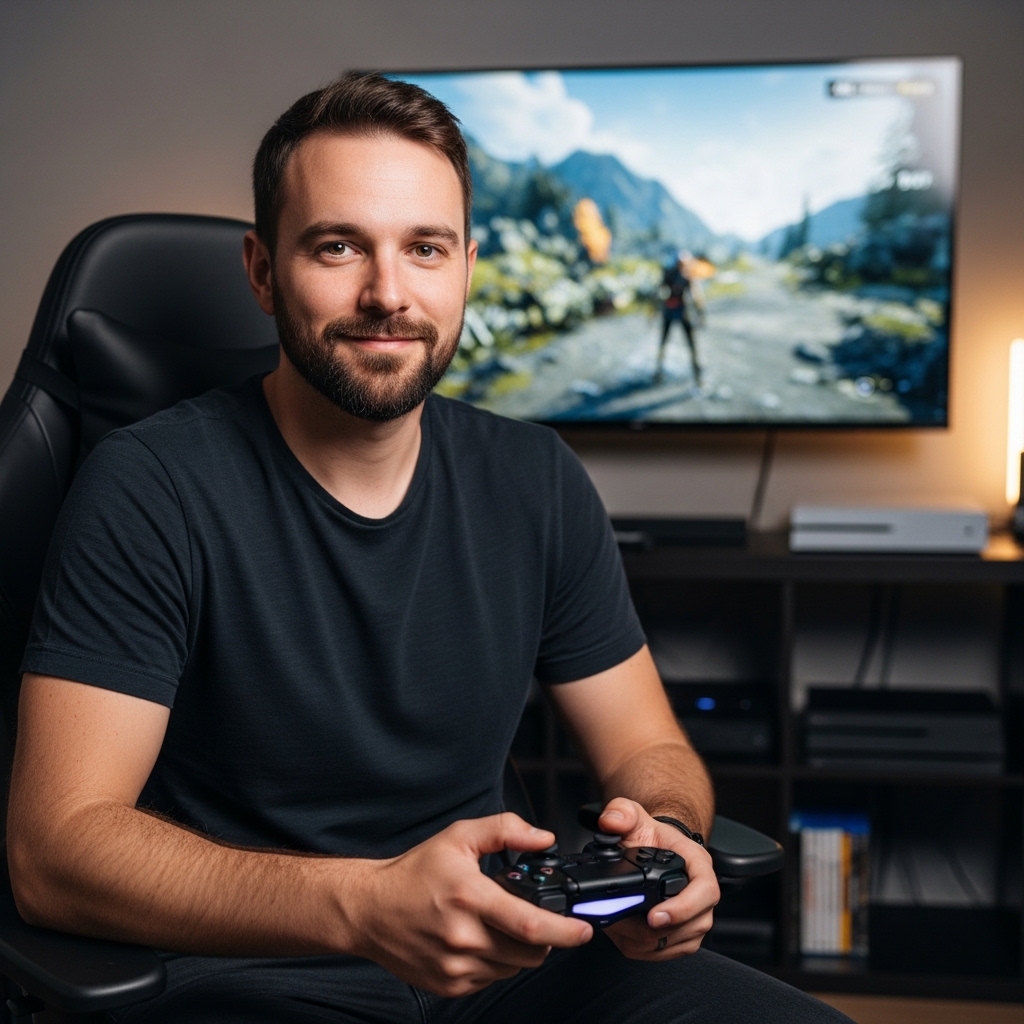

Daylight streaming through large living room windows can quickly turn standard television screens into washed-out, reflective mirrors. When shoppers ask what are the advantages of a qled tv, the primary answer begins with quantum dot enhancement film and its ability to produce intense luminance without washing out subtle color gradations. By placing microscopic nanocrystals between an LED backlight and the display panel, these sets achieve remarkable color volume and peak light output. Homeowners upgrading their primary entertainment spaces often choose dedicated bright-room QLED displays to preserve picture clarity during sunny weekend afternoons.
Beyond daytime viewing power, quantum dot technology delivers exceptional longevity because inorganic crystals do not suffer from the permanent image retention risks seen on organic panels. Competitive gamers and movie enthusiasts also benefit from rapid refresh rates, low input latency, and sophisticated local dimming controls. Modern setups pairing quantum dots with microscopic Mini-LED backlights create deeper shadow depth while keeping bright highlights punchy and clean. Understanding these core display mechanics helps you choose the right screen size, backlight configuration, and feature set for your specific room layout.
Pros
- Enormous 100-inch Mini LED panel delivers an authentic commercial-theater scale experience at home
- Smooth 144Hz refresh rate and low input lag satisfy demanding PC and console gamers
- Powerful 4K AI processor effectively cleans up lower-resolution sports and cable broadcasts
- Strong peak brightness easily combats glare in wide, well-lit living spaces
Cons
- Weighs over 130 pounds, requiring a dedicated multi-person installation and heavy-duty wall mount or wide credenza
- Lacks native Dolby Vision HDR format support, relying instead on HDR10 and HDR10+
- Immense dimensions demand a spacious room with adequate viewing distance to avoid eye fatigue
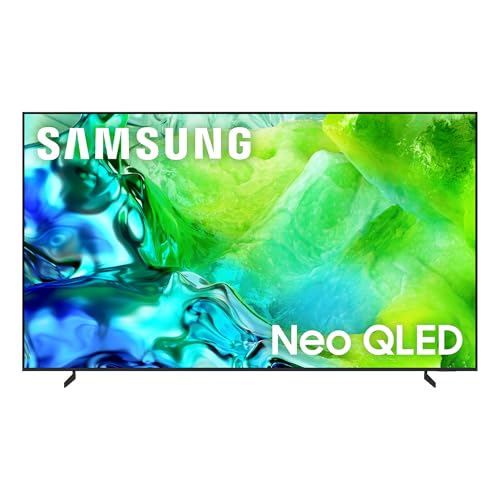
The Samsung 100-Inch Class QN80H Series Neo QLED represents the pinnacle of large-format home entertainment, blending precision Mini LED backlighting with smart AI processing. Designed specifically for homeowners, dedicated home theater enthusiasts, and sports fans looking to replicate a stadium or cinema experience, this colossal screen commands attention. While it is likely too imposing for compact apartment living rooms or small bedrooms, it serves as the ultimate centerpiece for open-concept floor plans, finished basements, and dedicated media spaces where viewing distance allows for total visual immersion.
Picture quality on a display of this scale requires tremendous precision, and the QN80H addresses this challenge through its dense array of Mini LEDs. By tightly controlling local dimming zones, the panel generates intense specular highlights alongside deep, uniform black levels that bring out subtle textures in shadowy movie scenes. Color reproduction remains vibrant across both high and low brightness levels thanks to quantum dot color enhancement. Furthermore, because stretching standard definition or 1080p feeds across a 100-inch surface can expose artifacts, Samsung equips this unit with a specialized multi-neural AI processor that actively sharpens edges, eliminates digital noise, and remasters standard dynamic range content to near-HDR quality.
Gamers and sports aficionados will find plenty to appreciate in the motion handling capabilities of the QN80H. Boasting a native 144Hz refresh rate along with Variable Refresh Rate (VRR) and Auto Low Latency Mode (ALLM), the screen provides exceptionally fluid graphics without jarring screen tear or motion blur. Whether you are navigating competitive first-person shooters on a high-end PC rig or tracking a kickoff during a Super Bowl watch party, rapid action sequences feel remarkably smooth and responsive. Gamers will also value the integrated game optimization bar, which makes adjusting display ratios and monitoring real-time frame rates effortless during marathon play sessions.
Smart capabilities are driven by the intuitive Tizen platform, which aggregates top streaming apps like Netflix, Disney+, Prime Video, and YouTube into an easily navigable dashboard. Unique to this generation is the integration of multiple conversational AI tools, allowing viewers to quickly query background details about on-screen actors or adjust picture settings via voice commands. On the audio front, built-in multidimensional speakers leverage Dolby Atmos and object tracking technology to align sound effects with their corresponding positions across the massive 100-inch frame. While dialogue clarity and soundstage width are impressive for integrated television audio, pairing this display with a dedicated multi-channel surround sound system or premium soundbar remains the ideal choice for full cinematic impact.
Given its monumental footprint and weight exceeding 132 pounds, preparing for delivery and installation requires careful forethought. You will need a spacious stand or a heavy-duty, professionally anchored VESA wall mount, as well as multiple helping hands on setup day. Like all Samsung televisions, it does not support Dolby Vision, opting instead for HDR10 and HDR10+. For homeowners ready to invest in a visual showpiece that excels at family movie nights, lively sports gatherings, and fast-paced gaming, the Samsung QN80H offers immense scale and Mini LED refinement that make everyday entertainment feel larger than life.
Console and PC gamers looking for an uncompromising big-screen battle station will appreciate the technical capabilities packed into the QN80H. The panel supports refresh rates up to 144Hz with low input latency, ensuring that player inputs register on-screen with near-instantaneous feedback. Variable Refresh Rate technology, combined with Auto Low Latency Mode, synchronizes seamlessly with current-generation consoles and PC graphics cards to eliminate screen tearing during frantic multiplayer firefights or high-speed racing simulations.
Samsung also includes its specialized Game Bar menu, which provides quick access to vital performance stats like current frames per second, HDR status, and VRR settings without pulling you away from gameplay. The sheer visual real estate makes split-screen cooperative games a joy for families, while dedicated picture modes optimize shadow visibility so hidden opponents remain clear in dark environments.
Accommodating a 100-inch display requires practical planning to ensure comfortable viewing and safe installation. A television of this magnitude is best enjoyed from a viewing distance of approximately 10 to 14 feet, allowing viewers to absorb the expansive 4K picture without visible grain or eye strain. Because the unit measures over 87 inches wide and weighs nearly 133 pounds, wall mounting demands a heavy-duty VESA mount securely anchored into wall studs.
For owners planning to place the TV on furniture, a sturdy, extra-wide entertainment console with sufficient depth is essential to support the included stand safely. Cable management pathways help keep power cords and high-speed HDMI connections tidy, ensuring your custom home theater room retains a clean, professional appearance free of visual clutter.
Core Technical Advantages and Everyday Benefits of QLED Displays
Evaluating display technologies requires looking past marketing buzzwords and examining how light generation directly influences visual fidelity. A Quantum Dot Light Emitting Diode television relies on microscopic nanocrystals to transform standard backlighting into highly concentrated, pure primary colors. This engineering architecture provides clear advantages in brightness, color saturation, panel durability, and screen size versatility. Understanding these specific benefits allows buyers to make informed choices based on ambient room conditions, daily viewing habits, and desired hardware lifespan.
1. Superior Peak Brightness and Daylight Glare Mitigation
Ambient daylight is one of the most persistent obstacles to enjoying modern high dynamic range entertainment. Traditional displays often struggle to overcome sunlight pouring through open windows, which causes dark scenes to disappear and colors to look washed out. High peak brightness represents one of the primary benefits of quantum dot display construction. Because quantum dot films efficiently convert blue LED light into intense red and green wavelengths, these panels achieve remarkable luminance levels that easily overpower room reflections.
High brightness does not merely illuminate daytime soap operas or morning news broadcasts. In HDR mastering, specular highlights like glints of sun on water or bright streetlights require brief bursts of extreme luminance to look lifelike. Many modern quantum dot screens pair this raw light output with specialized anti-reflective screen coatings to scatter incoming light before it bounces back into the viewer’s eyes. This combination ensures that contrast remains visible even in open floor plans illuminated by harsh overhead lighting.
Viewers situated in sun-drenched spaces avoid the constant need to pull heavy blackout curtains just to watch an afternoon game. Sustained light output allows the television to maintain balanced tone mapping across varied content formats without crushing shadow detail. This daylight viewing advantage remains a primary reason homeowners prioritize quantum dot hardware for central family living rooms.
2. Expanded Color Volume Across High Luminance Levels
Achieving high brightness means little if rich colors wash out into pale pastel shades as the screen turns up its light output. Color volume measures a display panel’s ability to maintain pure, saturated hues across its entire range of luminance. Standard LED televisions often dilute color saturation at higher brightness settings because their broad-spectrum color filters let stray wavelengths bleed through. Quantum dots, by contrast, emit photoluminescent light at precise, narrow spectral wavelengths tailored directly to human vision.
This precise optical emission allows quantum dot panels to reproduce wider color gamuts, comfortably filling extensive standards like DCI-P3 and expanding toward Rec.2020. Whether displaying the vibrant red paint of a sports car or subtle orange tones across an evening horizon, hues remain punchy and accurate even during intensely bright scenes. The television processor does not have to artificially compress color dynamics to preserve highlight detail. Viewers experience rich, natural visuals that reflect how directors and colorists calibrated the original master files.
Color purity also enhances the perception of depth and visual separation between foreground characters and background scenery. In complex nature documentaries, subtle gradations between forest greens and earthy tones remain distinct rather than blending into a muddy field. This refined color volume provides a consistently engaging picture across sports, movies, and animated features alike.
3. Complete Immunity to Permanent Image Retention
Screen longevity is a major investment consideration for any household display that sees heavy daily usage. Self-emissive panel architectures rely on organic light-emitting diodes that can degrade unevenly when subjected to static imagery over extended periods. Quantum dot panels, however, are built with durable inorganic nanocrystals that do not suffer from permanent panel burn-in. This physical resilience offers complete peace of mind for viewers who consume content with persistent graphical elements.
Static graphics appear across many common viewing categories, including news tickers, financial broadcast banners, and sports scoreboard overlays. Gamers also encounter fixed heads-up displays, mini-maps, and health meters that remain pinned to specific screen corners during marathon sessions. On a quantum dot screen, users never have to run pixel refresh cycles, enable aggressive screen-dimming timers, or worry about leaving a game paused on screen. The display maintains uniform light distribution and consistent color output across years of demanding family entertainment.
This durability also makes quantum dot screens exceptionally well suited for multi-purpose setups, including secondary home office displays and PC monitor configurations. Static desktop taskbars, web browser toolbars, and spreadsheet grids can remain active for eight hours a day without causing ghost images. Households seeking a dependable television that tolerates diverse usage habits benefit tremendously from this hardware stability.
4. Mini-LED Backlights and Precision Contrast Control
Early iterations of quantum dot displays relied on edge-lit backlights or basic full-array arrays that occasionally struggled with light bleed in dark home theaters. Modern high-tier displays resolve this challenge by pairing quantum dots with microscopic Mini-LED backlights. Because Mini-LED diodes are a fraction of the size of traditional LEDs, manufacturers can pack thousands of light sources directly behind the LCD glass. This architectural leap enables dense local dimming zones that independently modulate light across tiny, pinpoint clusters.
Tight local dimming suppresses distracting blooming, which is the unwanted halo effect that can appear around bright subtitles against pitch-black letterbox bars. A prime example of this engineering is visible in the Samsung 100-Inch Class QN80H Series, which uses Neo QLED Mini LED backlighting to balance shadow depth alongside sparkling highlights. Its precisely controlled lighting zones preserve delicate textures in dark fabrics while keeping streetlights and explosions brilliantly vivid. For buyers evaluating motion and backlight response, exploring Mini-LED screens for action-heavy content illustrates how tightly controlled backlights maintain black level integrity without sacrificing shadow details.
Sophisticated dimming algorithms constantly track movement across the frame to prevent backlight pulsing or noticeable brightness delays. When a bright spaceship drifts across a starfield, the background remains convincingly dark while the ship stays sharp and luminous. Viewers enjoy theatrical, high-contrast imagery in dark viewing rooms without sacrificing daytime room versatility.
5. High-Refresh-Rate Motion Handling and Next-Gen Console Gaming
Fast-motion responsiveness is essential for competitive console gaming, PC connections, and live athletic broadcasts. Modern premium quantum dot televisions feature native 120Hz or 144Hz refresh rates that refresh the screen image twice as fast as entry-level 60Hz panels. This elevated temporal resolution reduces motion blur, minimizes judder during fast camera pans, and delivers exceptionally smooth tracking for rapidly traveling objects. Gamers connecting a PlayStation 5, Xbox Series X, or modern gaming PC can unlock uncompressed 4K gameplay at high frame rates.
Full-bandwidth HDMI 2.1 connectivity allows these displays to support Variable Refresh Rate (VRR) and Auto Low Latency Mode (ALLM). Features like FreeSync and G-Sync compatibility synchronize the television’s refresh rate directly with the console GPU output, completely eliminating screen tearing and stutter. Fast action sports enthusiasts also gain significant motion clarity, making dedicated QLED televisions for fast-motion sports a favorite choice for hockey, football, and racing broadcasts. In Game Mode, signal processing bypasses unnecessary picture filters to achieve input lag ratings well below 15 milliseconds for near-instant controller responsiveness.
Motion interpolation engines also benefit from faster panel response times. Viewers can fine-tune motion smoothing settings to reduce frame judder in 24p cinematic movies without triggering an unnatural soap opera effect. This versatile motion management ensures that high-speed entertainment remains consistently comfortable and crisp to watch.
6. Massive Screen Scaling and Neural AI Upscaling Engines
Manufacturing large panel glass requires specialized industrial techniques, and quantum dot displays scale to massive proportions far more readily than competing self-emissive technologies. Today, homeowners can easily find quantum dot displays spanning 75 inches, 85 inches, 98 inches, and even 100 inches without astronomical pricing. However, displaying standard-definition cable or compressed streaming video across a massive display introduces the risk of noticeable pixelation and visual softness. To combat this issue, manufacturers integrate powerful neural network processors to handle real-time image reconstruction.
On oversized screens like the Samsung 100-Inch Class QN80H Series, specialized processing combines AI upscaling with intelligent noise reduction and black-level boosters to keep large pixels sharp. Using 20 neural networks, the processor analyzes individual frames by texture, edge detail, and contrast to upgrade lower-resolution signals toward pristine 4K quality. Audio processing operates in parallel, using spatial intelligence to isolate dialogue and balance ambient sound effects dynamically. This intelligent upscaling ensures that legacy sitcoms and low-bitrate sports streams look crisp and modern on supersized home theater screens.
Advanced processing also introduces Auto HDR Remastering, which intelligently converts Standard Dynamic Range (SDR) content into an expanded dynamic presentation. By boosting specular highlights and enriching color tones where appropriate, the processor breathes new life into vintage movies and classic television shows. This processing sophistication ensures that investing in a giant display never penalizes everyday viewing habits.
7. Panel Architectures, Viewing Angles, and Sub-Size Nuances
Understanding the underlying panel structure is vital when deciding where to place a television in your home. Most quantum dot televisions utilize Vertical Alignment (VA) LCD panels, which provide outstanding native contrast ratios and deep black levels at the expense of narrow viewing angles. When viewers move past 25 to 30 degrees off-center on standard VA panels, color saturation begins to fade and black levels can appear hazy. Premium models often incorporate specialized optical wide-angle layers or utilize ADS panel variations to maintain color fidelity across wide sectional sofas.
Shoppers must also be aware of feature step-downs that frequently occur on smaller display sizes within the same product line. While 65-inch, 75-inch, and larger panels typically include full 120Hz or 144Hz panels with dense local dimming, 43-inch and 50-inch variants often step down to 60Hz native refresh rates or simple edge lighting. Verifying the specific hardware tier before purchasing ensures you do not inadvertently lose high-speed gaming capabilities or contrast control in a secondary bedroom setup. Knowing these manufacturing variations prevents unpleasant post-purchase surprises.
Evaluating panel uniformity is another practical step when setting up your entertainment room. Subtle variations in backlight assembly can occasionally lead to faint clouding or gray uniformity differences during wide camera pans over solid green soccer pitches. Taking time to inspect panel specifications across your target size class ensures the screen performs admirably from every seat in the room.
8. Room Placement, Viewing Distance, and Long-Term Value
Maximizing the visual advantages of your display requires matching screen dimensions to your seating arrangement using recognized audio-visual standards. Guidelines from the Society of Motion Picture and Television Engineers (SMPTE) recommend a 30-degree field of view for mixed everyday viewing, while THX standards suggest a 40-degree field of view for an immersive cinematic experience. For example, an 85-inch screen offers an optimal theatrical field of view at roughly nine to eleven feet of viewing distance. Planning your seating layout beforehand ensures that you fully appreciate 4K detail without causing eye strain.
Physical installation also demands careful attention to hardware safety and weight distribution. Oversized screens weighing between 80 and 150 pounds require heavy-duty wall mounts anchored directly into solid wall studs rather than drywall anchors alone. Two people should always lift panels measuring 65 inches or larger to avoid flexing the internal LCD glass and damaging the delicate optical layers. Ensuring adequate ventilation around the rear chassis also helps dissipate heat from high-output LED backlights, protecting internal electronics for years of reliable operation.
When weighing performance against total investment, quantum dot technology delivers an unmatched blend of bright-room usability, color brilliance, and long-term hardware reliability. Whether hosting daylight sports parties, gaming at competitive frame rates, or watching cinematic HDR blockbusters, these displays provide the punch and clarity modern entertainment demands. By choosing a model with the right backlight design and refresh rate for your specific room, you secure an exceptional centerpiece for your home entertainment system.



Write Your Review
No reviews yet. Be the first to share your experience!