

Ambient daylight streaming across living room seating can quickly expose the limitations of traditional LCD panels, causing washed-out contrast and distracting reflections. Movie enthusiasts and dedicated console gamers frequently ask what is the best 65 inch oled tv to experience true per-pixel black levels without suffering from backlight blooming. Emissive panel technology allows each individual pixel to turn completely dark, creating an infinite contrast ratio that standard backlit displays cannot replicate. Modern display shoppers often weigh traditional WOLED panels against quantum dot designs to identify the right balance of highlight brightness, color volume, and natural shadow gradation.
Finding the ideal television requires matching your viewing environment to hardware capabilities, whether you host bright daytime sports viewings or sink into dark-room movie marathons. High-performance gaming setups demand full-bandwidth connections, making 4K 120Hz or 144Hz refresh rates and low input latency essential considerations alongside pure image fidelity. While price-conscious shoppers exploring smaller screen sizes often research budget OLED televisions, the 65-inch screen size represents the premier standard for immersion in contemporary living spaces. Understanding how video processors upscale streaming feeds and how anti-glare coatings manage reflections ensures your investment delivers exceptional performance across every entertainment source.

Pros
- Uncompromising black levels and stunning quantum dot color volume deliver class-leading HDR contrast
- Sophisticated XR AI processing provides remarkably clean and natural upscaling for lower-resolution cable and streaming video
- Comprehensive audio and visual format support including Dolby Vision, DTS:X, and IMAX Enhanced
- Snappy Google TV interface with native Apple AirPlay 2 and Google Cast integration
Cons
- High-end QD-OLED technology represents a significant financial investment compared to standard LED displays
- Sustained full-screen brightness is more suited for controlled lighting than rooms with direct, unfiltered afternoon sunlight
- OLED panels require sensible viewing habits to minimize the potential risk of long-term image retention from static tickers
The Sony 65-Inch BRAVIA 8 II (K-65XR80M2) represents the peak of modern television engineering, combining self-emissive QD-OLED hardware with Sony proprietary cognitive processing. Tailored for dedicated home theater enthusiasts, film purists, high-end gamers, and discerning homeowners, this television replaces traditional LED backlights with over eight million self-lit pixels. By marrying quantum dot color vibrancy with the infinite contrast of OLED, it creates an arresting picture that reproduces inky shadows and dazzling specular highlights simultaneously. Whether mounted in a dedicated basement media room or serving as the centerpiece of an open-concept suburban living space, this display targets viewers who prioritize uncompromised visual accuracy.
Under the hood, the Sony XR Processor with AI technology continuously drives the visual presentation by analyzing scenes in real time. Rather than applying a blunt sharpening mask across the entire panel, the processor identifies focal points, facial tones, and background textures to recreate depth that mirrors human perception. Upscaling lower-resolution sources is handled smoothly through XR Clear Image, making everyday cable sports, broadcast news, and vintage streaming series appear sharp without introducing harsh digital artifacts. Colors rendered through XR Triluminos Max exhibit exceptional purity, maintaining richness even in high-brightness scenes where traditional OLEDs might dilute hue saturation.
For sports fans and movie lovers, motion handling and format support are just as vital as raw resolution. The BRAVIA 8 II handles fast camera pans across athletic fields and high-octane action sequences with fluid stability, eliminating distracting judder while preserving authentic 24p film cadence. Broad high dynamic range format compatibility ensures you can experience Dolby Vision, IMAX Enhanced, and HDR10 content as mastering engineers intended. The audio experience is elevated by Sony screen-based sound engineering, which aligns dialogue and sound effects directly with on-screen movement to deliver crisp vocal clarity during intimate drama scenes before connecting a separate soundbar or AV receiver.
Day-to-day operation is powered by the Google TV smart platform, which unifies apps like Netflix, Disney+, Prime Video, and Apple TV into a personalized, cohesive home screen. Browsing menus is snappy, and finding content is straightforward using hands-free Google Assistant voice commands or casting directly from mobile devices via Apple AirPlay 2 and Google Cast. The physical chassis reflects a sleek, minimalist philosophy with ultra-thin borders that maximize viewing area. Integrated cable management channels help maintain a clean, tidy entertainment center whether you rest the display on a wide credenza or secure it against a wall using a standard VESA mount bracket.
While the BRAVIA 8 II stands among the finest televisions on the market, prospective buyers should consider room acoustics and ambient light conditions. While the QD-OLED panel produces impressive peak brightness for an OLED, rooms flooded with direct, unshaded sunlight from large windows may still benefit from the raw luminance output of high-tier Mini-LED displays. However, for homeowners who appreciate flawless contrast, gamers demanding near-instant pixel response times, and families gathering for weekend movie nights, this flagship Sony television offers a truly captivating visual centerpiece built for long-term enjoyment.
Picture quality on the Sony BRAVIA 8 II is defined by the union of quantum dot color enhancement and self-illuminating OLED pixels. Because each pixel can switch off entirely, contrast is theoretically infinite, completely eliminating the light bleed and haloing often visible around bright subtitles on traditional backlit panels. The display reveals subtle shadow nuances in dark thriller films that standard screens often crush into murky gray.
Color reproduction is another major highlight thanks to XR Triluminos Max. By utilizing quantum dots instead of standard white OLED color filters, the BRAVIA 8 II maintains saturated primaries even at elevated brightness levels. Highlights like neon signs, sunlight glinting off metal, and vibrant fantasy landscapes appear intensely realistic without looking cartoonish or overcooked, honoring the creative vision behind high-grade 4K HDR masters.
Powered by Google TV, the BRAVIA 8 II provides an intuitive interface that curates content recommendations based on viewing habits across multiple streaming subscriptions. Setup is rapid, allowing quick sign-ins and profile creation for different family members so watchlists remain personal and organized. Essential streaming platforms like Netflix, Prime Video, Hulu, and YouTube come preloaded and launch without lag.
In addition to standard streaming services, the inclusion of the Sony Pictures Core app gives viewers access to high-bitrate streaming and an expansive catalog of IMAX Enhanced movie titles. Compatibility with Apple AirPlay 2 and Google Cast ensures that sharing family vacation photos, personal videos, or music directly from iOS and Android devices is effortless during gatherings.

Pros
- Infinite contrast ratio with true inky blacks and precise per-pixel illumination
- Exceptional 144Hz VRR support tailored for PC and console gamers
- Advanced AI upscaling enhances sports broadcasts and older streaming content
- Wide viewing angles ensure consistent colors for family watch parties
Cons
- Lacks native Dolby Vision format support like other Samsung displays
- Built-in audio lacks sub-bass power, making a dedicated soundbar recommended
- OLED screens may show reflections in living rooms with direct, bright sunlight
The Samsung 65-Inch S90F OLED TV is a premium 4K television built for home theater enthusiasts, serious gamers, sports buffs, and movie lovers. Designed for American living rooms, finished basements, and modern apartments, this display combines self-illuminating OLED panel technology with Samsung's NQ4 AI Gen3 processor. Viewers who enjoy streaming weekend marathons, hosting Super Bowl watch parties, or connecting high-end gaming rigs will find this television well suited to their entertainment habits.
At the center of the visual experience is the OLED panel architecture, where each individual pixel turns on and off independently. This architecture creates true zero-nit black levels, eliminating haloing and backlight bleed in dark living room environments. The NQ4 AI Gen3 processor leverages 128 neural networks to analyze scenes in real time, enhancing specular highlights through HDR+ processing and boosting color depth. Furthermore, the intelligent auto-remastering system upgrades standard dynamic range content into HDR-like quality, injecting added brightness and rich hues into vintage movies and daytime television.
For fast-paced content, this display handles quick action with remarkable fluidity. Sports fans will appreciate the AI-driven motion smoothing, which keeps rapid-moving baseballs, hockey pucks, and football passes crisp while keeping scoreboard tickers legible. Gamers gain a substantial advantage with Motion Xcelerator technology supporting variable refresh rate (VRR) up to 4K at 144Hz. Combined with auto low latency mode (ALLM), the panel delivers ultra-low input lag and tear-free responsiveness for modern consoles and gaming PCs during competitive multiplayer sessions.
The physical design showcases a slim profile in Graphite Black with minimalistic bezels that blend smoothly into any room aesthetic. Whether mounted using a standard VESA bracket or placed on an entertainment console, cable management keeps wire clutter out of sight. Built-in Alexa voice control offers hands-free navigation for launching popular streaming apps like Netflix, Disney+, Prime Video, and YouTube. Smart TV responsiveness is snappy, letting busy families switch between live cable TV, streaming subscriptions, and connected gaming consoles with minimal friction.
While this television delivers standout visual quality, there are a few practical trade-offs to keep in mind. Like most Samsung televisions, it supports HDR10 and HDR10+ but skips Dolby Vision, which some home theater purists prefer for specific streaming titles. Additionally, while the integrated speakers offer clean dialogue for news and casual viewing, the slim chassis limits deep bass response, making an external soundbar or multi-channel audio receiver a worthwhile addition. For shoppers seeking premium contrast, fluid motion, and high-frame-rate gaming in a 65-inch footprint, this television stands out as a top-tier centerpiece for home entertainment.
Gamers will find plenty to like about the Samsung S90F OLED display. With native support for refresh rates up to 144Hz at full 4K resolution, fast-paced first-person shooters, racing sims, and action titles feel instantaneous and remarkably smooth. The integration of variable refresh rate (VRR) and auto low latency mode (ALLM) eliminates screen tearing and minimizes input lag, providing a sharp competitive edge for both console and PC setups.
The self-emissive OLED pixels also deliver near-instantaneous pixel response times. This rapid transition prevents ghosting and smearing during erratic camera pans, keeping visual targets well defined. The dedicated game bar interface makes it simple to monitor frame rates, adjust picture ratios, and tweak audio output settings on the fly without interrupting ongoing matches.
Picture reproduction on the S90F benefits directly from the self-lit nature of OLED panels. Because each pixel controls its own luminance, contrast is virtually limitless, delivering starfields and nighttime cityscapes without light bleed into adjacent dark areas. Off-axis viewing angles are exceptionally wide, ensuring that friends and family sitting along the edges of the room see the exact same color accuracy and contrast as those sitting directly centered.
The NQ4 AI Gen3 processor plays a major role in optimizing lower-resolution sources such as cable sports, standard HD streams, and older digital movies. Using multiple neural networks, the processor analyzes textures and cleans up compression artifacts to output a clean, detailed 4K image. Colors stay natural and vibrant across various lighting levels, making regular viewing feel elevated and immersive.

Pros
- Exceptional contrast and deep black levels enhanced by an anti-reflective Glare Free screen coating
- Outstanding gaming capability with up to 165Hz support, low input lag, G-SYNC, and FreeSync Premium Pro
- Intelligent AI processing delivers clean 4K upscaling and smooth motion handling for live sports
- Wide viewing angles keep color and contrast accurate across entire living room seating setups
Cons
- Does not support Dolby Vision HDR format, utilizing HDR10+ and standard HDR instead
- Built-in speakers provide modest bass performance, making a companion soundbar recommended for cinematic audio
- Premium OLED hardware commands a higher price tag than conventional LED or QLED alternatives
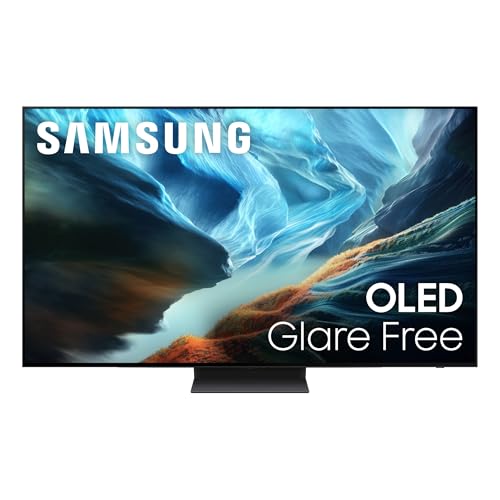
The Samsung 65-Inch Class S90H Series OLED 4K Smart TV stands out as a high-performance display built for home theater purists, console gamers, and sports fans alike. Designed to anchor a busy living room or a dedicated media space, this model brings together self-illuminating OLED pixels with modern AI-driven video processing. Whether you are hosting a lively Super Bowl party, settling down for a Friday family movie marathon, or diving into competitive multiplayer titles, this screen offers the balance of rich contrast and responsive playback that demanding viewers look for.
Picture quality represents one of the strongest highlights of the S90H series. Thanks to OLED HDR+ paired with Glare Free screen technology, the panel delivers true inky blacks without turning into a mirror during bright daylight viewing. The onboard NQ4 AI Gen3 processor utilizes 128 neural networks to drive 4K AI Upscaling Pro and Auto HDR Remastering. This means cable broadcasts, older streaming releases, and classic sitcoms receive noticeable clarity boosts, while high-dynamic-range movies showcase punchy highlights and nuanced shadow detail without washed-out gray tones.
For gaming and live sports, this television is equipped to handle rapid motion with ease. The Ultimate Gaming Pack includes Motion Xcelerator supporting up to a 165Hz refresh rate alongside NVIDIA G-SYNC and AMD FreeSync Premium Pro. Console and PC players benefit from low input lag, tear-free visuals, and quick response times during fast-paced action. Sports fans also benefit from the AI Motion Enhancer Pro, which works to keep fast-moving baseballs, hockey pucks, and on-screen score tickers sharp and readable without jarring motion blur or jitter.
Build quality and smart convenience are equally well considered. Sporting a sleek Graphite Black finish with ultra-thin borders, the display mounts cleanly flush against a wall using standard VESA hardware or sits securely on an entertainment console. Samsung Tizen smart platform supplies straightforward access to essential streaming applications like Netflix, Prime Video, Disney+, and live streaming channels. While the built-in speakers produce clear dialogue for casual news broadcasts, adding a dedicated soundbar or audio receiver is recommended to match the cinematic scale of the picture with deeper bass.
Prospective buyers should consider a few practical trade-offs before purchasing. As with most Samsung displays, this model does not support Dolby Vision, relying instead on HDR10, HDR10+, and HLG formats. Additionally, full-scale OLED displays sit at a premium price point compared to entry-level LED units. For movie lovers who prioritize deep contrast, gamers demanding high frame rates, and households wanting a bright, anti-glare display for daytime viewing, the Samsung S90H offers a well-rounded and deeply satisfying entertainment upgrade.
Gamers looking to pair current-gen consoles or high-end gaming PCs with a responsive screen will find plenty to appreciate in the S90H. With support for refresh rates up to 165Hz through Motion Xcelerator, gameplay feels fluid and responsive during fast turns and rapid firefights. Both NVIDIA G-SYNC and AMD FreeSync Premium Pro are supported, which helps prevent distracting screen tearing and stutter during demanding visual scenes.
Low input latency and auto low latency mode (ALLM) ensure that button presses translate immediately to the screen. The integrated Game Bar provides quick access to essential settings like aspect ratio adjustments, frame rate readouts, and input lag status without needing to leave your game. Whether you are running long campaign sessions on an Xbox Series X or competitive tournaments on a PC, this display delivers smooth, artifact-free performance.
Bright living spaces often present a challenge for traditional OLED televisions, but the S90H addresses this with specialized Glare Free surface treatment. This anti-reflective design disperses ambient light from windows and lamps, preserving deep black levels and vibrant colors even during afternoon viewing sessions. Wide viewing angles ensure everyone on the couch enjoys consistent contrast and color saturation from any seat in the room.
Sports broadcasts receive a noticeable upgrade through AI Motion Enhancer Pro, which intelligently detects and stabilizes high-speed ball movement and scrolling graphics. Combined with Auto HDR Remastering, standard dynamic range sporting events and legacy broadcast feeds gain an extra layer of brightness and crispness that makes live action feel energetic and lifelike.


Pros
- Exceptional contrast ratio and true black levels powered by self-emissive OLED technology
- Fluid 120Hz motion handling paired with VRR and ALLM for high-performance gaming
- Clean, responsive Roku TV operating system that remains easy for all ages to navigate
- Convenient backlit remote with hands-free voice control and an audible remote locator
Cons
- OLED panels generally do not reach the peak brightness levels of high-end Mini-LED TVs in sunlit rooms
- Built-in speakers provide clear dialogue but benefit from a dedicated soundbar for deep bass impact
- Potential risk of image retention if static news tickers or HUDs run continuously for extreme durations
The Roku 65-Inch Pro Series OLED TV represents a premium entry for the brand, pairing the straightforward simplicity of the Roku interface with self-lit OLED display engineering. Designed for American homeowners, apartment dwellers, dedicated cinephiles, and console gamers, this 65-inch screen delivers an elevated visual experience. Whether you are staging a Friday movie night, hosting Sunday football gatherings, or organizing late-night gaming sessions, this television aims to bridge the gap between high-end picture fidelity and hassle-free everyday operation.
At the heart of this television is an OLED panel capable of infinite contrast and pitch-black dark scenes, eliminating the blooming often noticed on traditional backlit LED screens. The inclusion of Dolby Vision allows HDR titles on Netflix, Prime Video, and Disney+ to pop with lifelike highlights and accurate color volume. Motion handling stays fluid thanks to the native 120Hz refresh rate, keeping fast-paced hockey passes and cinematic tracking shots clear without excessive blur. For everyday streaming, Roku Smart Picture Max continually evaluates incoming content to adjust color balance and sharpness automatically.
Console enthusiasts on Xbox Series X or PlayStation 5 will appreciate the low input lag and responsive gameplay enabled by Auto Low Latency Mode (ALLM) and Variable Refresh Rate (VRR) with AMD FreeSync Premium. Fast action sequences stay crisp and tear-free during heated multiplayer matches. On the audio side, Dolby Atmos passthrough over eARC and onboard processing provides clean vocal clarity, while Bluetooth Headphone Mode allows night owls to catch up on shows without disturbing the household.
Roku engineered this Pro Series display with practical living space needs in mind. The ultra-thin screen profile mounts neatly against standard VESA brackets or rests stably on the included tool-less stand, which features dual height configurations to easily clear a compact soundbar. Built-in cable management tracks keep power and HDMI lines hidden from view. The upgraded remote control adds backlit buttons for dim home theaters alongside a handy remote finder chime that triggers directly from a button on the television bezel.
While the self-emissive panel excels in controlled lighting and dark home theaters, buyers with light-drenched sunrooms may find that high-output Mini-LED models resist daytime glare better. Built-in audio also lacks deep sub-bass, making an external soundbar a recommended upgrade for true cinematic sound. For movie lovers, cord-cutters, sports viewers, and gamers who prize perfect black levels and straightforward navigation without dealing with overly cluttered smart interfaces, this 65-inch Pro Series OLED model serves as a compelling, user-friendly centerpiece.
The standout characteristic of this display is its self-emissive OLED panel, which turns individual pixels completely off to produce true blacks. This infinite contrast ratio makes dark movie scenes, starry night skies, and shadows appear rich and detailed without any backlight bleed or halo effects around bright text.
With Dolby Vision integration, high dynamic range content achieves nuanced tonal shading and vibrant color accuracy. Meanwhile, Roku Smart Picture Max actively reads incoming content types and modifies picture settings in the background, sparing viewers the need to tinker with picture presets manually.
Gamers looking to pair their current-generation consoles or PC setups with a big screen will appreciate the native 120Hz refresh rate. Fast-paced first-person shooters and racing games benefit from reduced blur and responsive controls.
Support for Variable Refresh Rate (VRR), AMD FreeSync Premium, and Auto Low Latency Mode (ALLM) ensures that frame rates stay synchronized to prevent screen tearing and keep input lag low. Console detection shifts the television into its optimal low-latency mode automatically whenever you boot up a game.
Operating on the Roku TV platform, the interface organizes favorite streaming apps like Netflix, Disney+, Prime Video, and Apple TV alongside live broadcast channels in a clean, customizable grid. Cord-cutters can take advantage of numerous free live channels through The Roku Channel without requiring additional subscription fees.
Daily usability receives a notable boost from the premium voice remote, which lights up in dark rooms and includes a locator feature that beeps when triggered from the TV chassis. Bluetooth Headphone Mode also provides effortless private listening directly through paired wireless earbuds or over-ear headphones.

Pros
- Self-lit OLED pixels produce true black levels with zero backlight blooming
- Full gaming support including 120Hz refresh rate, VRR, ALLM, and 0.1ms response time
- Wide viewing angles keep colors and contrast accurate across wide seating arrangements
- Responsive webOS interface with extensive streaming app support and free streaming channels
- Comprehensive HDR format support including Dolby Vision and Filmmaker Mode
Cons
- Peak brightness may not rival high-end Mini-LED screens in sun-drenched rooms
- Built-in speakers provide clear dialogue but lack deep low-end bass for action movies
- OLED panel requires standard care habits to prevent potential static image retention over time
The LG 65-Inch Class B6 Series OLED 4K Smart TV brings self-lit pixel technology into the sweet spot of home entertainment. Designed for home theater enthusiasts, avid console gamers, sports fans, and streaming-focused families, this 65-inch display offers a substantial screen size that easily anchors a main living room or a dedicated media room. Unlike traditional LED or edge-lit televisions, each individual pixel on this OLED panel turns on and off independently, allowing it to produce true black levels and striking contrast without annoying backlight bleed or halo effects around bright objects.
Real-world picture performance stands out during movie nights and dark-room viewing. With Dolby Vision and Filmmaker Mode onboard, high-dynamic-range content displays with nuanced shadow detail and authentic colors that honor the original creative intent. The onboard a8 AI Processor 4K Gen3 works behind the scenes to optimize both video and audio automatically. It applies AI Super Upscaling to clean up standard-definition cable feeds, sports broadcasts, and older streaming titles, sharpening textures and reducing noise so everything looks crisp on the 4K canvas.
For gamers hooked on modern consoles like the PlayStation 5 and Xbox Series X or PC gaming rigs, this display packs serious competitive credentials. A native 120Hz refresh rate pairs with an ultra-low 0.1ms response time to ensure fluid motion and immediate button-to-screen responsiveness. Support for variable refresh rate (VRR), NVIDIA G-SYNC, and AMD FreeSync Premium eliminates screen tearing during fast-paced action. The LG Game Optimizer and Game Dashboard put vital frame-rate and latency settings within quick reach without interrupting your session.
Everyday usability is powered by LG webOS, delivering smooth navigation across popular streaming apps like Netflix, Prime Video, Disney+, and YouTube. The interface integrates helpful AI assistant capabilities alongside LG Channels, which grants instant access to hundreds of free live channels and on-demand movies. The physical design remains impressively sleek, with razor-thin bezels and a slim 1.8-inch chassis depth without the stand. Standard VESA mount compatibility makes wall installation straightforward, while wide OLED viewing angles ensure family members seated off to the sides enjoy the same vibrant image as those in the center sweet spot.
While the picture quality excels in dim to moderately lit environments, potential buyers with exceptionally bright, sun-drenched living spaces should consider room placement, as OLEDs prioritize contrast over blinding peak luminance. The built-in speakers support Dolby Atmos and provide clear dialogue for daily news and casual viewing, but action movie enthusiasts will likely want a dedicated soundbar or audio receiver to match the grand visuals. For those investing in compatible LG audio gear, the Wow Orchestra feature allows the TV speakers and soundbar to fire together for a broader soundstage.
Taking into account its balance of cinematic contrast, top-tier gaming specs, and intuitive smart features, this television represents a smart choice for anyone looking to upgrade to authentic OLED picture quality. Whether you are hosting Super Bowl watch parties, marathon gaming with friends, or sinking into high-bitrate 4K movies on the weekend, this 65-inch B6 OLED delivers an engaging, premium entertainment experience that holds its own across every genre.
At the heart of the LG B6 OLED is its self-lit pixel panel, where over 8.3 million individual pixels regulate their own brightness down to absolute black. This provides an infinite contrast ratio, ensuring that starry night skies, dark cinematic scenes, and high-contrast visuals display without gray washing or light spill into letterbox bars.
The combination of Dolby Vision, HDR10, and Filmmaker Mode allows the screen to accurately display high-dynamic-range content as master colorists intended. Integrated Ambient Light Technology helps adjust tone mapping according to the lighting in your room, preserving delicate highlight details during daytime viewing and maintaining deep shadows at night.
Console and PC gamers benefit from hardware tailored for fast-paced competition. With a native 120Hz refresh rate and a rapid 0.1ms pixel response time, high-speed camera pans and chaotic multiplayer firefights remain remarkably sharp and free of ghosting.
Advanced synchronization features such as VRR, NVIDIA G-SYNC, and AMD FreeSync Premium keep the panel perfectly synchronized with your graphics card or console output. The Game Dashboard and Game Optimizer overlays allow quick adjustments to black stabilizer, input lag, and audio profiles on the fly without exiting your match.

Pros
- Exceptional black levels and color accuracy – perfect for movie lovers and home theater enthusiasts
- Outstanding gaming performance with 144Hz, VRR, and low input lag – one of the best OLEDs for gamers
- Brightness Booster and anti-glare coating make it more usable in living rooms with windows
- Four HDMI 2.1 ports provide future-proof connectivity for multiple high-bandwidth devices
Cons
- OLED burn-in risk remains a concern for static content like news channels or HUDs; proper care is needed for long-term use
- Built-in speakers, while decent, lack the bass and immersion of a dedicated soundbar – Dolby Atmos is best experienced with external audio
- Premium price point may be steep for budget-conscious shoppers, though it reflects the high-end OLED technology
The LG 65-inch OLED evo AI 4K C5 Series (2025) is a premium OLED smart TV that sets a new benchmark for picture quality and gaming performance. It uses LG’s self-lit OLED technology, which means each pixel produces its own light and can turn off completely for perfect black levels. This gives you infinite contrast, vibrant colors, and stunning HDR performance that makes movies, sports, and games look incredibly lifelike.
This TV is best suited for home theater enthusiasts, gamers, movie lovers, and families who want the best possible picture for their living room or dedicated media room. The self-lit pixels also deliver wide viewing angles, so everyone on the couch or around the room sees consistent color and contrast. The Brightness Booster and anti-glare coating help reduce reflections, making it more practical for bright rooms than earlier OLEDs, though it still shines best in a dimmer environment.
For gamers, the C5 is a powerhouse. It supports up to 144Hz refresh rate, a 0.1ms response time, NVIDIA G-Sync, AMD FreeSync Premium, and VRR. It also has four HDMI 2.1 inputs, so you can plug in a PS5, Xbox Series X, a gaming PC, and a soundbar all at once. The Game Dashboard and Game Optimizer put all the key settings at your fingertips. Sports fans will appreciate the smooth motion handling and judder reduction, while fast-moving action stays clear and blur-free.
The Alpha 9 AI Processor Gen8 handles everything from upscaling lower-resolution content to optimizing picture and sound based on what you’re watching. Filmmaker Mode preserves the original aspect ratio, color, and frame rate for a cinema-like experience. The built-in webOS platform is fast and responsive, with access to all major streaming apps like Netflix, Disney+, Prime Video, and YouTube. Alexa is built-in, so you can control the TV, smart home devices, and search for content hands-free.
Setup is straightforward: the TV comes with a sturdy stand that’s easy to attach, and it supports VESA wall mounting for a cleaner look. The design is sleek with ultra-thin bezels that keep the focus on the picture. Cable management channels on the back help keep things tidy. The included remote is well-designed, though some users may prefer a backlit version for dark rooms. Sound quality from the built-in speakers is decent for everyday TV, but for a truly cinematic experience with Dolby Atmos, pairing with a compatible soundbar (like LG’s Wow Orchestra) is recommended.
Realistically, OLED burn-in is a potential issue if you watch static content for hours daily, but modern LG OLEDs have improved pixel shift and logo dimming to mitigate this. The price is high, but you’re getting top-tier picture quality, gaming features, and smart TV performance. If you’re looking for the best TV for movie nights, competitive gaming, or a home theater setup, the LG C5 is a fantastic choice. For cord-cutters and streamers, it’s a dream – everything looks amazing, from 4K HDR movies to 1080p sports.
The LG C5 OLED evo delivers stunning picture quality thanks to its self-lit pixels. Perfect black levels create infinite contrast, making HDR content with Dolby Vision and HDR10 pop with incredible depth. The Brightness Booster enhances luminance, so bright highlights stand out without washing out blacks. Color accuracy is exceptional, covering a wide color gamut for vibrant, lifelike images. The Alpha 9 Gen8 processor uses AI Super Upscaling to sharpen lower-resolution content, reducing noise and adding detail. Motion handling is smooth with minimal judder, thanks to the 120Hz panel (144Hz for gaming). Viewing angles are excellent, with no color shift when viewed from the side, making it ideal for family movie nights. The anti-glare filter helps in bright rooms, but OLED still performs best in controlled lighting.
Gamers will love the LG C5. It supports a 144Hz refresh rate, 0.1ms response time, NVIDIA G-Sync, AMD FreeSync Premium, and VRR for tear-free, stutter-free gameplay. Input lag is incredibly low, making it perfect for competitive shooters and fast-paced action. Four HDMI 2.1 inputs (48Gbps) allow you to connect multiple consoles and a PC simultaneously. The Game Dashboard and Game Optimizer provide quick access to settings like black stabilizer, crosshair overlay, and refresh rate monitoring. The TV automatically detects consoles and switches to game mode for optimal performance. Whether you’re playing on PS5, Xbox Series X, or a high-end PC, the C5 delivers a premium gaming experience.
LG’s webOS platform is fast, intuitive, and packed with apps. The 2025 version includes a home screen with easy access to Netflix, Disney+, Prime Video, Apple TV+, Hulu, and hundreds of other channels. Built-in Alexa lets you launch apps, search for content, control smart home devices, and even ask for the weather. You can also use Google Assistant via the remote or a compatible speaker. The processor ensures quick app loading and smooth navigation. The remote is ergonomic and has a dedicated Netflix button, but it’s not backlit. For cord-cutters, the C5 is a great choice – it handles all major streaming services with ease and supports Dolby Vision and Atmos on compatible content.
The built-in speakers on the LG C5 provide clear dialogue and decent volume for a TV. They support Dolby Atmos, creating a virtual surround sound effect that’s immersive for movies and shows. However, the bass is limited, and the overall soundstage is not as wide as a dedicated soundbar system. For the best experience, LG recommends pairing with a compatible soundbar using Wow Orchestra, which syncs the TV speakers with the soundbar for a more enveloping sound. The TV also has an eARC port for easy connection to a receiver or soundbar. If you’re a movie lover or gamer, consider adding external audio to fully enjoy Dolby Atmos.
The LG C5 has a sleek, minimalist design with ultra-thin bezels that maximize the screen real estate. The panel is only about 0.2 inches deep, giving it a floating look when wall-mounted. The stand is a sturdy central pedestal that’s easy to assemble and provides stability. It also has cable management channels to keep wires hidden. The back is made of a dark plastic with a textured finish. VESA 300x300 mounting is supported for a flush wall mount. The overall build quality feels premium, and the TV is lightweight enough for a single person to mount with help. The remote is a standard IR/Bluetooth model with a minimalist button layout and a scroll wheel.
Setup is straightforward: attach the stand or mount the TV, plug in the power and HDMI cables, and follow the on-screen wizard. The TV has four HDMI 2.1 ports (one with eARC), two USB-A ports, an Ethernet port, optical audio out, a composite video input, and a cable/antenna connector. It also has built-in Wi-Fi 6 and Bluetooth 5.0 for wireless connectivity. The remote uses Bluetooth and RF for pairing, so you can control the TV without line of sight. The initial setup includes connecting to Wi-Fi, signing into your LG account, and configuring Alexa. The process takes about 10 minutes. For gamers, connecting consoles is plug-and-play, and the TV auto-detects settings.
Evaluating the Best 65-Inch OLED TVs: Panel Technologies, Performance, and Setup Considerations
Determining what is the best 65 inch oled tv requires looking past marketing slogans to evaluate panel architectures, processing engines, and room lighting. A display built for dark theater viewing may face challenges in a sunlit living room with unshaded windows. Modern 65-inch options provide balanced dimensions that deliver cinematic scale without overwhelming typical seating spaces. Matching your entertainment habits to specific hardware ensures your emissive screen performs reliably for years.
Understanding OLED Panel Architectures: Traditional WOLED vs QD-OLED
Emissive display technology operates without a backlight because every subpixel illuminates independently and can turn off completely. This self-lit structure creates genuine per-pixel black levels and delivers infinite native contrast. Without light bleeding into adjacent dark areas, starfields and dimly lit sequences remain crisp and blooming-free. This emissive foundation powers every premium 65-inch model available today.
Traditional WOLED panels use a White OLED foundation filtered into red, green, and blue, paired with an unfiltered white subpixel. This white subpixel increases light efficiency, helping models like the LG C5 series deliver punchy highlights in diverse rooms. Pushing peak brightness through a white subpixel can occasionally dilute color saturation in extreme highlights. Even so, modern WOLED evo panels produce rich imagery with dependable long-term stability.
Quantum Dot OLED combines a blue self-lit emissive layer with printed red and green quantum dot converters. Eliminating the white subpixel allows screens like the Sony BRAVIA 8 II to maintain saturated color volume in bright highlights across DCI-P3 color space. Quantum dot layers also provide wide viewing angles with minimal color shift when viewed off-axis. Choosing between panel types depends on whether you value high-luminance color saturation or proven brightness efficiency.
Peak Brightness, ABL Constraints, and Room Lighting Realities
Peak HDR brightness measures a panel’s ability to render small, intense specular highlights like reflections or streetlamps. Top displays illuminate small two-percent or ten-percent windows with intense punch to create realistic visual depth. However, small highlight brightness does not represent sustained full-screen daylight performance. How a display manages broad white scenes determines real-world visibility in bright rooms.
Emissive panels feature an internal Automatic Brightness Limiter circuit to protect organic pixels from thermal wear. When a bright hockey rink or snowy mountain fills the screen, the limiter restricts overall brightness to preserve the display. Viewers watching winter sports or using the TV as a desktop monitor will observe this gentle dimming effect. Understanding this behavior prevents unexpected surprises during high-key broadcasts.
Ambient room light control also depends on anti-reflective coatings and optical screen filters. Models like the Samsung S90H feature specialized glare-free filters, while the LG C5 evo carries verified glare reduction ratings. These treatments diffuse reflections from windows and lamps so dark shadows remain clear. However, QD-OLED panels without polarizers can show elevated black levels if placed opposite unshaded sunlit windows.
Video Processing and Motion Handling: The Engine Behind Picture Clarity
Raw panel hardware provides dynamic range potential, but the video processor determines picture clarity. Modern processors like the Sony XR Processor, Samsung NQ4 AI Gen3, and LG Alpha 9 Gen8 use neural networks to analyze video feeds in real time. These chips evaluate scene textures to apply noise reduction and edge sharpening. Without capable processing, low-bitrate streams can show digital noise and compression artifacts on a 65-inch screen.
Near-black handling and subtle color gradients represent another vital processing function. Compressed streaming scenes often introduce harsh banding across dark shadows and foggy backgrounds. Capable processors smooth out rough transitions across 10-bit gradients to prevent posterization without blurring fine details. This refinement ensures subtle shadow details in films remain clean rather than collapsing into muddy blocks.
Motion handling requires careful control because emissive pixels transition almost instantaneously. Rapid pixel response times can cause low-frame-rate 24p movies to show slight stutter during slow camera pans. Processors resolve this with subtle interpolation options that stabilize motion without creating an unnatural soap opera look. While compact 55-inch streaming televisions use similar processors, a 65-inch screen magnifies motion artifacts and demands clean signal handling.
Next-Gen Gaming Performance: Refresh Rates, Bandwidth, and Latency
Console and PC gamers value instant response and smooth motion, making OLED panels leading choices for gaming stations. Sub-millisecond response times eliminate trailing ghost artifacts behind fast-moving game objects. Premium displays offer 120Hz refresh rates, with performance models pushing motion up to 144Hz or 165Hz on sets like the Samsung S90H. These high refresh rates keep fast-paced multiplayer titles exceptionally smooth.
Smooth synchronization requires dependable Variable Refresh Rate support across all inputs. Leading models support HDMI Forum VRR along with Nvidia G-Sync Compatible and AMD FreeSync Premium Pro certifications. These features match the panel refresh rate to console or graphics card output. This synchronization prevents screen tearing and stutter when frame rates fluctuate during intense action.
Port bandwidth and layout require verification before connecting multiple high-performance devices. Full-bandwidth HDMI 2.1 inputs supporting 48Gbps are necessary for uncompressed 4K gaming at high refresh rates with HDR. Some displays provide four full-speed ports, while others include only two high-bandwidth inputs with one shared by eARC audio. If a soundbar uses that port, connecting multiple consoles may require inconvenient cable swapping.
HDR Ecosystems and Format Compatibility: Dolby Vision vs HDR10+
High Dynamic Range quality depends on dynamic metadata formats that adjust tone mapping scene by scene. Basic HDR10 uses a single static curve across an entire film, which can compromise dark scenes or bright highlights. Dynamic metadata formats read active scene instructions to tailor brightness curves to the television’s specific capabilities. This adaptive adjustment ensures balanced contrast in both dim rooms and bright highlights.
Manufacturers split their support across competing dynamic HDR formats. Sony, LG, and Roku support Dolby Vision, which dominates major streaming platforms like Netflix and Apple TV. Samsung omits Dolby Vision across its lineup, relying instead on HDR10+ and proprietary Auto HDR Remastering tools. Viewers who primarily stream Dolby Vision titles may prefer displays with native format decoding.
Creative intent also benefits from accurate picture presets like Filmmaker Mode and studio profiles. Filmmaker Mode turns off motion smoothing and sharpness filters to display films at correct frame rates and colors. Sets like the Sony BRAVIA 8 II also provide studio modes tuned for Netflix, Prime Video, and Sony Pictures Core. These settings deliver director-intended picture quality without manual color adjustment.
Mother Glass Screen Sizing Realities and Room Geometry
Shoppers frequently wonder why specific screen sizes are absent from retail shelves. Emissive panels are cut from standardized mother glass substrates using fixed manufacturing templates. This process produces standard consumer sizes exclusively at 42, 48, 55, 65, 77, 83, and 97 inches. Understanding these production rules explains why OLED models do not exist in traditional LCD sizes like 50, 70, or 75 inches.
Buyers upgrading older screens should map their room dimensions to these standard panel cuts. Someone seeking a 50-inch TV should evaluate 48-inch or 55-inch options, while those wanting 75-inch screens step up to 77 inches. Dedicated home theater builders sometimes choose large-format OLED televisions, but 65 inches remains the ideal middle ground for standard living rooms. It fits standard media consoles while delivering immersive scale across normal viewing distances.
Recommended viewing distance for a 65-inch 4K screen spans seven to nine feet from the panel. This seating position provides a 30 to 40 degree viewing angle that aligns with cinema immersion recommendations. At this distance, the human eye resolves fine 4K detail without noticing individual pixels. Proper placement allows a 65-inch screen to fill your visual field naturally during movie nights.
Burn-In Prevention, Heatsinks, and Panel Longevity
Concerns about permanent burn-in remain common among buyers considering an emissive television for the first time. Burn-in occurs only when persistent static elements like news banners or gaming interfaces cause uneven pixel wear over long periods. Temporary image retention is a brief ghosting effect that clears naturally after switching content. Current production panels feature multiple defensive tools that make permanent burn-in uncommon under regular home use.
Modern televisions use automated panel preservation routines that operate quietly in the background. Pixel shifting moves the picture slightly over time to distribute wear across neighboring subpixels. Logo brightness limiters detect static graphics and dim those specific zones without changing the rest of the image. Automated compensation cycles also run in standby mode after cumulative viewing sessions to refresh pixel uniformity.
Maintaining panel health also requires proper power handling from the owner. Avoid connecting your screen to smart plugs or wall switches that cut mains electricity when powered down. Removing mains power prevents the display from executing automated background maintenance cycles while in standby. Leaving the television in normal standby mode allows internal protective algorithms to run on schedule.
Audio Capabilities, Smart Platforms, and Living Room Integration
Slim panel enclosures leave little internal space for traditional audio speaker cones. Manufacturers address this by using acoustic drivers and actuators that vibrate the screen surface to project sound forward. Premium sets support spatial audio formats like Dolby Atmos and DTS:X, while coordinating with soundbars through systems like LG Wow Orchestra. While built-in speakers handle everyday viewing, an external sound system remains recommended for full theater dynamics.
Smart television operating systems shape daily user navigation and streaming convenience. Platforms like Google TV on Sony displays provide Gemini voice tools and clean universal content watchlists. LG webOS offers customizable home menus and quick settings cards, while Samsung Tizen includes cloud gaming access. The Roku Pro Series provides a straightforward layout with convenient remote-finder functions for straightforward operation.
Physical placement requires checking stand footprints and chassis clearances before setting up your display. Many 65-inch models feature adjustable stands that raise the panel to fit a soundbar underneath without blocking the screen. When mounting to a wall, verify VESA pattern dimensions and anchor the bracket directly into wall studs. Always lift large glass panels with two people to avoid bending the ultra-thin screen.
Strategic Selection Guide: Matching the Display to Your Environment
Choosing the right screen requires matching room conditions to your entertainment priorities. Film enthusiasts who watch in dark rooms often prefer the rich color volume of QD-OLED models like the Sony BRAVIA 8 II. Gamers needing fast refresh rates and low latency benefit from versatile sets like the LG C5 evo or Samsung S90 series. Viewers seeking dependable contrast at an entry level can look toward value-focused options like the LG B6 series.
Budget expectations should align with emissive manufacturing costs. While buyers hope for prices matching basic LED screens, authentic OLED panels require specialized manufacturing processes. Price-conscious shoppers should look for seasonal clearance sales or previous-year models rather than settling for edge-lit displays with gray blacks. A well-selected 65-inch screen delivers contrast and color fidelity that transform daily viewing.
Completing your installation requires verifying that cables and picture settings support full performance. Use certified Ultra High Speed HDMI cables to ensure reliable bandwidth for 4K streaming and gaming. Turn off aggressive eco-saving modes to allow the panel to display proper highlight brightness and contrast. With appropriate settings and routine standby care, your 65-inch display will deliver reference-level entertainment for years to come.


Write Your Review
No reviews yet. Be the first to share your experience!